
Nails that peel, split, or flake can be frustrating—especially when you're already taking steps to care for them. You apply cuticle oil daily, massage it in religiously, and yet your nails continue to deteriorate. This contradiction leaves many people wondering: if cuticle oil is supposed to nourish and strengthen, why aren’t the results showing? The truth is, while cuticle oil plays an important role in nail health, it’s not a cure-all. Peeling nails often stem from deeper issues that go beyond surface-level dryness. Understanding these root causes is key to restoring resilience and achieving strong, smooth nails.
The Role of Cuticle Oil: What It Can—and Can’t—Do
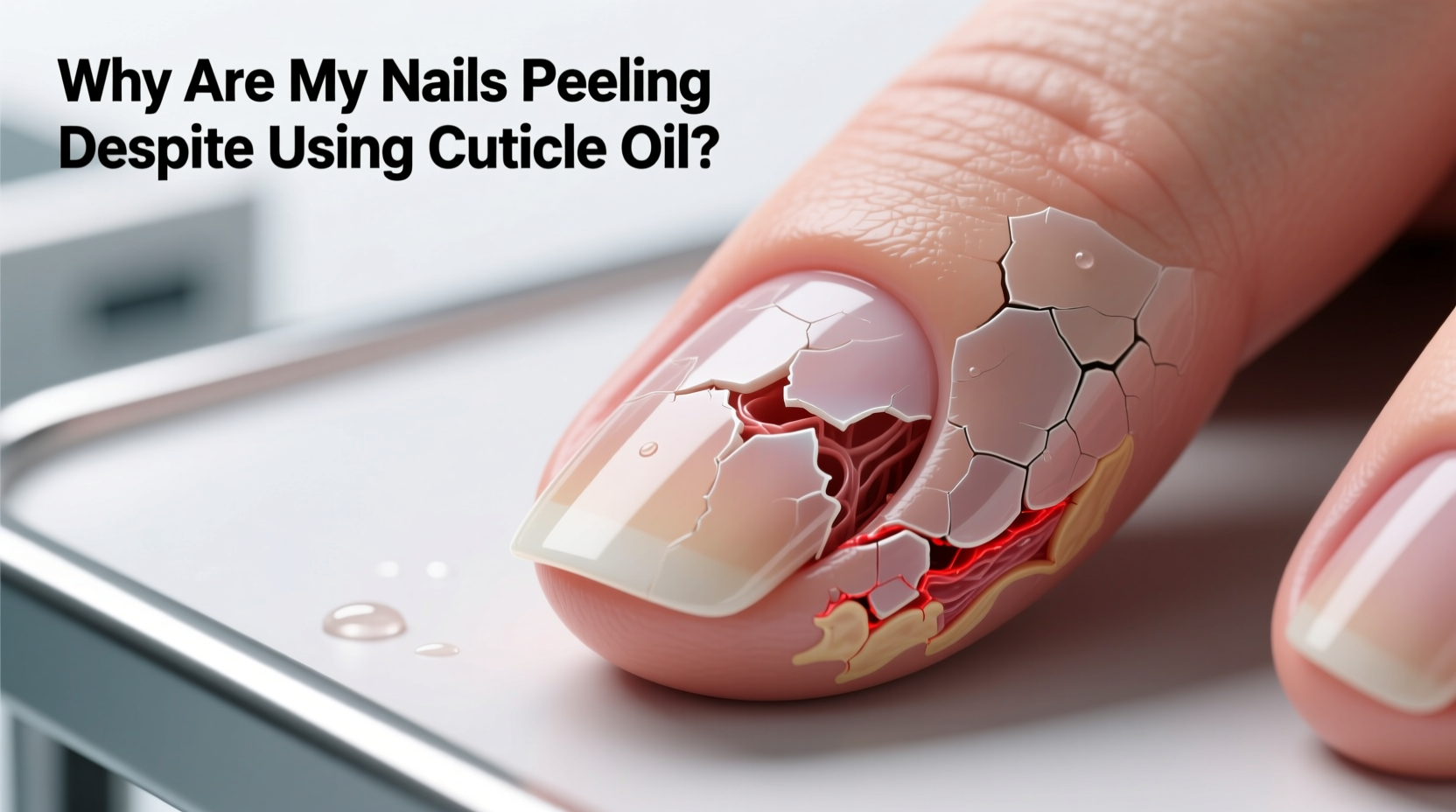
Cuticle oil is primarily designed to moisturize the skin surrounding the nail—the cuticle and nail fold. Most formulas contain carrier oils like jojoba, sweet almond, or grapeseed oil, along with essential oils for fragrance or additional benefits. These ingredients help prevent hangnails, improve circulation, and create a protective barrier against environmental stressors.
However, cuticle oil doesn't directly penetrate the nail plate (the visible part of the nail) in significant amounts. The nail is made of keratin, a tough protein that's naturally semi-permeable but not highly absorbent. While some moisture can pass through, most oils sit on the surface rather than hydrating the layers beneath. Therefore, applying cuticle oil may improve the appearance of the skin around the nail but won't necessarily fix structural weaknesses within the nail itself.
Common Causes of Nail Peeling Beyond Dryness
If your nails are peeling despite consistent oil use, the issue likely lies elsewhere. Several internal and external factors contribute to nail brittleness and layer separation:
- Excessive water exposure: Frequent handwashing, dishwashing, or swimming softens the nail plate, causing it to swell and contract repeatedly. This weakens the structure over time, leading to delamination (peeling).
- Chemical exposure: Harsh soaps, detergents, and cleaning agents strip natural oils. Acetone-based nail polish removers are especially damaging, dissolving protective lipids and dehydrating the nail matrix.
- Nutritional deficiencies: Lack of biotin, iron, zinc, or protein can impair keratin production. Iron deficiency, in particular, is linked to brittle, spoon-shaped nails (koilonychia).
- Underlying health conditions: Thyroid disorders, psoriasis, lichen planus, and fungal infections can all manifest as nail changes, including peeling and splitting.
- Mechanical trauma: Using nails as tools, aggressive filing, or wearing artificial nails can cause micro-injuries that compromise integrity.
“Many patients come in using oils religiously but don’t realize their dishwashing habits or diet are undoing the benefits.” — Dr. Lena Patel, Dermatologist & Nail Health Specialist
Why Moisture Imbalance Is the Hidden Culprit
One of the most misunderstood aspects of nail health is moisture balance. Contrary to popular belief, peeling isn’t always due to dryness—it can also result from too much moisture. Nails that alternate between wet and dry environments become fragile. Think of a paper towel: when soaked, it’s pliable; when dried, it cracks. The same principle applies to nails.
This cycle of hydration and dehydration disrupts hydrogen bonds in keratin, weakening the nail’s layered structure. Over time, the layers begin to separate, creating that familiar \"peeling\" effect. Cuticle oil alone cannot stabilize this imbalance because it doesn’t regulate water absorption into the nail plate.
Strategies to Restore Moisture Balance
- Wear gloves during wet tasks: Use cotton-lined rubber gloves when washing dishes, cleaning, or gardening to minimize water exposure.
- Limited handwashing without immediate moisturizing: After washing, dry hands thoroughly and apply a hand cream followed by cuticle oil to seal in moisture.
- Avoid prolonged soaking: Limit baths or manicures with extended soaking to under 10 minutes.
- Use a nail hardener with caution: Some contain formaldehyde or acrylates that can further dry or irritate. Opt for protein-based or calcium-infused formulas instead.
Internal Factors: Nutrition and Systemic Health
No amount of topical care can compensate for poor internal health. The nail matrix—the area under the cuticle where new nail cells form—requires a steady supply of nutrients to produce strong, resilient nails. If your body lacks essential building blocks, the resulting nail will be structurally compromised from day one.
Biotin (vitamin B7) is often marketed as a miracle supplement for nails, and there’s evidence to support its use. A 2017 review published in Skin Appendage Disorders found that biotin supplementation improved nail thickness and reduced splitting in 71% of participants. However, biotin deficiency is rare, and excess intake offers no added benefit.
More impactful deficiencies include:
| Nutrient | Role in Nail Health | Dietary Sources |
|---|---|---|
| Iron | Supports oxygen transport; deficiency leads to brittle, concave nails | Red meat, lentils, spinach, fortified cereals |
| Zinc | Essential for cell division and keratin synthesis | Pumpkin seeds, shellfish, chickpeas |
| Protein | Nails are made of keratin, a structural protein | Eggs, poultry, tofu, Greek yogurt |
| Vitamin C | Supports collagen formation and iron absorption | Oranges, bell peppers, broccoli |
If you suspect a deficiency, consult a healthcare provider for blood testing before starting supplements. Self-treating with high-dose vitamins can lead to imbalances or mask underlying conditions.
Mini Case Study: Sarah’s Persistent Peeling
Sarah, a 34-year-old nurse, used a high-end cuticle oil twice daily for three months but noticed no improvement in her peeling nails. Her job required frequent handwashing—up to 30 times per shift—and she often skipped gloves during patient care. Despite moisturizing afterward, her nails continued to split and fray at the tips.
After consulting a dermatologist, she learned that her constant water exposure was the primary culprit. The solution wasn’t more oil, but behavior change: wearing nitrile gloves under cotton liners during shifts, switching to a gentler hand soap, and applying a urea-based nail conditioner nightly. Within six weeks, her nails showed visible improvement, with less peeling and increased flexibility.
Sarah’s case illustrates a common misconception: that topical treatments can override environmental damage. In reality, protection must come first—moisturization follows.
Step-by-Step Guide to Healthier Nails
Fixing peeling nails requires a holistic approach. Follow this timeline to address both external and internal factors:
- Week 1–2: Assess and Protect
- Track hand-washing frequency and chemical exposure.
- Start wearing gloves during wet tasks.
- Switch to acetone-free nail polish remover.
- Trim nails short and file in one direction with a fine-grit file.
- Week 3–4: Optimize Topical Care
- Continue cuticle oil application 2x daily.
- Add a nail serum containing hydrolyzed keratin or panthenol.
- Apply a thick hand cream at night and wear cotton gloves to enhance absorption.
- Week 5–8: Address Internal Health
- Evaluate diet for protein, iron, and zinc intake.
- Consider a blood test if fatigue or hair loss accompanies nail issues.
- Begin biotin (2.5 mg/day) only if advised by a doctor.
- Ongoing: Maintain and Monitor
- Reassess nail condition monthly.
- Avoid using nails as tools (e.g., opening packages).
- Give nails a break from polish every few weeks.
Frequently Asked Questions
Can drinking more water help peeling nails?
While overall hydration supports general health, drinking water alone won’t stop nail peeling. The nail plate isn’t directly hydrated by systemic fluids. External protection and targeted moisturization are far more effective.
Is it bad to use cuticle oil every day?
No, daily use is safe and beneficial. Just ensure the product is free from allergens like certain essential oils if you have sensitive skin. Overuse won’t harm nails, but pairing it with protective habits yields the best results.
How long does it take to see improvement in peeling nails?
Nail growth averages 3 mm per month. Since fingernails take 4–6 months to fully regenerate, noticeable improvement typically appears within 6–8 weeks, with full recovery requiring several months of consistent care.
Checklist for Preventing Nail Peeling
- ✅ Wear gloves during household chores and handwashing
- ✅ Use acetone-free nail polish remover
- ✅ Apply cuticle oil after handwashing
- ✅ File nails gently in one direction
- ✅ Include protein-rich foods in daily meals
- ✅ Avoid using nails as tools
- ✅ Give nails a polish-free week every month
- ✅ Consult a dermatologist if peeling persists beyond 3 months
Conclusion: Beyond the Bottle
Cuticle oil is a valuable tool in nail care, but it’s only one piece of the puzzle. Peeling nails are often a symptom of deeper imbalances—whether from excessive moisture, nutritional gaps, or mechanical stress. True improvement comes not from applying more oil, but from understanding and addressing the root causes. By combining protective habits, balanced nutrition, and informed product choices, you can build stronger, more resilient nails from the inside out. Don’t just treat the surface—rebuild the foundation.




 浙公网安备
33010002000092号
浙公网安备
33010002000092号 浙B2-20120091-4
Comments
No comments yet. Why don't you start the discussion?