
Vertical peeling of the nails—where layers of the nail plate split from top to bottom—is a common yet frustrating condition that affects both appearance and function. Unlike horizontal splitting, which often results from trauma or aging, vertical peeling typically signals deeper structural weakness. While occasional flaking may seem harmless, persistent peeling can indicate nutritional deficiencies, environmental damage, or underlying health issues. Understanding the root causes and adopting targeted care strategies can transform brittle, peeling nails into strong, resilient ones.
Understanding Vertical Nail Peeling
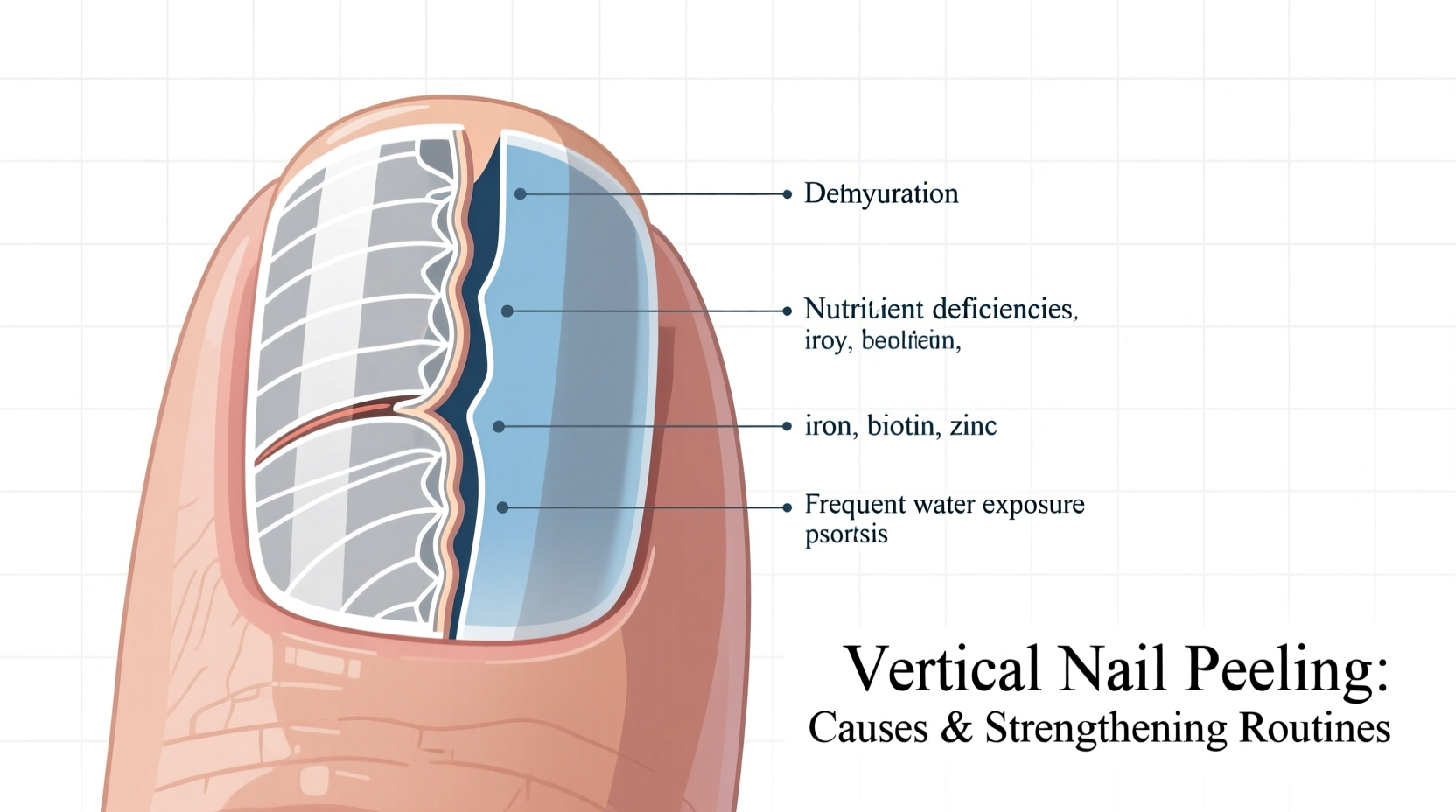
Vertical peeling occurs when the keratin layers of the nail separate along the length of the nail, creating thin, ragged strips that lift from the surface. This differs from onychoschizia (horizontal layering), which usually affects the free edge. Vertical peeling starts near the cuticle or mid-nail bed and progresses outward, making nails prone to snagging and breaking. The condition is more than cosmetic—it reflects the overall health of your body and daily habits.
Nails are made of alpha-keratin, a tough protein also found in hair and skin. Healthy nails grow steadily, maintain a smooth surface, and resist minor impacts. When they begin to peel vertically, it’s often due to compromised keratin bonds caused by internal imbalances or external stressors.
Common Causes of Vertical Nail Peeling
Peeling nails rarely stem from a single factor. Instead, they result from a combination of lifestyle, environment, and physiology. Identifying the primary contributors is essential for effective treatment.
1. Excessive Moisture and Dryness Cycles
Frequent hand washing, dishwashing without gloves, or prolonged exposure to water weakens nail structure. Water penetrates the nail layers, causing them to swell. When they dry, the layers contract unevenly, leading to separation and peeling. Alternating between wet and dry environments—common among healthcare workers, cleaners, or parents—accelerates this damage.
2. Harsh Nail Products
Acetone-based nail polish removers strip natural oils, leaving nails dehydrated and fragile. Similarly, low-quality polishes containing formaldehyde or toluene can cause brittleness over time. Artificial enhancements like acrylics or gels, especially when improperly applied or removed, weaken the nail matrix and increase susceptibility to vertical splitting.
3. Nutritional Deficiencies
The body prioritizes vital organs over nails, so nutrient shortfalls appear first in hair and nails. Key deficiencies linked to peeling include:
- Biotin (Vitamin B7): Critical for keratin production; deficiency leads to thin, splitting nails.
- Iron: Low iron levels, especially in cases of anemia, impair oxygen delivery to nail beds.
- Zinc: Supports cell regeneration and immune function; deficiency slows nail growth and strength.
- Protein: Since nails are primarily protein, inadequate intake compromises their integrity.
4. Underlying Health Conditions
Chronic peeling may signal systemic issues such as hypothyroidism, psoriasis, lichen planus, or fungal infections. Psoriatic nails often show pitting, discoloration, and vertical ridges alongside peeling. If peeling persists despite care, medical evaluation is warranted.
5. Mechanical Stress and Poor Nail Care Habits
Using nails as tools—to open packages, scratch surfaces, or type aggressively—causes microtrauma. Over-filing, especially with rough files or back-and-forth motion, thins the nail edges. Aggressive cuticle trimming disrupts the protective seal, increasing infection risk and weakening the base.
“Nail changes are often the first visible sign of internal imbalance. A patient with chronic vertical peeling should be evaluated for nutritional status and thyroid function.” — Dr. Lena Torres, Dermatologist & Nail Health Specialist
Strengthening Routines for Resilient Nails
Rebuilding nail strength requires consistency and a multi-pronged approach. Unlike skin, nails grow slowly—about 3 mm per month—so improvements take weeks to months. The following routine combines topical care, dietary support, and behavioral adjustments.
Step-by-Step Strengthening Timeline
- Week 1–2: Assess and Protect
Identify damaging habits. Wear cotton-lined gloves during cleaning. Switch to acetone-free polish remover. Begin using a nail hardener with calcium or hydroxyethyl methacrylate. - Week 3–4: Hydrate and Nourish
Apply cuticle oil twice daily. Use a urea- or lactic acid-based cream to gently exfoliate and moisturize. Start biotin supplementation if approved by a doctor. - Month 2–3: Reinforce and Monitor
Maintain protection and hydration. Introduce protein-rich meals. Track nail changes in a journal. Discontinue any products causing irritation. - Month 4+: Maintain and Prevent
Peeling should reduce significantly. Continue preventive practices. Reassess diet and health if full recovery isn’t achieved.
Diet and Supplements for Nail Health
No topical treatment can fully compensate for poor nutrition. A balanced diet rich in specific nutrients directly supports keratin synthesis and nail matrix activity.
| Nutrient | Role in Nail Health | Dietary Sources |
|---|---|---|
| Biotin | Enhances keratin infrastructure and thickness | Eggs, almonds, sweet potatoes, salmon |
| Iron | Supports oxygen transport to nail cells | Spinach, lentils, red meat, fortified cereals |
| Omega-3 Fatty Acids | Reduces inflammation and improves moisture retention | Flaxseeds, walnuts, chia seeds, fatty fish |
| Vitamin C | Aids collagen formation and iron absorption | Oranges, bell peppers, broccoli, strawberries |
| Protein (Lysine, Methionine) | Provides building blocks for nail growth | Chicken, tofu, beans, Greek yogurt, quinoa |
While supplements like biotin (typically 2.5–5 mg daily) are popular, consult a healthcare provider before starting. High doses may interfere with lab tests, including thyroid panels. Pair supplementation with whole foods for best results.
Do’s and Don’ts: Nail Care Best Practices
Small daily choices have a major impact on nail integrity. Follow this guide to avoid common pitfalls.
| Do’s | Don’ts |
|---|---|
| Wear gloves when doing dishes or using cleaning agents | Soak hands in hot water for long periods |
| Use a glass or fine-grit file (180+ grit) in one direction | Use metal clippers or saw back-and-forth with a file |
| Apply cuticle oil daily (jojoba or vitamin E oil works well) | Cut or push back cuticles aggressively |
| Keep nails trimmed short to reduce leverage and breakage | Let nails grow too long, especially if peeling |
| Choose breathable nail polishes labeled “5-free” or “non-toxic” | Leave polish on for more than two weeks |
Real-Life Example: Recovery from Chronic Peeling
Sarah, a 34-year-old nurse, struggled with vertical nail peeling for over a year. Her job required frequent handwashing and glove use, leaving her nails constantly damp, then dry. She used standard nail polish remover and didn’t moisturize regularly. After consulting a dermatologist, she was advised to wear cotton-lined vinyl gloves during shifts, switch to a hydrating hand cream with ceramides, and apply a keratin-based nail serum nightly. She began taking a daily multivitamin with biotin and iron, confirmed safe by her physician after blood work ruled out anemia. Within ten weeks, her nails stopped peeling and regained a smooth texture. Sarah now maintains the routine as part of her self-care practice.
When to See a Doctor
Most cases of vertical peeling respond to lifestyle changes. However, seek professional help if you notice:
- Peeling accompanied by pain, discoloration, or thickening
- Signs of infection like redness, swelling, or pus
- Changes in nail shape or separation from the nail bed (onycholysis)
- No improvement after 3–4 months of consistent care
A dermatologist can perform tests for fungal infections, evaluate for psoriasis, or order blood work to check for deficiencies or thyroid dysfunction.
FAQ
Can dehydration cause nails to peel vertically?
Yes. Chronic dehydration affects all tissues, including nails. Without adequate moisture, keratin fibers become brittle and prone to splitting. Drinking enough water supports overall tissue health, though topical hydration is equally important.
Is it safe to use nail hardeners every day?
Some nail hardeners contain formaldehyde or methacrylates that can over-dry and stiffen nails, making them more likely to crack. Use them sparingly—2–3 times per week—and opt for flexible formulas with ingredients like calcium lactate or hydrolyzed wheat protein.
How long does it take for peeling nails to heal?
Visible improvement typically takes 6–8 weeks. Since fingernails take about 6 months to fully regenerate, complete recovery may require several months of consistent care. Patience and routine adherence are key.
Essential Checklist for Stronger Nails
- Wear gloves during wet work
- Switch to acetone-free nail polish remover
- Apply cuticle oil morning and night
- File nails in one direction with a fine-grit file
- Eat protein-rich meals and consider biotin if deficient
- Avoid using nails as tools
- Trim nails regularly to prevent snagging
- Monitor for signs of infection or systemic illness
Conclusion: Build Strength from Within and Outside
Vertical nail peeling is not just a surface issue—it’s a signal from your body that balance is needed. Whether the cause is environmental, nutritional, or medical, the solution lies in consistent, informed care. By protecting your nails from damage, fueling your body with the right nutrients, and practicing gentle maintenance, you can rebuild strength and prevent future peeling. Healthy nails aren’t built overnight, but every small step adds up. Start today, stay consistent, and watch your nails transform.




 浙公网安备
33010002000092号
浙公网安备
33010002000092号 浙B2-20120091-4
Comments
No comments yet. Why don't you start the discussion?