
Pine trees are valued for their year-round greenery, windbreak capabilities, and aesthetic appeal in both rural and suburban landscapes. But when needles turn brown, branches die back, or entire trees begin to decline, it can be alarming. While some needle shedding is natural, widespread deterioration signals underlying issues. Understanding the root causes—ranging from pests to environmental stress—is essential to saving your pines and protecting others on your property.
Common Signs of a Dying Pine Tree
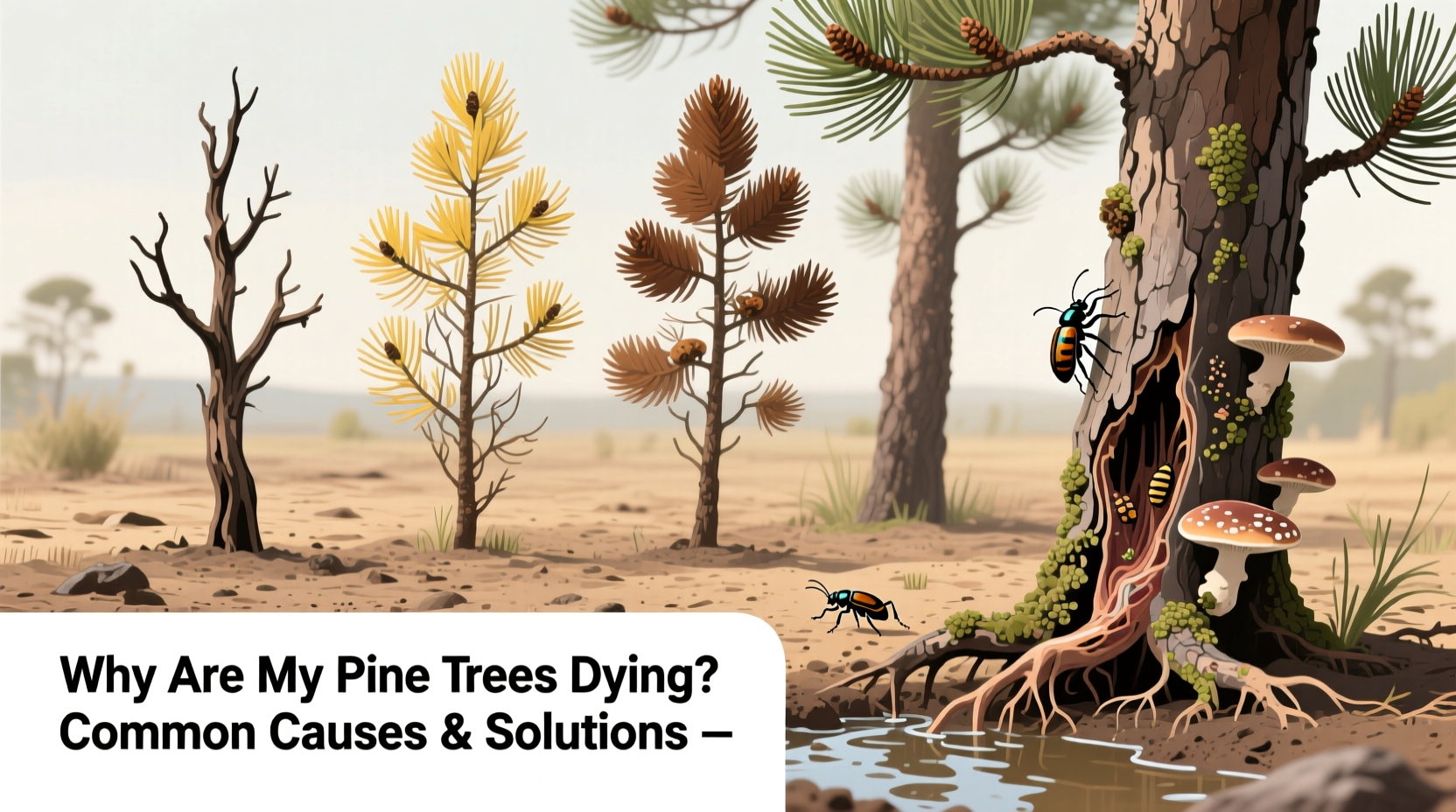
Before identifying causes, recognize the warning signs:
- Browning or yellowing needles, starting at the base or tips
- Premature needle drop outside of fall/winter cycles
- Thin canopy with sparse foliage
- Resin oozing from bark (white or amber)
- Holes, sawdust-like frass, or tunnels in the trunk
- Mushrooms or conks growing at the base
- Brittle, peeling bark
These symptoms may point to disease, insect infestation, poor soil, or improper care. The key is early detection and accurate diagnosis.
Top Causes of Pine Tree Decline and Death
1. Pine Bark Beetles
Pine bark beetles are among the most destructive pests affecting pines. Species like the mountain pine beetle and Ips beetle bore into the bark, disrupting nutrient flow and introducing blue stain fungus. Infested trees often show red needles within weeks.
2. Fungal Diseases
Diseases such as Diplodia tip blight, Dothistroma needle blight, and Fusarium wilt attack different parts of the tree. Dothistroma causes dark bands on needles and premature defoliation, while Diplodia destroys new shoots and cones.
These fungi thrive in humid conditions and spread through rain splash and pruning tools. Overhead watering increases risk.
3. Root Rot and Poor Soil Conditions
Prolonged wet soil leads to root rot caused by pathogens like *Phytophthora*. Symptoms include stunted growth, thinning crowns, and eventual collapse. Compacted clay soils or poor drainage exacerbate the issue.
Pines prefer slightly acidic, well-drained soils. Heavy mulching around the trunk or planting too deep can suffocate roots.
4. Environmental Stress
Drought, extreme temperatures, and winter burn are frequent contributors. Pines suffer during prolonged dry spells, especially if young or recently transplanted. Winter sun and wind cause desiccation when roots can’t absorb water from frozen ground.
Urban environments add challenges: pollution, road salt, and reflected heat from buildings intensify stress.
5. Mechanical Damage and Construction Injury
Lawnmowers, string trimmers, and construction equipment damage bark near the base, creating entry points for disease. Trenching for utilities can sever critical roots, leading to slow decline over years.
“Over 60% of urban tree deaths are linked to root disturbance during construction.” — Dr. Alan Reed, Urban Forestry Specialist, University of Georgia
Step-by-Step Guide to Diagnosing and Treating Sick Pine Trees
- Inspect the Tree Thoroughly: Check needles, bark, trunk, and base. Look for discoloration, holes, sap flow, or mushrooms.
- Assess the Environment: Note recent weather, irrigation habits, nearby construction, or chemical exposure.
- Check for Insects: Use a knife to gently lift loose bark. Look for larvae, galleries, or fine sawdust.
- Test Soil Drainage: Dig a 1-foot hole, fill with water. If it takes more than 4 hours to drain, you have compaction or poor structure.
- Send Samples to a Lab: Contact your local extension office for disease or pest identification.
- Implement Treatment: Based on diagnosis—apply fungicides, adjust watering, or remove severely infected trees.
- Monitor Recovery: Reassess every 4–6 weeks. Improvement may take months.
Effective Solutions and Prevention Strategies
Proper Watering Techniques
Deep, infrequent watering encourages strong root development. For mature pines, apply 1–2 inches of water weekly during drought. Use soaker hoses rather than sprinklers to keep foliage dry and reduce fungal risk.
Pruning and Sanitation
Remove dead or diseased branches with sterilized tools. Prune in late winter or early spring to minimize infection spread. Never top pine trees—this weakens structure and invites pests.
Fungicide and Insecticide Use
Apply copper-based fungicides for Dothistroma or mancozeb for Diplodia, following label instructions. For bark beetles, systemic insecticides like imidacloprid can help—but only on healthy or mildly stressed trees. Severely infested trees should be removed.
Improve Soil Health
Aerate compacted soil with vertical mulching. Add organic matter like compost to improve structure. Avoid piling mulch against the trunk (“volcano mulching”), which promotes rot.
Do’s and Don’ts for Pine Tree Care
| Do | Don't |
|---|---|
| Water deeply once per week during dry periods | Overwater or allow standing water around the base |
| Prune in late winter using clean tools | Prune during active growing season or rainy weather |
| Use 2–3 inches of mulch, keeping it 6 inches from the trunk | Pile mulch high against the trunk |
| Remove and destroy infected plant material | Compost diseased branches near healthy trees |
| Plant resistant varieties like Austrian or Mugo pine in high-risk areas | Plant pines in low-lying, poorly drained areas |
Real-World Example: Saving a Neighborhood Stand of Pines
In Flagstaff, Arizona, a homeowner noticed several ponderosa pines turning red over one summer. Initial suspicion was drought, but upon inspection, small holes and pitch tubes were visible on trunks. A local arborist confirmed an Ips beetle outbreak.
The response included removing three heavily infested trees, applying a preventive pyrethroid spray to remaining healthy pines, and initiating a deep-root watering program. Within a year, no further losses occurred, and surviving trees regained vigor. The key was swift action and integrated pest management.
Frequently Asked Questions
Can a brown pine tree come back to life?
If browning is limited to older needles or isolated branches, recovery is possible with proper care. However, if the entire canopy is brown and no green buds remain, the tree is likely dead and should be removed.
How do I stop pine beetles from spreading?
Remove infested trees before beetles emerge (typically spring). Apply preventive insecticides to high-value trees during peak beetle flight season. Avoid storing cut pine wood near living trees.
Is it normal for pine trees to lose needles?
Yes. Pines shed older needles every 2–3 years, usually in fall. This affects interior needles only. Widespread, rapid needle loss across the whole tree is not normal and requires investigation.
Conclusion: Act Now to Save Your Pines
Pine tree decline is rarely due to a single factor—it's often a combination of stressors that weaken the tree over time. By understanding the common causes and implementing proactive care, you can halt deterioration and preserve these majestic evergreens. Whether it’s adjusting your watering routine, preventing mechanical injury, or treating disease early, every action counts.




 浙公网安备
33010002000092号
浙公网安备
33010002000092号 浙B2-20120091-4
Comments
No comments yet. Why don't you start the discussion?