
Strange noises coming from your plumbing can be more than just an annoyance—they might signal underlying issues that, if ignored, could lead to leaks, water damage, or costly repairs. Whether it's a loud bang when you turn off the faucet, a high-pitched squeal, or persistent rattling under the sink, understanding what’s behind the sound is the first step toward fixing it. Most pipe noises stem from simple mechanical issues that homeowners can diagnose and resolve without calling a plumber.
Common Causes of Noisy Pipes
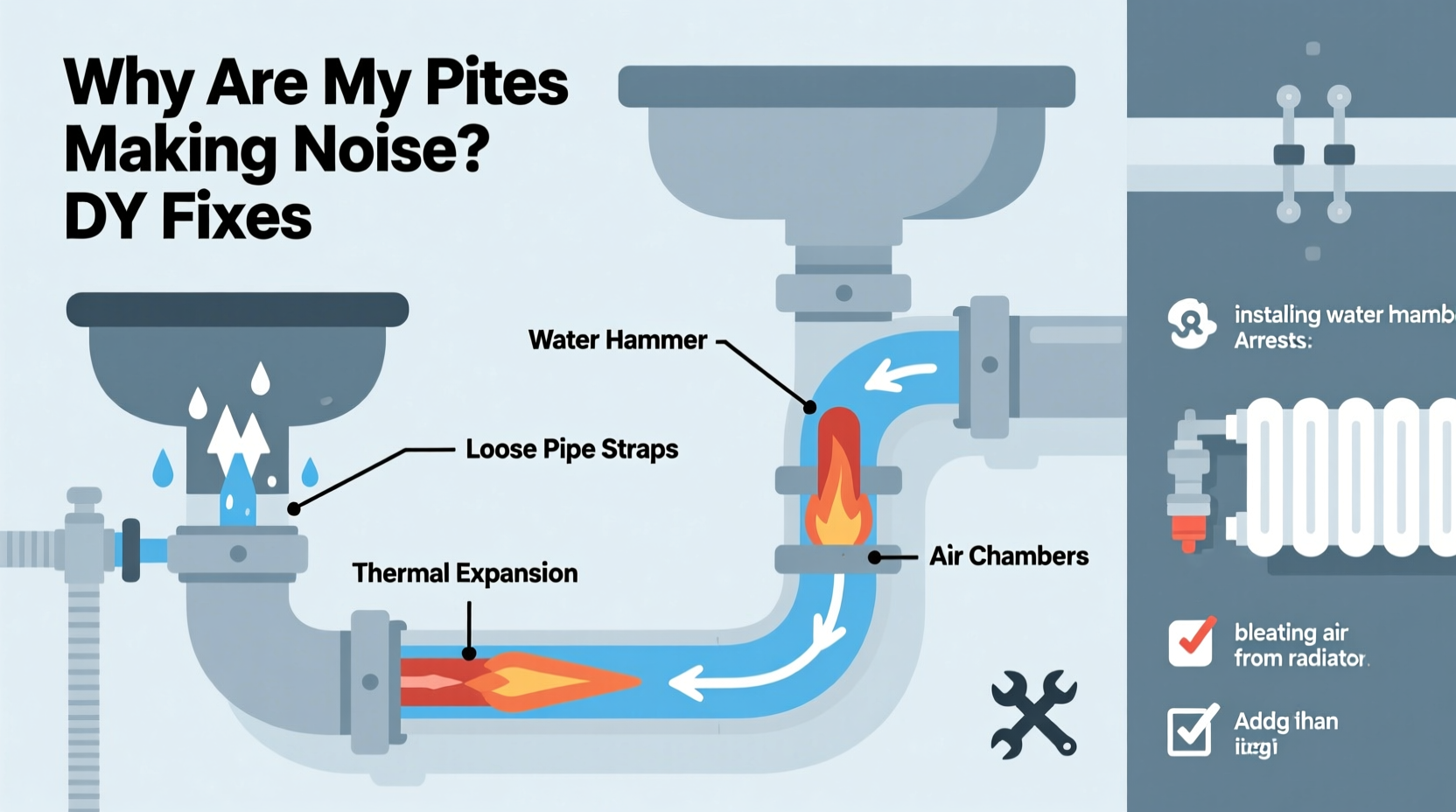
Pipe noise typically falls into three categories: water hammer (loud banging), whistling or squealing, and rattling or vibrating. Each type has distinct causes rooted in water pressure, pipe movement, or fixture wear.
- Water hammer: A sudden, loud thud or bang when taps are shut off quickly. Caused by high water pressure and lack of air cushions in the system.
- Squealing or screeching: High-pitched sounds from faucets or valves, often due to worn washers or cartridge issues.
- Rattling or vibrating: Loose pipes rubbing against framing or supports, especially noticeable when water flows at high volume.
- Gurgling or bubbling: Usually linked to drain venting problems rather than supply lines.
While some noise is normal in older homes, sudden or worsening sounds should be investigated promptly.
Step-by-Step Guide to Diagnose and Fix Noisy Pipes
Follow this logical sequence to identify and resolve the source of pipe noise in your home.
- Isolate the noise location: Determine whether the sound comes from walls, under sinks, near toilets, or throughout the house.
- Note when it occurs: Does it happen when turning water on/off, during appliance use (like washing machines), or continuously?
- Check water pressure: Use a pressure gauge on an outdoor spigot. Ideal range is 40–80 psi. Over 80 psi increases risk of water hammer and fixture damage.
- Inspect visible pipes: Look under sinks and in basements for loose straps, contact with wood, or corrosion.
- Drain the system to reset air chambers: Air chambers absorb shock; when waterlogged, they fail. Draining restores function.
- Test individual fixtures: Replace worn faucet cartridges or valve seats if squealing persists.
How to Drain Your Plumbing System to Fix Water Hammer
Waterlogged air chambers are a leading cause of banging pipes. Restoring trapped air stops shock waves.
- Turn off the main water supply.
- Open all faucets starting from the highest point (e.g., upstairs bathroom) to the lowest (basement or outdoor tap).
- Flush all toilets.
- Wait until water stops draining, then close all faucets.
- Turn main water back on slowly.
- Open faucets one by one to release trapped air (expect sputtering).
This process typically resolves water hammer caused by collapsed air cushions. Repeat annually as preventive maintenance.
DIY Fixes for Specific Pipe Noises
Different sounds require different solutions. Below are targeted fixes based on symptom.
Fixing Rattling or Vibrating Pipes
Loose pipes vibrate against floor joists or wall studs when water flows. The fix involves securing them properly.
- Locate accessible sections (under sinks, in basements).
- Add foam insulation sleeves around metal pipes to dampen vibration.
- Install or tighten pipe straps every 4–6 feet for horizontal runs, 8–10 feet for vertical.
- Use rubber-lined hangers instead of metal-on-metal contacts.
Stopping Squealing Faucets and Valves
Squealing usually originates in the fixture, not the pipes themselves. Common culprits include:
- Worn rubber washers in compression faucets
- Failing ceramic cartridges in modern faucets
- Partially closed angle stops (shut-off valves)
To fix:
- Shut off water supply under the sink.
- Disassemble the faucet handle and remove the cartridge or stem.
- Inspect for cracks, warping, or mineral buildup.
- Replace the component with an OEM part (match model number).
- Reassemble and test slowly.
If the noise occurs when only hot water is used, check the water heater’s temperature and pressure relief valve—it may be releasing excess pressure.
Do’s and Don’ts When Dealing with Noisy Pipes
| Do’s | Don’ts |
|---|---|
| Check water pressure regularly using a gauge | Ignore persistent banging—it can damage joints over time |
| Secure loose pipes with proper strapping | Over-tighten pipe clamps, which can crush copper or PVC |
| Drain the system annually to refresh air chambers | Use Teflon tape on compression fittings—it weakens seals |
| Replace worn washers and cartridges promptly | Assume all noise is harmless “old house charm” |
“Many homeowners dismiss pipe noise as inevitable, but consistent banging can loosen joints, crack solder, and eventually lead to leaks. Addressing it early saves thousands in water damage.” — Daniel Ruiz, Master Plumber & HVAC Technician
Real Example: Fixing a Noisy Washing Machine Supply Line
Mark, a homeowner in Portland, noticed a loud knocking sound every time his washing machine filled. The noise echoed through the kitchen above the laundry room. He initially thought it was structural, but after isolating the timing to the fill cycle, he suspected water hammer.
He tested water pressure at an outdoor spigot and found it at 92 psi—well above the recommended limit. After installing a pressure-reducing valve and draining the plumbing system to restore air chambers, the banging stopped completely. He also added rubber isolation pads under the washing machine hoses to reduce vibration transmission.
The total cost was under $50, and the fix took less than two hours. Mark now checks his water pressure twice a year and recommends others do the same.
When to Call a Professional
While most pipe noise can be fixed DIY, certain situations require expert help:
- Water pressure consistently above 80 psi despite regulator installation
- Recurring gurgling in drains, indicating blocked or improperly installed vent stacks
- Corroded or leaking pipes behind walls
- Noise accompanied by reduced water flow or fluctuating pressure
A licensed plumber can install a water hammer arrestor, adjust or replace a failing pressure regulator, or re-vent drain lines—all critical interventions beyond basic DIY scope.
FAQ
Why do my pipes bang only at night?
Nighttime banging is often due to higher water pressure when municipal demand drops. It may also coincide with dishwasher or washing machine cycles running automatically. Check if your home’s pressure exceeds 80 psi during off-peak hours.
Can noisy pipes cause a leak?
Yes. Persistent water hammer creates repeated stress on joints and fittings, which can fatigue soldered connections or weaken threaded seals over time. Left unaddressed, this leads to pinhole leaks or joint failure.
Are plastic (PEX) pipes quieter than copper?
Generally, yes. PEX is more flexible and absorbs vibration better than rigid copper. However, improper installation—such as over-tightened clips or lack of expansion space—can still cause noise in PEX systems.
Conclusion: Take Control of Your Home’s Plumbing Health
Noisy pipes aren’t something to live with—they’re signals your plumbing system needs attention. From simple fixes like tightening a strap or replacing a washer to resetting air chambers and monitoring water pressure, most solutions are affordable and within reach of any motivated homeowner. Ignoring the symptoms risks long-term damage, while proactive care ensures quiet, efficient, and durable plumbing.




 浙公网安备
33010002000092号
浙公网安备
33010002000092号 浙B2-20120091-4
Comments
No comments yet. Why don't you start the discussion?