
Towels should feel soft, absorbent, and inviting—like a warm hug from the linen closet. But if yours come out of the wash feeling more like sandpaper than spa luxury, something’s gone wrong in the laundry process. While many assume fabric softeners or dryers are the key to fluffiness, the real culprit often lies in how detergent is used—or misused. From overloading detergent to skipping rinses, small oversights can lead to stiff, scratchy towels that lose their comfort and absorbency over time.
Understanding the science behind towel texture helps clarify what goes wrong during washing. Cotton fibers, especially in high-pile bath towels, rely on being clean yet flexible. When detergent residue builds up, minerals from hard water coat the fibers, or heat damages the fabric structure, towels lose their softness. The good news? Most of these issues are preventable with smarter detergent habits and proper laundering techniques.
The Science Behind Towel Stiffness
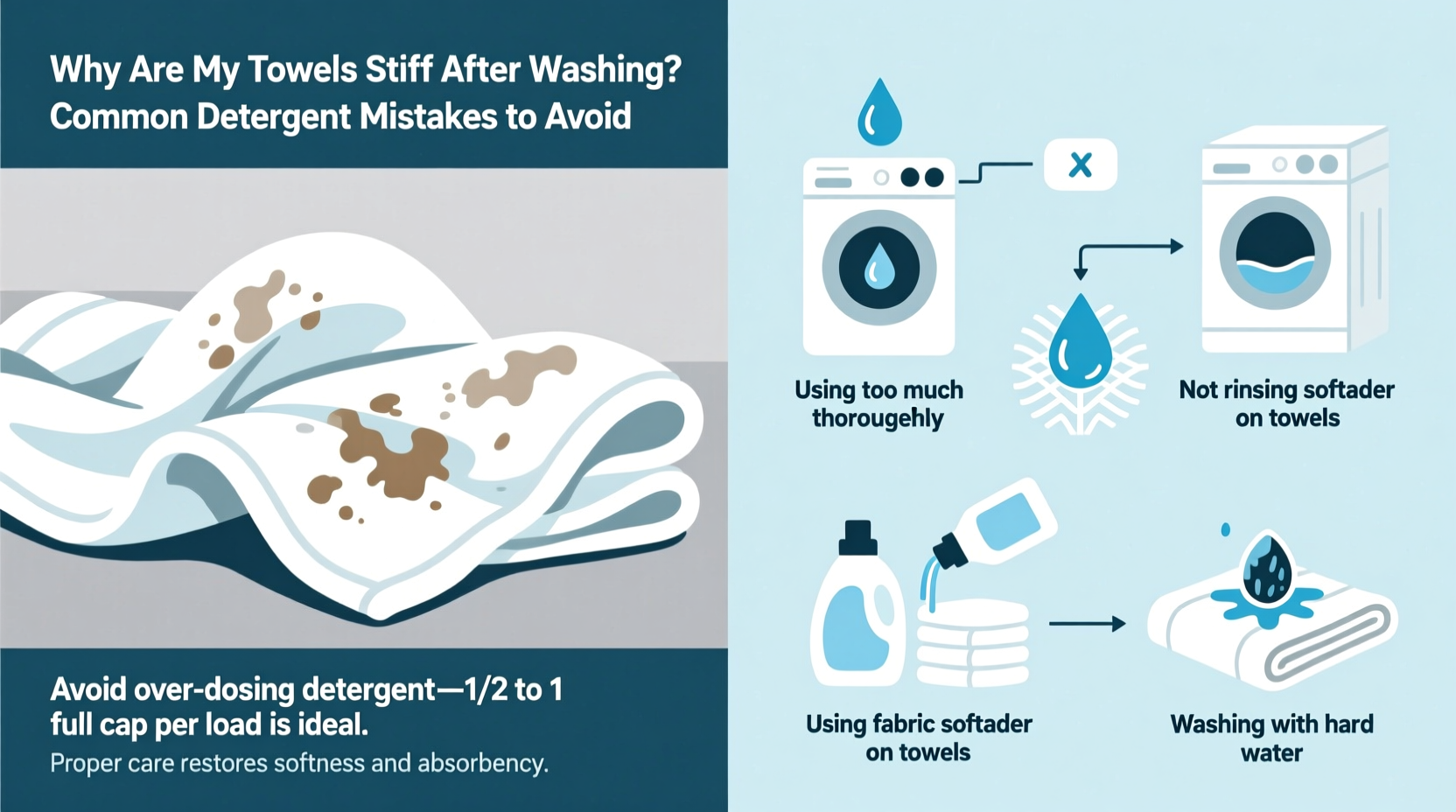
When towels emerge stiff from the washer or dryer, it’s rarely due to a single factor. Instead, it’s usually a combination of chemical residue, mechanical stress, and environmental conditions. Detergent plays a central role because it interacts directly with fabric fibers during the wash cycle.
Detergents work by breaking down oils, sweat, and dirt using surfactants—chemicals that reduce surface tension and suspend grime in water. However, when too much detergent is used, or the machine doesn’t rinse thoroughly, these surfactants remain trapped in the fibers. As the towel dries, the leftover detergent crystallizes, creating a rigid coating that makes the fabric feel rough and less absorbent.
Additionally, detergents often contain fillers, enzymes, brighteners, and fragrances that don’t always rinse away completely—especially in high-efficiency (HE) machines with low water usage. Over time, this buildup accumulates, layer upon layer, until the towel feels more like cardboard than cotton.
“Residue retention is the silent killer of towel quality. Many people think they’re cleaning their towels, but they’re actually coating them.” — Dr. Linda Park, Textile Chemist at the American Cleaning Institute
5 Common Detergent Mistakes That Make Towels Stiff
Avoiding these frequent errors can dramatically improve the softness and lifespan of your towels:
1. Using Too Much Detergent
This is the most widespread mistake. Manufacturers design modern detergents to be highly concentrated, meaning only a small amount is needed per load. Yet many people pour generously, believing “more soap = cleaner clothes.” In reality, excess detergent overwhelms the rinse cycle. The washer can’t flush it all out, leaving behind sticky residues that stiffen fibers.
2. Not Adjusting for Water Hardness
Hard water contains high levels of calcium and magnesium ions. These minerals react with detergent to form insoluble compounds (essentially soap scum) that bind to fabric. The result? A chalky film on towels that reduces softness and absorbency. If you live in a hard water area and don’t use a water softener or detergent booster, stiffness is almost inevitable.
3. Relying on Liquid Fabric Softeners Too Often
Liquid fabric softeners coat fibers with a waxy layer to reduce friction and add fragrance. While this creates temporary softness, repeated use leads to buildup that clogs the pores of cotton loops, making towels less absorbent and eventually stiff. Worse, this residue is difficult to remove and can trap odors.
4. Using Detergents with Heavy Additives
Fragrance-heavy, stain-boosting, or “ultra-clean” detergents often contain dyes, optical brighteners, and extra surfactants that don’t fully rinse out. These additives may make towels smell nice or look brighter, but they compromise long-term texture. For towels, simplicity wins: choose free-and-clear, low-sudsing formulas designed for sensitive skin or HE machines.
5. Skipping an Extra Rinse Cycle
Standard wash cycles may not fully eliminate detergent, especially in large or heavily soiled loads. Without a thorough rinse, residues linger. An additional rinse—either manually selected or via the “extra rinse” button on your machine—can flush out lingering chemicals and dramatically improve softness.
Do’s and Don’ts: Towel Washing Best Practices
| Do | Don’t |
|---|---|
| Use half the recommended detergent dose for regular loads | Overfill the detergent drawer or scoop |
| Wash towels in warm water (not hot) to preserve fibers | Use boiling water frequently—it weakens cotton over time |
| Add ½ cup white vinegar to the rinse cycle monthly to dissolve buildup | Mix vinegar and bleach—they create toxic fumes |
| Tumble dry on medium heat with wool dryer balls | Over-dry towels on high heat, which causes fiber brittleness |
| Wash towels separately from clothes to prevent lint transfer and allow full agitation | Wash towels with zippers, Velcro, or rough fabrics that cause pilling |
Step-by-Step Guide to Reviving Stiff Towels
If your current towel collection has already turned rigid, don’t throw them out. You can restore softness with a deep-cleaning reset. Follow this four-week plan to strip away years of buildup:
- Week 1 – Vinegar Wash: Wash towels in warm water with 1 cup of distilled white vinegar and no detergent. Vinegar dissolves mineral deposits and breaks down oily residues without damaging fibers.
- Week 2 – Baking Soda Refresh: Run a second cycle using ½ cup baking soda instead of detergent. Baking soda lifts stubborn odors and neutralizes pH, helping fibers relax.
- Week 3 – Light Detergent Clean: Use only 1 tablespoon of gentle, dye-free detergent. This light pass removes any loosened debris while re-cleaning the fabric safely.
- Week 4 – Air Dry & Assess: Hang towels to dry naturally. Air drying prevents heat-induced stiffness and allows you to evaluate softness. Repeat the cycle if needed.
After restoration, maintain softness by washing towels every 3–4 uses, avoiding fabric softeners, and using minimal detergent. Store them in a dry, ventilated space to prevent mustiness.
Real Example: How Sarah Fixed Her Family’s Scratchy Towels
Sarah, a mother of three in suburban Ohio, noticed her kids were avoiding the bathroom after baths. “They’d step out and immediately grab hooded robes,” she said. “I thought maybe they were just being dramatic—until I touched the towels myself.” They felt coarse, almost papery.
She was using a popular brand-name liquid detergent, double-dosing because her family generates heavy soil. She also added fabric softener every time, convinced it made things softer. After reading about detergent buildup, she tried the vinegar wash method. On the first post-vinegar dry, her daughter exclaimed, “These feel like hotel towels!”
Sarah now uses only one capful of detergent per large load and runs a vinegar rinse once a month. Her towels have regained their fluffiness—and her kids no longer dread drying off.
Checklist: Soft Towel Maintenance Routine
- ✅ Use only the minimum effective amount of detergent
- ✅ Choose fragrance-free, low-sudsing detergent for towels
- ✅ Wash towels separately from other laundry
- ✅ Add white vinegar to the rinse cycle monthly
- ✅ Avoid liquid fabric softeners; opt for wool dryer balls instead
- ✅ Select “extra rinse” on your washing machine
- ✅ Dry on medium heat with good airflow
- ✅ Deep clean stiff towels quarterly using vinegar and baking soda
- ✅ Replace towels every 2–3 years, even with care
Frequently Asked Questions
Can I use dryer sheets instead of liquid softener?
Dryer sheets are slightly better than liquid softeners because they deposit less residue, but they still leave behind fatty coatings that reduce absorbency over time. Wool dryer balls are the best alternative—they soften towels mechanically by separating fibers during drying and reduce static without chemicals.
Why do my towels smell musty even after washing?
Musty odors often indicate trapped moisture and bacterial growth caused by detergent or softener buildup. Residues retain humidity, creating a breeding ground for mildew. To fix this, wash towels with vinegar or a small amount of oxygen bleach (not chlorine), then ensure they are fully dried. Never store damp towels.
Is it better to air dry or machine dry towels?
Air drying preserves fibers and prevents heat-related stiffness, but it takes longer and may result in a rougher hand feel due to fiber clumping as they dry. Machine drying on medium heat with dryer balls fluffs the pile and restores loft. For best results, combine both: partially air dry, then finish in the dryer for 10–15 minutes.
Conclusion: Towels Deserve Better Than Harsh Habits
Towels don’t stiffen because they’re old or cheap—they stiffen because we treat them like ordinary laundry. In reality, they need specialized care to maintain softness, absorbency, and longevity. By correcting simple detergent mistakes—using too much, choosing the wrong type, or neglecting rinsing—you can transform scratchy linens back into plush, spa-like essentials.
Start today: measure your detergent, skip the softener, and give your next load an extra rinse. Your skin will notice the difference. And if you’ve already fallen victim to residue buildup, the revival process works—many users report towels feeling newer after a proper strip than they did fresh out of the package.




 浙公网安备
33010002000092号
浙公网安备
33010002000092号 浙B2-20120091-4
Comments
No comments yet. Why don't you start the discussion?