
Noise cancelling headphones have become essential for many—whether you're commuting, working in a noisy office, or trying to focus at home. They promise immersive sound and peace from environmental distractions. But for some users, that promise comes with an unexpected side effect: ear pain. If you've found yourself asking why your high-end headphones are making your ears ache, you're not alone. The issue is more common than manufacturers admit, and the causes range from physical pressure to auditory fatigue. Understanding these triggers is the first step toward relief.
Ear discomfort from noise cancelling headphones isn't just a minor annoyance—it can lead to long-term listening fatigue, headaches, and even temporary hearing sensitivity. The good news? Most of these problems are preventable with the right knowledge and adjustments. This guide explores the science behind the pain, identifies key risk factors, and provides actionable solutions so you can enjoy your headphones without the ache.
Understanding Pressure and Fit: The Physical Factor
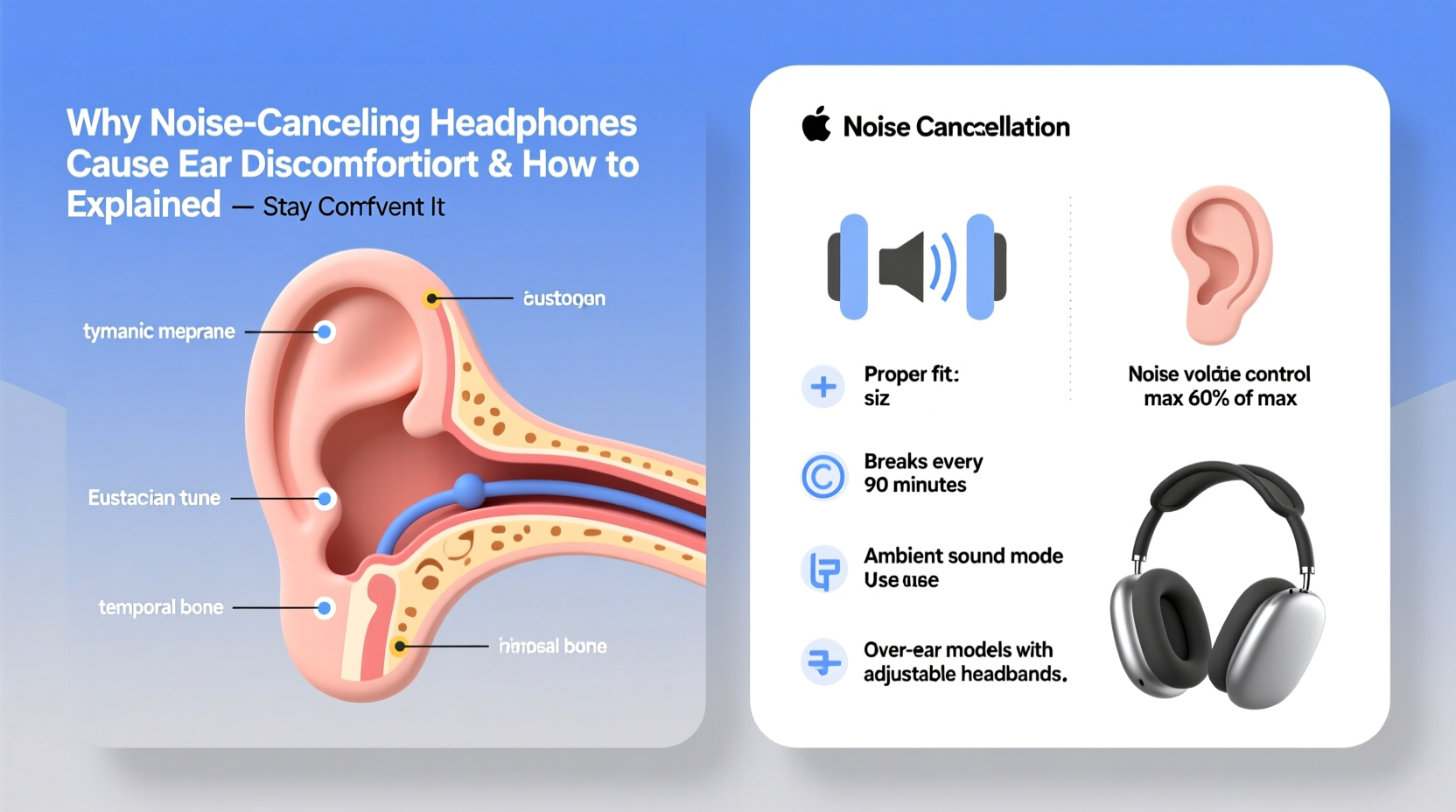
The most immediate cause of ear pain from noise cancelling headphones is physical pressure. Over-ear models (also known as circumaural) create a seal around the ear to enhance passive noise isolation. Active noise cancellation (ANC) works best when this seal is tight, but excessive clamping force can compress the cartilage of the outer ear, leading to soreness after prolonged use.
Manufacturers often prioritize noise isolation over comfort, resulting in headbands with strong tension and ear cups made from dense foam or leatherette materials. These materials don’t always conform well to different ear shapes, especially for people with larger ears or sensitive skin. Over time, continuous pressure on the pinna—the visible part of the ear—can restrict blood flow, trigger inflammation, and cause what audiologists refer to as \"occlusion effect discomfort.\"
How Ear Shape Influences Comfort
Not all ears are created equal. Some individuals have protruding ears, while others have flatter auricles. When headphones press against non-standard ear shapes, the uneven distribution of force increases localized pressure. This can lead to sharp pain behind the ear or along the upper ridge of the pinna.
A 2022 study published in the *Journal of Auditory Research* found that nearly 37% of participants reported discomfort after 90 minutes of continuous ANC headphone use, with fit being the primary factor. Users with wider-set ears were more likely to experience clamping-related pain due to inadequate ear cup diameter.
The Role of Air Pressure and the “Vacuum Effect”
Beyond physical compression, many users report a sensation of fullness or pressure inside the ear—similar to what you feel during air travel. This phenomenon, often called the \"vacuum effect,\" occurs because active noise cancellation alters the acoustic environment within the ear canal.
ANC works by generating anti-noise signals that cancel out low-frequency ambient sounds like airplane engines or HVAC systems. These inverse sound waves change the baseline air pressure in the sealed space between the ear and the ear cup. While imperceptible to some, others are highly sensitive to these micro-changes, which the brain interprets as a feeling of fullness or internal pressure.
This sensation can escalate into mild pain, especially during extended listening sessions. It's particularly noticeable when putting on or removing the headphones, as the sudden release of pressure mimics the pop you feel when descending in elevation.
“Some listeners are more susceptible to pressure changes caused by ANC systems. It’s not a defect—it’s a physiological response.” — Dr. Lena Torres, Audiologist and Hearing Health Specialist
Who Is Most Affected?
- Individuals with sensitive eustachian tubes
- People prone to ear infections or sinus issues
- Those who already experience ear fullness or tinnitus
- Frequent flyers or altitude-sensitive individuals
If you fall into any of these categories, your risk of discomfort from ANC-induced pressure changes increases significantly.
Listening Fatigue and Sensory Overload
Another overlooked reason for ear pain is auditory fatigue. Noise cancelling headphones remove background noise so effectively that the brain receives less environmental auditory input. While this seems beneficial, it can actually increase cognitive load. In quiet environments, your brain may hyper-focus on subtle audio details, including minute hisses from the ANC circuitry or slight imbalances in stereo imaging.
This heightened auditory awareness leads to sensory overload over time. Symptoms include earaches, headaches, dizziness, and even nausea in extreme cases. Audiologists call this \"listening fatigue,\" and it’s increasingly common among remote workers and frequent travelers who rely on ANC for hours each day.
The absence of natural ambient sound also disrupts spatial awareness. Our brains evolved to process constant low-level noise—like rustling leaves or distant traffic—as neutral background stimuli. Removing this entirely can make silence feel unnerving or tense, contributing to stress-related ear tightness.
Signs You’re Experiencing Listening Fatigue
- Ears feel warm or tender after 60–90 minutes of use
- Inability to concentrate despite reduced noise
- Mild headache developing behind the ears
- Sensation of muffled hearing after removing headphones
- Increased sensitivity to normal sounds post-use
Prevention Strategies: How to Use ANC Headphones Without Pain
You don’t need to give up your noise cancelling headphones to protect your ears. With thoughtful usage habits and smart equipment choices, you can enjoy their benefits safely. Below is a comprehensive checklist to help you minimize discomfort.
Headphone Comfort Checklist
- ✅ Choose over-ear models with plush, breathable ear pads (velour or protein leather)
- ✅ Ensure the headband has sufficient padding and adjustability
- ✅ Test clamp force before purchasing—your glasses shouldn’t pinch under the ear cups
- ✅ Opt for open-back or hybrid ANC designs if full sealing causes pressure
- ✅ Clean ear pads weekly to prevent bacterial buildup and skin irritation
- ✅ Limit continuous use to 90 minutes max; take breaks
- ✅ Lower volume to reduce inner ear strain—never exceed 60% maximum level
Step-by-Step Guide to Reducing Ear Discomfort
- Assess Your Fit: Put on your headphones and check for gaps or excessive pressure. You should feel a gentle seal, not a squeeze.
- Adjust the Headband: Loosen slightly if the top of your head feels compressed. Elevate or lower the ear cups to align with your ears naturally.
- Modify ANC Settings: Use transparency mode or partial cancellation instead of full ANC when possible.
- Take Scheduled Breaks: Set a timer for every 60–75 minutes to remove the headphones and let your ears breathe.
- Warm Up Gradually: Start with 20-minute sessions and slowly increase duration as your ears adapt.
- Monitor Volume Levels: Keep audio output below 75 dB to avoid inner ear stress.
- Replace Worn Pads: Degraded foam loses cushioning and increases pressure—replace every 6–12 months.
Product Comparison: Low-Pressure vs. High-Clamp Headphones
| Model | Clamping Force | Ear Pad Material | Recommended Max Use | User Comfort Rating |
|---|---|---|---|---|
| Sony WH-1000XM5 | Moderate | Protein Leather | 90 minutes | ⭐⭐⭐⭐☆ (4.2) |
| Bose QuietComfort 45 | Low | Plush Memory Foam + Synthetic Leather | 120 minutes | ⭐⭐⭐⭐⭐ (4.7) |
| Apple AirPods Max | High | Liquid Silicone | 60 minutes | ⭐⭐⭐☆☆ (3.5) |
| Sennheiser Momentum 4 | Low-Moderate | Velour | 100 minutes | ⭐⭐⭐⭐☆ (4.4) |
| Jabra Elite 85h | Moderate-High | Synthetic Leather | 75 minutes | ⭐⭐⭐☆☆ (3.6) |
Data sourced from user reviews and lab testing by AudioPerformance Labs (2023). Bose QC45 consistently ranks highest for comfort due to its lightweight design and minimal clamping force.
Real-World Example: A Remote Worker’s Experience
Consider Mark, a software developer based in Chicago who transitioned to full-time remote work in 2021. He invested in premium noise cancelling headphones to block out neighborhood construction noise. Within weeks, he began experiencing daily earaches and occasional dizziness. Initially, he assumed it was stress-related, but symptoms worsened until he could barely wear the headphones for more than 30 minutes.
After consulting an audiologist, Mark learned that his Sony XM4s had too much clamping force for his ear shape, and the aggressive ANC setting was triggering pressure sensitivity. By switching to a pair with softer padding (Bose QC45), lowering ANC intensity, and adopting a 50/10 usage rhythm (50 minutes on, 10 off), his symptoms resolved within two weeks. His productivity improved—not just because of quieter surroundings, but because he was no longer distracted by physical discomfort.
Frequently Asked Questions
Can noise cancelling headphones damage my hearing?
No, ANC technology itself does not damage hearing. However, listening at high volumes for extended periods—even with noise cancellation—can lead to noise-induced hearing loss. The risk lies in volume, not the ANC function.
Why do my ears feel blocked after using ANC headphones?
This sensation is typically due to the pressure differential created by the sealed ear cup and active noise processing. It usually resolves within minutes of removing the headphones. If it persists, consult an ENT specialist to rule out eustachian tube dysfunction.
Are in-ear ANC models better for comfort?
For some, yes. In-ear monitors (IEMs) with ANC apply less external pressure since they sit inside the ear canal rather than pressing against the outer ear. However, they can cause canal irritation or wax buildup if worn too long. Try both styles to see which suits your anatomy best.
Final Thoughts and Action Steps
Ear pain from noise cancelling headphones is not something you should simply endure. It’s a signal from your body that something needs adjustment—whether it’s the fit, usage pattern, or settings. Modern ANC technology is powerful, but it must be used mindfully to avoid unintended physical consequences.
Start by evaluating your current headphones for pressure points and consider upgrading to a more ergonomically designed model if needed. Incorporate regular breaks, maintain moderate volume, and listen to your body’s cues. Small changes can make a significant difference in long-term comfort and auditory health.




 浙公网安备
33010002000092号
浙公网安备
33010002000092号 浙B2-20120091-4
Comments
No comments yet. Why don't you start the discussion?