
Oat milk lattes have surged in popularity over the past few years, becoming a staple on café menus from Brooklyn to Berlin. But anyone who’s ordered one at a coffee shop has likely noticed something: they often cost $1–$2 more than their traditional dairy counterparts. This price gap raises a simple but increasingly relevant question—why are oat milk lattes so expensive compared to dairy versions?
The answer isn’t just about premium branding or trendy consumerism. It's rooted in real economic, logistical, and production factors that affect every step of the supply chain—from oat farming to barista steaming. Understanding these elements reveals a complex picture behind that extra charge on your receipt.
Production Costs: The Foundation of the Price Gap
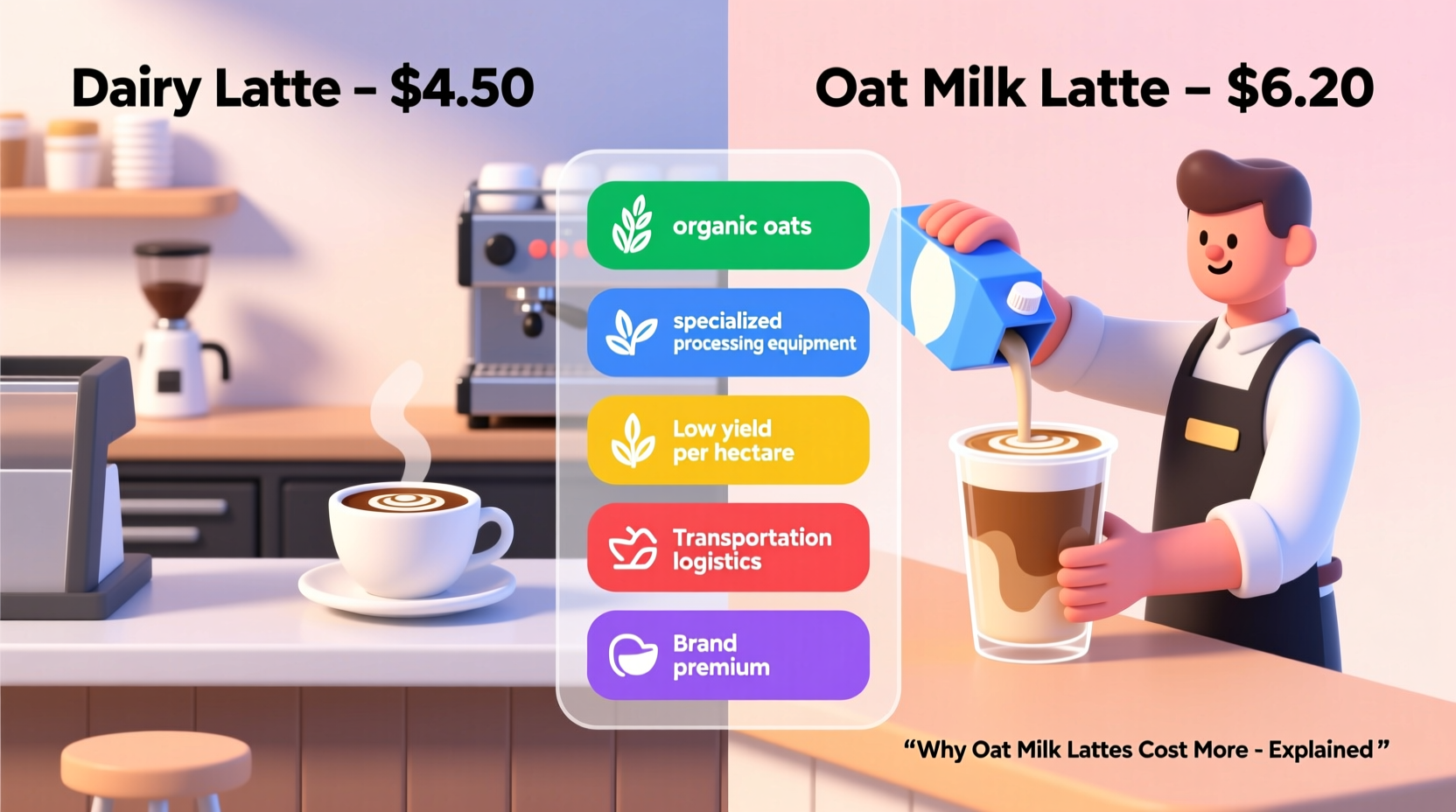
At first glance, oats seem like a low-cost grain. They’re widely grown across North America and Europe, require less water than almonds, and don’t need the intensive animal husbandry that dairy does. However, turning raw oats into barista-grade oat milk is a surprisingly energy- and resource-intensive process.
Unlike cow’s milk, which comes directly from animals with minimal processing (pasteurization and homogenization), oat milk must be manufactured from scratch. The typical production involves:
- Soaking whole oats in water
- Blending them into a slurry
- Enzymatically breaking down starches into sugars for better texture and sweetness
- Filtration to remove fibrous solids
- Addition of oils, stabilizers, vitamins, and emulsifiers
- Pasteurization and packaging
This multi-step process requires specialized equipment, precise temperature control, and food science expertise. Companies like Oatly invest heavily in proprietary enzyme technology to create a creamy, foam-friendly product that mimics dairy milk—especially crucial for latte preparation. These R&D and manufacturing investments drive up baseline production costs.
Supply Chain and Distribution Challenges
While dairy milk benefits from a century-old infrastructure—refrigerated trucks, established dairies, and widespread distribution networks—oat milk operates within a newer, less optimized system. Most oat milk is produced in centralized facilities, often located far from major consumer markets.
For example, Oatly’s primary U.S. production plant is in New Jersey, but demand spikes in cities like Los Angeles, Seattle, and Denver. Shipping refrigerated cartons across the country adds significant logistics expenses. In contrast, regional dairy cooperatives can deliver fresh milk locally within hours, reducing fuel, storage, and spoilage costs.
Additionally, oat milk typically comes in shelf-stable Tetra Pak containers, which are recyclable but more expensive than standard plastic jugs used for conventional milk. The packaging itself includes multiple layers (plastic, aluminum, paper) to preserve freshness without refrigeration until opened—adding to material and manufacturing costs.
Dairy farms also benefit from government subsidies in countries like the United States, where milk pricing is partially stabilized through federal programs. Plant-based alternatives receive no such support, leaving producers to absorb market volatility independently.
Market Demand and Brand Positioning
Consumer demand plays a powerful role in pricing. As environmental awareness and lactose intolerance rise, oat milk has become the preferred non-dairy option in many urban cafés. According to market research firm IRI, oat milk accounted for nearly 40% of the U.S. plant-based milk market in 2023, despite representing only a fraction of total milk sales.
High demand allows brands to position oat milk as a premium product. Cafés, in turn, pass those costs to customers while capitalizing on perceived health and sustainability benefits. A 2022 survey by the National Coffee Association found that 68% of specialty coffee drinkers were willing to pay extra for plant-based milk options, especially oat.
This willingness creates pricing power. While wholesale dairy milk costs an average of $0.70–$1.00 per liter for cafés, oat milk can range from $1.80 to $2.50 per liter—more than double. That difference is reflected directly in the final drink price.
| Milk Type | Average Café Wholesale Cost (per liter) | Lifespan (Unopened) | Subsidized? |
|---|---|---|---|
| Whole Dairy Milk | $0.70 – $1.00 | 14–21 days (refrigerated) | Yes (U.S.) |
| Oat Milk (Barista) | $1.80 – $2.50 | 6–12 months (shelf-stable) | No |
| Almond Milk | $1.20 – $1.70 | 7–10 days (refrigerated) | No |
| Soy Milk | $1.00 – $1.50 | 7–14 days (refrigerated) | No |
The table illustrates not only cost differences but also structural disparities. Oat milk’s longer shelf life reduces waste, which can offset some expense—but the initial purchase price remains high due to production intensity and brand premiums.
Environmental Claims vs. Real-World Impact
Many consumers choose oat milk believing it’s both eco-friendly and affordable. While oats do have a lower carbon footprint than dairy—Oatly claims its milk produces 73% less CO₂ than cow’s milk—the sustainability narrative doesn’t eliminate cost drivers.
In fact, efforts to improve sustainability sometimes increase costs. For instance, Oatly uses renewable energy in its Swedish factories and sources non-GMO oats, both of which raise production expenses. Similarly, companies investing in regenerative agriculture partnerships or carbon labeling add overhead that filters down to retailers and cafés.
“Sustainable scaling is expensive. We’re building new systems from the ground up—no existing playbook.” — Sarah Wu, Food Systems Analyst at the Good Food Institute
Moreover, the “oat boom” has led to increased competition for high-quality grain. Farmers may charge more for food-grade oats when demand from milk manufacturers rises, further inflating input costs. Unlike dairy, where supply is relatively stable through herd management, plant-based milk producers are subject to annual crop yields and global grain markets.
Mini Case Study: The Brooklyn Café Dilemma
Consider \"Hearth & Bean,\" a small specialty café in Williamsburg, Brooklyn. Since 2020, oat milk orders have climbed from 15% to nearly 50% of all espresso drinks. Owner Lena Torres initially welcomed the shift, seeing it as a sign of evolving customer preferences.
But profits began to shrink. “We were selling twice as many oat lattes, but our milk costs tripled,” she explains. “A gallon of organic whole milk costs us $4.50. A four-pack of Oatly Barista costs $12—and it makes fewer drinks.”
To maintain margins, Hearth & Bean raised the price of oat milk upgrades from $0.75 to $1.50 per drink. Some customers complained, but sales held steady. “People expect a premium for plant-based,” says Torres. “But if oat milk were priced like dairy, we’d either lose money or have to cut staff hours.”
This scenario reflects a broader trend: independent cafés face tough trade-offs between sustainability goals, customer satisfaction, and financial viability when offering oat milk.
Step-by-Step: How a Café Prices a Milk Upgrade
Understanding how cafés set prices helps explain the final cost to consumers. Here’s a realistic breakdown of how a $1.50 oat milk surcharge is justified:
- Wholesale Purchase: Café buys Oatly Barista (1L) for $2.20.
- Usage per Drink: A standard latte uses ~150ml of milk = $0.33 in oat milk cost.
- Waste Factor: 10% spoilage or spillage adds $0.03.
- Labor & Equipment: Steaming, cleaning steam wands, handling separate pitchers = $0.40.
- Overhead Allocation: Rent, utilities, insurance prorated per drink = $0.25.
- Profit Margin: Minimum 30% markup on add-ons = $0.49.
Total: $0.33 + $0.03 + $0.40 + $0.25 + $0.49 = $1.50
In contrast, dairy milk costs about $0.15 per latte, with lower labor differentiation and existing infrastructure—making it feasible to include at no extra charge.
FAQ
Will oat milk lattes ever be as cheap as dairy lattes?
Possibly, but not soon. Widespread cost parity would require massive scaling of production, reduced ingredient costs, and potentially policy changes like subsidies for plant-based foods. Until then, economies of scale remain limited.
Is homemade oat milk cheaper?
Yes—for personal use. Making oat milk at home costs roughly $0.50–$0.70 per liter in ingredients. However, it lacks the stabilizers and emulsifiers needed for proper coffee integration, often resulting in separation or poor foam. It’s economical but not café-functional.
Are other plant milks cheaper than oat?
Sometimes. Soy and almond milk are generally less expensive for cafés, though they come with their own drawbacks (allergens, environmental concerns). Coconut milk is rarely used in lattes due to strong flavor. Oat strikes a balance between taste, performance, and ethics—which justifies its premium positioning.
Checklist: Reducing Oat Milk Costs (For Cafés and Consumers)
- Buy oat milk in bulk from distributors to reduce per-unit cost
- Negotiate contracts with suppliers for volume discounts
- Educate customers on why surcharges exist to reduce friction
- Use standardized portion controls to minimize waste
- Consider offering a house-made oat blend (with proper stabilizers) for lower long-term costs
- For consumers: order larger sizes to reduce cost per ounce, or make oat lattes at home using affordable barista blends
Conclusion
The higher price of oat milk lattes isn’t arbitrary. It reflects genuine differences in production complexity, supply chain maturity, market dynamics, and operational demands. While dairy benefits from decades of infrastructure and policy support, oat milk is still navigating the challenges of rapid growth and innovation.
As consumer demand continues to evolve, there’s hope that scaling and technological advances will narrow the gap. In the meantime, understanding the reasons behind the price can help both café owners and customers make informed choices—appreciating not just the taste, but the effort behind every creamy, sustainable sip.




 浙公网安备
33010002000092号
浙公网安备
33010002000092号 浙B2-20120091-4
Comments
No comments yet. Why don't you start the discussion?