
Drive an hour or more outside a major city, and you might suddenly find yourself at a sprawling complex of brand-name stores offering deep discounts. These outlet malls—often nestled between highway exits and cornfields—seem oddly placed. Why build massive retail destinations where few people live? The answer lies in a calculated blend of real estate economics, consumer psychology, and brand strategy. Outlet malls aren’t poorly planned; they’re deliberately isolated to serve specific business goals.
The Real Estate Advantage: Lower Costs, Larger Spaces
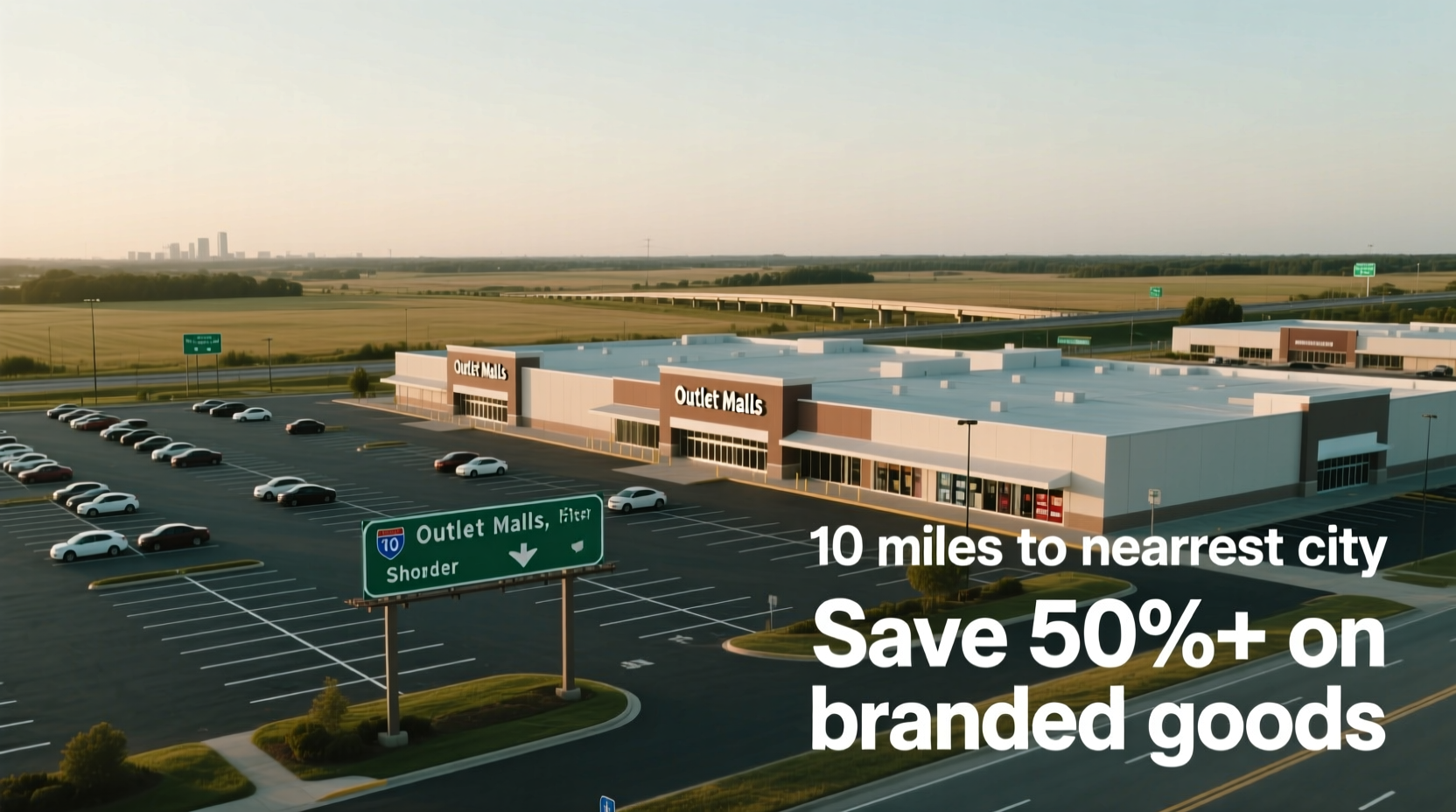
One of the primary reasons outlet malls are built in remote areas is cost efficiency. Land in urban centers or even suburban downtowns comes with high price tags and zoning restrictions. In contrast, rural or semi-rural locations offer vast tracts of inexpensive land. Developers can acquire hundreds of acres for a fraction of what it would cost near a city.
This affordability allows for expansive layouts. Unlike traditional malls constrained by space, outlet centers feature wide parking lots, open-air walkways, and standalone buildings that mimic small-town streetscapes. These design elements enhance the shopping experience but require significant acreage—something only available on the outskirts.
Tax Incentives and Municipal Cooperation
Local governments in less populated areas often welcome outlet developments as economic boosters. A single outlet mall can create hundreds of jobs and generate substantial sales tax revenue. To attract developers, municipalities may offer tax abatements, infrastructure support, or streamlined permitting processes.
For example, the village of Wrentham, Massachusetts, transformed its economy when the Wrentham Village Premium Outlets opened in 1995. Once a quiet New England town, it now sees millions of visitors annually, significantly increasing local tax receipts and supporting ancillary businesses like gas stations, restaurants, and hotels.
Consumer Psychology: The \"Treasure Hunt\" Effect
Outlet malls rely heavily on psychological incentives. Their remote locations create a sense of occasion. Shoppers don’t stumble upon them—they plan trips, often treating the experience like a mini-adventure. This journey enhances perceived value: if someone drives two hours to save money, the savings feel more significant.
The layout reinforces this mindset. Stores are arranged to encourage walking past multiple retailers. Limited-time deals, seasonal sales, and exclusive outlet-only items foster urgency. Retailers bank on the idea that effort invested equals reward deserved—making consumers more likely to spend.
“Distance creates desire. When shoppers travel far, they’re psychologically primed to justify the trip with purchases.” — Dr. Lydia Chen, Behavioral Economist at Cornell University
The Illusion of Exclusivity and Scarcity
Many brands manufacture specific product lines exclusively for outlets. These items are labeled as “outlet-exclusive” and often not available in regular retail stores. While sometimes made with lower-cost materials, their presence reinforces the notion that these deals are special and limited.
This model protects the brand’s premium image. Customers who buy discounted goods at remote outlets are less likely to compare them directly with full-price versions in city boutiques. The separation prevents direct price comparisons and maintains the perception of exclusivity for flagship products.
Brand Protection and Inventory Management
Outlet malls solve a critical problem for fashion and lifestyle brands: what to do with overstock, discontinued items, or slight manufacturing defects. Selling these through regular retail channels could devalue the brand or undercut full-price sales.
By routing excess inventory to remote outlets, companies maintain control over pricing and brand positioning. These items are sold under the same brand name but in a context where discounting is expected. It’s a strategic way to recoup costs without flooding the primary market with cheap alternatives.
| Sale Channel | Price Point | Inventory Type | Brand Risk |
|---|---|---|---|
| Urban Flagship Store | Premium | New season collections | High – must maintain exclusivity |
| Suburban Mall Store | Standard retail | Current season + minor discounts | Moderate – competitive environment |
| Rural Outlet Mall | Discounted (30–70% off) | Overstock, past-season, outlet-exclusive lines | Low – physically and perceptually separated |
Case Study: The Rise of Seaside Heights Outlet Center
In 2010, a consortium of developers proposed an outlet mall in Seaside Heights, New Jersey—a location still recovering from economic decline after years of fluctuating tourism. Despite skepticism about accessibility, the project moved forward with state-backed incentives.
The Seaside Heights Outlet Center opened in 2013 on a 90-acre plot previously used for industrial storage. With anchor tenants like Nike, Coach, and Polo Ralph Lauren, it drew visitors from Philadelphia, New York City, and central New Jersey. Within two years, annual foot traffic exceeded 3 million.
What made it work? Proximity to major highways (Route 37 and the Garden State Parkway), aggressive marketing as a “destination shopping” experience, and partnerships with ride-share services to offset transportation barriers. Local diners and beachside rentals reported increased business during peak seasons, proving that well-planned remote outlets can revitalize entire communities.
How to Shop Smart at Remote Outlet Malls
Not all discounts are equal. Some outlet stores use pricing tactics like inflated “original” prices to make current deals seem larger than they are. To get genuine value, follow this checklist:
- Research regular retail prices before visiting
- Compare materials and construction to full-line versions
- Avoid impulse buys—stick to a list
- Visit early in the season (January, July) for best selection
- Look for additional coupons or loyalty program perks
- Factor in gas, tolls, and time when calculating savings
Frequently Asked Questions
Are outlet mall products lower quality than those in regular stores?
Often, yes. Many brands produce outlet-exclusive lines using less expensive fabrics, simplified designs, or automated manufacturing to reduce costs. Always inspect stitching, lining, and hardware before purchasing. Some luxury brands maintain high standards, but others clearly differentiate quality between retail and outlet tiers.
Why don’t cities build outlet malls closer to residential areas?
They rarely do because proximity undermines the business model. Close access would increase competition with full-price stores, reduce the “event” appeal, and raise land and labor costs. Additionally, local zoning may restrict large-scale commercial development in residential zones.
Do outlet malls hurt small local retailers?
In some cases, yes. Small businesses near outlet corridors may struggle to compete with national brands offering steep discounts. However, others benefit indirectly—restaurants, gas stations, and service providers often see increased traffic during peak shopping weekends.
Conclusion: Distance as a Strategic Asset
The isolation of outlet malls isn’t a flaw—it’s a feature. By situating themselves far from urban centers, these retail hubs leverage cheaper land, minimize brand conflict, and tap into consumer behavior that equates effort with reward. They transform long drives into shopping adventures, turning geographic inconvenience into economic advantage.
For travelers, understanding this logic helps separate real bargains from marketing illusions. For urban planners and economists, outlet malls represent a fascinating intersection of commerce, psychology, and regional development. Whether you love them or find them frustrating, their placement is never accidental.




 浙公网安备
33010002000092号
浙公网安备
33010002000092号 浙B2-20120091-4
Comments
No comments yet. Why don't you start the discussion?