
The giant panda, with its distinctive black-and-white fur and gentle demeanor, has become a global symbol of wildlife conservation. Yet behind its iconic status lies a fragile existence. Despite decades of protection and international attention, pandas remain vulnerable. While their conservation status was upgraded from \"Endangered\" to \"Vulnerable\" by the IUCN in 2016, they still face significant challenges that threaten their long-term survival. Understanding why pandas are endangered requires a close look at the complex web of ecological, biological, and human-driven factors limiting their recovery.
Habitat Loss: The Primary Threat to Pandas
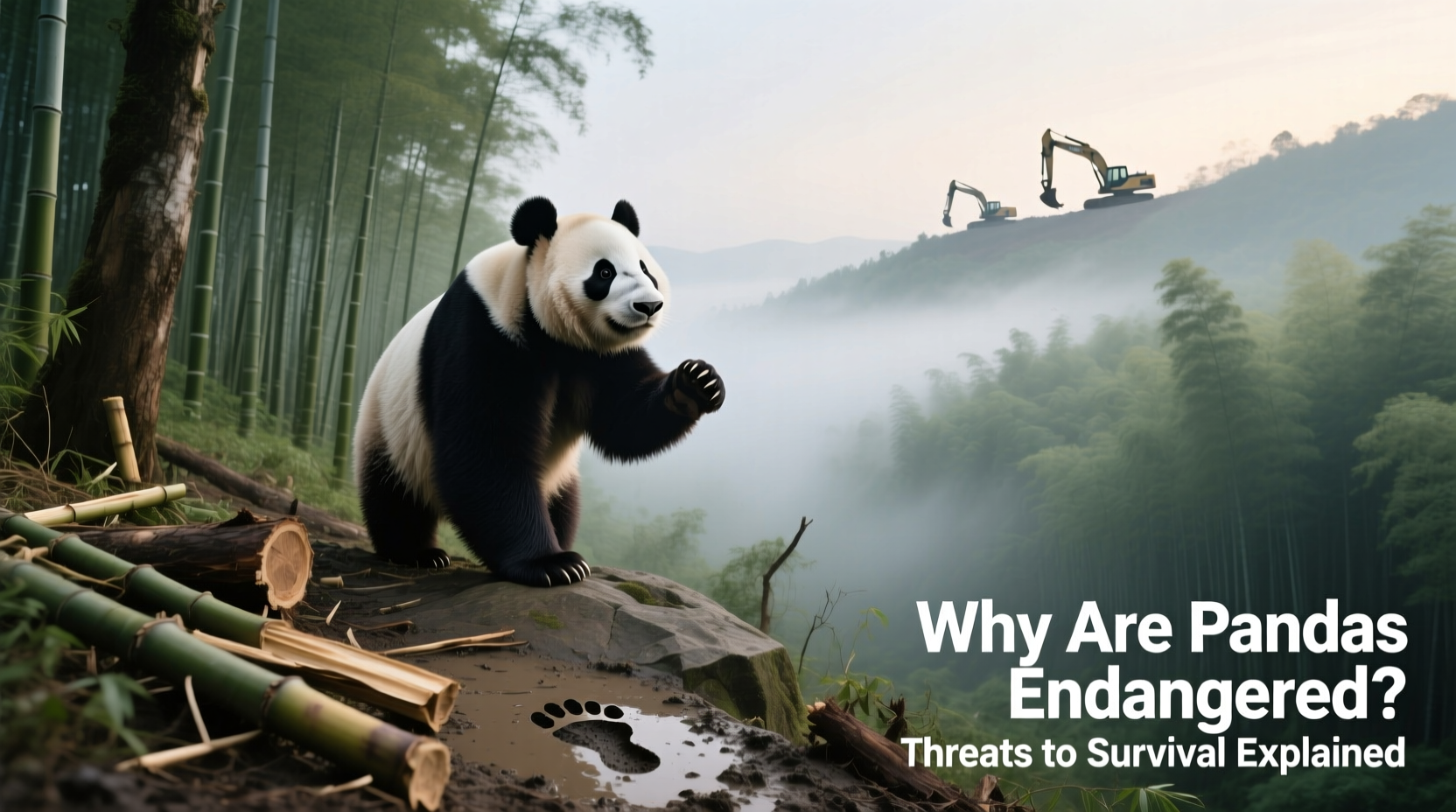
The most pressing threat to giant pandas is the destruction and fragmentation of their natural habitat. Pandas are native to the mountainous regions of central China, primarily in Sichuan, Shaanxi, and Gansu provinces. Their survival depends on vast tracts of bamboo forests, which serve as both food source and shelter. Over the past several decades, rapid urbanization, agriculture expansion, and infrastructure development have drastically reduced and fragmented these forests.
Deforestation for timber, farming, and road construction has split panda populations into isolated pockets. These fragmented habitats prevent pandas from migrating, finding mates, and accessing new bamboo stands. With over 60% of their historical range already lost, the remaining panda communities are increasingly vulnerable to local extinction.
Bamboo Dependency and Food Scarcity
Giant pandas have an unusual diet for a bear—they are almost entirely dependent on bamboo, which makes up 99% of their food intake. An adult panda consumes between 12 to 38 kilograms of bamboo daily. This specialized diet creates a unique vulnerability: when bamboo flowers and dies—a natural cycle that occurs every 30 to 120 years depending on the species—pandas lose their primary food source.
Because bamboo regeneration can take 10–15 years, entire populations may starve if they cannot migrate to new areas. Habitat fragmentation exacerbates this issue, as isolated panda groups often lack access to alternative bamboo forests during die-offs. In the 1970s and 1980s, mass bamboo flowering events led to the deaths of over 130 pandas due to starvation, highlighting how precarious their food security truly is.
“Pandas aren’t inefficient eaters—they’re specialists. Their survival hinges on the stability of bamboo ecosystems, which are themselves under pressure.” — Dr. Fang Jun, Senior Panda Biologist, Chengdu Research Base
Low Reproductive Rates and Biological Challenges
Even under ideal conditions, pandas reproduce slowly, making population recovery difficult. Female pandas ovulate only once a year and are fertile for just 24 to 72 hours. Cubs are born extremely underdeveloped—about the size of a stick of butter—and require intense maternal care for the first year of life. Twin births occur frequently, but mothers typically abandon one cub due to energy constraints.
In the wild, infant mortality remains high. Only about half of cubs survive past their first year. Captive breeding programs have made progress, but reintroducing captive-born pandas into the wild poses challenges due to limited genetic diversity and behavioral adaptation issues.
| Reproductive Factor | Challenge for Pandas |
|---|---|
| Ovulation Frequency | Once per year |
| Fertile Window | 24–72 hours annually |
| Cub Survival Rate (Wild) | Approximately 50% |
| Time Between Births | Typically 2–3 years |
| Sexual Maturity | Female: 4–6 years; Male: 6–7 years |
Climate Change: An Emerging Long-Term Threat
While habitat loss and reproductive challenges are immediate concerns, climate change poses a growing danger to panda survival. Studies project that rising temperatures could eliminate over 35% of bamboo habitat in key panda reserves by 2070. As bamboo species shift their ranges uphill in response to warming, pandas may not be able to follow—especially where mountains end or human settlements block migration routes.
Moreover, extreme weather events such as landslides and floods, which are becoming more frequent in southwestern China, can destroy bamboo groves and disrupt panda movement corridors. Without intervention, climate-induced habitat degradation could reverse decades of conservation gains.
Human-Wildlife Conflict and Poaching (Historical and Indirect)
Direct poaching of pandas has declined significantly due to strict laws and public awareness campaigns. However, indirect threats persist. Local communities sometimes encroach on protected areas for firewood collection, livestock grazing, or crop cultivation, increasing human-panda interactions. Although rare, accidental trapping intended for other animals still results in panda injuries or deaths each year.
Tourism, while beneficial for funding conservation, can also disturb panda behavior if not managed responsibly. Noise, habitat intrusion, and increased waste near reserves can stress animals and degrade their environment.
Conservation Successes and Ongoing Efforts
Despite these challenges, coordinated conservation strategies have yielded measurable improvements. China has established over 67 panda reserves, protecting nearly two-thirds of the wild population. Reforestation projects, including the Natural Forest Protection Program and the Grain-to-Green initiative, have restored thousands of hectares of degraded land.
The creation of habitat corridors—strips of forest connecting isolated panda populations—has improved gene flow and reduced inbreeding risks. Additionally, international partnerships with organizations like WWF have strengthened research, monitoring, and community-based conservation programs.
Step-by-Step: How Conservationists Are Protecting Pandas
- Map and monitor wild populations using camera traps and GPS collars to track movement and health.
- Restore and expand bamboo forests through reforestation and sustainable land-use planning.
- Build wildlife corridors to link fragmented habitats and enable safe migration.
- Support captive breeding and reintroduction with careful genetic management and pre-release training.
- Engage local communities through education, eco-tourism, and alternative livelihood programs to reduce dependence on forest resources.
Mini Case Study: The Wolong Nature Reserve Recovery
After the devastating 2008 Sichuan earthquake damaged much of the Wolong Nature Reserve, home to one of the largest wild panda populations, conservationists launched a comprehensive recovery plan. Engineers rebuilt research facilities, ecologists replanted over 2,000 hectares of bamboo, and biologists installed motion-sensor cameras to monitor panda activity. By 2020, surveys showed a 20% increase in panda sightings compared to pre-earthquake levels. The success was attributed not only to habitat restoration but also to stronger collaboration with nearby villages, who now participate in forest patrols and sustainable farming.
FAQ
Are pandas still endangered?
No, pandas are no longer classified as “Endangered.” In 2016, the IUCN Red List reclassified them as “Vulnerable” due to population growth and habitat recovery. However, they remain at risk and require continued protection.
How many pandas are left in the wild?
As of the most recent surveys, there are approximately 1,864 giant pandas living in the wild, mostly in China. An additional 600+ live in captivity worldwide.
Can pandas survive without bamboo?
Pandas are highly specialized feeders and rely almost exclusively on bamboo. While they can eat other plants or small animals occasionally, they lack the digestive efficiency to thrive on alternative diets long-term.
Checklist: How You Can Help Protect Pandas
- Support reputable conservation organizations like WWF or the Chengdu Research Base.
- Choose sustainable bamboo or FSC-certified wood products to reduce deforestation.
- Avoid souvenirs made from wildlife parts or illegally harvested materials.
- Educate others about panda conservation and the importance of biodiversity.
- Reduce your carbon footprint to help combat climate change impacts on panda habitats.
Conclusion
The journey to secure a future for giant pandas is far from over. While habitat loss, dietary specialization, low reproduction, and climate change continue to challenge their survival, targeted conservation efforts have proven effective. The panda’s story is a powerful reminder that even the most vulnerable species can rebound with sustained commitment, science-based strategies, and global cooperation.




 浙公网安备
33010002000092号
浙公网安备
33010002000092号 浙B2-20120091-4
Comments
No comments yet. Why don't you start the discussion?