
Pigs are among the most recognizable farm animals, often depicted as rosy-pink with curly tails. But not all pigs are pink—some are black, spotted, brown, or even striped. This variation raises a natural question: why are some pigs pink at all? The answer lies in a mix of genetics, domestication, and evolutionary adaptation. From wild boars to modern farmed hogs, pigmentation has changed dramatically over thousands of years. Understanding this transformation reveals much about animal breeding, human influence on species, and the biological mechanisms behind skin and hair color.
The Natural Color of Wild Pigs
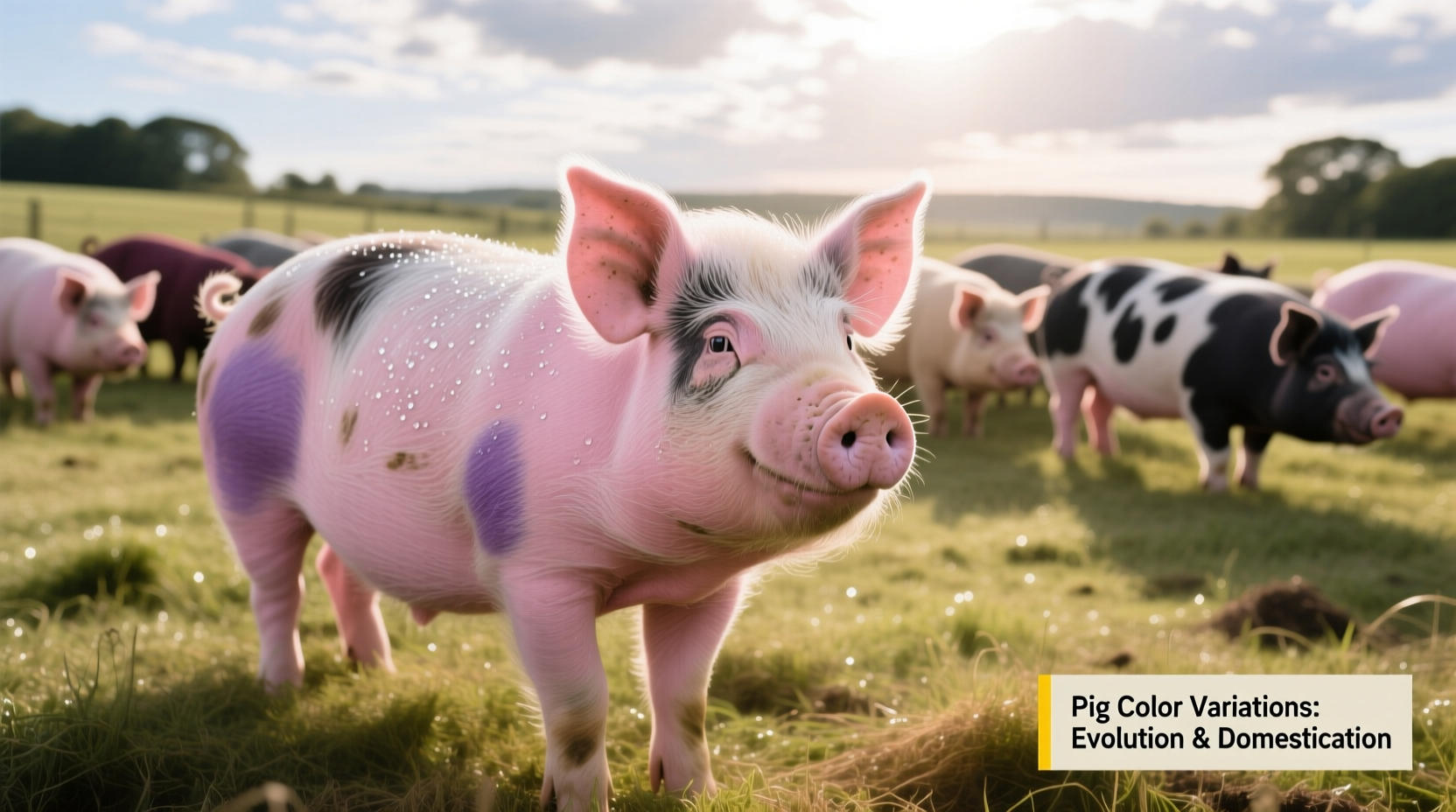
In the wild, pigs—specifically wild boars (Sus scrofa)—are typically dark-colored, ranging from deep black to muddy brown. This natural pigmentation serves several survival purposes. Dark coats provide camouflage in forested and shadowy environments, helping piglets avoid predators. They also offer protection against ultraviolet (UV) radiation, reducing the risk of sun damage. Melanin, the pigment responsible for darker skin and fur, plays a crucial role in shielding tissues from environmental stressors.
Wild piglets often display stripes at birth, resembling young deer or tigers. These patterns break up their outline, making them harder to spot in dappled light. As they mature, the stripes fade and are replaced by solid dark fur. This developmental pattern is evidence of evolutionary strategies focused on early-life survival.
How Domestication Changed Pig Color
The shift from dark to pink began with domestication, which started over 9,000 years ago in regions like Anatolia and China. Early farmers selected pigs not only for temperament and size but also for visible traits—including coat color. Unlike in the wild, where camouflage is essential, domestic environments reduced the need for protective coloring. With fewer predators and controlled living conditions, genetic mutations affecting pigmentation were no longer penalized by natural selection.
A key factor in the emergence of pink pigs is a mutation in the MC1R gene, which regulates melanin production. In many domesticated breeds, such as the Yorkshire or Landrace, this gene is altered, leading to reduced eumelanin (the pigment responsible for black/brown color) and increased pheomelanin (associated with red/yellow tones). The result is a lighter, often pinkish appearance. Because these mutations are recessive, they only become widespread when selectively bred over generations.
“Domestication relaxed the evolutionary constraints on pigmentation. Traits that would be disadvantageous in the wild became neutral—or even desirable—in human-controlled settings.” — Dr. Lena Peterson, Evolutionary Biologist, University of Uppsala
Pig Color Variations Across Breeds
Today’s domestic pigs display a wide range of colors, reflecting centuries of selective breeding. Some breeds retain their ancestral dark coats, while others exhibit white, spotted, or patchy patterns. Below is a comparison of common pig breeds and their typical coloration:
| Breed | Typical Color | Origin | Notes |
|---|---|---|---|
| Yorkshire | White/Pink | England | One of the most common commercial breeds; known for lean meat. |
| Duroc | Reddish-gold | USA | High marbling; popular in premium pork markets. |
| Landrace | Pink/White | Denmark | Long-bodied, prolific breed used widely in crossbreeding. |
| Middle White | White with drooping snout | England | Bred specifically for pork production; now rare. |
| Warthog | Dark gray with sparse bristles | Africa | Not domesticated; retains wild-type coloration. |
| Juliana Pig | Black with spots | France/USA | Miniature breed with wild-like markings; often kept as pets. |
This diversity illustrates how human preferences have shaped pig appearance independent of survival needs. In some cultures, certain colors were associated with luck or purity, further driving demand for lighter pigs.
Why Pink? The Science Behind the Hue
The pink color commonly associated with pigs is not due to skin pigmentation but rather the visibility of blood vessels beneath thin, lightly pigmented skin. Most so-called “pink” pigs actually have white or pale hair and translucent skin. The pink appearance comes from capillaries close to the skin surface, similar to how fair-skinned humans appear rosy.
True pink skin does not exist in pigs; instead, the lack of melanin allows underlying circulation to show through. This makes pink pigs more vulnerable to sunburn and skin cancer, especially in open pastures. Farmers raising light-colored breeds often provide shade or use sunscreen formulations designed for livestock.
In contrast, darker pigs have higher melanin levels, offering natural UV protection. This difference underscores a trade-off: aesthetic or cultural preference for lighter pigs versus practical health advantages of darker coats.
Step-by-Step: How a Mutation Becomes a Breed Standard
- Mutation Occurs: A random change in the MC1R gene reduces melanin production in an individual pig.
- Selected by Humans: Farmers notice the unusual color and choose to breed that pig due to novelty or preference.
- Controlled Breeding: Offspring showing the trait are mated repeatedly, increasing the frequency of the gene.
- Breed Development: After several generations, the trait becomes fixed in a lineage, forming a new breed standard.
- Commercial Spread: The breed gains popularity for meat quality, appearance, or ease of management, spreading globally.
Mini Case Study: The Middle White Pig
In 19th-century England, farmers sought a pig ideal for producing high-quality pork for roasting. The Middle White breed emerged from crossing Large White and Small White pigs. Its defining features included a short snout, white coat, and docile nature. The pink-white appearance was favored in markets, where consumers associated pale meat with cleanliness and tenderness.
By the early 20th century, the Middle White dominated UK pork shows. However, as industrial farming prioritized fast growth and feed efficiency, the breed declined. Today, it’s considered endangered—but its legacy lives on in modern white pig breeds. This case highlights how aesthetics, consumer perception, and economic forces collectively shape animal traits beyond mere biology.
Frequently Asked Questions
Are all domestic pigs naturally pink?
No. Pink pigs are the result of specific genetic mutations favored during domestication. Many domestic breeds remain black, brown, or spotted. The pink appearance is largely limited to certain Western commercial breeds.
Can wild pigs be pink?
Extremely rarely. There have been isolated reports of albino wild boars with pinkish skin and red eyes, but these are genetic anomalies. Such individuals face higher predation and lower survival rates due to poor camouflage and UV sensitivity.
Does pig color affect meat quality?
Not directly. Meat quality depends on breed, diet, age, and handling—not coat color. However, some breeds that happen to be pink (like Yorkshire) are selectively bred for lean meat, creating a false association between color and taste.
Checklist: Understanding Pig Coloration
- Recognize that pink pigs are a product of domestication, not nature.
- Understand the role of the MC1R gene in determining pigmentation.
- Know that pink coloration results from visible blood flow under pale skin.
- Consider environmental factors like sun exposure when raising light-colored pigs.
- Appreciate that color diversity reflects human cultural and agricultural choices.
Conclusion
The pink pig is an icon of farm life, but its color tells a deeper story of human influence on evolution. From the dark, camouflaged wild boar to the glossy pink show pig, changes in appearance mirror shifts in agriculture, culture, and genetics. While pink pigs dominate imagery and industrial farming, the full spectrum of pig colors reminds us of the complexity behind domestication. Whether you're a farmer, student, or curious observer, understanding pig coloration offers insight into how biology and human choice intertwine.




 浙公网安备
33010002000092号
浙公网安备
33010002000092号 浙B2-20120091-4
Comments
No comments yet. Why don't you start the discussion?