
One moment you're about to join a multiplayer match in Call of Duty, and the next—your PlayStation displays an error: “Cannot connect to the server.” You’re not alone. Millions of PlayStation users encounter connectivity issues with PlayStation Network (PSN) at some point. While it’s easy to assume your router is the culprit, sometimes the problem lies beyond your home network. Understanding why PSN servers go down, how to verify their status, and what steps to take when they do can save you hours of frustration.
Understanding Why PSN Servers Go Down
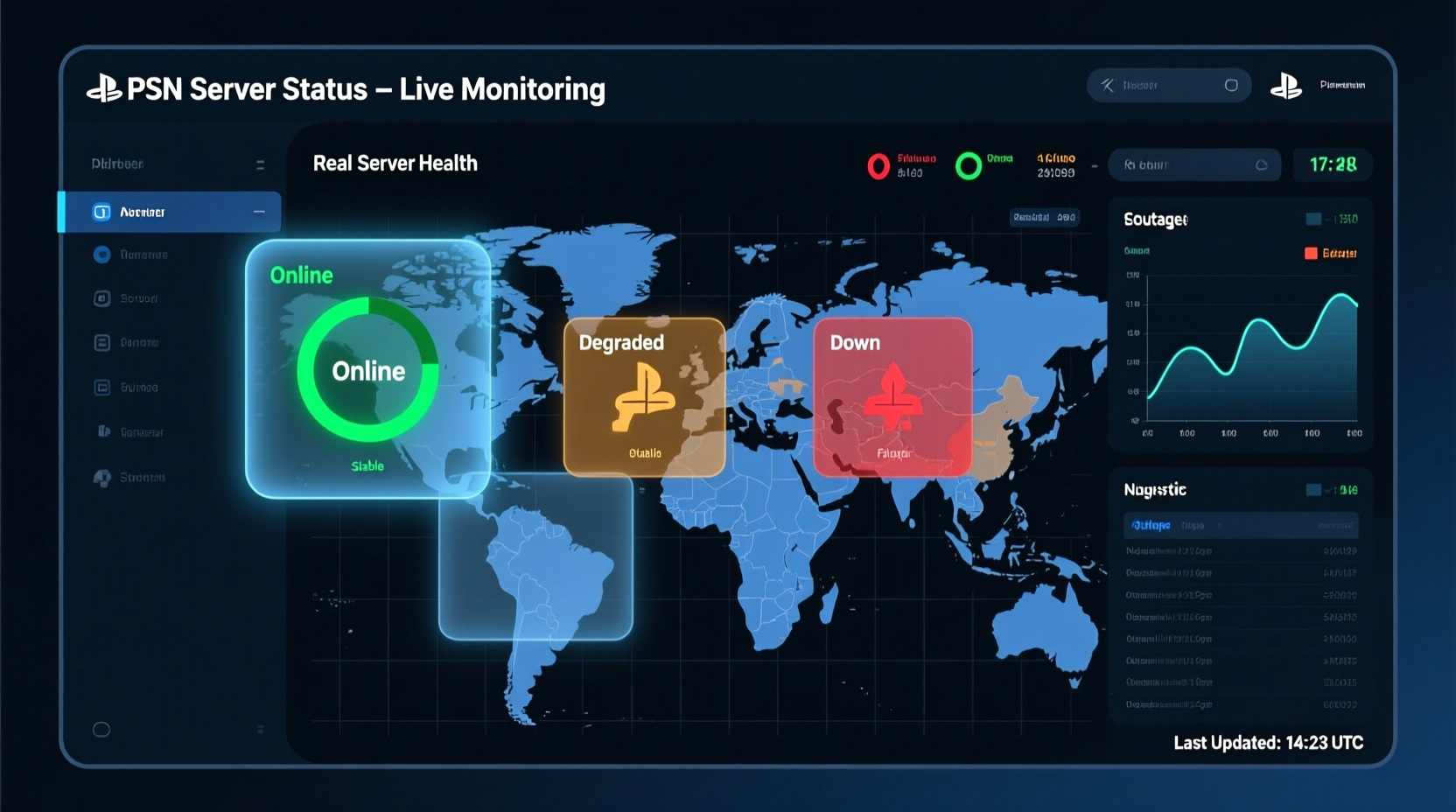
PlayStation Network is one of the largest online gaming platforms in the world, supporting tens of millions of users across consoles, mobile apps, and cloud services. Despite Sony's robust infrastructure, outages still occur. These disruptions stem from various causes, ranging from planned maintenance to global cyber threats.
Planned Maintenance: Sony regularly schedules system updates and backend improvements. These often happen during off-peak hours in major regions, but timing differences can catch players unaware. Maintenance may include patching security vulnerabilities, upgrading databases, or rolling out new features for PS5 or PS4 systems.
Unexpected Technical Failures: Server hardware malfunctions, software bugs, or database corruption can lead to unplanned downtime. In 2023, a critical authentication service failure left users unable to log in for over 24 hours. Such incidents highlight the complexity behind maintaining a global digital ecosystem.
Cyberattacks: Distributed Denial-of-Service (DDoS) attacks remain a persistent threat. Attackers flood PSN servers with traffic, overwhelming them and blocking legitimate user access. High-profile holidays like Black Friday or game launch days are prime targets due to increased traffic.
Regional Outages: Not all outages affect every region equally. Network routing issues, ISP problems, or localized data center failures might impact only certain countries or continents. For example, users in Europe may experience lag while those in North America see no issues.
“Large-scale networks like PSN require constant balancing between performance, security, and scalability. Even minor misconfigurations can cascade into widespread service disruption.” — Dr. Lena Torres, Senior Network Architect at CloudEdge Systems
How to Check PSN Server Status Accurately
Before troubleshooting your console or internet connection, confirm whether the issue originates from PSN itself. Misdiagnosing a global outage as a local problem wastes time and effort.
The official source for real-time updates is the PlayStation Status website (status.playstation.com). This page categorizes services such as Game & Voice Chat, PlayStation Store, and Account Management, each marked with green (operational), yellow (degraded), or red (down) indicators.
In addition to Sony’s site, consider these third-party tools:
- Downdetector: Aggregates user reports by location and service type, offering insight into emerging issues before official confirmation.
- Reddit communities: Subreddits like r/PS5 and r/PlayStation frequently post real-time updates and workarounds shared by affected users.
- Twitter/X: Follow @AskPlayStation for immediate announcements regarding outages or scheduled maintenance.
Troubleshooting Steps When PSN Is Unreachable
If PSN status shows full operation but you still can’t connect, the issue likely resides within your environment. Follow this step-by-step guide to isolate and resolve common connection problems.
- Restart Your Console: Power down your PS5 or PS4 completely (not rest mode), wait 30 seconds, then restart. This clears temporary glitches in network drivers.
- Check Internet Connection: Navigate to Settings > Network > Test Internet Connection to verify signal strength and latency.
- Reboot Your Router: Unplug your modem and router for two minutes, then reconnect. This resets IP assignments and refreshes DNS caches.
- Use Wired Over Wi-Fi: If possible, connect via Ethernet cable. Wireless signals are prone to interference and packet loss, especially during peak usage times.
- Change DNS Settings: Switch to Google DNS (8.8.8.8 and 8.8.4.4) or Cloudflare (1.1.1.1) under Network Settings to bypass ISP-related resolution delays.
- Forget and Reconnect to Wi-Fi: Remove your network from saved profiles and re-enter the password to eliminate corrupted configurations.
- Update System Software: Ensure your console runs the latest firmware. Older versions may fail to authenticate with updated PSN protocols.
Advanced Fixes for Persistent Issues
If standard steps fail, try rebuilding the database through Safe Mode. Turn off the console, hold the power button until you hear two beeps, then select “Option 5: Clear Cache and Rebuild Database.” This process scans your drive and reconstructs file indexing, which can fix underlying system errors affecting network performance.
Common Mistakes That Worsen Connectivity Problems
Well-intentioned actions can inadvertently prolong disconnection issues. Avoid these common pitfalls:
| Mistake | Why It’s Problematic | Better Alternative |
|---|---|---|
| Repeatedly retrying failed login attempts | May trigger temporary account lockouts or rate limiting | Wait 10–15 minutes and test connection once |
| Ignoring router firmware updates | Outdated firmware lacks security patches and stability fixes | Enable auto-updates or check manufacturer site monthly |
| Using outdated LAN cables | Cat 5 cables limit bandwidth; Cat 6+ recommended for PS5 | Upgrade to Cat 6 or higher for gigabit speeds |
| Placing console near heat sources or enclosed spaces | Overheating affects internal components, including network chip | Ensure at least 4 inches of ventilation around the unit |
Real-World Example: A Gamer’s Night Gone Wrong
Jason, a competitive Apex Legends player from Toronto, prepared for a ranked tournament one Friday evening. As match time approached, he found himself repeatedly kicked from lobbies with error code WS-116730-4. He checked his Wi-Fi—full bars—and ran multiple speed tests showing stable 120 Mbps download speeds.
Instead of blaming his ISP, Jason visited downdetector.com and noticed hundreds of similar reports clustered around Ontario. The PlayStation Status page confirmed degraded service for Online Gameplay in North America. After waiting 90 minutes, the service returned, and Jason was able to participate in the event.
This case illustrates the importance of verifying external factors before assuming personal equipment failure. Acting too quickly could have led Jason to reset his router unnecessarily or even factory-reset his console.
Frequently Asked Questions
How long do PSN outages usually last?
Most planned maintenance windows last between 2 and 6 hours. Unexpected outages vary—minor issues may resolve in under an hour, while major incidents (like authentication failures) can take over 24 hours. Sony typically provides estimated restoration times during prolonged events.
Can I get compensation if PSN is down during a paid event?
Sony rarely offers direct refunds for downtime, though exceptions occur during high-profile disruptions. In 2021, users received free games after a multi-day outage. Compensation depends on severity, duration, and public response.
Does restarting my console delete my game progress?
No. Restarting your PS5 or PS4 does not erase saved data. However, rebuilding the database does not delete files either—it only reorganizes how the system reads them. Always ensure your saves are backed up to the cloud if you have PlayStation Plus.
Essential Troubleshooting Checklist
- ✅ Check status.playstation.com for current service health
- ✅ Review Downdetector for regional user reports
- ✅ Restart your PlayStation console fully (not Rest Mode)
- ✅ Reboot your router and modem
- ✅ Test connection using wired Ethernet if available
- ✅ Update console software to the latest version
- ✅ Change DNS settings to 8.8.8.8 / 8.8.4.4
- ✅ Wait patiently if it’s a known widespread outage
Final Thoughts: Stay Informed, Stay Ready
PSN outages are inevitable in today’s interconnected gaming landscape. Whether caused by maintenance, technical faults, or malicious attacks, knowing how to respond efficiently minimizes disruption to your gaming experience. The key is to act methodically—verify the scope of the issue first, then address your local setup only if necessary.
By staying informed through reliable channels and applying proven troubleshooting techniques, you gain control even during large-scale disruptions. Don’t let a server hiccup ruin your game night. Prepare now, so when the next outage hits, you’ll be the first one back online.




 浙公网安备
33010002000092号
浙公网安备
33010002000092号 浙B2-20120091-4
Comments
No comments yet. Why don't you start the discussion?