
The pygmy three-toed sloth (*Bradypus pygmaeus*) is one of the most elusive and critically endangered mammals on Earth. Found only on Isla Escudo de Veraguas, a tiny island off the northeastern coast of Panama, this unique creature exists in an extremely limited range—making it exceptionally vulnerable to environmental changes and human activity. Despite its slow movements and seemingly peaceful existence, the pygmy three-toed sloth faces a growing list of existential threats. Understanding why this species is endangered, the dangers it confronts, and the ongoing conservation initiatives is essential for ensuring its survival.
A Species on the Brink: The Biology of the Pygmy Three-Toed Sloth
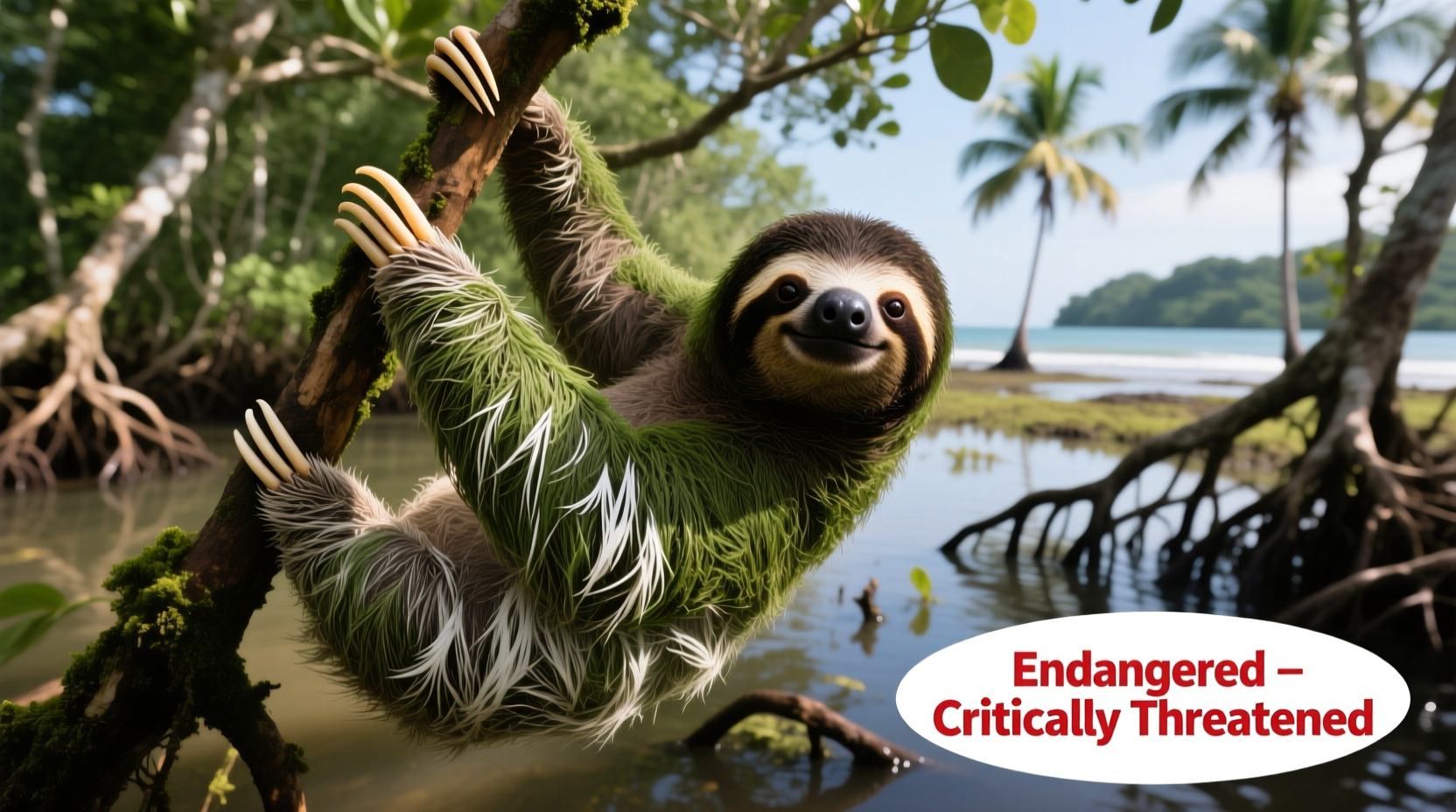
Discovered in 2001, the pygmy three-toed sloth is a dwarfed version of the more widespread brown-throated sloth. It is approximately 30% smaller and exhibits distinct genetic and morphological differences that set it apart as a separate species. These sloths spend nearly their entire lives in red mangrove trees (*Rhizophora mangle*), which dominate the narrow coastal fringes of Isla Escudo. Their diet consists almost entirely of mangrove leaves, which are low in nutrients and difficult to digest—contributing to their famously slow metabolism.
Because they evolved in isolation on this small island (just 4.3 square kilometers), the species has developed no natural defenses against predators or rapid habitat change. With an estimated population of fewer than 100 mature individuals, the International Union for Conservation of Nature (IUCN) classifies the pygmy three-toed sloth as Critically Endangered—the highest risk category before extinction.
Primary Threats to Survival
The decline of the pygmy three-toed sloth is not due to a single cause but rather a combination of interrelated threats, all intensified by the species’ restricted habitat and low reproductive rate.
Habitat Loss and Degradation
The red mangroves that form the sloth’s exclusive habitat are under pressure from human encroachment. Although Isla Escudo is uninhabited, nearby indigenous communities occasionally visit for fishing and subsistence activities. In recent years, increased tourism and infrastructure development have led to mangrove clearing for docks, trails, and campsites. Even minor disturbances can fragment the already limited forest canopy, isolating individual sloths and reducing breeding opportunities.
Climate Change and Sea-Level Rise
As a low-lying island ecosystem, Isla Escudo is highly susceptible to rising sea levels and storm surges. Mangrove forests are being eroded at an accelerating pace. Scientists project that continued sea-level rise could submerge significant portions of the island within decades, effectively drowning the sloth’s only home.
Predation and Human Interaction
While the island lacks large natural predators, visiting humans sometimes capture sloths for the illegal pet trade or kill them out of curiosity. Dogs brought by fishermen also pose a predation risk. Due to their slow movement and lack of defensive mechanisms, even a small number of such incidents can significantly impact the fragile population.
Low Genetic Diversity and Reproductive Rate
Isolated for approximately 9,000 years, the pygmy sloth population suffers from severe inbreeding. This reduces genetic resilience and increases vulnerability to disease and environmental stress. Additionally, sloths reproduce slowly—females give birth to a single offspring once every year or two—making population recovery extremely difficult.
“Species with such narrow geographic ranges and specialized ecological needs are among the first to disappear when ecosystems are disrupted.” — Dr. Rebecca R. Suárez, Tropical Mammal Ecologist
Conservation Efforts and Protection Measures
Despite the challenges, several organizations and governmental bodies have initiated efforts to safeguard the pygmy three-toed sloth and its habitat.
Legal Protections and Protected Status
Isla Escudo de Veraguas lies within a protected area managed by Panama’s Ministry of Environment. The island is part of the Comarca Ngäbe-Buglé Indigenous Territory, granting local communities co-management rights. However, enforcement remains inconsistent due to limited resources and remote location.
Scientific Research and Monitoring
Researchers from institutions like the Smithsonian Tropical Research Institute conduct periodic surveys using camera traps and direct observation to estimate population size and monitor health. These studies help inform conservation strategies and assess the effectiveness of protection measures.
Community-Based Conservation
Engaging local indigenous groups is crucial. Education programs aim to raise awareness about the sloth’s uniqueness and ecological importance. Some initiatives promote eco-tourism guidelines to minimize human impact while providing alternative livelihoods.
Ex-Situ Conservation Considerations
Though controversial, discussions about establishing captive breeding programs have emerged. However, experts caution that removing individuals from such a small population could accelerate decline. No accredited zoos currently house pygmy three-toed sloths, and any ex-situ effort would require rigorous ethical and scientific oversight.
| Conservation Strategy | Status | Challenges |
|---|---|---|
| Habitat Protection | Legally established, weak enforcement | Limited ranger presence, tourism pressure |
| Population Monitoring | Ongoing, infrequent | Remote access, funding gaps |
| Community Engagement | Developing | Cultural barriers, language differences |
| Captive Breeding | Not implemented | Risk to wild population, unknown care needs |
Actionable Steps: How Conservation Can Succeed
Reversing the decline of the pygmy three-toed sloth requires coordinated, long-term action. Below is a practical checklist for stakeholders and concerned individuals:
- Strengthen enforcement of existing protected area regulations on Isla Escudo.
- Fund regular scientific expeditions to monitor population trends and health.
- Support mangrove reforestation projects to expand available habitat.
- Develop and enforce strict eco-tourism codes of conduct.
- Partner with indigenous leaders to integrate traditional knowledge into conservation planning.
- Advocate for international recognition and funding through IUCN and CITES.
- Launch public education campaigns highlighting the sloth’s plight.
Mini Case Study: Lessons from the Manatee Conservation Program
In nearby regions of Central America, manatee conservation offers a relevant model. Once severely threatened by boat strikes and habitat loss, Antillean manatees saw population stabilization through a mix of legal protections, community patrols, and habitat restoration. By designating no-wake zones and training local fishers as conservation monitors, Belize achieved measurable success. Applying similar community-centered approaches to Isla Escudo could empower locals to become stewards of the pygmy sloth’s survival.
Frequently Asked Questions
Why is the pygmy three-toed sloth only found on one island?
The species evolved in isolation after Isla Escudo separated from the mainland around 9,000 years ago. This geographic separation led to speciation through adaptive evolution, resulting in a unique, island-endemic animal with no other populations in the wild.
Can the pygmy three-toed sloth survive in captivity?
There is no confirmed success in keeping this species alive in captivity. Their specialized diet, sensitivity to stress, and dependence on mangrove ecosystems make them extremely difficult to maintain outside their natural habitat. Most experts believe conservation should focus on protecting them in the wild.
How does climate change specifically affect this sloth?
Rising sea levels directly threaten to inundate the low-elevation mangrove forests where the sloths live. Increased storm intensity can uproot mangroves, while higher temperatures may alter leaf chemistry, affecting the sloth’s primary food source.
Conclusion: A Call to Preserve a Natural Wonder
The pygmy three-toed sloth is more than a biological curiosity—it is a symbol of evolutionary uniqueness and ecological fragility. Its existence reminds us that even the most unassuming creatures play vital roles in their ecosystems and deserve protection. While the challenges are immense, they are not insurmountable. With stronger policies, sustained research, and inclusive conservation models, there is still hope for this remarkable animal.




 浙公网安备
33010002000092号
浙公网安备
33010002000092号 浙B2-20120091-4
Comments
No comments yet. Why don't you start the discussion?