
In recent years, the hum of 8-bit soundtracks and the pixelated glow of CRT screens have returned—not as relics, but as cultural touchstones. Once dismissed as outdated technology, retro gaming consoles like the NES, Sega Genesis, and Game Boy are now more sought after than ever. Their resurgence isn't a fleeting trend; it's a full-blown revival driven by emotional connection, technological accessibility, and a growing appreciation for simplicity in an age of digital overload. From limited-edition re-releases to thriving online communities, retro gaming has carved out a permanent space in modern entertainment.
Nostalgia: The Emotional Engine Behind the Revival
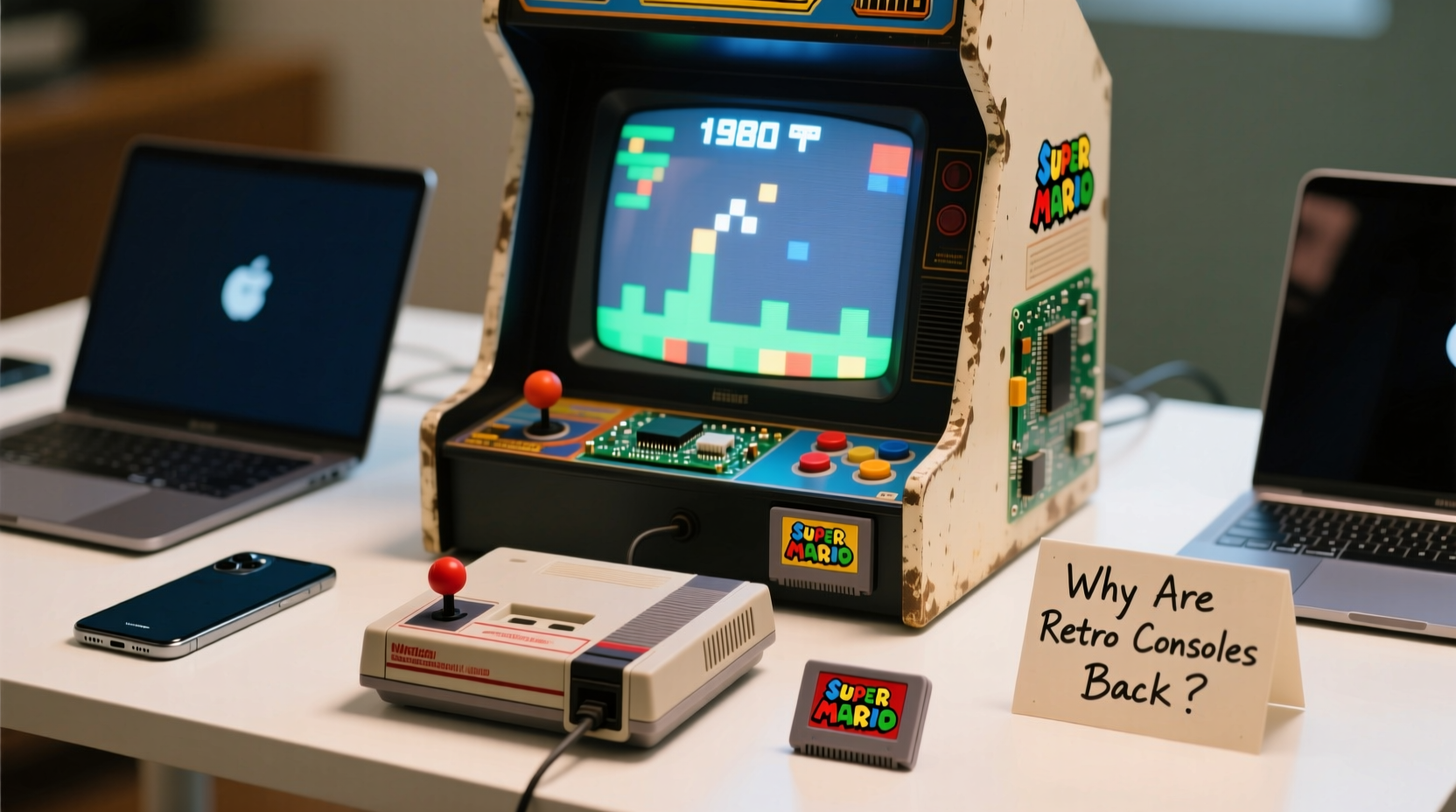
For many adults today, childhood memories are intertwined with hours spent mastering Super Mario Bros., battling Bowser, or racing through Green Hill Zone on the Sega Genesis. These experiences weren’t just games—they were formative moments. As those players enter their 30s and 40s, they’re returning to these systems not just for fun, but for emotional comfort.
Nostalgia is a powerful psychological force. It evokes warmth, safety, and identity. Retro gaming taps directly into this by offering a tangible link to the past. Unlike streaming services that rotate content, physical cartridges and consoles provide a sense of permanence. Holding a Nintendo Entertainment System (NES) controller can instantly transport someone back to their living room floor in 1991.
“Nostalgia doesn’t just sell products—it sells feelings. Retro consoles offer a rare authenticity in a world where digital experiences feel increasingly disposable.” — Dr. Lena Park, Cultural Psychologist at Boston University
This emotional resonance extends beyond individual players. Parents who grew up with these systems are now introducing them to their children, creating intergenerational play experiences. A father might sit beside his daughter as she discovers The Legend of Zelda for the first time on original hardware, bridging decades through shared discovery.
The Simplicity Factor in a Complex Digital Age
Modern gaming is spectacular: photorealistic graphics, expansive open worlds, and online multiplayer ecosystems. But with complexity comes fatigue. Gamers today face decision paralysis—dozens of titles vying for attention, subscription fees, mandatory updates, and always-online requirements. In contrast, retro consoles offer something rare: simplicity.
A retro game cartridge loads instantly. There are no patches, no account logins, no microtransactions. The rules are clear, the objectives straightforward. You press start, you play. This immediacy is deeply appealing in a world saturated with friction.
Additionally, retro games often emphasize skill mastery over progression systems. Beating a level in Mega Man requires precision and repetition, not loot boxes or power-ups. That sense of earned accomplishment resonates strongly with players tired of gamified grind mechanics.
Designers are noticing this shift. Indie developers frequently cite retro aesthetics and gameplay loops as inspiration. Titles like *Shovel Knight* and *Celeste* blend modern polish with 8- and 16-bit sensibilities, proving that minimalist design can still captivate audiences.
Collector Culture and the Rise of Limited Edition Hardware
Retro gaming has evolved into a legitimate collecting hobby, akin to vintage vinyl or classic automobiles. Rare cartridges, mint-condition consoles, and unopened packages command high prices at auction. A sealed copy of *Super Mario Bros.* sold for over $2 million in 2020—a testament to both scarcity and sentiment.
Manufacturers have responded by launching officially licensed mini-consoles. Nintendo’s NES Classic and SNES Classic editions brought curated libraries of beloved titles into homes with plug-and-play ease. Though initially criticized for short supply, their success proved there was massive demand for accessible retro experiences.
Third-party companies like Analogue have taken this further, producing high-end FPGA-based clones such as the Analogue Pocket and Analogue Nt. These devices replicate original hardware behavior while adding modern features like HDMI output and save states—appealing to purists and tech-savvy collectors alike.
| Console | Original Release | Re-release Model | Key Features |
|---|---|---|---|
| NES | 1985 | NES Classic Edition | 30 preloaded games, HDMI output, compact size |
| Sega Genesis | 1989 | Sega Genesis Mini | 42 games including Japanese exclusives, dual controllers |
| Game Boy | 1989 | Analogue Pocket | FPGA accuracy, supports original cartridges, modern screen |
| PlayStation | 1994 | PS Classic | 20 preloaded games, USB-powered, emulator-based |
The appeal isn’t just about playing games—it’s about ownership, preservation, and curation. Collectors take pride in building complete-in-box (CIB) sets, restoring old hardware, and documenting their finds online. YouTube channels dedicated to “console hunting” or “cartridge cleaning” boast millions of views, reflecting a vibrant subculture.
Community, Streaming, and the Digital Preservation Movement
Retro gaming thrives not in isolation, but in community. Online forums like AtariAge and Reddit’s r/retrogaming host passionate discussions on repair techniques, rare releases, and homebrew development. Speedrunning communities use retro titles as competitive platforms, with events like Games Done Quick showcasing astonishing feats of precision and memory.
Streaming has also played a pivotal role. Platforms like Twitch and YouTube allow gamers to broadcast retro sessions live, attracting audiences eager to relive classics or discover them anew. Watching someone attempt to beat *Contra* without dying—or fail hilariously trying—creates shared entertainment rooted in authenticity.
Beyond recreation, there’s a growing movement focused on preservation. As original hardware degrades and production parts disappear, enthusiasts are reverse-engineering systems, creating FPGA replicas, and archiving ROMs. Projects like the RetroUSB AVS and MiSTer FPGA demonstrate how fan innovation keeps legacy systems alive.
“We’re not just preserving games—we’re preserving a moment in cultural history. These consoles shaped how we interact with technology.” — James Holloway, Founder of the Video Game History Foundation
This digital archaeology ensures that even if original cartridges fail, the software lives on. However, it walks a fine line with copyright law, making official re-releases all the more important for legal access.
Step-by-Step Guide: Building Your First Retro Setup
Starting a retro gaming collection doesn’t require deep pockets or technical expertise. Follow this practical guide to get started responsibly and enjoyably.
- Define Your Focus: Choose a generation or brand—e.g., 8-bit (NES, Master System), 16-bit (SNES, Genesis), or handhelds (Game Boy).
- Decide Between Original or Modern Replicas: Original hardware offers authenticity but may need repairs. Replicas like the Analogue Pocket offer reliability and modern outputs.
- Source Your Console: Check local thrift stores, eBay, or Facebook Marketplace. Look for signs of water damage, discoloration, or missing parts.
- Acquire Games: Start with well-known titles (*Super Mario Bros.*, *Sonic the Hedgehog*, *The Legend of Zelda*) before exploring obscure ones.
- Invest in Proper Display: Use a CRT TV for authentic look and minimal lag, or a modern display with a scaler (e.g., OSSC) to reduce blur.
- Maintain Your Gear: Clean cartridge contacts with isopropyl alcohol, store consoles upright in dry areas, and avoid direct sunlight.
- Join a Community: Engage with retro forums or Discord servers to learn troubleshooting tips and share discoveries.
Mini Case Study: How One Collector Turned Passion into a Business
Mark Tran, a graphic designer from Portland, began collecting retro games in 2015 after finding his old Game Boy in his parents’ attic. What started as a weekend hobby quickly grew. He learned to clean and repair cartridges, replaced dead batteries in save files, and mastered AV-to-HDMI conversion.
By 2019, he launched “Pixel Vault,” a small business refurbishing and selling retro consoles with warranties. Each unit undergoes testing, cosmetic restoration, and includes a guide for beginners. Within two years, he was earning enough to leave his day job.
“People don’t just want a working console,” Mark says. “They want a piece of their past, restored with care. I’m not just fixing machines—I’m helping people reconnect with joy.”
His success reflects a broader trend: retro gaming isn’t just consumption; it’s craftsmanship and emotional service.
Frequently Asked Questions
Are retro consoles worth investing in?
Yes, especially rare or sealed items. However, treat it as a passion investment rather than pure financial gain. Condition, completeness, and market demand heavily influence value.
Can I play retro games legally on emulators?
Emulators themselves are legal, but downloading copyrighted ROMs without owning the original game is not. Some companies, like Nintendo, offer legal retro options through subscriptions (e.g., Nintendo Switch Online + Expansion Pack).
What’s the most valuable retro console or game?
The highest-selling single item is a sealed copy of *Super Mario Bros.* graded 9.8 by WATA, which sold for $2.04 million in 2020. The Nintendo World Championships 1990 cartridge is another ultra-rare prize, with fewer than 100 known copies.
Checklist: Launching Your Retro Gaming Journey
- ☐ Choose a console generation to focus on
- ☐ Decide between original hardware and modern re-releases
- ☐ Research common issues (e.g., “red ring of death” for later models)
- ☐ Budget for additional accessories (controllers, adapters, displays)
- ☐ Join at least one online retro gaming community
- ☐ Start with 2–3 iconic games to build your library
- ☐ Learn basic maintenance (cleaning, storage, troubleshooting)
- ☐ Consider insurance or protective cases for valuable items
Conclusion: Reclaiming Play in Its Purest Form
The resurgence of retro gaming consoles is more than a trend—it’s a cultural reset. In an era defined by constant updates, algorithmic feeds, and digital exhaustion, these systems offer something profoundly human: simplicity, mastery, and emotional connection. They remind us that play doesn’t need photorealism to be meaningful.
Whether you’re revisiting your childhood, sharing games with a new generation, or diving into collecting, retro gaming invites participation on its own terms. It rewards patience, curiosity, and care. And in doing so, it preserves not just code and circuitry, but the spirit of wonder that first drew millions to pick up a controller.




 浙公网安备
33010002000092号
浙公网安备
33010002000092号 浙B2-20120091-4
Comments
No comments yet. Why don't you start the discussion?