
In recent years, the resale market for retro video game consoles has exploded. What were once dusty relics gathering cobwebs in attics now command hundreds — sometimes thousands — of dollars on online marketplaces. A sealed Nintendo Entertainment System (NES) sold for over $120,000 in 2023. Limited-run Sega Genesis models fetch more than modern gaming rigs. The question isn’t whether these prices are high; it’s why they’ve reached such extremes. The answer lies at the intersection of nostalgia, scarcity, digital preservation, and a growing recognition of video games as cultural artifacts.
The Rise of Nostalgia as Currency
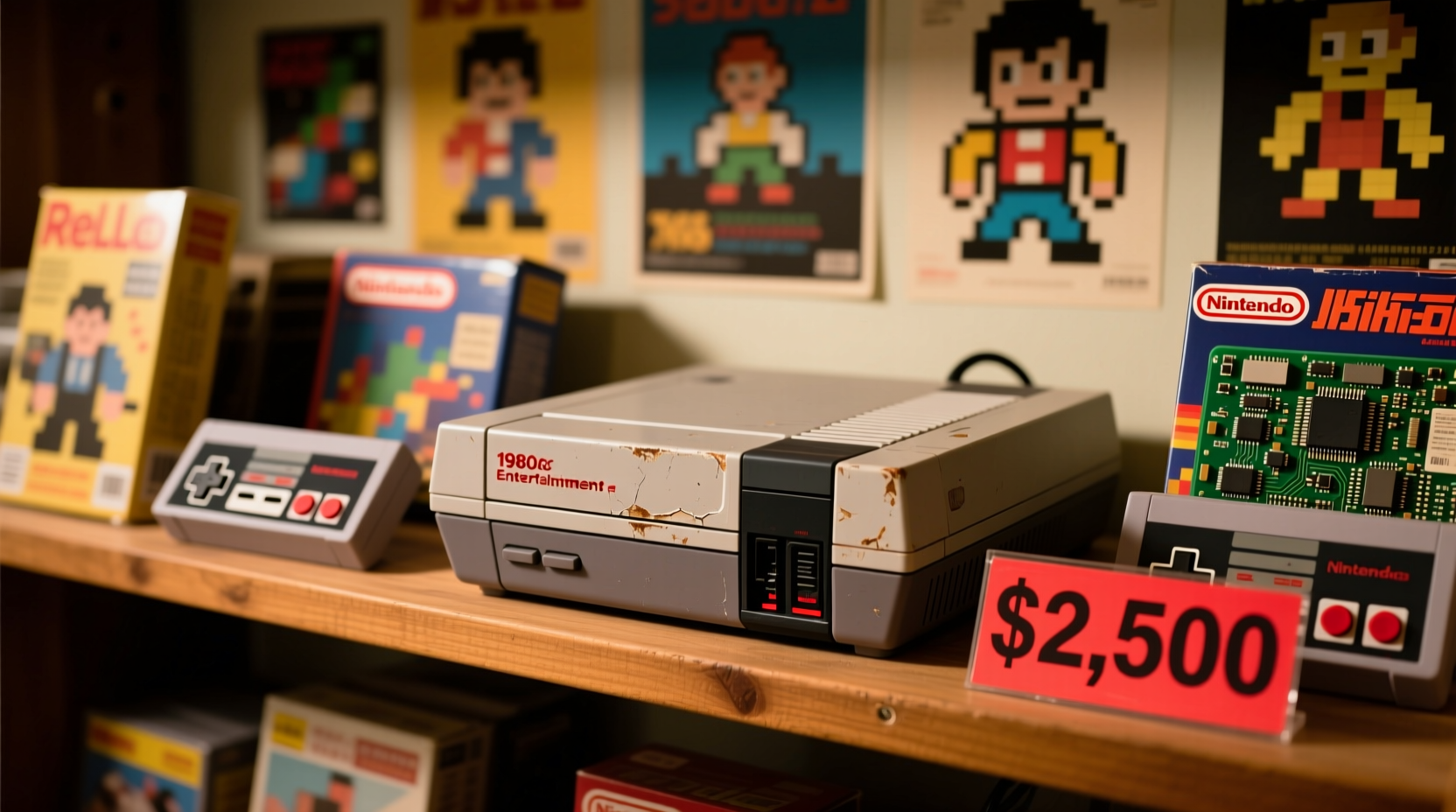
For many adults today, retro consoles represent more than just hardware—they’re time capsules of childhood. The late 1980s through the early 2000s marked a golden era of gaming: pixelated heroes, chiptune soundtracks, and hours spent mastering side-scrolling challenges. As millennials and Gen Xers enter peak earning years, their disposable income increasingly flows toward experiences and objects that reconnect them with formative memories.
This emotional pull transforms old consoles into emotional investments. A working Super Nintendo or Sega Saturn isn’t just a machine—it’s a portal to summers spent playing *Super Mario World* or late nights battling friends in *Street Fighter II*. Sellers understand this psychology and price accordingly. The stronger the emotional association, the higher the premium.
“Nostalgia isn’t just sentimentality—it’s a measurable economic driver in collectibles. When people re-experience joy from their past, they’re willing to pay well above replacement cost.” — Dr. Lena Torres, Cultural Economist, University of Michigan
Scarcity and Condition: The Collector’s Dilemma
Unlike books or clothing, vintage electronics degrade over time. Capacitors leak, plastics yellow, and connectors corrode. Finding a retro console in working condition—especially one with original packaging and accessories—is rare. This natural attrition creates artificial scarcity, driving up demand among purists and collectors.
Grading systems similar to those used for trading cards have emerged. Companies like WATA (Video Game Grading Authority) authenticate and score consoles and cartridges based on condition, completeness, and originality. A factory-sealed copy of *The Legend of Zelda* for NES graded WATA 9.8 recently sold for $870,000. Even ungraded but pristine units can sell for ten times their original retail price.
Factors That Influence Value
| Factor | Impact on Price | Example |
|---|---|---|
| Original Packaging | Increases value by 50–200% | A boxed Famicom Disk System sells for ~$600 vs. $200 loose |
| Working Condition | Essential for baseline value | Non-functional NES may sell for parts only (~$30) |
| Rarity | Can multiply value exponentially | Nintendo World Championships 1990 cartridge: ~$25,000+ |
| Regional Variant | Premium for import models | Japanese Famicom vs. US NES: often double the price |
| Grading Score | High scores add thousands | WATA 9.6 vs. 9.0: 300%+ price difference |
The Role of Online Marketplaces and Reseller Culture
Platforms like eBay, Etsy, and specialized forums such as AtariAge or r/retrogaming on Reddit have created global marketplaces where supply and demand operate without geographic limits. A console found in rural Japan can be shipped to a collector in Toronto within days. Algorithms promote listings with rising bids, creating bidding wars that inflate prices beyond rational thresholds.
Resellers have adapted quickly. Some source consoles from estate sales, thrift stores, or garage clearances, refurbish them professionally, and resell at markup. Others specialize in “restomods”—modernizing retro consoles with HDMI outputs, noise filters, and upgraded internals—while preserving original aesthetics. These hybrid units appeal to both gamers and decorators, further expanding the buyer pool.
The rise of YouTube reviewers and unboxers also amplifies visibility. Videos showcasing rare finds or record-breaking auctions generate millions of views, fueling FOMO (fear of missing out) and encouraging speculative buying.
Cultural Recognition and Institutional Validation
Once dismissed as toys, video games are now recognized as legitimate art forms. Museums like the Museum of Modern Art (MoMA) in New York have added classic games to their permanent collections. Academic programs study game design and history. This cultural shift legitimizes retro hardware as historically significant objects—not junk, but heritage.
Limited production runs contribute to this status. The Sega Activator, a motion controller for the Genesis, had a tiny release and is now a sought-after oddity. The Nintendo PlayStation prototype—a failed collaboration between Nintendo and Sony—sold for $360,000 in 2020 due to its historical importance in shaping the modern gaming landscape.
As institutions preserve these items, private collectors follow suit. Owning a piece of gaming history becomes a point of pride, akin to owning a first edition book or vintage vinyl pressing.
Mini Case Study: The $100,000 NES
In 2020, a sealed Nintendo Entertainment System graded WATA 9.6 sold for $110,000. The unit was part of a collection discovered in a Texas attic, stored in a dry basement since purchase in 1987. It included all original paperwork, manuals, and even the mail-in warranty card—still unopened.
The buyer, a private collector from California, stated in an interview: “It’s not about playing it. It’s about preserving a moment when gaming entered homes across America.” The sale made headlines, sparking debates about whether such prices reflect true value or speculative bubbles. Regardless, it set a benchmark. Since then, every high-grade sealed NES listing has opened bids above $20,000.
How to Navigate the Retro Console Market Responsibly
For enthusiasts who want to participate without overpaying, a strategic approach is essential. The market is rife with counterfeits, overhyped listings, and inflated grades. Understanding what drives value helps avoid costly mistakes.
- Research Before Buying: Know the average sale price for your target console using completed listings on eBay or price databases like PriceCharting.
- Verify Authenticity: Check serial numbers, mold marks, and font styles. Reproductions often miss subtle manufacturing details.
- Test Functionality: Request video proof of boot-up and gameplay if buying online.
- Avoid Overgrading: Be skeptical of WATA 9.8+ claims unless backed by certification codes and photos.
- Consider Long-Term Storage: Use anti-static bags, silica gel packs, and UV-protected display cases.
Checklist: Smart Retro Console Purchasing
- ✅ Confirm model number matches authentic versions
- ✅ Ask for high-resolution photos of ports, labels, and interior (if possible)
- ✅ Check feedback ratings of the seller
- ✅ Verify return policy
- ✅ Compare price to recent completed sales (not active bids)
- ✅ Consider professional restoration costs if buying non-working
- ✅ Store in a dark, dry place away from magnetic fields
Frequently Asked Questions
Are retro consoles a good investment?
Some are, but treat them like any collectible: high risk, emotionally driven, and dependent on trends. Sealed, graded, and rare units have appreciated, but mass-market consoles like common SNES models may never see dramatic returns. Only invest money you can afford to lose.
Why are Japanese consoles more valuable?
Japan often received exclusive releases, earlier launch dates, and higher build quality. The Famicom (Japanese NES) has a distinct design and smaller form factor. Import taxes, shipping costs, and limited overseas distribution make surviving units rarer outside Asia, increasing their desirability.
Can I still play retro games without buying original hardware?
Absolutely. Emulation software on modern devices can replicate most classic systems accurately. FPGA-based clones like the MiSTer offer near-perfect hardware simulation. However, purists argue nothing replaces the feel of original controllers and CRT scanlines. For casual players, alternatives exist—but for collectors, authenticity is non-negotiable.
Preservation vs. Profit: The Ethical Debate
As prices climb, a tension emerges between preservation and commercialization. Some critics argue that treating consoles as luxury commodities removes them from public access. Rare cartridges locked in vaults do little to educate future generations. Others contend that high prices incentivize careful storage and discourage destruction.
Organizations like the Video Game History Foundation work to archive and document hardware and software before it’s lost. They warn that unchecked speculation could lead to hoarding, counterfeiting, and the loss of context. A sealed game might be worth six figures, but without its manual, marketing, or cultural background, it becomes a hollow trophy.
“We’re not just saving plastic and circuit boards—we’re saving stories, design innovations, and community histories. Once they’re gone, they don’t come back.” — Frank Cifaldi, Founder, Video Game History Foundation
Conclusion: More Than Just Machines
The soaring prices of retro video game consoles reflect deeper currents: a generation reclaiming its youth, a culture finally honoring digital creativity, and a marketplace where emotion often outweighs utility. While some sales seem absurd, they underscore a truth—that technology carries memory, identity, and meaning far beyond its function.
Whether you’re a collector, a player, or simply curious, understanding this phenomenon offers insight into how we value the past. If you have an old console tucked away, consider its story. If you’re thinking of buying one, look beyond the price tag. And if you appreciate gaming history, support preservation efforts that ensure these machines aren’t lost to time—or locked behind glass in private vaults.




 浙公网安备
33010002000092号
浙公网安备
33010002000092号 浙B2-20120091-4
Comments
No comments yet. Why don't you start the discussion?