
Every year, as the calendar flips to November, millions of households begin preparing for the holiday season. Among the most sought-after items on shopping lists: the rotating Christmas tree base. Designed to make decorating easier and display more elegant, these motorized stands promise effortless viewing from all angles. Yet, despite growing availability online and in stores, they vanish from shelves almost overnight. The pattern repeats annually—November arrives, demand spikes, and within days, “out of stock” signs dominate major retailers. But why? What drives this seasonal scarcity, and what can consumers do about it?
The answer lies at the intersection of timing, consumer behavior, supply chain limitations, and the rise of viral home trends. Understanding the phenomenon requires more than a glance at inventory reports—it demands insight into how modern holidays are celebrated, marketed, and shopped.
The Rise of the Rotating Tree Base
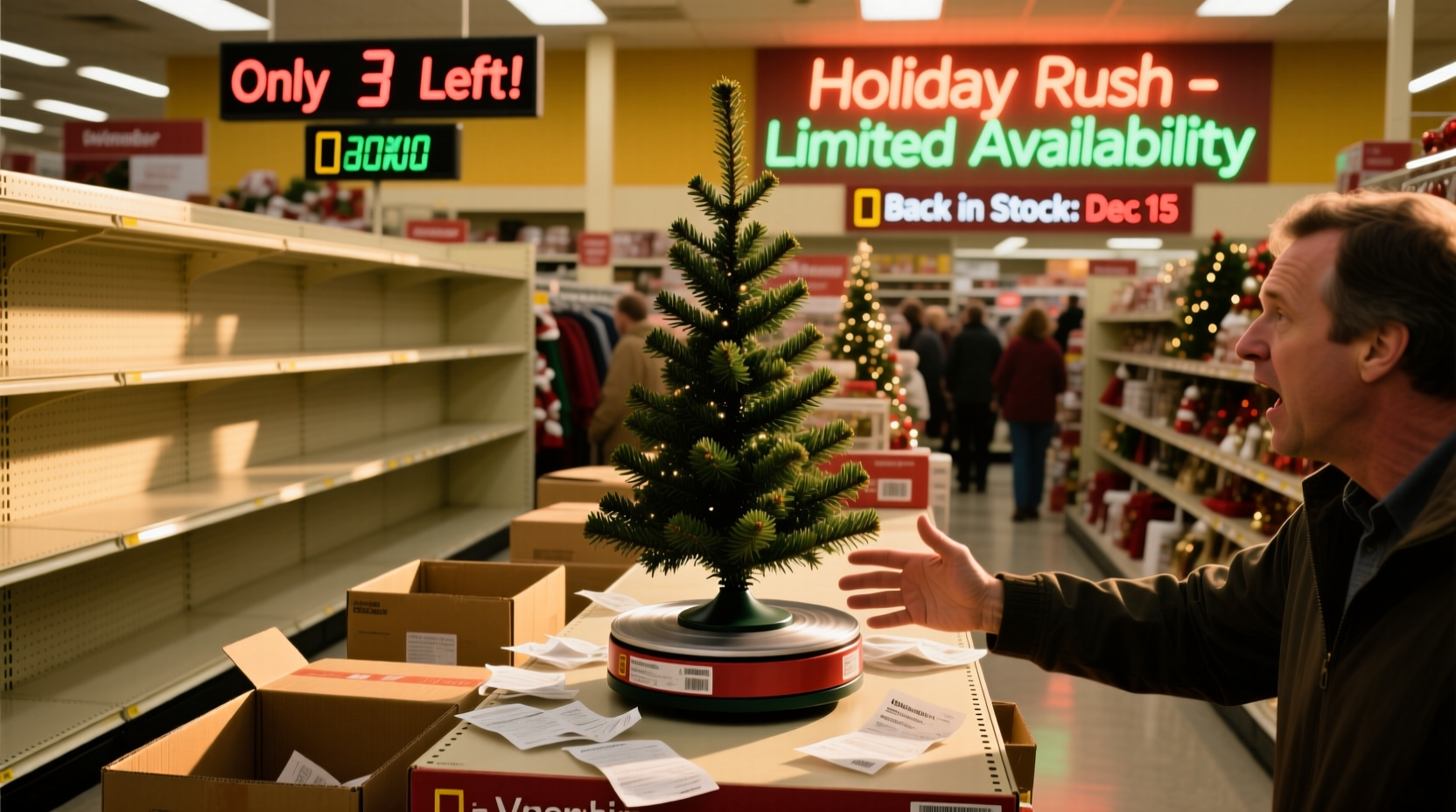
Rotating Christmas tree bases were once niche accessories, found mostly in specialty gift shops or high-end department stores. Today, they’re considered nearly essential by many decorators. These bases slowly turn the tree—usually completing a full rotation every 30 to 60 seconds—allowing ornaments and lights to be admired from every angle without walking around the tree. For families with limited space or those who prioritize aesthetic symmetry, the convenience is undeniable.
The technology itself isn’t new. Motorized platforms have been used in retail displays and museums for decades. But their adaptation for home use gained momentum in the early 2010s, thanks to improved engineering and mass production. Modern versions are quieter, sturdier, and capable of supporting trees up to 12 feet tall and several hundred pounds.
What transformed them from luxury to must-have was not just function—but visibility. Social media platforms like Pinterest, Instagram, and TikTok amplified their appeal. A video showing a glittering tree spinning gracefully under string lights quickly captures attention. Influencers showcase perfectly coordinated decor, often highlighting the ease of decorating a rotating base. As one lifestyle blogger noted: “It’s not just about convenience—it’s about creating a centerpiece that feels alive.”
Demand Peaks Before Supply Can Catch Up
The core issue behind annual sellouts is timing. Most consumers begin serious holiday shopping in November, especially after Thanksgiving. However, manufacturers operate on long lead times. Production decisions for seasonal goods are typically made in the spring or summer. If a company underestimates demand—even by 15%—it may not be able to ramp up output in time.
Unlike everyday items, rotating tree bases aren’t produced year-round. Factories often dedicate only a few months to manufacturing holiday-specific products. Once initial batches are shipped and sold, reordering is difficult due to compressed timelines and global logistics bottlenecks. Shipping delays, port congestion, and raw material shortages further limit flexibility.
Consider this: A manufacturer in Southeast Asia produces 200,000 units based on last year’s sales data. This year, however, a viral TikTok trend featuring “effortless Christmas decor” sends searches for rotating bases up by 40%. Retailers place emergency orders, but factories are already booked through December. The result? Widespread stockouts by mid-November.
“Seasonal forecasting is always a gamble. With rotating bases, we’ve seen demand double in two years—but capacity hasn’t followed.” — Marcus Lin, Supply Chain Analyst at HolidayGoods Insights
Why November Is the Critical Month
While Christmas is in December, preparation begins weeks earlier. November marks the start of key shopping triggers:
- Black Friday planning: Shoppers research deals early, locking in big-ticket items.
- School holidays: Families set up trees when children are home, often in late November.
- Decorating culture: Many Americans now treat tree setup as an event—complete with music, snacks, and social media posts.
- Gifting lead time: People buying the base as a gift need it shipped well before December 24.
This convergence creates a narrow window of peak demand. Unlike lights or ornaments—which can be bought even in early December—tree bases are needed earlier because they form the foundation of the display. Once a family commits to putting up the tree, there’s little room for delay.
Online analytics support this pattern. Google Trends data shows searches for “rotating Christmas tree stand” increase by over 300% between October and November each year. Amazon’s Best Sellers Rank for top models often jumps from outside the top 10,000 to within the top 500 in a matter of weeks.
Market Consolidation and Limited Competition
Another factor contributing to scarcity is market concentration. While dozens of brands claim to offer rotating bases, only a handful dominate in terms of quality, reliability, and consumer trust. Brands like Gorilla Rack, Northlight, and Best Choice Products consistently rank at the top of reviews for durability and smooth rotation.
Smaller or generic brands often struggle with motor burnout, wobbling, or weight limits. As a result, experienced shoppers stick to proven names. When everyone wants the same few models, competition intensifies—and inventory depletes faster.
A comparison of top-selling models reveals why certain brands dominate:
| Brand | Weight Capacity | Rotation Speed | Price Range | Common Issues |
|---|---|---|---|---|
| Gorilla Rack Deluxe | 75 lbs | One rotation per minute | $89–$110 | Occasional noise after long use |
| Northlight Motorized Stand | 50 lbs | 30 seconds per rotation | $65–$80 | Less stable with wide trees |
| Best Choice Products Turntable | 100 lbs | Adjustable speed | $70–$90 | Assembly instructions unclear |
| Generic Store Brand | 40 lbs (estimated) | Inconsistent | $30–$50 | Frequent motor failure |
Consumers are willing to pay more for reliability, especially when replacing a failed unit from a previous year. This loyalty narrows the effective supply pool and accelerates sellouts of preferred models.
Strategies to Secure a Rotating Base Before It's Gone
Waiting until mid-November drastically reduces your chances. But with planning and awareness, it’s possible to beat the rush. Here’s a realistic timeline and checklist for success.
Step-by-Step Guide: How to Buy a Rotating Christmas Tree Base Early
- August: Research models. Read reviews on Amazon, Reddit (r/Christmas), and YouTube teardowns. Note specs like weight capacity and noise level.
- September: Set price alerts. Use tools like CamelCamelCamel or Slickdeals to track drops and restocks.
- Early October: Pre-order if available. Some retailers open pre-orders for holiday items as early as September 15.
- Mid-October: Check warehouse clubs. Costco, Sam’s Club, and BJ’s often carry exclusive models in limited runs.
- Late October: Sign up for back-in-stock notifications. Enable email or app alerts on Amazon, Home Depot, and Walmart.
- First week of November: Buy immediately when available. Don’t wait—even a few hours can mean missing out.
Checklist: Avoid Last-Minute Disappointment
- ☑ Know your tree size and weight
- ☑ Choose a base rated for at least 20% more than your tree’s weight
- ☑ Verify power source (some require grounded outlets)
- ☑ Check return policy in case of defects
- ☑ Buy batteries (if remote-controlled) separately
- ☑ Measure floor space—rotating bases need clearance
Real Example: The Johnson Family’s Close Call
The Johnsons of Naperville, Illinois, learned the hard way in 2022. They waited until November 18 to buy a rotating base for their 8-foot Fraser fir. Both Amazon and Home Depot showed “currently unavailable.” Target had one left—but required in-store pickup 45 minutes away. By the time they arrived, it was gone.
“We ended up assembling a DIY turntable using a lazy Susan bearing from a hardware store,” said Sarah Johnson. “It worked, but it wasn’t smooth, and we had to manually spin it every few minutes.”
Determined not to repeat the mistake, they started monitoring deals in August 2023. They set up three separate stock alerts and purchased a Best Choice model on October 3—within minutes of a restock notification. “This year, our tree spins silently all night. Worth every bit of early effort,” she added.
Frequently Asked Questions
Can I use a rotating base with an artificial tree?
Yes, most rotating bases are designed specifically for artificial trees. Just ensure the stand’s diameter matches your tree’s pole and that the weight falls within the supported range. Some pre-lit trees come with compatible bases, but not all rotate.
Are rotating tree stands noisy?
Higher-quality models operate quietly, producing only a soft hum. Cheaper versions may emit a noticeable whirring sound, especially as they age. Look for customer reviews mentioning noise levels before buying.
Do I need a special outlet for a rotating base?
Most require a standard 120V electrical outlet. Avoid using extension cords, as voltage drops can strain the motor. If your tree is far from an outlet, consider installing a temporary floor cord cover for safety.
Conclusion: Plan Ahead, Decorate Stress-Free
The annual disappearance of rotating Christmas tree bases isn’t a mystery—it’s a predictable outcome of concentrated demand, limited production cycles, and the influence of digital trends. While retailers and manufacturers continue to adjust, the burden remains on consumers to act early.
By shifting your holiday planning forward by just six to eight weeks, you can avoid frustration, secure better prices, and enjoy a smoother decorating experience. The perfect spinning tree doesn’t happen by accident. It happens because someone decided in September that November would go differently.




 浙公网安备
33010002000092号
浙公网安备
33010002000092号 浙B2-20120091-4
Comments
No comments yet. Why don't you start the discussion?