
Rules are everywhere—on the road, at work, in schools, homes, and even within social circles. While they may sometimes feel restrictive or arbitrary, rules serve a foundational role in maintaining order, ensuring fairness, and promoting safety. Far from being mere suggestions, they act as invisible frameworks that guide human interaction and societal function. Understanding why rules matter goes beyond obedience; it’s about recognizing their deeper purpose in shaping environments where people can thrive.
The Purpose of Rules: More Than Just Control
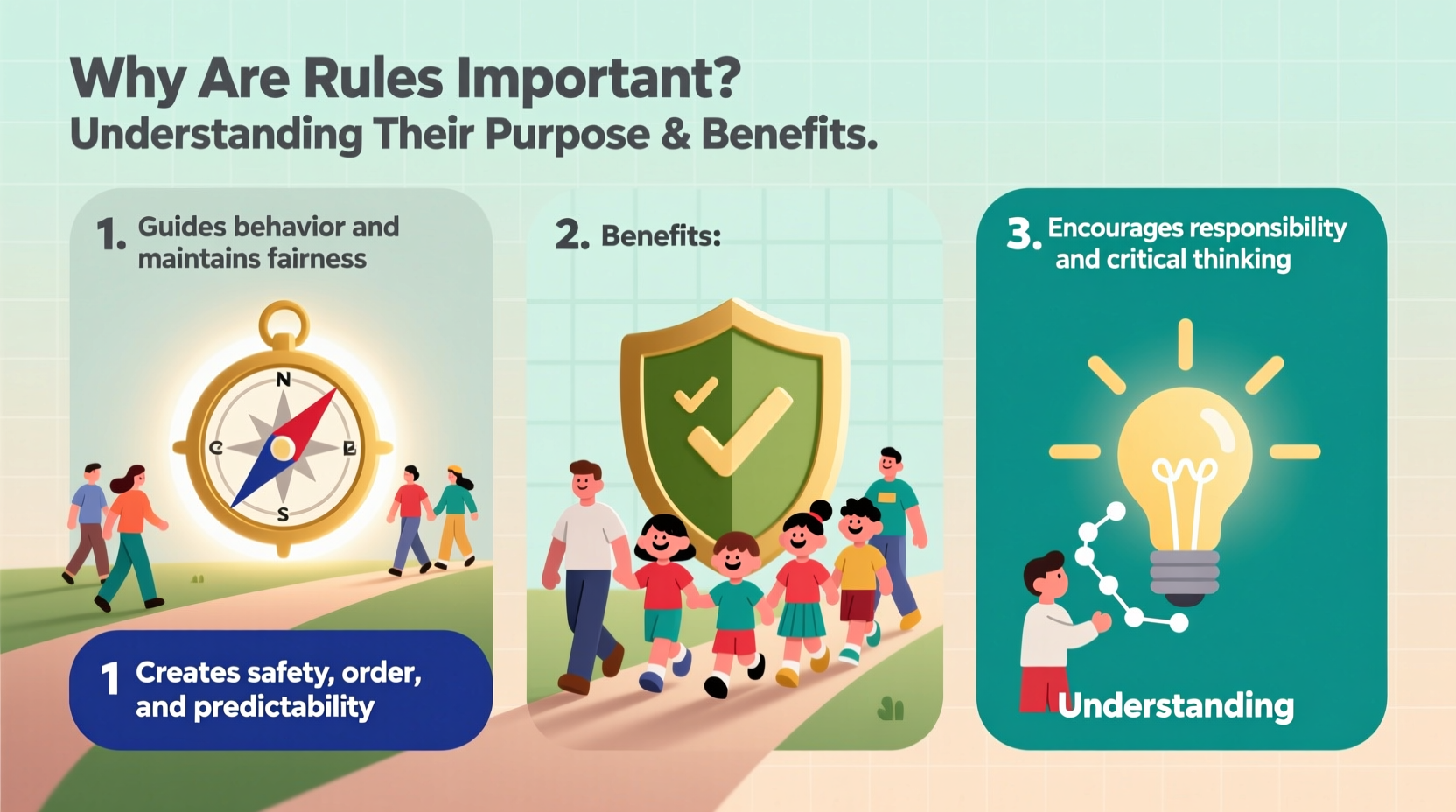
At their core, rules exist to create predictability. When individuals know what is expected of them and what consequences follow certain actions, decision-making becomes more consistent and less chaotic. This predictability fosters trust. In a classroom, for example, students who understand behavioral expectations are more likely to focus on learning rather than navigating uncertainty. Similarly, traffic laws allow drivers to anticipate each other’s movements, drastically reducing the risk of accidents.
Rules also define boundaries. They clarify what is acceptable and what is not, helping individuals navigate complex social dynamics. Without such boundaries, conflicts escalate quickly, cooperation breaks down, and progress stalls. Consider a team project without agreed-upon roles or deadlines—it often descends into confusion and frustration. Rules prevent this by establishing structure and accountability.
“Rules aren’t about limiting freedom—they’re about enabling collective freedom by preventing harm and chaos.” — Dr. Linda Chen, Behavioral Sociologist
Key Benefits of Rules in Daily Life
The advantages of well-designed rules extend across personal, professional, and societal levels. Here are three primary benefits:
- Safety and Protection: Rules protect individuals from physical, emotional, and financial harm. Seatbelt laws, workplace safety protocols, and anti-discrimination policies all exist to shield people from preventable risks.
- Fairness and Equality: Rules standardize treatment. In legal systems, due process ensures everyone receives equal consideration under the law, regardless of status. In schools, grading rubrics help ensure evaluations are based on merit, not bias.
- Efficiency and Productivity: Clear guidelines streamline processes. Businesses with documented procedures reduce errors and training time. Households with chore charts distribute responsibilities fairly, minimizing conflict.
Real-World Example: The Impact of School Rules
A middle school in Portland implemented a revised code of conduct focused on clarity and restorative practices. Previously, vague rules like “be respectful” led to inconsistent enforcement and student frustration. Teachers interpreted the rule differently, resulting in perceived favoritism.
The new system outlined specific behaviors—such as raising hands before speaking, using inclusive language, and submitting assignments on time—and paired them with clear consequences and support mechanisms. Within one semester, disciplinary referrals dropped by 42%, teacher satisfaction increased, and students reported feeling safer and more respected.
This case illustrates that effective rules are not just about punishment—they’re about creating a shared understanding that empowers everyone involved.
Common Rule Pitfalls and How to Avoid Them
Not all rules are effective. Poorly designed or inconsistently enforced rules can breed resentment and noncompliance. Below is a comparison of common do’s and don’ts in rule creation:
| Do’s | Don’ts |
|---|---|
| Involve stakeholders in rule development | Impose rules without consultation |
| Keep rules simple and clearly written | Create overly complex or ambiguous guidelines |
| Enforce rules consistently and fairly | Apply rules selectively or arbitrarily |
| Review and update rules periodically | Maintain outdated or irrelevant rules |
| Explain the reasoning behind each rule | Expect compliance without context |
Effective rule-making requires ongoing evaluation. What works in one context may fail in another. Flexibility and responsiveness are key to maintaining legitimacy and relevance.
Building Effective Rules: A Step-by-Step Guide
Whether you're setting family guidelines, workplace policies, or community standards, follow this structured approach to create meaningful rules:
- Identify the Problem: Determine what issue the rule aims to address—e.g., chronic lateness, unsafe behavior, or miscommunication.
- Consult Affected Parties: Gather input from those who will follow the rule. Their insights improve buy-in and practicality.
- Draft Clear Language: Use precise, positive phrasing. Instead of “Don’t shout,” say “Speak in a calm, respectful tone.”
- Define Consequences and Support: Specify what happens if the rule is broken and what help is available for compliance.
- Communicate and Train: Share the rule widely and provide examples or training sessions to ensure understanding.
- Monitor and Adjust: Observe outcomes over time. Revise rules that aren’t working or have unintended effects.
Essential Tips for Rule Compliance and Culture Building
- Reward adherence publicly when appropriate—recognition reinforces positive behavior.
- Address violations promptly but fairly. Delayed enforcement weakens credibility.
- Use restorative approaches when possible—focus on repairing harm rather than only punishing.
- Document rules in accessible formats (e.g., handbooks, posters, digital portals).
- Encourage feedback loops so people can suggest improvements without fear of reprisal.
Frequently Asked Questions
Why do some rules feel unfair?
Rules may seem unfair when they lack transparency, are applied inconsistently, or don’t consider individual circumstances. To mitigate this, involve diverse perspectives during rule creation and allow for appeals or adjustments when justified.
Can too many rules be harmful?
Yes. Excessive rules can lead to bureaucracy, reduced autonomy, and resistance. Prioritize essential rules that address safety, fairness, and efficiency. Regular audits help eliminate redundancy.
What if a rule no longer makes sense?
Rules should evolve. If data or experience shows a rule is outdated or counterproductive, revise or remove it. Stagnant rules lose legitimacy and compliance.
Conclusion: Embracing Rules as Tools for Growth
Rules are not obstacles to freedom—they are enablers of it. By defining boundaries, ensuring fairness, and promoting safety, they create the conditions in which individuals and communities can flourish. From childhood classrooms to global institutions, rules form the backbone of functional societies.
The key lies in designing rules thoughtfully, enforcing them fairly, and remaining open to change. When rules are transparent, reasonable, and rooted in shared values, they inspire cooperation rather than resistance.




 浙公网安备
33010002000092号
浙公网安备
33010002000092号 浙B2-20120091-4
Comments
No comments yet. Why don't you start the discussion?