
Snakes have long fascinated and unsettled humans alike. Among their most feared traits is venom—deadly, precise, and biologically complex. But why did snakes evolve venom in the first place? Far from being a random adaptation, venom is the result of millions of years of evolutionary refinement. It serves not only as a tool for survival but also as a remarkable example of natural selection shaping physiology to meet ecological demands. Understanding why snakes are venomous requires delving into evolutionary biology, predator-prey dynamics, and biochemical innovation.
The Evolutionary Origins of Snake Venom
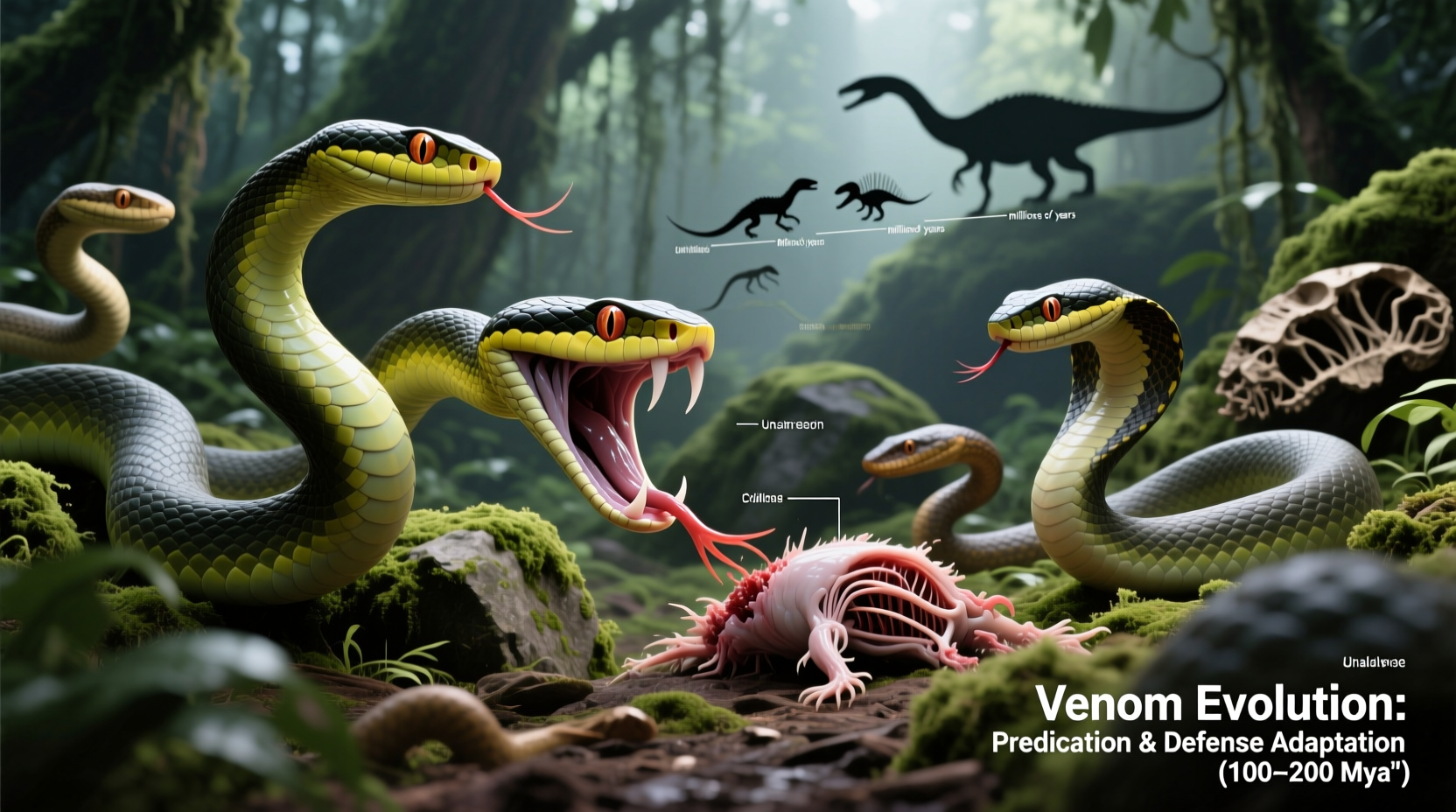
Venom in snakes did not appear overnight. Instead, it evolved gradually from existing biological systems. Research indicates that snake venom originated from modifications of salivary glands. Over time, genes responsible for producing digestive enzymes in saliva were duplicated and repurposed to create toxins. These modified proteins began targeting specific physiological processes in prey, such as blood clotting, nerve signaling, or muscle contraction.
This process, known as \"recruitment,\" allowed early venomous snakes to gain a competitive edge. Fossil and genetic evidence suggests that the common ancestor of modern venomous snakes lived around 60–80 million years ago. From this lineage emerged today’s vipers, cobras, elapids, and colubrids, each with distinct venom compositions tailored to their environments and diets.
“Venom is not just a weapon—it’s a highly specialized biochemical toolkit shaped by natural selection.” — Dr. Bryan Fry, Venom Evolution Biologist, University of Queensland
Predation: The Primary Purpose of Venom
The most fundamental reason snakes evolved venom is to aid in hunting. Unlike constrictors that subdue prey through physical force, venomous snakes rely on chemical warfare. Injecting venom allows them to immobilize or kill prey quickly, minimizing the risk of injury during capture.
Different species use venom in varied ways:
- Neurotoxic venoms, like those of cobras and mambas, disrupt nerve signals, leading to paralysis.
- Hemotoxic venoms, found in vipers and rattlesnakes, destroy tissue and disrupt blood flow, causing shock and internal bleeding.
- Cytotoxic venoms break down cells at the bite site, aiding digestion.
In many cases, venom also begins the digestive process externally—a phenomenon called “pre-digestion.” Enzymes in the venom start breaking down tissues before the snake even swallows its meal, making nutrient absorption more efficient.
Defense Mechanisms and Warning Signals
While predation is the primary driver, venom also plays a crucial role in defense. When threatened, many venomous snakes will deliver a “dry bite” (without injecting venom) or use warning behaviors like hissing, hooding, or rattling to deter predators. This conserves venom for hunting while still providing protection.
Some species have evolved bright coloration or distinct patterns—such as the coral snake’s red-yellow-black bands—as aposematic signals. These visual warnings communicate danger to potential predators, reducing the need for actual envenomation.
Interestingly, defensive bites often contain more venom than predatory ones. This reflects an evolutionary trade-off: when facing a large threat, the snake prioritizes survival over resource conservation.
Biochemical Diversity and Ecological Adaptation
Venom composition varies dramatically across species, reflecting their ecological niches. For example:
| Snake Species | Primary Prey | Venom Type | Key Toxins |
|---|---|---|---|
| King Cobra (Ophiophagus hannah) | Other snakes | Neurotoxic | Alpha-neurotoxins, fasciculins |
| Eastern Diamondback Rattlesnake | Rodents, rabbits | Hemotoxic | Proteases, metalloproteinases |
| Tiger Snake (Notechis scutatus) | Frogs, small mammals | Mixed (neuro + coagulant) | Textilotoxin, prothrombin activators |
| Gaboon Viper | Birds, rodents | Cytotoxic + Hemotoxic | Phospholipase A2, hemorrhagins |
This variation underscores how natural selection fine-tunes venom to maximize effectiveness against specific prey. Snakes that feed on fast-moving animals benefit from rapid neurotoxins, while those preying on burrowing rodents may rely on slower-acting but deeply penetrating hemotoxins.
Human Implications and Medical Research
While snake venom poses risks to humans, it has also become a valuable resource in medicine. Components of venom are being studied for their potential in treating conditions such as high blood pressure, chronic pain, and even cancer.
For instance:
- Captopril, one of the first ACE inhibitors used to treat hypertension, was developed from a peptide found in the venom of the Brazilian pit viper.
- Some neurotoxins are being explored for use in targeted painkillers that avoid opioid side effects.
- Disintegrins from viper venom show promise in preventing tumor growth by inhibiting blood vessel formation.
This duality—venom as both a threat and a therapeutic tool—highlights the complexity of evolutionary adaptations. What evolved to ensure a snake’s survival now holds keys to advancing human health.
Mini Case Study: The Mozambique Spitting Cobra
The Mozambique spitting cobra (Naja mossambica) exemplifies the dual function of venom. Native to sub-Saharan Africa, this snake primarily uses its potent neurotoxic and cytotoxic venom to subdue amphibians and small mammals. However, when confronted by larger threats—including humans—it can accurately spit venom up to 2.5 meters, aiming for the eyes.
This defensive adaptation reduces the risk of physical confrontation while effectively deterring predators. Field studies show that individuals who encounter this behavior are less likely to pursue the snake further, demonstrating how venom serves both offensive and defensive roles depending on context.
FAQ
Are all venomous snakes dangerous to humans?
No. While all venomous snakes produce toxins, not all are medically significant to humans. Some species have weak venom, deliver small quantities, or possess fangs that cannot easily penetrate human skin. Examples include the American garter snake, which is mildly venomous but harmless to people.
Can snakes run out of venom?
Yes. After delivering a full envenomation, it can take hours or even days for a snake to replenish its venom supply. During this time, it may resort to dry bites when threatened. This limitation influences how snakes decide when to inject venom.
Do non-venomous snakes have any advantages over venomous ones?
Absolutely. Non-venomous snakes like pythons and boas rely on constriction, which requires no biochemical investment in venom production. This allows them to grow larger and thrive in environments where venom might offer less advantage, such as dense forests or aquatic habitats.
Checklist: Key Takeaways About Snake Venom Evolution
- Venom evolved from modified salivary glands through gene duplication and natural selection.
- The primary function is predation—rapidly immobilizing or killing prey.
- Venom also serves as a potent defense mechanism, especially when paired with warning displays.
- Venom composition varies widely based on diet, habitat, and evolutionary history.
- Components of snake venom are being used in cutting-edge medical research.
- Snakes can modulate venom delivery, using dry bites when appropriate to conserve resources.
Conclusion
The question of why snakes are venomous reveals a story of survival, adaptation, and biochemical ingenuity. Far from being mere instruments of fear, venomous snakes represent a pinnacle of evolutionary specialization—each drop of venom a product of millions of years of refinement. By understanding the purpose behind venom, we not only demystify these creatures but also uncover pathways to scientific innovation.




 浙公网安备
33010002000092号
浙公网安备
33010002000092号 浙B2-20120091-4
Comments
No comments yet. Why don't you start the discussion?