
Autism Spectrum Disorder (ASD) is a neurodevelopmental condition characterized by differences in social interaction, communication, and behavior. One of the most misunderstood aspects of autism is verbal ability—or the lack thereof. While many autistic individuals speak fluently, others do not use spoken language at all. This variation is often confusing to those unfamiliar with autism, leading to misconceptions about intelligence, awareness, or emotional capacity. The reality is far more nuanced: being nonverbal does not mean being non-communicative or non-cognitive. Understanding why some autistic people are nonverbal requires insight into neurological differences, sensory processing, and the diverse ways humans express themselves.
What Does \"Nonverbal\" Mean in Autism?
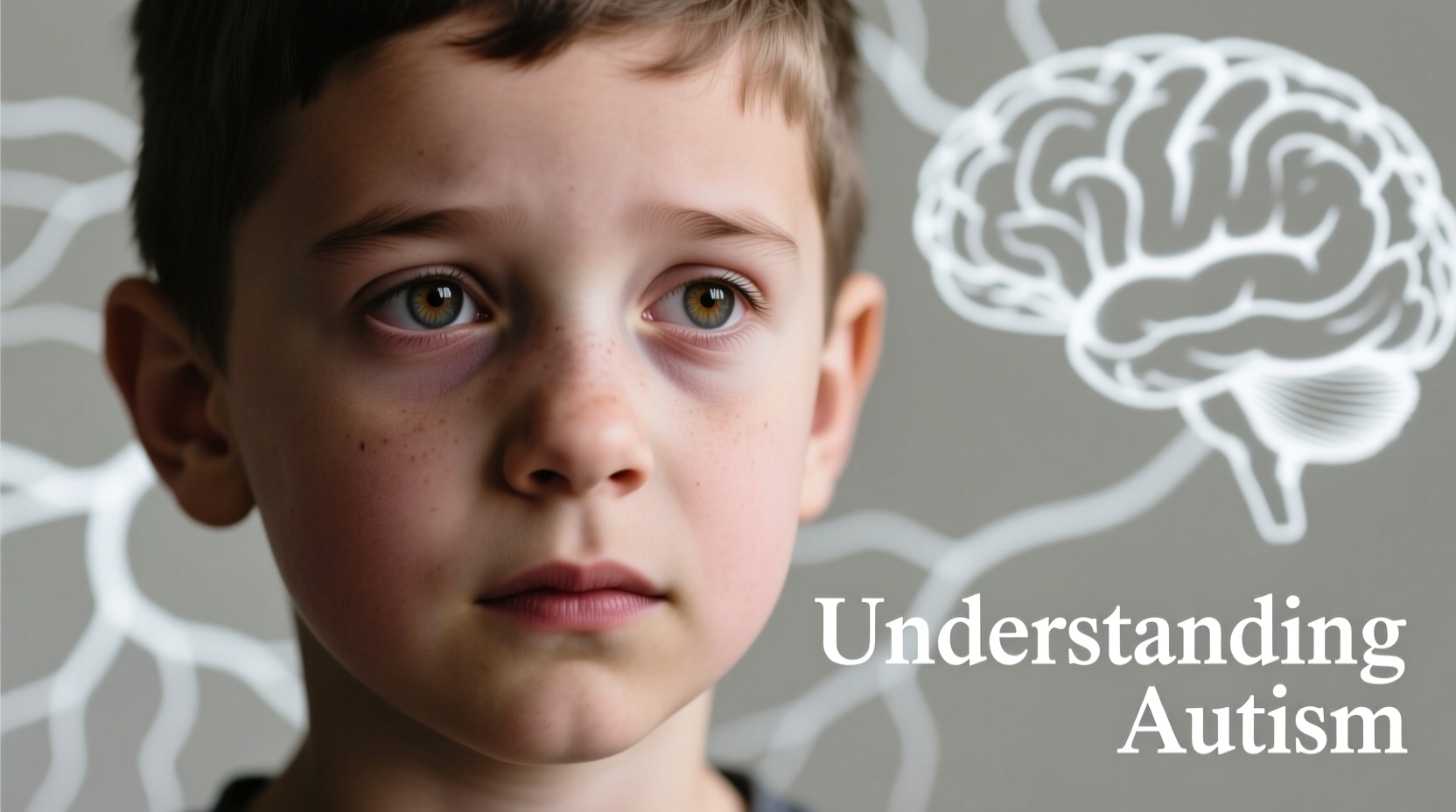
In the context of autism, \"nonverbal\" typically refers to individuals who do not use spoken words as their primary means of communication. It's important to clarify that this doesn't necessarily mean they never speak. Some may be minimally verbal—using only a few words or phrases—while others may be completely silent. Others might speak in certain settings but lose the ability under stress, fatigue, or sensory overload, a phenomenon known as situational mutism.
Crucially, nonverbal status says nothing about cognitive ability. Many nonverbal autistic individuals have average or above-average intelligence. Their challenge lies not in understanding language, but in producing it due to neurological and motor planning difficulties.
Neurological and Developmental Factors Behind Nonverbal Autism
The root of nonverbal autism lies in how the brain processes and coordinates speech. Several interrelated factors contribute:
- Apraxia of Speech: A motor planning disorder where the brain struggles to coordinate the muscle movements needed for speech, despite knowing what to say.
- Dyspraxia: A broader motor coordination difficulty affecting fine and gross motor skills, including those required for articulation.
- Auditory Processing Differences: Some autistic individuals process sounds differently, making it hard to distinguish speech from background noise or to sequence sounds correctly.
- Executive Function Challenges: Difficulty organizing thoughts into coherent sentences in real time.
- Sensory Overload: In overwhelming environments, the brain may shut down speech pathways as a protective mechanism.
Research shows that up to 25–30% of autistic children do not develop functional speech by age five. However, many go on to communicate effectively through alternative methods later in life.
“Not speaking is not the same as not thinking. We must stop equating speech with intelligence.” — Dr. Steven Kapp, Autistic researcher and lecturer, University of Portsmouth
Alternative Communication Methods That Work
When speech isn’t accessible, alternative and augmentative communication (AAC) tools bridge the gap. These are not substitutes for speech—they are valid forms of expression in their own right.
| Method | Description | Best For |
|---|---|---|
| Picture Exchange Communication System (PECS) | Using images to request items or express ideas | Early learners, visual thinkers |
| Speech-Generating Devices (SGDs) | Tablets or dedicated devices that produce voice output | Individuals with reliable motor control |
| Sign Language | Manual gestures representing words or concepts | Those with strong imitation skills |
| Spelling-to-Communicate (S2C) / Rapid Prompting Method (RPM) | Pointing to letters on a board or keyboard to spell words | Minimally verbal individuals with literacy potential |
| Gesture & Body Language | Nods, eye gaze, pulling, leading | Basic needs and emotional expression |
Emerging evidence suggests early access to AAC does not hinder speech development—in fact, it often supports it. Children exposed to multiple communication modes frequently develop speech alongside or after mastering symbolic communication.
Real Example: Jamie’s Journey to Communication
Jamie, a 10-year-old autistic boy, was labeled “low functioning” in preschool due to his lack of speech. He struggled with transitions, covered his ears in noisy hallways, and rarely made eye contact. His teachers assumed he didn’t understand instructions. At home, however, Jamie would line up toys with precision and hum melodies from memory.
At age seven, a speech therapist introduced him to a tablet-based AAC device. Within weeks, Jamie began selecting icons to request snacks, music, and bathroom breaks. By age nine, he spelled out full sentences using a letter board during quiet sessions with his aide. Today, Jamie types independently to write stories and answer school questions. He still doesn’t speak, but he communicates complex thoughts and dreams of becoming a marine biologist.
Jamie’s case illustrates how assumptions based on speech can severely underestimate capability. With the right tools and belief in his potential, his voice emerged—not through speech, but through technology and support.
Common Misconceptions About Nonverbal Autistic Individuals
Several myths persist about nonverbal autistic people, often leading to exclusion or inadequate support:
- Myth: They don’t understand language.
Truth: Many comprehend far more than they can express. - Myth: They lack emotions or social interest.
Truth: Social connection is often desired but difficult to initiate or maintain in conventional ways. - Myth: If they don’t speak by age five, they never will.
Truth: Late emergence of speech is documented, sometimes in adolescence or adulthood. - Myth: AAC is only for “severe” cases.
Truth: AAC benefits anyone struggling with expressive communication, regardless of diagnosis.
Support Checklist: How to Communicate Respectfully with Nonverbal Autistic People
Whether you’re a parent, teacher, therapist, or peer, these steps foster inclusive and effective communication:
- Presume competence at all times.
- Use clear, simple language without talking down.
- Allow ample response time—up to 30 seconds or more.
- Observe nonverbal cues like gaze, gestures, or body shifts.
- Introduce AAC tools early and consistently.
- Involve the individual in decisions about their communication method.
- Partner with speech-language pathologists experienced in autism and AAC.
Frequently Asked Questions
Can nonverbal autistic people learn to speak later in life?
Yes, some do develop speech after years of silence, especially with intensive therapy and reduced anxiety. Others remain nonverbal but thrive using alternative methods. Progress varies widely and should not be measured solely by speech acquisition.
Is being nonverbal a sign of lower intelligence?
No. Intelligence cannot be assessed through speech alone. Many nonverbal autistic individuals demonstrate high-level thinking through writing, art, or technology-assisted communication. Standard IQ tests often misrepresent their abilities due to motor and sensory challenges.
How can schools better support nonverbal autistic students?
Schools should provide access to AAC devices, train staff in inclusive communication strategies, reduce sensory triggers, and prioritize functional communication over behavioral compliance. Individualized education plans (IEPs) must include communication goals developed with input from the student and specialists.
Conclusion: Rethinking Communication and Embracing Neurodiversity
Understanding why some autistic people are nonverbal opens a door to rethinking what communication really means. Speech is just one channel among many. When we value typing, pointing, gesturing, and assistive technology as legitimate forms of expression, we affirm the dignity and agency of nonverbal individuals.
Instead of asking, “Why don’t they talk?” we should ask, “How can we listen?” The answers lie in patience, innovation, and a commitment to inclusion. Every person has a voice—even if it doesn’t come from their mouth.




 浙公网安备
33010002000092号
浙公网安备
33010002000092号 浙B2-20120091-4
Comments
No comments yet. Why don't you start the discussion?