
As the holiday season approaches, many homeowners turn to string lights to create a warm, festive atmosphere. Whether draping them over trees, wrapping them around railings, or lining windowsills, Christmas lights play a central role in seasonal décor. But when it comes to dimming those lights—especially for ambiance or energy savings—not all strings behave as expected. Some flicker, buzz, or fail to dim at all. The reason? Not all Christmas lights are designed to be dimmed. Understanding why certain lights can’t be dimmed—and how to select ones that work with your dimmer—is essential for both performance and safety.
The Science Behind Dimmability: Why Some Lights Just Won’t Cooperate
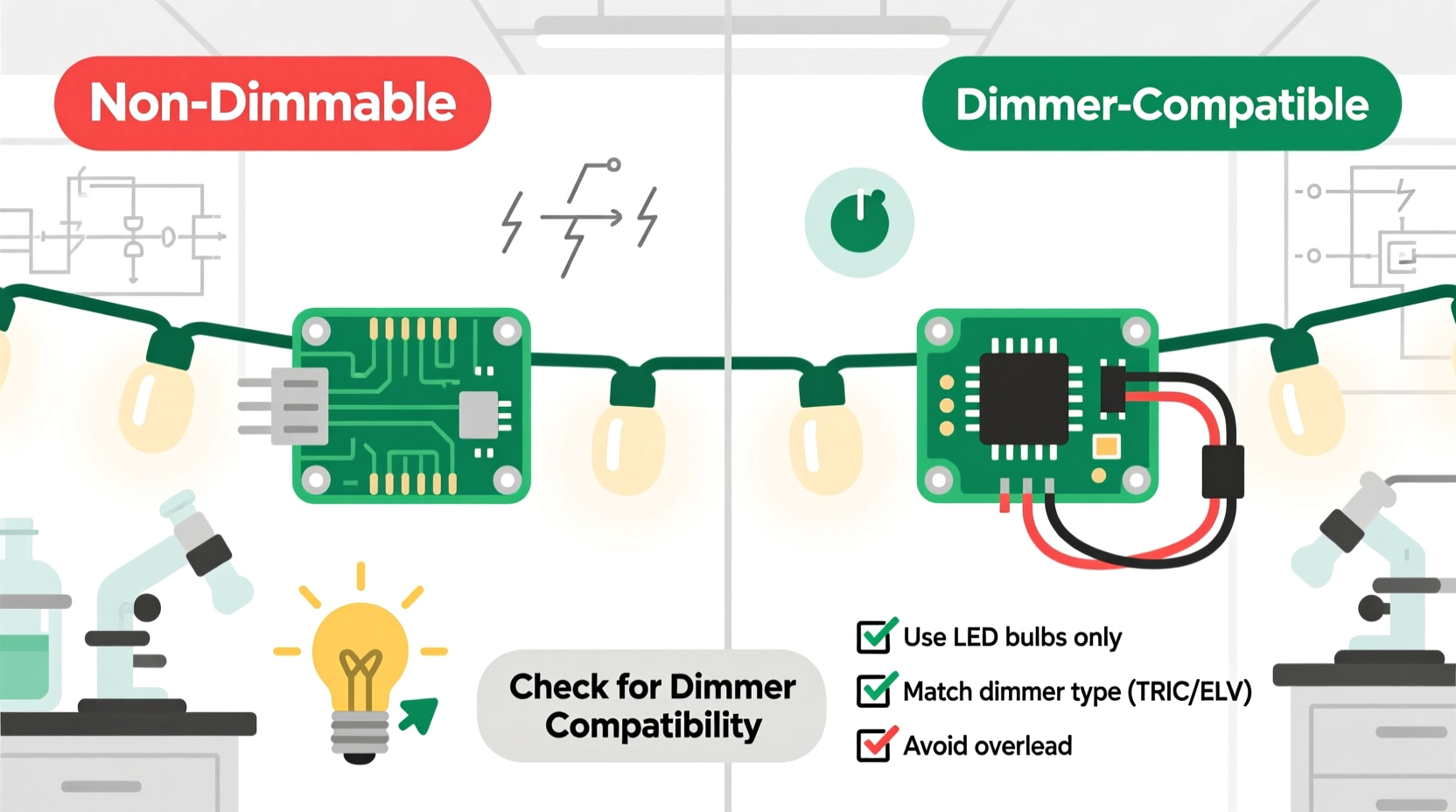
Dimmable lighting relies on reducing the electrical current delivered to the bulb. Traditional incandescent bulbs handle this well because their filament naturally responds to lower voltage by glowing less brightly. However, modern Christmas lights—particularly LED models—operate differently. Most use constant-current drivers or internal circuitry that expect a consistent power supply. When a dimmer interrupts that flow, especially through phase-cut dimming (common in household switches), the light’s electronics may misinterpret the signal.
This mismatch often results in undesirable behavior: flickering, strobing, inconsistent brightness levels, or complete failure to illuminate. In some cases, attempting to dim non-dimmable LEDs can even damage the light string or the dimmer switch over time. The core issue lies in compatibility between the control mechanism (the dimmer) and the load type (the lights).
Types of Christmas Lights and Their Dimming Capabilities
Not all Christmas lights are created equal. Their ability to dim depends largely on the technology used and how they’re engineered. Here's a breakdown of common types:
- Incandescent Mini Lights: These traditional bulbs are inherently dimmable because they rely on a heated filament. They respond smoothly to most standard dimmers, making them a reliable choice for adjustable lighting. However, they consume more energy and have shorter lifespans compared to LEDs.
- LED Lights – Non-Dimmable: Many inexpensive LED strings are built without dimming circuitry. They’re designed for on/off operation only. Using these with a dimmer often leads to erratic behavior and reduced longevity.
- LED Lights – Dimmable: These contain specialized drivers that interpret dimmer signals correctly. They must be paired with compatible dimmers to function properly. Look for explicit labeling such as “dimmable” or “works with leading-edge/trailing-edge dimmers.”
- Smart LED Strings: Wi-Fi or Bluetooth-enabled lights (like Philips Hue or Govee) offer app-based dimming and color control. While they bypass traditional wall dimmers entirely, they require a stable power source and are typically not designed to be used with physical dimmer switches.
The shift toward energy-efficient LEDs has introduced complexity into what was once a simple plug-and-play system. Consumers now need to consider not just brightness and color, but also electrical compatibility.
How to Choose Compatible Dimmable Christmas Lights
Selecting the right dimmable lights involves more than just reading a label. It requires understanding your existing electrical setup and matching components accordingly. Follow these steps to ensure seamless integration:
- Identify Your Dimmer Type: Older homes often use leading-edge (triac-based) dimmers, which work best with higher-wattage incandescent loads. Modern low-wattage LEDs typically require trailing-edge (electronic low-voltage) dimmers for smooth performance.
- Check Total Load Requirements: LED strings draw very little power. A typical 50-light strand might use only 4–6 watts. Many dimmers have a minimum load requirement (often 25–40 watts). If the total wattage of your connected lights falls below this threshold, the dimmer may not function correctly.
- Verify Light Specifications: Confirm that the product is labeled “dimmable.” Check manufacturer documentation for compatibility with specific dimmer brands (e.g., Lutron, Leviton).
- Use a Compatible Power Supply: For smart lights, avoid connecting them to any wall dimmer. Instead, keep the switch fully on and control brightness via app or remote.
- Test Before Full Installation: Plug in a single strand first to verify smooth dimming across the full range, from 10% to 100%, without flickering or buzzing.
“Pairing the wrong LED string with an incompatible dimmer is one of the most common causes of premature light failure and customer dissatisfaction during the holidays.” — Mark Reynolds, Electrical Systems Engineer at Holiday Lighting Solutions Inc.
Do’s and Don’ts: Choosing & Using Dimmable Christmas Lights
| Do’s | Don’ts |
|---|---|
| ✔ Do purchase lights explicitly labeled “dimmable” | ✘ Don’t assume all LED lights can be dimmed |
| ✔ Do match your dimmer type (leading vs. trailing edge) | ✘ Don’t use non-dimmable LEDs on a dimmer circuit |
| ✔ Do calculate total wattage to meet dimmer minimums | ✘ Don’t daisy-chain too many strings if exceeding manufacturer limits |
| ✔ Do use a dimmer rated for LED loads | ✘ Don’t install smart lights behind a wall dimmer |
| ✔ Do test performance before permanent installation | ✘ Don’t ignore buzzing or flickering—these are warning signs |
A Real-World Example: One Homeowner’s Dimming Dilemma
Sarah, a homeowner in Portland, Oregon, wanted to create a cozy evening ambiance using dimmable LED Christmas lights along her staircase railing. She purchased a popular brand of “warm white” LED mini-lights advertised as energy-saving and long-lasting. After installation, she connected them to her existing wall dimmer—originally installed for incandescent porch lights.
When she tried to dim the lights, they flickered violently at low settings and emitted a high-pitched whine. Frustrated, she contacted the manufacturer, who explained that while the lights were technically dimmable, they required a trailing-edge dimmer. Her older triac-based dimmer couldn’t communicate effectively with the low-power LED driver.
The solution? Sarah replaced her wall dimmer with a Lutron Diva LED-compatible model. Once installed, the same lights dimmed smoothly from 100% down to a soft 10%, creating the exact mood she had envisioned. This case highlights how component compatibility—not just product claims—is critical for success.
Step-by-Step Guide to Installing Dimmable Christmas Lights Safely
To ensure your holiday lighting works flawlessly throughout the season, follow this practical sequence:
- Assess Your Current Setup: Determine whether you're using a wall dimmer and identify its type (check labels or consult an electrician if unsure).
- Select the Right Lights: Choose products clearly marked as “dimmable” and verify compatibility with your dimmer brand if possible.
- Calculate Total Wattage: Add up the wattage of all strings you plan to connect. Ensure it meets the minimum load of your dimmer (or exceeds it safely within maximum ratings).
- Install or Upgrade Dimmer (if needed): Replace outdated dimmers with an LED-compatible model. Turn off power at the breaker and follow local electrical codes.
- Connect Without Overloading: Avoid exceeding the maximum number of connected strings specified by the manufacturer.
- Test Gradually: Power on the lights and slowly adjust the dimmer from high to low. Watch for flickering, noise, or uneven brightness.
- Monitor Performance: Re-check after several hours of operation. Heat buildup or voltage drop can reveal issues not apparent during initial testing.
Frequently Asked Questions
Can I make non-dimmable Christmas lights dimmable?
No. Modifying non-dimmable lights is unsafe and voids warranties. The internal circuitry isn’t designed to handle variable voltage. Attempting to force dimming can lead to overheating, component failure, or fire risk. Always use lights specifically rated as dimmable.
Why do my dimmable LED lights still flicker slightly?
Minor flickering can occur due to incompatible dimmers, insufficient load, or electromagnetic interference. Try adding a dummy load (like a small incandescent nightlight on the same circuit) to stabilize the signal. Alternatively, switch to a high-quality trailing-edge dimmer designed for low-wattage LEDs.
Are battery-operated Christmas lights dimmable?
Some are. Battery-powered LED strings often include built-in dimming modes controlled by a button or remote. However, they cannot be dimmed via wall switches since they operate independently of household circuits. Check product details for multi-level brightness options.
Final Thoughts: Lighting Up the Holidays the Right Way
The joy of holiday decorating shouldn’t come with electrical frustration. Knowing why some Christmas lights aren’t dimmable—and how to choose ones that are—empowers you to create beautiful, functional displays without compromising safety or performance. Compatibility isn’t just about brightness or color temperature; it’s about harmonizing technology across every part of the system: lights, dimmers, and power sources.
Take the time to read labels, understand your home’s electrical setup, and invest in quality components. Whether you’re illuminating a mantle, wrapping a tree, or outlining your roofline, the right combination of dimmable lights and proper controls transforms simple decoration into an experience—one that glows warmly, adjusts gracefully, and lasts for seasons to come.




 浙公网安备
33010002000092号
浙公网安备
33010002000092号 浙B2-20120091-4
Comments
No comments yet. Why don't you start the discussion?