
As families gather around their freshly decorated Christmas trees each year, few expect a puddle forming beneath the trunk. Yet, many households encounter the frustrating issue of water leakage from their tree stand. Not only does this create a slipping hazard, but it can also damage hardwood floors, ruin rugs, and shorten the life of the tree due to inconsistent hydration. Understanding why leaks occur—and how to prevent or fix them—is essential for a safe, beautiful, and long-lasting holiday centerpiece.
Christmas tree stands are designed to hold several gallons of water, keeping real trees hydrated throughout the season. However, over time, wear and tear, poor design, or user error can compromise their integrity. The good news is that most leaks are fixable with simple tools and preventive habits. This guide dives into the root causes of leakage, offers tested solutions, and shares expert insights to help you enjoy a worry-free holiday display.
Common Causes of Leaking Christmas Tree Stands
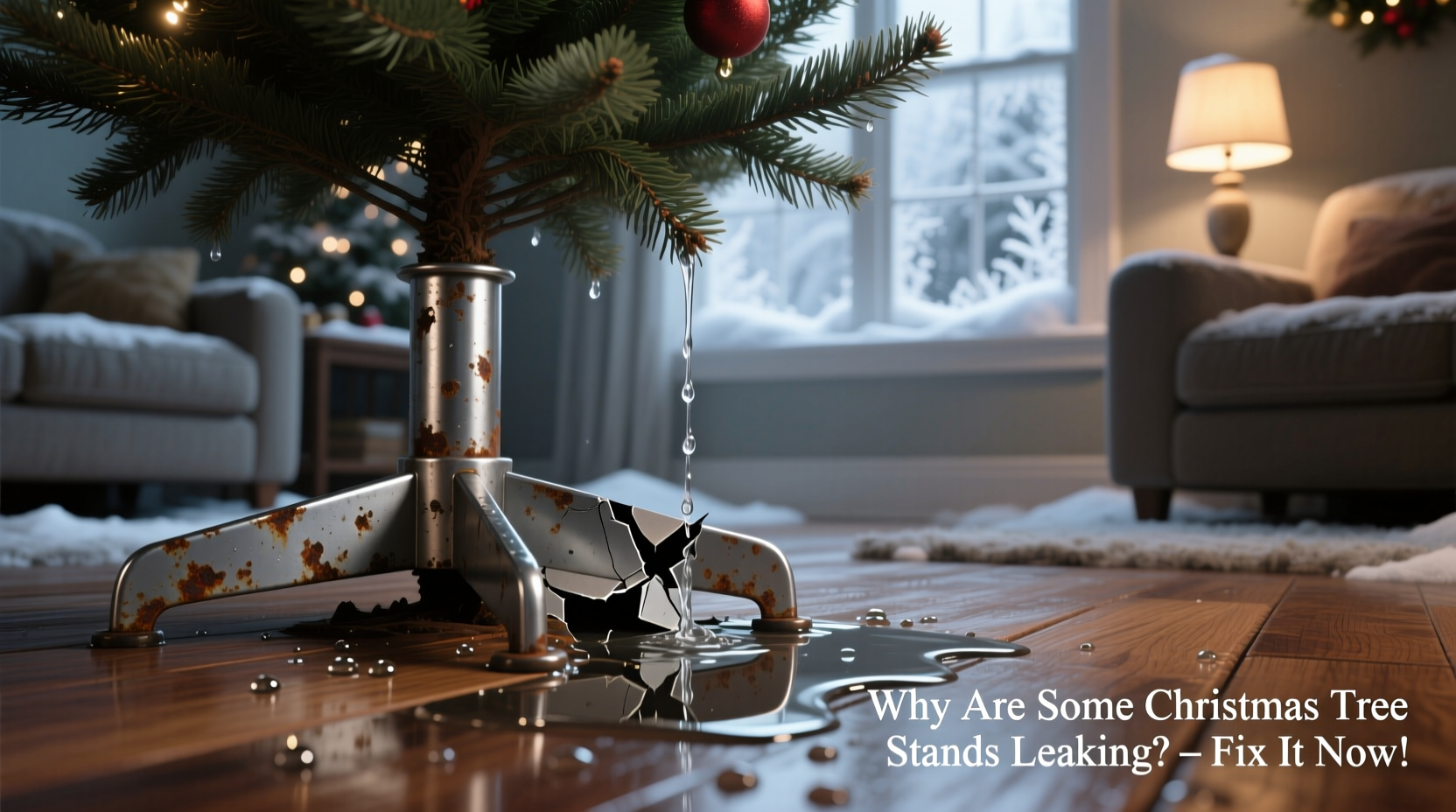
Not all leaks stem from the same source. Identifying the cause is the first step toward an effective fix. Below are the most frequent reasons why water escapes from a Christmas tree stand:
- Cracked or warped base: Plastic stands, especially lower-end models, can develop hairline fractures after repeated use or exposure to temperature changes.
- Loose or damaged bolts: Many stands use tightening mechanisms (screws, wingnuts, or threaded bolts) to secure the tree. If these aren’t tightened properly—or if they strip—the base may not seal correctly, allowing water to seep out.
- Worn rubber gaskets or seals: Some stands include rubber washers or O-rings to create a watertight seal between components. Over time, these degrade and lose elasticity.
- Overfilling the reservoir: Pouring water beyond the maximum line can cause overflow, especially when the tree shifts or settles.
- Uneven floor surfaces: A tilted stand increases pressure on one side, potentially forcing water past weak points or gaps.
- Poor manufacturing quality: Budget stands often use thin plastic or imprecise molds, making them prone to warping and leakage from day one.
Step-by-Step Guide to Fix a Leaking Tree Stand
Once you’ve identified the source of the leak, follow this systematic approach to repair or mitigate the problem.
- Empty and dry the stand completely. Remove the tree if possible, drain all water, and wipe down the interior with a clean towel. Let it air-dry for several hours.
- Inspect for visible damage. Examine the base, sides, and bolt holes under bright light. Run your fingers along seams to detect hairline cracks.
- Tighten or replace bolts and screws. Use a wrench or screwdriver to ensure all fasteners are snug—but avoid over-tightening, which can crack plastic.
- Replace worn seals. If your stand uses rubber gaskets, remove them and take them to a hardware store to find matching replacements.
- Apply waterproof sealant to cracks. For minor fractures in plastic or metal stands, use a food-safe epoxy or aquarium-grade silicone sealant. Apply generously, allow it to cure for 24–48 hours, and retest before use.
- Test the repair. Fill the stand with water away from flooring (e.g., in a garage or bathtub). Wait 30 minutes to check for new leaks.
If the stand is beyond repair, consider upgrading to a higher-quality model. Investing in durability pays off in convenience and safety over multiple seasons.
Do’s and Don’ts: Maintaining a Leak-Free Tree Stand
Prevention is more effective than repair. Follow these guidelines to extend the life of your stand and minimize future issues.
| Do’s | Don’ts |
|---|---|
| Clean the stand thoroughly after each season before storage. | Leave water in the stand during storage—it promotes mold and weakens materials. |
| Store the stand in a cool, dry place, ideally upright and covered. | Stack heavy items on top of the stand, which can warp the base. |
| Use distilled or filtered water to reduce mineral buildup in the reservoir. | Use bleach or harsh chemicals regularly—they degrade plastic and rubber components. |
| Check water levels daily and refill as needed. | Wait until the reservoir is empty to refill—dry periods stress the tree and increase needle drop. |
| Place a waterproof mat or tray under the stand as backup protection. | Rely solely on the stand’s integrity—assume any stand could fail and plan accordingly. |
Real Example: How One Family Prevented Floor Damage
The Reynolds family had used the same plastic tree stand for eight years. During the 2023 holidays, they noticed a growing damp spot near the living room sofa. At first, they assumed the dog had an accident. But after moving the tree, they found a consistent drip from the stand’s front corner.
They disassembled the unit and discovered a hairline crack near the bolt housing—likely caused by over-tightening in previous years. Instead of replacing the entire stand, they applied a two-part epoxy sealant rated for wet environments. While waiting for it to cure, they placed a large plastic tray underneath as a secondary barrier.
After refilling and monitoring for 24 hours, no new leaks appeared. The tree stayed hydrated for five weeks, and their hardwood floor remained unharmed. The experience prompted them to add “stand inspection” to their annual holiday prep checklist.
“Even high-quality stands can fail if improperly maintained. A quick visual check and seasonal cleaning can prevent costly accidents.” — Daniel Hartman, Home Safety Inspector & Holiday Decor Specialist
Upgrade Options: Choosing a Better Tree Stand
If your current stand repeatedly leaks or shows signs of structural fatigue, it may be time to upgrade. Modern stands offer improved designs that enhance stability and water retention.
Look for these features when shopping:
- Stainless steel or heavy-duty polypropylene construction: Resists cracking and corrosion.
- Centering mechanism: Ensures even pressure distribution, reducing strain on the base.
- Large, accessible fill spout: Allows easy refilling without removing the tree.
- Integrated drip tray: Catches minor overflows and condensation.
- Capacity of at least 1 gallon: Larger trees can drink up to a quart per day; adequate capacity reduces refill frequency.
Premium models like the Tree Genie or Reality First Noel are known for durability and leak-resistant engineering. While they cost more upfront—typically $40–$80—they often last decades with proper care, making them cost-effective in the long run.
FAQ: Common Questions About Leaky Tree Stands
Is it normal for a Christmas tree stand to lose water?
Some evaporation and minor absorption by the tree are normal. However, visible pooling or dripping indicates a mechanical issue—not regular use. A healthy tree may consume up to a gallon in the first 24 hours, but this should happen through uptake, not leakage.
Can I use tape or glue to fix a cracked stand?
Standard duct tape or household glue won’t hold under constant water pressure. Use only waterproof sealants specifically designed for aquatic applications, such as marine epoxy or aquarium silicone. Even then, this is a temporary fix for minor cracks; replacement is safer for long-term use.
How do I know if my stand is level?
Place a small bubble level on the top rim of the stand. Adjust the tree’s position or place shims under the base feet until the bubble centers. An uneven stand increases hydrostatic pressure on one side, raising the risk of leaks.
Essential Checklist for a Leak-Free Holiday Season
Follow this pre-decorating checklist to ensure your tree stand performs reliably:
- ✅ Inspect the stand for cracks, warping, or degraded seals
- ✅ Clean the reservoir with mild soap and water
- ✅ Test bolt tightness and replace missing or stripped hardware
- ✅ Apply sealant to any micro-cracks (if applicable)
- ✅ Confirm the floor surface is level
- ✅ Place a waterproof underlayment or tray beneath the stand
- ✅ Perform a dry run: assemble, fill, and monitor for leaks before adding the tree
- ✅ Mark a high-water line inside the reservoir for easy refilling
Conclusion: Protect Your Home and Enjoy a Stress-Free Holiday
A leaking Christmas tree stand isn’t just a nuisance—it’s a preventable risk to your home and peace of mind. With proper inspection, maintenance, and a few smart upgrades, you can eliminate leaks and focus on what matters: enjoying time with loved ones under a beautifully lit tree.
Start now—don’t wait until the tree is up and water is spreading across your floor. Take ten minutes to examine your stand, apply necessary fixes, and prepare a protective barrier. These small actions ensure your holiday memories remain joyful, not marred by water damage or last-minute repairs.




 浙公网安备
33010002000092号
浙公网安备
33010002000092号 浙B2-20120091-4
Comments
No comments yet. Why don't you start the discussion?