
As the holiday season approaches, stringing up Christmas lights is one of the most joyful traditions. But nothing disrupts the festive mood faster than noticing that some bulbs glow brightly while others barely emit a flicker. If you’ve ever stepped back to admire your display only to find patches of glaring brightness next to dim or dull spots, you’re not alone. This inconsistency isn’t just unattractive—it can also signal underlying electrical issues, compatibility problems, or wear and tear. Understanding the root causes behind uneven bulb brightness helps ensure a safer, more uniform, and visually appealing holiday light setup.
Understanding How Christmas Lights Work
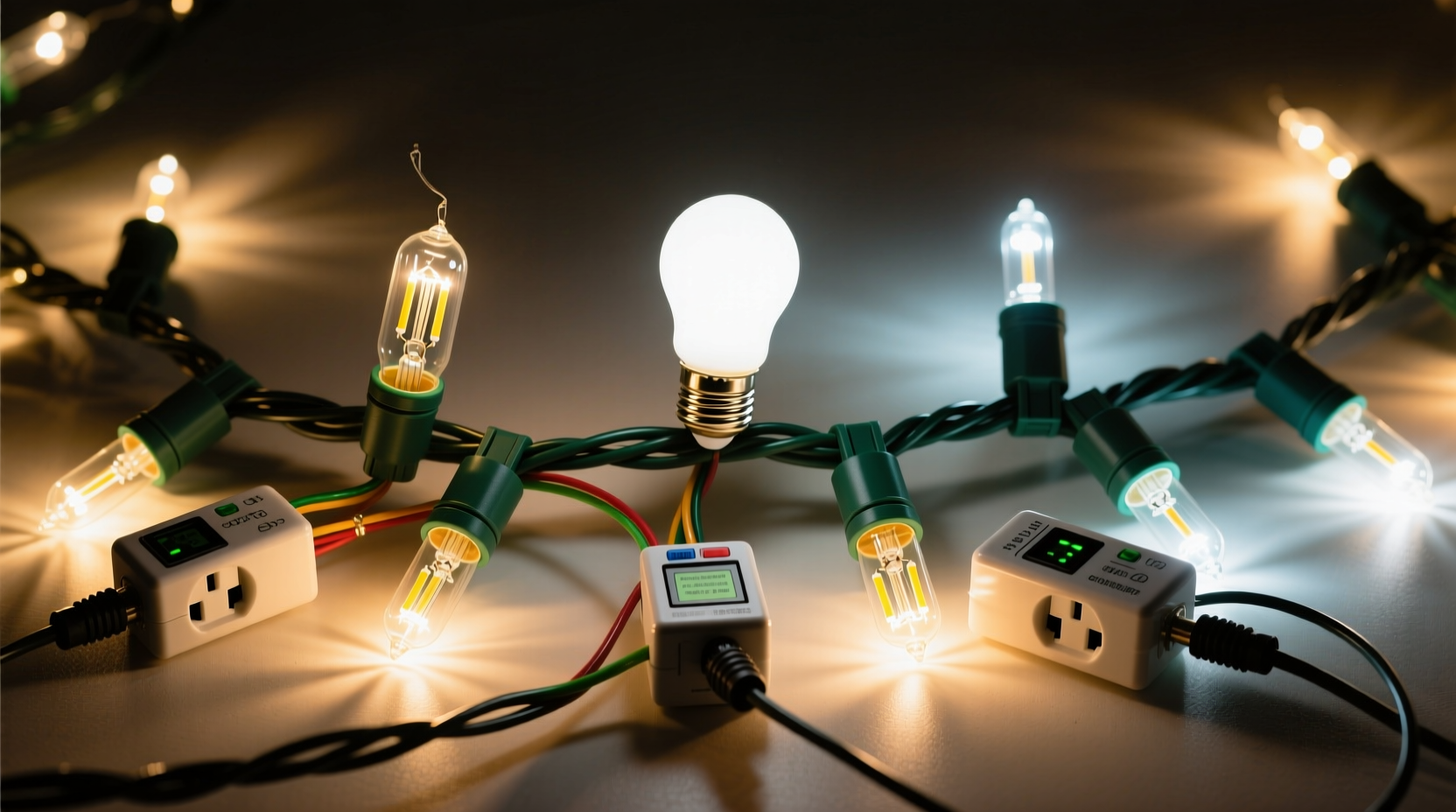
Most traditional Christmas light strings operate on either a series or parallel circuit design. The type of circuit has a direct impact on how voltage is distributed across bulbs and explains why brightness varies.
In a series circuit, electricity flows through each bulb in sequence. If one bulb fails or has higher resistance, it affects the entire string. Older incandescent mini-lights often use this configuration. Because voltage is shared among all bulbs, any variation in resistance—due to age, manufacturing differences, or poor contact—can cause certain bulbs to appear brighter or dimmer.
In contrast, parallel circuits provide independent pathways for current to reach each bulb. Modern LED strings typically use this design, which means one faulty bulb won’t affect the others. However, even in parallel setups, brightness inconsistencies can occur due to power supply fluctuations, mixed bulb types, or degraded components.
The shift from older incandescent bulbs to energy-efficient LEDs has introduced new variables. While LEDs consume less power and last longer, mixing them with incandescent bulbs—or using different LED models on the same circuit—can create noticeable brightness disparities.
Common Causes of Uneven Brightness
Brightness differences in Christmas lights stem from a range of technical and environmental factors. Identifying the cause is the first step toward resolution.
1. Mixed Bulb Types or Wattages
One of the most frequent culprits is combining bulbs with different wattages, voltages, or technologies. For example, plugging an LED string into the same outlet or daisy-chaining it with an incandescent set leads to mismatched current draw. LEDs require far less power, so when connected improperly, they may appear excessively bright—or worse, burn out prematurely.
2. Failing or Loose Bulbs
In series-wired strings, a single loose or failing bulb increases resistance in the circuit. This forces remaining bulbs to carry more voltage than intended, causing them to glow brighter—and hotter—than normal. Over time, this overvoltage accelerates filament degradation and creates a cascading failure effect.
3. Voltage Drop Across Long Runs
When multiple light strings are connected end-to-end (daisy-chained), voltage diminishes over distance. The first few bulbs receive full voltage and appear bright, while those at the end of the chain grow progressively dimmer. This is especially common with low-voltage incandescent sets exceeding manufacturer-recommended lengths.
4. Corroded or Damaged Sockets
Outdoor lights exposed to moisture, snow, or temperature swings can develop corroded contacts inside sockets. Poor conductivity reduces current flow to individual bulbs, making them dimmer. Similarly, bent socket tabs fail to make proper contact with the bulb base, leading to intermittent or weak illumination.
5. Aging and Wear
Christmas lights used for several seasons naturally degrade. Filaments weaken, internal wiring develops micro-fractures, and plastic housings become brittle. As components age unevenly, brightness variations emerge even within the same string.
Troubleshooting Step-by-Step
Restoring uniform brightness requires systematic inspection and correction. Follow this logical process to diagnose and resolve the issue.
- Unplug the light string – Safety first. Always disconnect power before handling lights.
- Inspect each bulb visually – Look for darkened glass, broken filaments, or loose placement. Remove and reseat each bulb to ensure tight contact.
- Test suspect bulbs – Use a known-working socket to test individual bulbs. Replace any that flicker or fail to illuminate.
- Check for corrosion – Examine metal contacts in sockets. Use a cotton swab dipped in isopropyl alcohol to gently clean tarnished areas.
- Verify compatible connections – Ensure no LED and incandescent strings are linked together. Confirm total wattage does not exceed outlet or adapter limits.
- Measure chain length – Refer to packaging guidelines. Most incandescent strings should not exceed three connected units; LEDs may allow up to 40 depending on model.
- Use a multimeter (optional) – For advanced users, test voltage at the beginning and end of a string. A drop of more than 10% indicates excessive resistance or overload.
If brightness improves after replacing bulbs and cleaning contacts but still varies, consider retiring older strings. Continued use risks overheating and potential fire hazards.
Do’s and Don’ts When Managing Light Strings
| Do | Don’t |
|---|---|
| Use bulbs of the same type, voltage, and brand within a single string | Mix LED and incandescent bulbs on the same circuit |
| Replace missing bulbs immediately to prevent overloading | Operate strings with empty sockets |
| Store lights coiled loosely around a cardboard spool | Yank tangled lights apart, risking wire damage |
| Use outdoor-rated extension cords for exterior displays | Daisy-chain more than the recommended number of strings |
| Inspect lights annually for frayed wires or cracked insulation | Use damaged strings, even if they still light up |
Real-World Example: A Homeowner’s Holiday Fix
Consider Mark from Portland, Oregon, who installed his family’s heirloom incandescent lights along the roofline each December. One year, he noticed the left side glowed intensely while the right appeared washed out. After ruling out shadows, he unplugged the set and began testing.
He discovered two bulbs were slightly loose and one had a darkened filament. Replacing them helped slightly, but the imbalance remained. Upon closer inspection, he realized he’d added a newer LED string to extend coverage—unaware of the compatibility issue. Once he separated the LED segment and powered it independently, both sections lit evenly.
Additionally, he cleaned corroded contacts with rubbing alcohol and invested in labeled storage bins to keep bulb types separate. The following year, his display was perfectly uniform—and stayed that way throughout the season.
“Voltage mismatches and mixed technologies are the top reasons we see inconsistent brightness in seasonal lighting.” — Daniel Reyes, Electrical Safety Engineer at the National Fire Protection Association (NFPA)
Prevention and Best Practices
Maintaining consistent brightness starts long before the holidays. Proactive care extends the life of your lights and prevents avoidable issues.
- Label your light strings by type (LED/incandescent), color temperature (warm white, cool white), and location used. This avoids accidental mismatches during installation.
- Invest in shunt-equipped bulbs for incandescent sets. These have backup pathways that maintain circuit continuity if a filament breaks, reducing strain on other bulbs.
- Use a dedicated circuit for large displays. Overloaded household circuits cause voltage sags, leading to dimming across all connected devices.
- Upgrade to commercial-grade LED strings for outdoor use. They offer better heat dissipation, consistent color rendering, and uniform brightness across long runs.
- Store properly off-season. Keep lights in climate-controlled spaces, away from rodents and humidity. Wrap them around reels instead of stuffing into boxes.
Frequently Asked Questions
Can I replace a dim incandescent bulb with an LED one?
No. Even if the base fits, the electrical characteristics differ significantly. LEDs draw less current and may not activate properly in a series circuit designed for incandescent loads. In some cases, attempting this replacement can damage the LED or cause flickering. Always use exact replacements specified by the manufacturer.
Why do the first few bulbs in my string burn out faster?
This usually indicates voltage overload. In series circuits, if later bulbs develop higher resistance (due to aging or poor contact), earlier ones receive excess voltage. They shine brighter temporarily but fail sooner. Regular maintenance and avoiding daisy-chaining beyond limits help prevent this.
Is it safe to leave unevenly lit strings plugged in?
Not always. Brighter bulbs operating above rated voltage generate more heat, increasing fire risk—especially near flammable materials like dry Christmas trees or curtains. If you notice hot spots, buzzing sounds, or melting insulation, unplug immediately and inspect or replace the string.
Final Checklist Before Hanging Your Lights
- ✅ All bulbs are the same type and rating
- ✅ No visible damage to wires, sockets, or plugs
- ✅ Corrosion-free contacts and secure bulb seating
- ✅ Correct number of strings daisy-chained (per manufacturer)
- ✅ Separate circuits for LED and incandescent sets
- ✅ Outdoor cords and timers are weatherproof and grounded
- ✅ Spare bulbs and tools (like a bulb tester) are on hand
Conclusion: Shine Bright, Not Uneven
A flawless holiday light display isn’t just about aesthetics—it reflects attention to detail, safety awareness, and respect for electrical integrity. When some bulbs outshine others, it’s more than a visual flaw; it’s a warning sign that something in the system is off balance. By understanding circuit types, respecting compatibility rules, and performing annual maintenance, you can achieve a display that’s not only dazzling but durable.
Take the time now—before the season begins—to audit your collection, retire outdated strings, and organize your inventory. With consistent care, your lights can deliver years of reliable, radiant cheer. A little effort today ensures peace of mind and picture-perfect nights tomorrow.




 浙公网安备
33010002000092号
浙公网安备
33010002000092号 浙B2-20120091-4
Comments
No comments yet. Why don't you start the discussion?