
Balloons are often associated with celebration—birthdays, weddings, parades—but for a surprising number of people, the sight or sound of a balloon can trigger intense fear, anxiety, or even panic attacks. This specific fear, known as globophobia—the fear of balloons—is more common than many realize. Unlike general anxiety disorders, globophobia is a situational phobia that can be traced to sensory triggers, past experiences, and even neurological sensitivities. Understanding why balloons provoke such strong reactions in certain individuals requires delving into psychology, neuroscience, and early developmental influences.
The suddenness of a balloon pop, its unpredictable nature, and the sharp auditory burst make it a potent stressor for sensitive nervous systems. For some, the fear isn't just about discomfort—it's a full-blown phobic response rooted in deeper emotional or physiological wiring. This article explores the science behind globophobia, identifies key contributing factors, and offers practical guidance for managing and overcoming this unique fear.
The Science Behind the Startle: Why Balloon Pops Are So Shocking
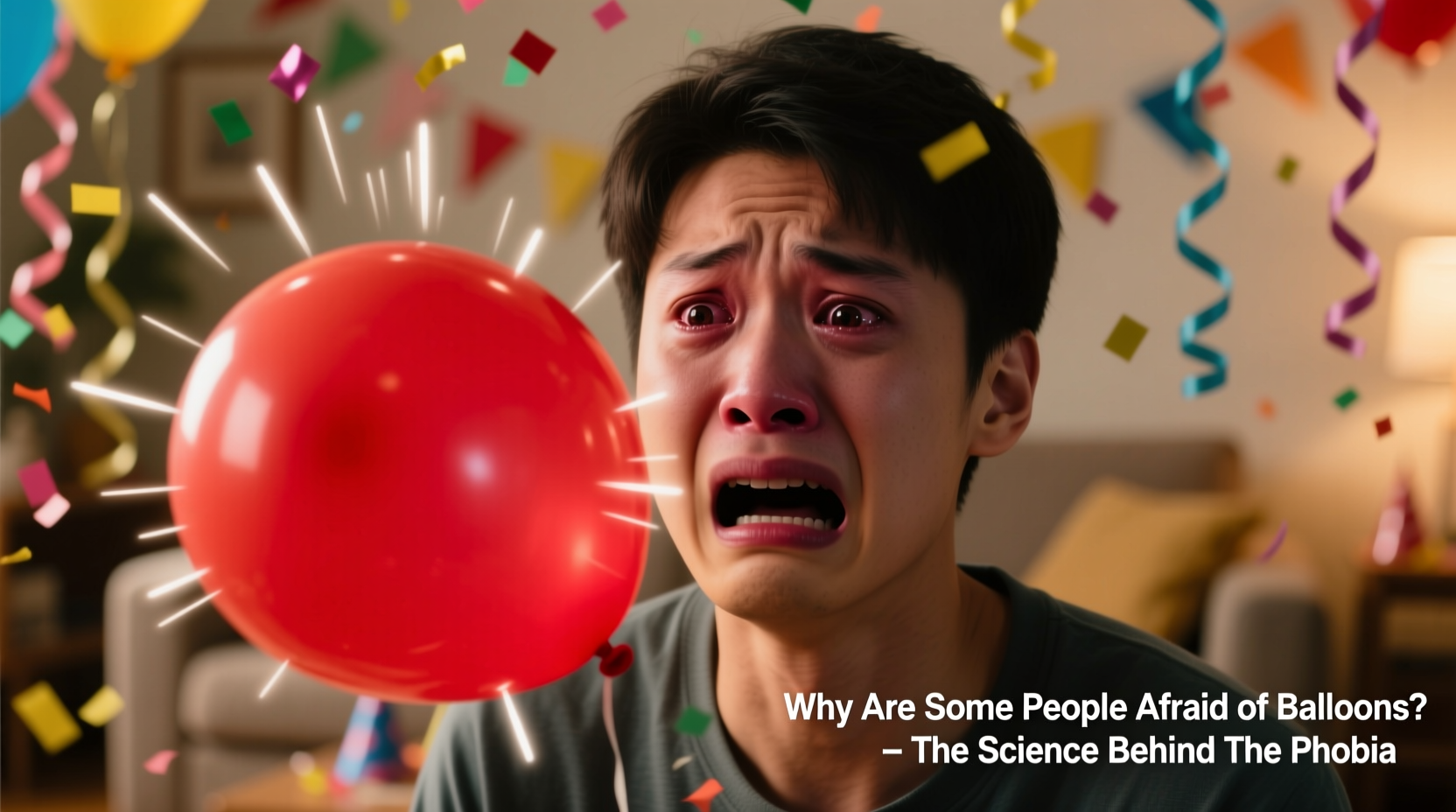
The human brain is wired to respond quickly to sudden, loud noises—a survival mechanism inherited from our evolutionary ancestors. A balloon pop typically registers between 130 and 150 decibels, comparable to a jet engine at close range. That level of sound activates the amygdala, the brain’s emotional center responsible for processing fear and threat detection.
This reflexive reaction is known as the \"startle response.\" It includes physical changes like increased heart rate, muscle tension, and a surge of adrenaline. In most people, this reaction fades within seconds. But for those with heightened sensory sensitivity or existing anxiety conditions, the startle doesn’t subside easily. Instead, it escalates into a full fear response—even when there’s no real danger.
Neurologically, individuals with globophobia may have an overactive sympathetic nervous system. This system governs the body’s “fight-or-flight” response. When triggered by a balloon pop, their bodies react as if facing genuine peril. Over time, repeated exposure (even indirect, such as hearing a pop in a video) can condition the brain to associate balloons with danger, reinforcing the phobia.
Potential Origins of Globophobia: Trauma, Sensory Sensitivity, and Conditioning
Fears don’t appear out of nowhere. Globophobia usually develops due to one or more of the following factors:
- Traumatic childhood experience: A child startled by a balloon pop at a party may internalize the event as deeply frightening. Even if they don’t remember the exact moment, the emotional imprint can linger.
- Sensory processing differences: People with autism spectrum disorder (ASD), ADHD, or misophonia often experience heightened sensitivity to sound, texture, or unpredictability—all of which balloons embody.
- Classical conditioning: Repeated negative associations—such as a balloon popping near the face or causing a fall—can condition the mind to anticipate harm.
- Vicarious learning: Observing a parent or peer react with fear to balloons can teach a child that balloons are dangerous, even without direct trauma.
- Generalized anxiety: Those already prone to anxiety may latch onto specific triggers like balloons as symbolic representations of unpredictability and loss of control.
A 2020 study published in the Journal of Anxiety Disorders found that nearly 78% of participants with specific phobias could trace their fear back to a distinct triggering event before age 12. In cases of globophobia, these events were often social—birthday parties, school events, or family gatherings—where balloons were present and popped unexpectedly.
“Phobias aren’t irrational—they’re learned responses to perceived threats. The brain remembers the emotion, not the logic.” — Dr. Lena Reyes, Clinical Psychologist and Phobia Researcher
Understanding the Fear Triggers: Beyond Just the Pop
While the pop itself is the most obvious trigger, globophobia often involves multiple layers of aversion. For many sufferers, the fear begins long before the balloon bursts.
Common triggers include:
- Hearing air being pumped into a balloon (the stretching sound)
- Seeing a fully inflated balloon near the face or head
- The visual distortion of a stretched latex surface
- Fear of the balloon bursting suddenly and painfully
- Anxiety about being unable to escape the environment (e.g., trapped at a party)
In some cases, the texture of latex or the smell of rubber can also contribute to discomfort, especially in neurodivergent individuals. The combination of auditory, visual, and tactile stimuli makes balloons a multi-sensory threat for those predisposed to anxiety.
Moreover, the lack of control plays a critical role. Unlike other loud sounds—thunder, fireworks—balloons are man-made and often intentionally popped. This intentional destruction can feel aggressive or violating to someone already on edge. The anticipation of a pop, knowing it could happen at any moment, creates a state of hypervigilance that drains mental energy and heightens stress.
Case Study: From Panic to Progress—One Person’s Journey with Globophobia
Jamie, a 29-year-old graphic designer, avoided birthday parties and children’s events for years. At age 6, a balloon exploded inches from their ear during a classroom celebration, causing temporary hearing discomfort and intense fear. Though adults dismissed it as a minor incident, Jamie began associating balloons with pain and helplessness.
By adulthood, the fear had generalized. Just seeing a balloon at a grocery store checkout would cause chest tightness and a desire to flee. After starting therapy for generalized anxiety, Jamie identified globophobia as a significant but overlooked factor in their avoidance behaviors.
Working with a cognitive behavioral therapist, Jamie used gradual exposure techniques. They began by looking at photos of balloons, then watching videos of pops with headphones at low volume. Over several months, they progressed to holding uninflated balloons, then slowly inflating one under controlled conditions.
Today, Jamie still feels uneasy around balloons but no longer avoids social events. “It’s not about becoming fearless,” they said. “It’s about reclaiming my space in the world without letting a latex bag dictate my choices.”
How to Manage and Overcome Globophobia: A Step-by-Step Approach
Like all specific phobias, globophobia is highly treatable. The goal isn’t necessarily to love balloons, but to reduce fear to a manageable level. Here’s a structured approach based on clinical best practices:
- Identify your triggers: Keep a journal of situations involving balloons. Note what caused discomfort—sound, sight, smell, or context.
- Seek professional support: A licensed therapist trained in anxiety disorders can guide treatment, particularly using CBT (Cognitive Behavioral Therapy).
- Practice grounding techniques: Learn breathing exercises or mindfulness strategies to regain control during moments of anxiety.
- Begin gradual exposure: Start with the least threatening form of the stimulus (e.g., a deflated balloon) and slowly progress.
- Use desensitization tools: Audio recordings of balloon pops at low volume can help retrain the brain’s response over time.
- Create safety plans: If attending an event with balloons, plan an exit strategy or bring noise-canceling headphones.
- Reframe thoughts: Challenge catastrophic thinking (“That balloon will hurt me”) with evidence-based reasoning (“Balloons pop safely all the time”).
Do’s and Don’ts When Supporting Someone with Globophobia
Well-meaning friends or family might unintentionally worsen the fear by dismissing it as childish. Understanding and empathy go a long way. Use the table below to guide supportive behavior:
| Do | Don’t |
|---|---|
| Validate their fear without judgment (“I understand this is hard for you”) | Minimize their feelings (“It’s just a balloon!”) |
| Ask how you can help (“Would you like me to check if there are balloons?”) | Force exposure (“You need to get over it”) |
| Respect boundaries and offer alternatives | Surprise them with balloons as a “joke” |
| Encourage professional help gently | Pressure them to “toughen up” |
| Learn about phobias and anxiety | Assume it’s attention-seeking behavior |
Frequently Asked Questions About Balloon Pop Phobia
Is globophobia a real phobia or just being overly sensitive?
Yes, globophobia is a recognized specific phobia. While sensitivity varies, when fear causes significant distress or avoidance behavior, it meets clinical criteria for a diagnosable condition under the DSM-5. It’s not simply being “too sensitive”—it’s a conditioned fear response that impacts daily functioning.
Can adults develop globophobia later in life?
Yes, though it most commonly begins in childhood, adults can develop the phobia after a traumatic incident involving a balloon—such as a pop causing injury or occurring during a high-stress situation. Sudden onset in adulthood may also be linked to broader anxiety disorders or PTSD.
Are there any medications for globophobia?
There are no medications specifically for globophobia. However, short-term use of anti-anxiety medication may help during acute episodes. Long-term relief is best achieved through therapy, particularly exposure-based treatments like CBT or EMDR (Eye Movement Desensitization and Reprocessing).
Practical Checklist for Managing Balloon-Related Anxiety
If you or a loved one struggles with globophobia, this checklist can serve as a roadmap for progress:
- ✅ Acknowledge the fear without shame
- ✅ Identify specific triggers (sound, sight, context)
- ✅ Consult a mental health professional specializing in phobias
- ✅ Practice deep breathing or grounding techniques
- ✅ Begin controlled exposure (photos, videos, objects)
- ✅ Set small, achievable goals (e.g., stand near a deflated balloon)
- ✅ Communicate needs to friends and family
- ✅ Avoid self-criticism; progress is non-linear
- ✅ Celebrate every step forward, no matter how small
Conclusion: Reclaiming Comfort in a Noisy World
Fear of balloons may seem unusual, but it reflects a universal human experience: the struggle to feel safe in an unpredictable world. Globophobia isn’t about balloons—it’s about control, memory, and the body’s instinct to protect itself. With compassion and structured support, this fear can be managed and often overcome.
Whether you’re navigating your own anxiety or supporting someone who is, remember that healing begins with understanding. Normalize the conversation around seemingly “small” fears, because for the person living with them, they are anything but trivial.




 浙公网安备
33010002000092号
浙公网安备
33010002000092号 浙B2-20120091-4
Comments
No comments yet. Why don't you start the discussion?