
The Dinka people of South Sudan are among the tallest populations in the world, with adult males frequently surpassing 6 feet (183 cm) and some individuals reaching over 7 feet (213 cm). This striking stature has drawn scientific curiosity for decades. While no single factor fully explains their height, a combination of genetics, nutrition, environment, and lifestyle contributes to this unique physical trait. Understanding why the Dinka are so tall offers insight into human biology, adaptation, and the interplay between heredity and environment.
Genetic Predisposition: The Blueprint of Height
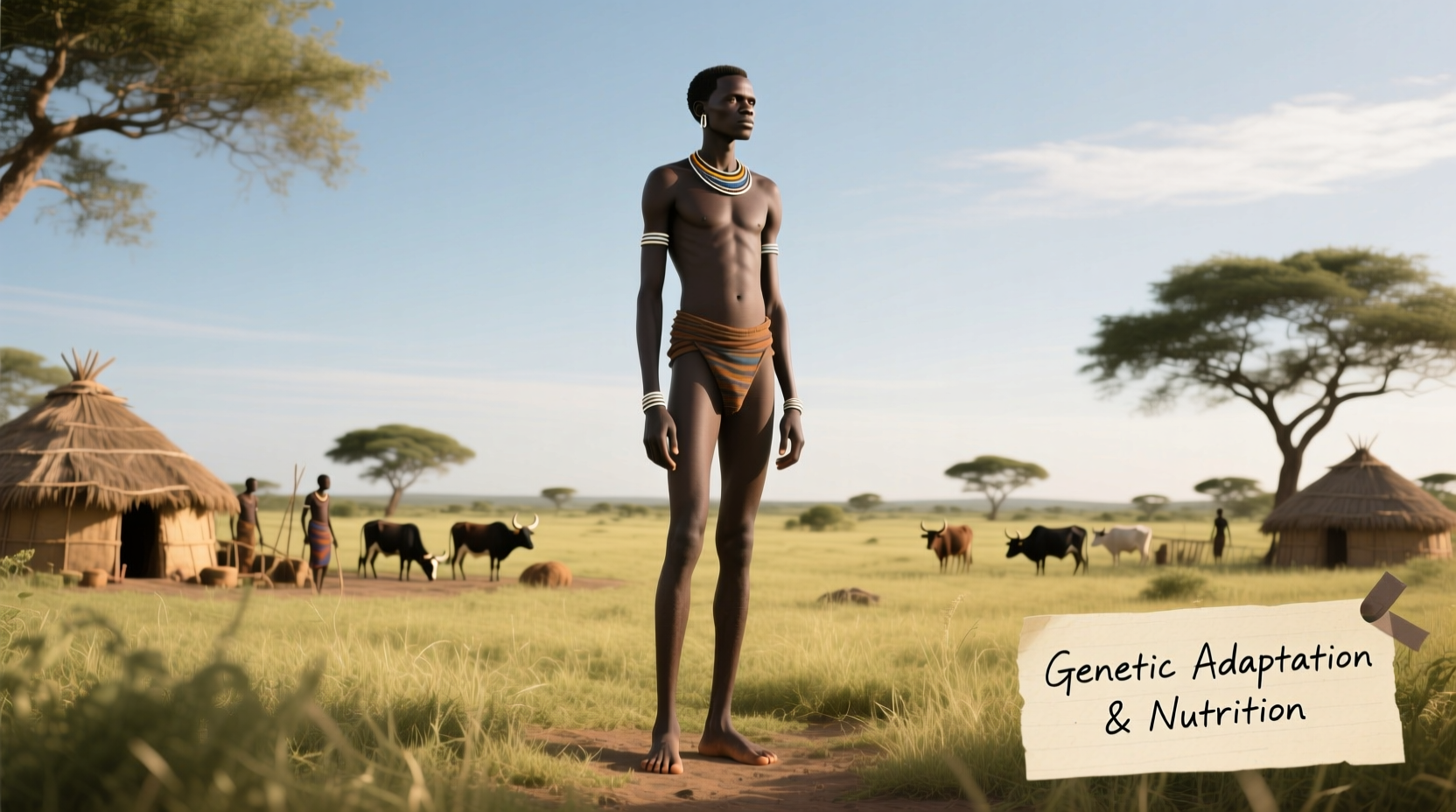
Height is largely determined by genetics, and the Dinka possess a distinct genetic profile that favors vertical growth. Studies on African populations have identified several gene variants associated with increased skeletal development, particularly in Nilotic groups like the Dinka, Nuer, and Shilluk. These genes influence the regulation of growth hormones and bone elongation during adolescence.
One key area of research involves the HMGA2 and GDF5 genes, both linked to limb length and overall stature. Dinka individuals often exhibit long limbs relative to torso size—a somatotype known as \"linear build\"—which is genetically programmed and visible from early childhood.
“Populations like the Dinka represent natural experiments in human growth. Their height isn’t accidental—it’s encoded.” — Dr. Sarah Tishkoff, Geneticist, University of Pennsylvania
This genetic advantage is amplified through generations due to relatively isolated breeding patterns within the community, preserving traits that favor tallness.
Nutritional Influences During Development
While genetics lay the foundation, nutrition plays a decisive role in actualizing height potential. The traditional Dinka diet, though simple, is well-suited to support growth during critical developmental years.
Centered around cattle, the Dinka practice agro-pastoralism, relying heavily on milk, blood, and occasionally meat from their herds. This animal-based diet provides high-quality protein, calcium, vitamin B12, and iron—all essential for bone development and hormonal function. Unlike many subsistence diets low in protein, the Dinka’s access to dairy ensures consistent nutrient intake even during dry seasons.
Children are often given fermented milk and cow’s blood mixed with milk, a practice that delivers bioavailable nutrients crucial for sustained growth. This dietary pattern supports not just survival, but optimal physical development.
| Nutrient | Source in Dinka Diet | Role in Growth |
|---|---|---|
| Protein | Milk, blood, meat | Builds muscle and tissue, supports hormone synthesis |
| Calcium | Fermented milk | Bone mineralization and density |
| Vitamin B12 | Animal products | Nerve function and red blood cell production |
| Iron | Cow’s blood | Prevents anemia, supports oxygen transport |
Environmental and Lifestyle Factors
Living in the flat, open savannas of South Sudan, the Dinka lead physically active lives from an early age. Herding cattle across vast distances requires endurance, walking, and constant movement—activities that stimulate circulation, metabolism, and musculoskeletal development.
Physical activity during youth enhances growth hormone secretion and improves nutrient absorption. Combined with minimal sedentary behavior, this lifestyle fosters healthy development. Moreover, the warm climate reduces the need for heavy clothing or shelter, allowing for greater freedom of movement and less restriction on posture and gait.
Another environmental factor is sunlight exposure. The equatorial region receives intense UV radiation year-round, enabling efficient vitamin D synthesis in the skin. Vitamin D is essential for calcium absorption and bone strength. Even without fortified foods, the Dinka maintain sufficient levels naturally, further supporting skeletal growth.
Case Study: Deng Athuai – A Young Dinka Herder
Deng Athuai, a 17-year-old from Tonj, stands at 6'6\" (198 cm). From age six, he helped his father herd cattle across the Bahr el Ghazal region, walking up to 15 kilometers daily. His diet consisted mainly of milk and occasional blood supplements during droughts. Despite limited access to modern healthcare, Deng reached full height without nutritional stunting. Blood tests conducted during a mobile clinic visit revealed strong vitamin D and hemoglobin levels—key markers of healthy growth. His case illustrates how traditional lifestyle and diet can synergize with genetics to produce exceptional stature.
Evolutionary and Cultural Perspectives
Some anthropologists suggest that tall stature may have offered evolutionary advantages in the Dinka’s historical environment. In a landscape dominated by tall grasslands and seasonal flooding, greater height could improve visibility for spotting predators or rival groups. Additionally, taller warriors may have had a psychological and physical edge in intertribal conflicts.
Culturally, height is highly valued among the Dinka. Tall men are often seen as more attractive, stronger, and better suited for leadership roles. Marriage preferences frequently favor taller suitors, reinforcing the trait through selective mating. This social reinforcement may contribute to the persistence and amplification of height-related genes over time.
It’s also worth noting that the Dinka traditionally do not use furniture like chairs or beds. Sleeping on mats and sitting on the ground promotes natural spinal alignment and may reduce postural compression commonly seen in sedentary societies.
Common Misconceptions About Dinka Height
- Myth: All Dinka people are over 7 feet tall.
Reality: While exceptionally tall individuals exist, average male height is around 6'1\"–6'3\", still among the highest globally but not universally extreme. - Myth: Their height is due to a single “tall gene.”
Reality: Height is polygenic—dozens of genes interact to influence final stature. - Myth: Modern medicine or supplements explain their height.
Reality: Most tall Dinka live traditionally, with no access to growth hormones or fortified foods.
How to Support Optimal Growth: A Practical Checklist
While genetics cannot be changed, maximizing growth potential is possible through lifestyle choices—especially during childhood and adolescence. Here’s what matters most:
- Eat a balanced diet rich in protein, calcium, and vitamins (especially D and B12)
- Ensure regular physical activity, including weight-bearing exercises
- Get consistent, quality sleep—growth hormone peaks during deep sleep
- Minimize chronic stress and illness, which can impair development
- Avoid malnutrition or prolonged calorie deficits during growth years
Frequently Asked Questions
Are the Dinka the tallest people in the world?
On average, yes—they rank among the tallest ethnic groups. Dutch men currently hold the title for tallest average national height (~6'0\"), but certain Nilotic groups like the Dinka and Shilluk often exceed this in field studies, with averages between 6'1\" and 6'4\".
Can someone grow tall like the Dinka by copying their diet?
Not exactly. While a nutrient-rich, animal-based diet supports growth, your genetic ceiling limits maximum height. Someone without the Dinka’s genetic background won’t achieve the same results even with identical nutrition.
Do Dinka people face health issues due to their height?
Taller individuals everywhere, including the Dinka, may face slightly higher risks of cardiovascular strain or joint wear over time. However, no widespread health problems specific to their height have been documented in traditional communities.
Conclusion: Nature, Nurture, and Human Diversity
The extraordinary height of the Dinka people is not a mystery, but a testament to the power of biological and cultural synergy. Genetics provide the blueprint, but diet, lifestyle, and environment determine whether that potential is fulfilled. Their stature reflects thousands of years of adaptation, survival, and cultural values shaped by the South Sudanese landscape.
Studying populations like the Dinka doesn’t just answer questions about height—it deepens our understanding of human variation, resilience, and the delicate balance between inheritance and lived experience. As global health and nutrition evolve, such insights become increasingly valuable in supporting healthy growth for all children, regardless of origin.




 浙公网安备
33010002000092号
浙公网安备
33010002000092号 浙B2-20120091-4
Comments
No comments yet. Why don't you start the discussion?