
The United States Constitution, adopted in 1787, is one of the oldest written national constitutions still in use. Yet, despite its enduring framework, it has not remained static. Over the past two centuries, it has been formally changed 27 times through the amendment process. These amendments are not arbitrary adjustments but deliberate responses to shifting social values, legal challenges, and evolving interpretations of rights and governance. Understanding why amendments exist—and why they continue to be proposed—offers critical insight into how a foundational document can remain both stable and adaptable.
The Purpose of Constitutional Amendments
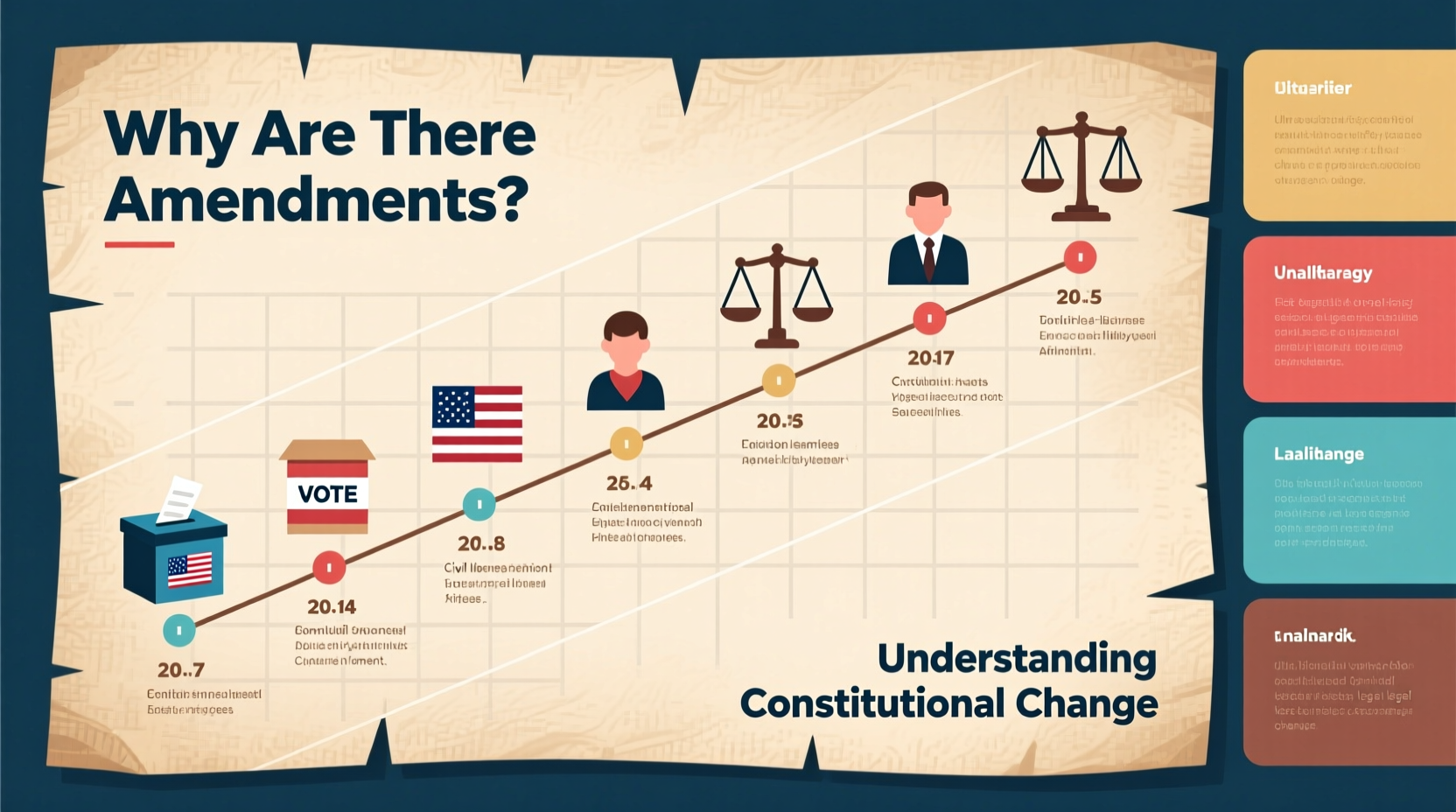
A constitution serves as the supreme law of a nation, outlining the structure of government, defining powers, and protecting individual rights. However, no document can foresee every future challenge or moral transformation. The framers of the U.S. Constitution recognized this limitation and built in a mechanism for change: Article V. This provision allows for amendments to be proposed either by a two-thirds vote in both houses of Congress or by a constitutional convention called by two-thirds of state legislatures. Ratification requires approval from three-fourths of the states.
This rigorous process ensures that amendments reflect broad consensus rather than fleeting political trends. It also underscores their significance—they are not mere policy shifts but fundamental recalibrations of national principles. Amendments have been used to abolish slavery, expand voting rights, limit presidential terms, and clarify governmental authority.
Historical Waves of Constitutional Change
Amendments have come in distinct historical waves, each responding to major societal shifts:
- Post-Revolutionary Foundations (1791): The first ten amendments—the Bill of Rights—were ratified to protect individual liberties such as freedom of speech, religion, and due process, addressing concerns about federal overreach.
- Civil War Era (1865–1870): The 13th, 14th, and 15th Amendments abolished slavery, granted citizenship and equal protection under the law, and prohibited racial discrimination in voting.
- Progressive Era (1913–1920): Reforms included direct election of senators (17th), prohibition of alcohol (18th), women’s suffrage (19th), and income tax authorization (16th).
- Civil Rights & Democratic Reform (1961–1971): The 23rd allowed D.C. residents to vote in presidential elections; the 24th banned poll taxes; the 26th lowered the voting age to 18.
- Structural Adjustments (1992): The 27th Amendment, originally proposed in 1789, finally limited congressional pay raises until after an election.
“Constitutions must evolve with the people they serve. An unchanging charter risks becoming irrelevant.” — Justice Thurgood Marshall, U.S. Supreme Court
Why Can’t Congress Just Pass Laws Instead?
A common question arises: if laws can be changed easily through legislation, why go through the arduous amendment process? The answer lies in hierarchy and permanence. Ordinary laws can be repealed or altered with each new Congress. Constitutional amendments, however, establish principles that supersede statutes and resist casual reversal.
For example, civil rights legislation could be weakened or undone by future lawmakers. But the 14th Amendment’s Equal Protection Clause provides a constitutional foundation that makes discriminatory laws inherently suspect and subject to strict judicial scrutiny. Similarly, while Congress could theoretically restrict free speech via statute, the First Amendment acts as a permanent barrier.
In cases where judicial interpretation creates uncertainty—such as debates over gun rights, privacy, or executive power—some advocate for amendments to clarify intent and prevent inconsistent rulings.
Step-by-Step: How an Amendment Becomes Law
The amendment process is intentionally difficult, designed to ensure wide agreement before altering the nation’s foundational text. Here’s how it works:
- Proposal: Either Congress proposes an amendment with a two-thirds majority in both the House and Senate, or two-thirds of state legislatures call for a constitutional convention (never successfully used).
- Debate and Advocacy: Once proposed, public discourse, lobbying, and legislative debate shape momentum. Grassroots movements often play a key role.
- Ratification: The proposed amendment must be ratified by three-fourths of the states (currently 38 out of 50). This can occur through state legislatures or state conventions, depending on Congress’s choice.
- Certification: Upon ratification, the Archivist of the United States certifies the amendment, and it becomes part of the Constitution.
This process can take years—or even decades. The 27th Amendment took over 200 years to complete ratification, illustrating both the durability and complexity of constitutional change.
Modern Debates and Proposed Amendments
Today, several proposed amendments reflect ongoing national conversations:
- Equal Rights Amendment (ERA): Seeks to guarantee equal rights regardless of sex. Though passed by Congress in 1972, it fell short of ratification deadlines, though advocacy continues.
- Flag Desecration Amendment: Would allow Congress to ban physical desecration of the American flag, countering Supreme Court rulings that protect such acts as free speech.
- Term Limits for Congress: A recurring proposal to impose limits on how long members of Congress can serve, aiming to reduce career politicking.
- Money as Speech: Some advocate amending the First Amendment to overturn rulings like Citizens United, which equated campaign spending with free expression.
| Proposed Amendment | Purpose | Status |
|---|---|---|
| Equal Rights Amendment | Guarantee gender equality in the Constitution | Unratified (debate ongoing) |
| Flag Protection Amendment | Allow bans on flag burning | Repeatedly introduced, not passed |
| Congressional Term Limits | Limit re-elections for House and Senate members | Poll popular, lacks legislative traction |
| Repeal 22nd Amendment | Allow presidents to serve more than two terms | Occasionally proposed, highly controversial |
Mini Case Study: The 26th Amendment and Youth Voting Rights
During the Vietnam War, young Americans were being drafted at 18 but could not vote in most states, where the voting age was 21. This contradiction sparked nationwide protests under the slogan “Old enough to fight, old enough to vote.” In response, Congress lowered the voting age to 18 via the Voting Rights Act of 1970. However, the Supreme Court ruled that Congress lacked authority to set the voting age for state elections.
To resolve this constitutional conflict, Congress proposed the 26th Amendment in 1971. It passed both chambers with overwhelming support and was ratified by the required 38 states in just over three months—one of the fastest ratifications in history. This case illustrates how real-world injustice, combined with public pressure and legal constraints, can drive rapid constitutional change.
Frequently Asked Questions
Can a constitutional amendment be repealed?
Yes, though rarely. The 21st Amendment (1933) repealed the 18th Amendment (Prohibition), making it the only instance of a full repeal. Other amendments may be rendered obsolete by new ones or court rulings, but formal repeal requires the same rigorous process as adoption.
Why don’t we amend the Constitution more often?
The framers designed the process to be difficult to prevent impulsive changes. Stability is valued in constitutional law. Additionally, courts often reinterpret existing provisions (e.g., expanding privacy rights under the 14th Amendment) instead of requiring new text.
Have any amendments done more harm than good?
Historians debate this. The 18th Amendment (Prohibition) led to widespread crime and corruption, ultimately being repealed. While well-intentioned, it demonstrated that moral legislation without enforcement mechanisms can backfire. Most other amendments are widely seen as progressive advancements.
Action Checklist: Understanding and Engaging With Constitutional Change
To stay informed and involved in constitutional discourse, consider the following steps:
- Study the original Constitution and all 27 amendments to understand current rights and structures.
- Follow pending amendment proposals in Congress and state legislatures.
- Participate in civic education efforts or community discussions about constitutional issues.
- Contact your representatives to express support or concern about proposed amendments.
- Vote in local and national elections—amendments often appear on ballots during ratification campaigns.
Conclusion: The Living Legacy of Constitutional Change
The existence of amendments is not a flaw in the Constitution—it is a feature. They reflect a nation’s capacity to confront injustice, correct errors, and grow in its understanding of liberty and justice. From abolishing slavery to enfranchising women and young adults, amendments have expanded who truly counts as an equal member of American society.
Understanding why amendments happen helps citizens appreciate the balance between enduring principles and necessary evolution. It also empowers individuals to engage thoughtfully in debates about future changes. The Constitution does not govern us in isolation; we, the people, shape it through dialogue, struggle, and democratic action.




 浙公网安备
33010002000092号
浙公网安备
33010002000092号 浙B2-20120091-4
Comments
No comments yet. Why don't you start the discussion?