
Religious diversity is one of the most striking features of human civilization. From Buddhism in Southeast Asia to Christianity in the West, from Indigenous spiritual traditions to modern new religious movements, thousands of belief systems coexist across the globe. This raises a fundamental question: Why are there so many different religions? The answer lies not in a single cause but in a complex interplay of historical, cultural, psychological, and sociological factors that have shaped humanity’s search for meaning over millennia.
Historical Development and Geographic Isolation
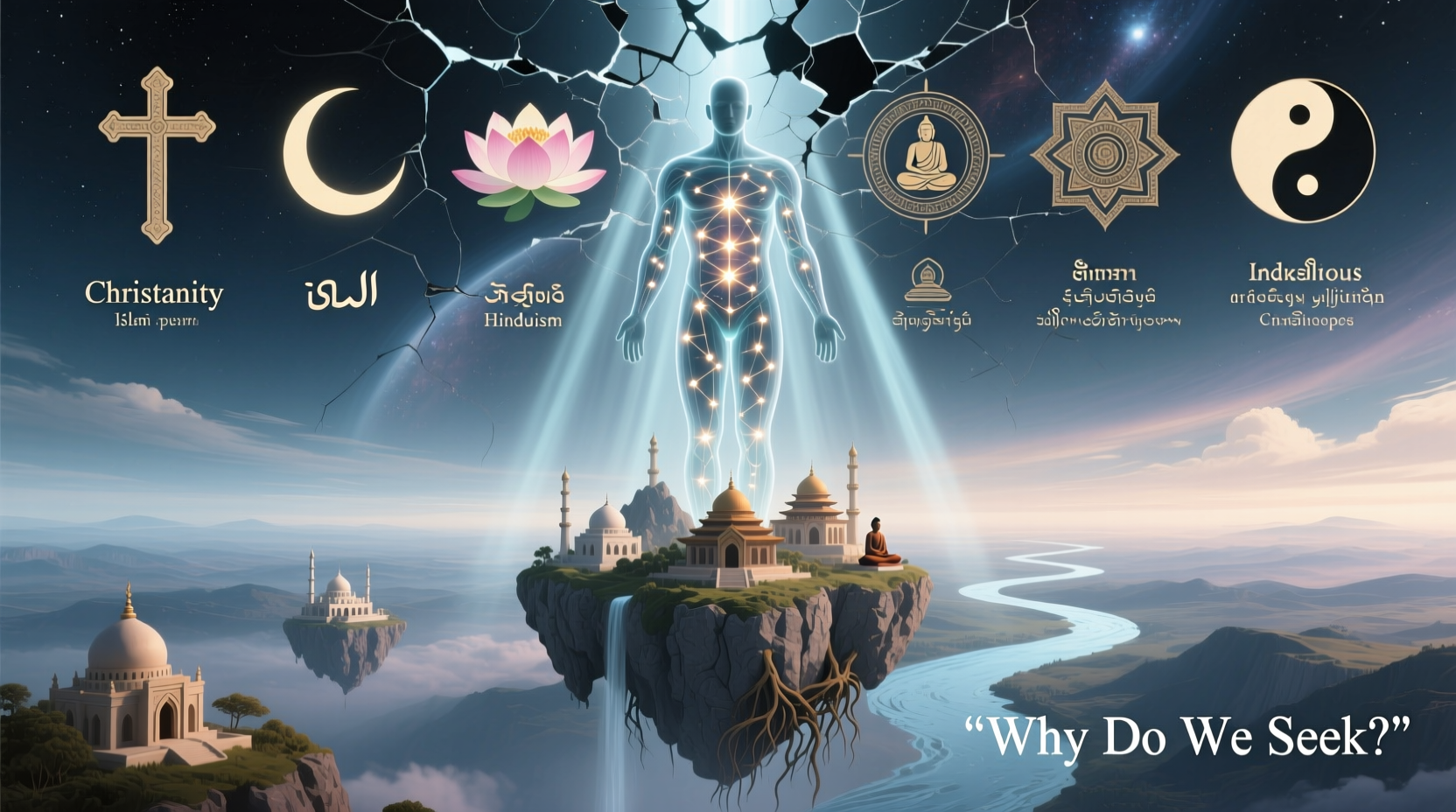
One of the primary reasons for religious diversity is the historical development of societies in geographic isolation. Before global communication and travel, communities evolved independently, each facing unique environmental challenges, social structures, and existential questions. In response, they developed distinct worldviews and spiritual practices tailored to their circumstances.
For example, ancient Mesopotamians worshipped deities associated with rivers and fertility due to their dependence on the Tigris and Euphrates. Meanwhile, desert-dwelling Bedouins emphasized monotheism and moral accountability, which later influenced Judaism, Christianity, and Islam. Similarly, Hinduism emerged in the Indian subcontinent with a complex pantheon reflecting diverse regional cultures and philosophical inquiries into karma and reincarnation.
When civilizations remained isolated, their religious ideas diverged. Even when traditions shared common roots—like the Abrahamic faiths—they evolved differently based on local interpretations, political shifts, and leadership changes.
Cultural Interpretations of the Sacred
Every culture interprets spiritual experiences through its own language, symbols, and values. What one society sees as divine revelation, another may interpret as ancestral wisdom or natural harmony. These cultural lenses shape how people understand ultimate reality, morality, and the afterlife.
Shinto in Japan emphasizes reverence for nature and ancestral spirits (kami), aligning with a cultural value of harmony with the environment. In contrast, Zoroastrianism in ancient Persia introduced a dualistic worldview of good versus evil, influencing later apocalyptic themes in Judaism and Christianity.
This cultural relativity means that even when humans ask similar questions—“What happens after death?” or “Why do we suffer?”—their answers vary widely based on inherited narratives, linguistic frameworks, and communal identity.
“Religion is the dream of the world expressed in mythic terms.” — Karen Armstrong, religious historian
Psychological and Existential Needs
At its core, religion addresses deep psychological and existential needs: the fear of death, the desire for purpose, and the need for community. Different religions offer varied solutions to these universal concerns.
- Buddhism teaches that suffering arises from attachment and can be overcome through mindfulness and enlightenment.
- Christianity offers salvation through faith in Jesus Christ, promising eternal life.
- Taoism encourages living in balance with the Tao, the natural flow of the universe, reducing inner conflict.
Because individuals and groups process these existential anxieties differently, multiple religious frameworks emerge. Some emphasize ritual purity, others mystical experience, and still others ethical conduct as the path to transcendence.
Common Religious Functions Across Traditions
| Function | Example in Christianity | Example in Islam | Example in Indigenous Traditions |
|---|---|---|---|
| Moral Guidance | The Ten Commandments | The Five Pillars | Oral codes of respect and reciprocity |
| Ritual Practice | Communion | Salah (daily prayers) | Sweat lodge ceremonies |
| Afterlife Belief | Heaven and Hell | Jannah and Jahannam | Spirit return to ancestral lands |
| Community Bonding | Church services | Jumu'ah (Friday prayer) | Seasonal gatherings |
Political and Social Influences
Religions have often been shaped—or reshaped—by political power. Rulers have used religion to legitimize authority, unify populations, or justify conquest. When empires expanded, they either imposed their beliefs or absorbed local ones, creating hybrid systems.
Consider the Roman Empire’s adoption of Christianity under Emperor Constantine. Once a persecuted sect, Christianity became the state religion, leading to doctrinal standardization and the suppression of alternative Christian views (such as Arianism). Similarly, the spread of Islam through trade and conquest led to diverse expressions—from Sufi mysticism in South Asia to legalistic schools in Arabia.
In modern times, nationalism has intertwined with religion, reinforcing distinctions. Serbian Orthodoxy, Turkish secularism with Islamic heritage, and Hindu nationalism in India all show how politics can amplify religious identity and fragmentation.
Mini Case Study: The Protestant Reformation
In 16th-century Europe, Martin Luther challenged the Catholic Church’s practices, particularly the sale of indulgences. His actions sparked the Protestant Reformation, leading to hundreds of new denominations—Lutheran, Calvinist, Anglican, and eventually Baptists, Methodists, and Pentecostals. This illustrates how theological disagreement, combined with printing technology and rising literacy, can rapidly diversify a single tradition into many branches.
Do’s and Don’ts When Exploring Religious Diversity
| Do | Don't |
|---|---|
| Approach other faiths with curiosity and respect | Assume your beliefs are superior |
| Learn about religions from primary sources and practitioners | Rely solely on stereotypes or media portrayals |
| Recognize that differences don’t imply contradiction | Dismiss unfamiliar practices as “strange” |
| Ask thoughtful questions in interfaith dialogue | Use debates to win arguments rather than build understanding |
Step-by-Step Guide to Understanding a New Religion
- Research its origins: Identify where and when it began, and who its key figures were.
- Study core beliefs: Learn about its view of God, the self, morality, and the afterlife.
- Observe practices: Understand rituals, holidays, dietary rules, and daily observances.
- Engage with followers: Attend services or events (if invited) and ask respectful questions.
- Compare thoughtfully: Note similarities and differences without judgment.
- Reflect personally: Consider what aspects resonate with your own worldview.
Frequently Asked Questions
Can all religions be true at the same time?
This depends on perspective. Exclusivists believe only one religion holds full truth. Inclusivists accept partial truth in others but see one path as complete. Pluralists, like theologian John Hick, argue that all major religions are valid responses to the same ultimate reality, expressed through different cultural forms. There is no universally accepted answer—this remains a deeply personal and philosophical question.
Why do some religions seem more peaceful than others?
No religion is inherently violent or peaceful. How a religion is practiced depends on interpretation, leadership, and socio-political context. For example, both Christianity and Islam have histories of crusades and jihads, but also rich traditions of peacebuilding, charity, and nonviolence (e.g., Quakers, Sufis). Media often highlights conflict, but millions practice their faith quietly and compassionately every day.
Has globalization reduced religious diversity?
In some ways, yes—through the spread of major world religions like Christianity and Islam. But globalization has also revived interest in indigenous and minority faiths, as people seek authentic cultural identities. Additionally, new religious movements (like Baháʼí, Rastafarianism, or secular mindfulness communities) continue to emerge, showing that diversity persists and evolves.
Conclusion: Embracing Diversity as a Path to Wisdom
The existence of so many religions is not a flaw—it’s a reflection of humanity’s endless quest for meaning. Each tradition carries insights born of struggle, beauty, and contemplation. Rather than seeking to eliminate differences, we can learn to appreciate them as facets of a larger spiritual mosaic.
Understanding religious diversity fosters empathy, reduces prejudice, and enriches our own perspectives. In a world often divided by belief, the wisest stance may not be uniformity, but informed respect.




 浙公网安备
33010002000092号
浙公网安备
33010002000092号 浙B2-20120091-4
Comments
No comments yet. Why don't you start the discussion?