
The vibrant orange, pink, yellow, and purple blooms that line gardens and roadside ditches across temperate regions often catch the eye with their bold colors and elegant form. These hardy perennials, known as daylilies, are a staple in landscaping due to their resilience and long blooming season. But have you ever paused to wonder: why are they called daylilies? The name seems simple at first glance, yet it carries a deeper botanical truth about their fleeting beauty and unique life cycle.
Unlike many flowering plants whose blossoms last for days or even weeks, each individual flower on a daylily lasts only a single day. This ephemeral nature is the key to understanding both the poetic and scientific roots of their common name. While the term “daylily” may sound like a whimsical nickname, it is actually a precise descriptor rooted in observation and etymology.
The Daily Bloom Cycle: Nature’s Clockwork
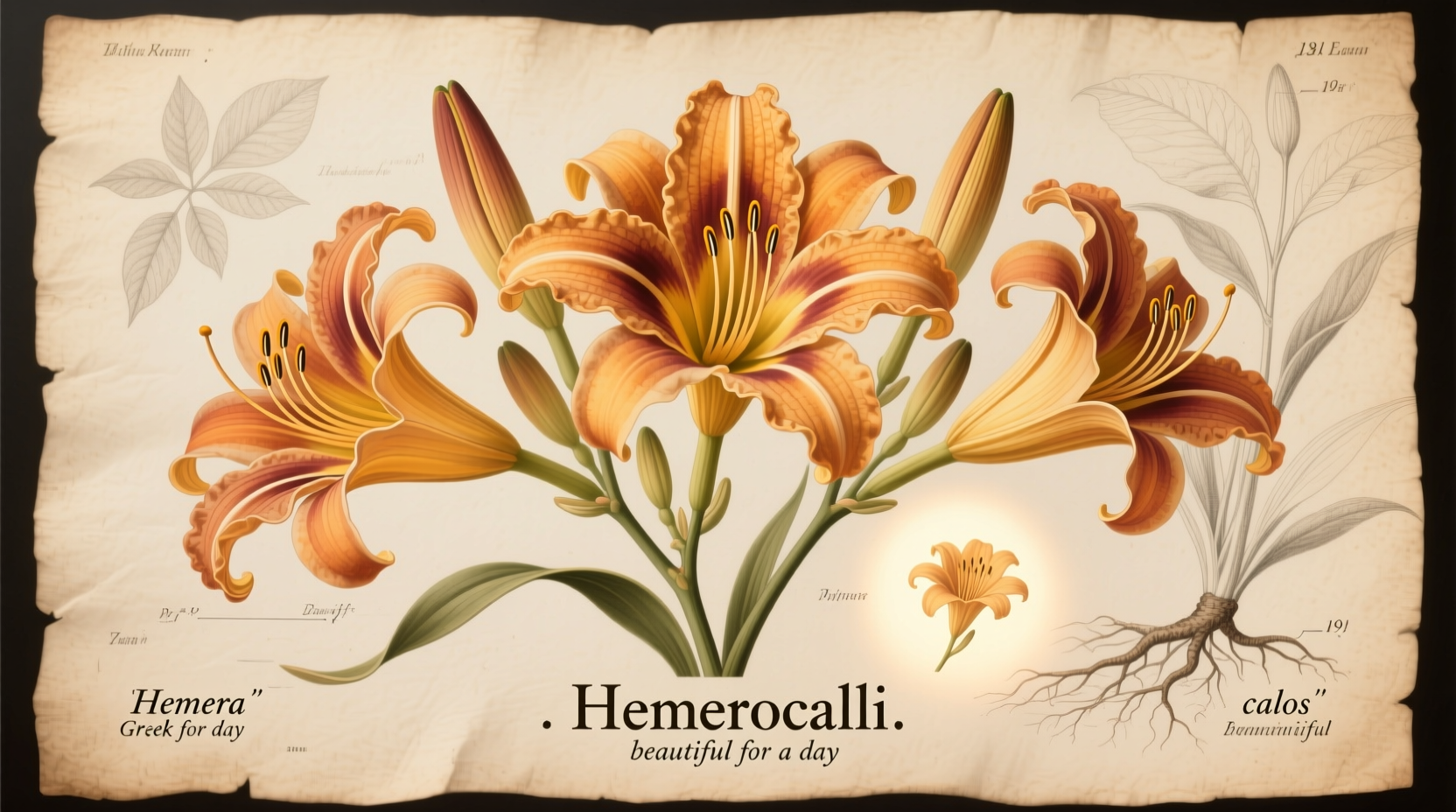
Each flower on a daylily opens in the morning—often just after sunrise—and remains open through the afternoon. By evening, the petals begin to wilt, and by the next morning, the bloom has faded entirely. This rapid lifecycle gives the impression that the plant lives only for a day, hence the name \"daylily.\" However, the plant itself is far from short-lived. A mature daylily can produce dozens, sometimes hundreds, of buds over a growing season, ensuring a continuous display of color despite each bloom’s brief existence.
The timing of this bloom is remarkably consistent. Botanists have observed that certain cultivars open their flowers within minutes of the same time each day, influenced by light, temperature, and internal biological rhythms. This predictability has made daylilies a favorite subject in studies of circadian rhythms in plants.
Etymology and Historical Naming
The term “daylily” is an English adaptation of the scientific name *Hemerocallis*, derived from two Greek words: hemera, meaning “day,” and kallios, meaning “beautiful” or “most beautiful.” So, *Hemerocallis* literally translates to “beautiful for a day.” This name was coined by 18th-century botanists who were struck by the flower’s striking appearance and its equally striking brevity.
It’s important to note that despite the name, daylilies are not true lilies. True lilies belong to the genus *Lilium* and grow from bulbs, while daylilies grow from fleshy root systems called tuberous rhizomes. They also differ in toxicity; daylilies are generally safe for human consumption (and are used in Chinese cuisine), whereas many true lilies are toxic to cats and some other animals.
“Naming a flower after its lifespan is rare in horticulture. The fact that ‘daylily’ stuck shows how deeply its fleeting beauty resonates with people.” — Dr. Lydia Chen, Botanical Historian
Common Misconceptions About Daylilies
Because of their name and lily-like appearance, several misconceptions persist about daylilies. One of the most widespread is that they are related to lilies. As previously noted, they are not. Another misconception is that the entire plant dies after one day. In reality, only the individual flower does. The foliage, root system, and flower scapes (stalks) continue to thrive and support new blooms.
Additionally, some gardeners assume that because each bloom lasts only a day, the plant offers limited ornamental value. On the contrary, a well-maintained daylily can bloom continuously for four to six weeks, with multiple buds opening sequentially along each scape. Some modern cultivars, known as “rebloomers,” can even produce a second flush of flowers later in the season.
Do’s and Don’ts When Growing Daylilies
| Do | Don't |
|---|---|
| Plant in full sun to partial shade (at least 6 hours of sun) | Plant in constantly soggy soil |
| Deadhead spent blooms regularly to improve appearance | Over-prune healthy foliage; it feeds the roots |
| Divide clumps every 3–5 years to maintain vigor | Expect all varieties to rebloom without checking cultivar traits |
| Use daylily petals in salads or stir-fries (if pesticide-free) | Assume all parts of all varieties are edible—some may cause stomach upset |
Cultural Significance and Symbolism
The transient nature of the daylily bloom has inspired symbolic meanings across cultures. In Chinese tradition, the daylily (known as *xuān cǎo*) symbolizes motherhood and filial piety. It was historically planted near homes to remind children of their mothers' love and care. The idea was that just as the flower appears briefly but returns year after year, a mother’s presence endures even when not immediately visible.
In Victorian flower language, the daylily represented coquetry or fleeting joy—fitting, given its one-day bloom. Yet modern interpretations often focus on resilience and renewal, celebrating the plant’s ability to thrive in poor soils, withstand drought, and return reliably each summer.
A Real Garden Scenario: The Johnson Family’s Experience
The Johnsons moved into a new home with a neglected backyard. The soil was compacted, and weeds dominated the flower beds. After researching low-maintenance perennials, they chose several daylily cultivars—‘Stella de Oro,’ ‘Happy Returns,’ and ‘Purple Dancer’—for their front border. Within two seasons, the area transformed. Despite hot summers and irregular watering, the daylilies flourished.
Mrs. Johnson initially worried that the flowers didn’t last long. “I’d go out in the evening and see wilted petals everywhere,” she recalled. But once she learned about the daily bloom cycle, she began enjoying the ritual of checking for new flowers each morning. “It became a little moment of joy—like nature’s daily gift.”
How to Maximize Your Daylily Display
To get the most out of your daylilies, follow these steps:
- Choose the right location: Full sun promotes the most blooms. At least six hours of direct sunlight is ideal.
- Prepare the soil: While daylilies tolerate various conditions, well-draining, slightly acidic to neutral soil yields the best results.
- Plant at the correct depth: The crown (where roots meet stems) should sit about one inch below the soil surface.
- Water consistently during establishment: First-year plants benefit from weekly deep watering, especially in dry spells.
- Deadhead regularly: Remove spent flowers daily to prevent seed formation and keep the plant focused on producing more blooms.
- Fertilize lightly: A balanced, slow-release fertilizer in spring supports growth without encouraging excessive foliage at the expense of flowers.
- Divide when needed: If blooming declines or clumps look crowded, divide in early spring or fall.
Frequently Asked Questions
Are daylilies really only open for one day?
Yes, each individual flower typically opens in the morning and wilts by the following morning. However, a single plant produces many buds, so the overall blooming period can last several weeks.
Can you eat daylilies?
Yes, the petals and buds of most daylily varieties are edible and commonly used in Asian cuisine. Ensure they haven’t been treated with pesticides or chemicals. Avoid eating roots or leaves, as they can be tough or cause digestive discomfort.
Why aren’t my daylilies blooming well?
Poor blooming is often due to insufficient sunlight, overcrowding, or nutrient imbalance. Make sure your plants get at least six hours of sun, divide them if clumps are dense, and avoid high-nitrogen fertilizers that promote leaf growth over flowers.
Conclusion: Embracing Fleeting Beauty
The name “daylily” is more than just a label—it’s a lesson in appreciating the present. Each bloom reminds us that beauty doesn’t need to last forever to be meaningful. Understanding the origin of the name deepens our connection to the natural world and encourages mindful gardening. Whether you're drawn to their vibrant colors, their hardiness, or their symbolic resonance, daylilies offer a blend of simplicity and profundity that few perennials match.




 浙公网安备
33010002000092号
浙公网安备
33010002000092号 浙B2-20120091-4
Comments
No comments yet. Why don't you start the discussion?