
Kidney beans are a staple in kitchens across the globe, featured prominently in dishes like chili, rice and beans, and salads. But have you ever paused to wonder why they’re called “kidney” beans? The answer lies not in flavor or function, but in form. These legumes earned their name due to their striking resemblance to human kidneys—both in shape and size. While this might seem like a trivial observation, it reflects a broader pattern in how we name foods based on visual associations. Understanding the origin, evolution, and significance of kidney beans offers insight into agricultural history, linguistic habits, and even nutritional science.
The Shape That Inspired a Name
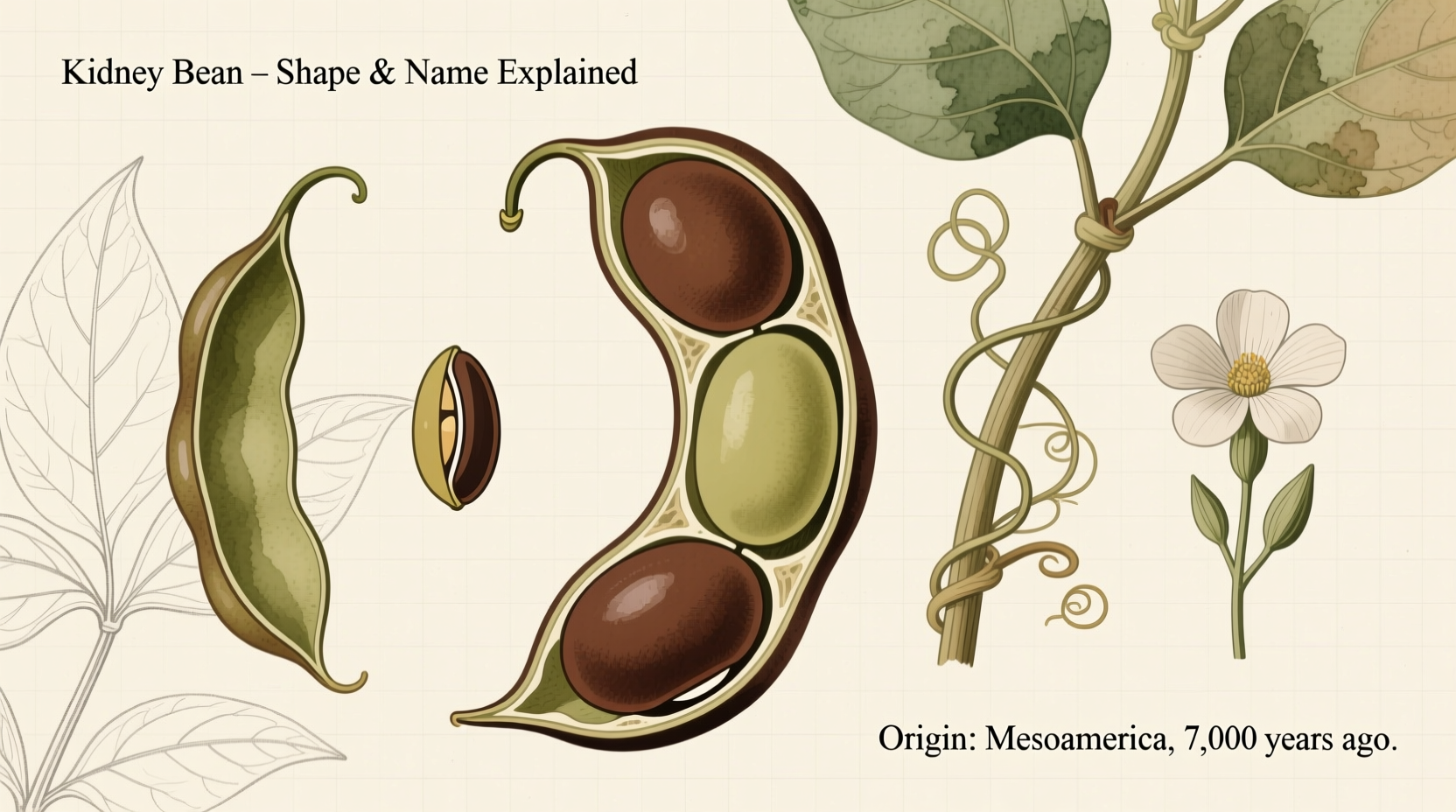
The most immediate reason for the name “kidney bean” is its physical appearance. When whole and dried, the bean has a broad, curved indentation on one side and a rounded exterior on the other, mirroring the contour of a human kidney. This visual similarity is so strong that early botanists and farmers likely adopted the term as a descriptive shorthand.
This kind of naming convention isn’t unique to kidney beans. Foods like heart-shaped strawberries, finger bananas, and pearl onions follow the same logic—using familiar shapes to make identification easier for consumers and cultivators alike. In botanical terms, kidney beans belong to the species *Phaseolus vulgaris*, which includes black beans, pinto beans, and navy beans. Despite being the same species, each variety is distinguished by color, size, and—most notably—shape.
Historical Origin and Global Spread
Kidney beans originated in Latin America, where they were domesticated over 7,000 years ago. Archaeological evidence from sites in Peru and Mexico shows that early civilizations cultivated various forms of *Phaseolus vulgaris* as part of a triad known as the “Three Sisters”—corn, squash, and beans. This agricultural system allowed each plant to support the others: corn provided a stalk for beans to climb, beans fixed nitrogen in the soil, and squash covered the ground to retain moisture.
When Spanish explorers arrived in the Americas in the 15th and 16th centuries, they encountered these native crops and brought them back to Europe. From there, kidney beans spread to Africa, Asia, and beyond through colonial trade routes. Their adaptability to different climates and soils made them a valuable food source during long sea voyages and in regions with limited protein options.
The English name “kidney bean” first appeared in written records in the 18th century, coinciding with increased scientific classification of plants. Prior to this, they may have been referred to regionally as “Spanish beans” or “Mexican beans.” The adoption of “kidney” as a descriptor was both practical and anatomically intuitive, aligning with Enlightenment-era trends in taxonomy that emphasized observable characteristics.
Nutritional Profile and Culinary Uses
Beyond their name and origin, kidney beans are valued for their dense nutritional content. A single cup of cooked kidney beans contains about 15 grams of protein, 13 grams of fiber, and significant amounts of iron, potassium, and folate. They are low in fat and have a moderate glycemic index, making them a favorable choice for people managing diabetes or seeking plant-based nutrition.
Culinary applications vary widely across cultures:
- In India, kidney beans (known as *rajma*) are simmered in spiced tomato gravy and served with rice.
- In the southern United States, they are a key ingredient in red beans and rice, often cooked with smoked sausage and aromatics.
- In Central America, they are mashed and used as fillings for tacos or tamales.
- In Mediterranean diets, they appear in hearty soups and stews.
Their firm texture holds up well during prolonged cooking, which makes them ideal for slow-cooked dishes. However, they must be boiled thoroughly before consumption—raw or undercooked kidney beans contain phytohaemagglutinin, a toxin that can cause severe gastrointestinal distress.
“Kidney beans are a nutritional powerhouse, but their safety depends entirely on proper preparation. Never skip the boil.” — Dr. Lena Torres, Food Safety Researcher, University of California
Comparative Analysis: Kidney Beans vs. Similar Legumes
While all *Phaseolus vulgaris* varieties share genetic roots, subtle differences in shape, texture, and flavor make each suitable for specific uses. The table below compares kidney beans to three common counterparts:
| Bean Type | Shape & Size | Texture (Cooked) | Common Uses |
|---|---|---|---|
| Kidney Bean | Large, curved, oval with indented side | Firm, meaty | Chili, rajma, salads |
| Pinto Bean | Medium, speckled, slightly flattened | Soft, creamy | Burritos, refried beans |
| Black Bean | Small, oblong, uniform | Dense, smooth | Cuban rice, soups, dips |
| Cannellini Bean | Oval, elongated, white | Buttery, tender | Italian stews, purees |
This comparison highlights how shape influences culinary decisions. The kidney bean’s robust structure allows it to maintain integrity in thick, chunky dishes, whereas softer beans like pinto or cannellini are better suited for mashing or blending.
Step-by-Step Guide to Preparing Kidney Beans Safely
Because of their natural toxins, kidney beans require careful preparation. Follow this sequence to ensure they are safe to eat:
- Sort and rinse: Remove any debris or damaged beans and rinse under cold water.
- Soak overnight: Place beans in a large bowl with three times their volume in water. Soaking reduces cooking time and helps leach out some oligosaccharides that cause gas.
- Discard soaking water: Do not cook beans in the soaking liquid, as it contains released compounds.
- Boil vigorously: Bring fresh water to a rolling boil and cook beans for at least 10 minutes. This step is critical to destroy phytohaemagglutinin.
- Simmer until tender: Reduce heat and simmer for 45–60 minutes until soft throughout.
- Drain and use: Incorporate into your recipe or store in the refrigerator for up to five days.
Real-World Example: A Chef’s Kitchen Revelation
In a small farm-to-table restaurant in Oaxaca, Mexico, chef Maria Ruiz once substituted pinto beans for kidney beans in her signature chili. Customers noticed immediately. “It didn’t hold together,” she recalled. “The texture was too soft, and the dish lost its heartiness.” After reviewing old family recipes, she realized her grandmother had always specified kidney beans—not just for flavor, but because their shape and density gave the stew body. “They absorb sauce without falling apart,” she said. “It’s not just what they taste like, but what they do in the pot.”
This experience reinforced her belief that bean selection is as important as seasoning. Today, she teaches workshops emphasizing the importance of matching bean type to dish structure—a lesson rooted in both tradition and food science.
Frequently Asked Questions
Can I eat raw kidney beans?
No. Raw or undercooked kidney beans contain high levels of phytohaemagglutinin, a lectin that can cause nausea, vomiting, and diarrhea. Always boil them for at least 10 minutes before simmering.
Why are canned kidney beans safe to eat straight from the can?
Canned kidney beans are pre-boiled at high temperatures during processing, which neutralizes the toxins. They are safe to consume directly or added to cold salads.
Are red kidney beans the same as white kidney beans (cannellini)?
No. Although both are *Phaseolus vulgaris*, red kidney beans are darker, firmer, and more robust in flavor. White kidney beans (cannellini) are milder and creamier, better suited for delicate dishes.
Final Thoughts and Call to Action
The name “kidney bean” may seem whimsical at first glance, but it reflects a deeper truth about how humans interact with nature—we categorize what we see based on familiarity. What began as a simple visual analogy has endured through centuries of global cuisine, agriculture, and nutrition science. These beans are more than just a pantry staple; they are a bridge between ancient farming practices and modern dietary needs.
Next time you open a can or soak a batch of dried kidney beans, take a moment to appreciate not only their utility but also the story embedded in their name. Then, experiment: try a traditional *rajma* recipe, craft a smoky chili, or invent your own bean-based dish. Share your creation online, tag a friend who loves cooking, or leave a note here about how you use kidney beans in your kitchen. The conversation around food is richer when everyone brings something to the table.




 浙公网安备
33010002000092号
浙公网安备
33010002000092号 浙B2-20120091-4
Comments
No comments yet. Why don't you start the discussion?