
The Canary Islands, a Spanish archipelago located off the northwest coast of Africa, are known for their volcanic landscapes, year-round warm climate, and vibrant tourism industry. But despite their tropical reputation, one thing often puzzles visitors and history enthusiasts alike: why are they called the “Canary” Islands when the bright yellow songbirds we associate with that name aren’t native to the region? The truth behind the name is far older—and more fascinating—than most realize, rooted in ancient exploration, misinterpretation, and Latin etymology.
The Misconception: Birds First?
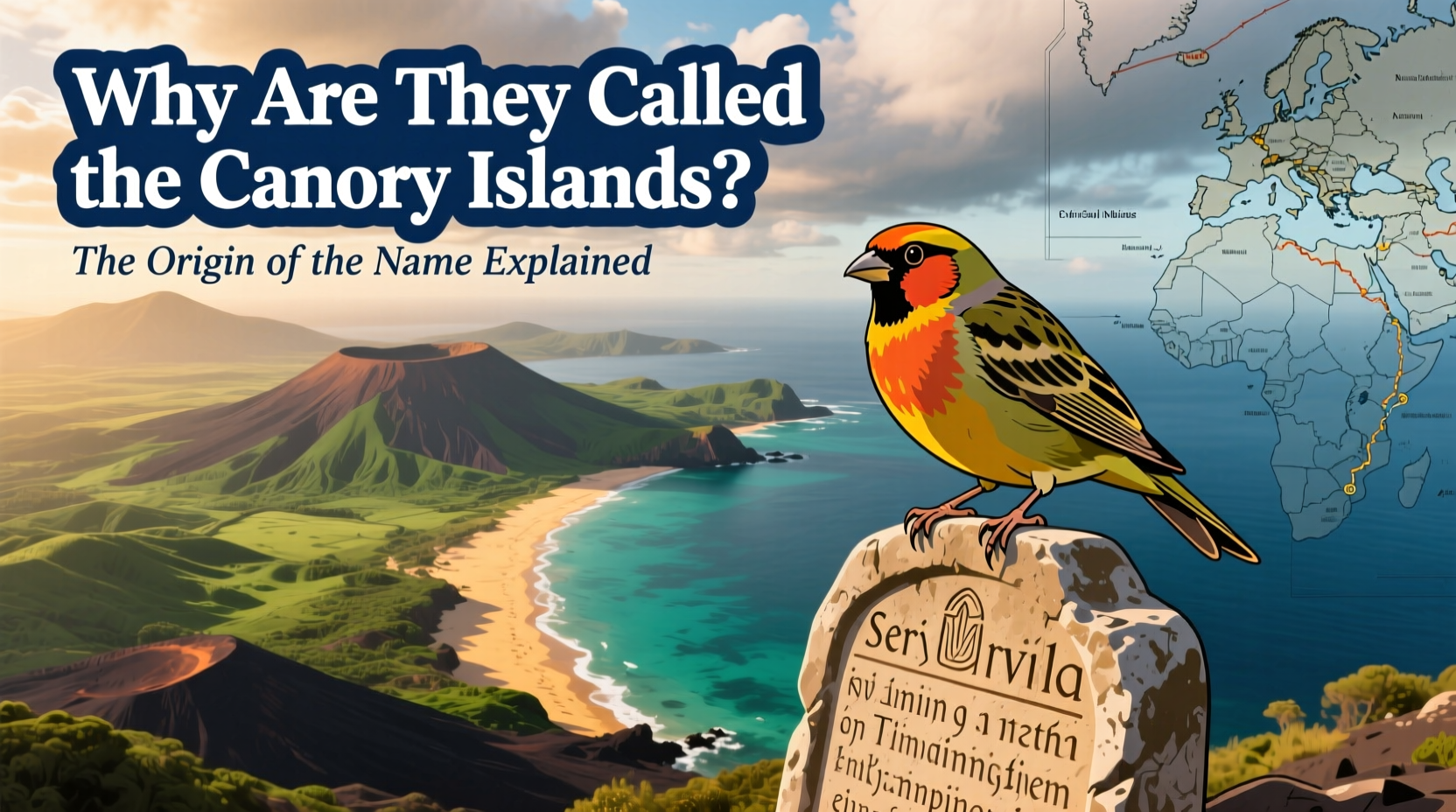
Most people assume the islands were named after the canary bird, specifically the domesticated yellow variety popular as pets. However, this assumption gets the timeline backward. The birds were actually named *after* the islands, not the other way around. The scientific name for the wild ancestor of the pet canary is *Serinus canaria*, with “canaria” directly referencing the Canary Islands. So if the birds didn’t give the islands their name, what did?
Origin in Antiquity: The Role of the Romans
The earliest recorded references to the Canary Islands come from Greco-Roman sources. In the 1st century AD, the Roman historian Pliny the Elder wrote about an expedition to a group of Atlantic islands he called the \"Fortunatae Insulae,\" or \"Islands of the Blessed.\" Among these, he mentioned one named *Canaria*. According to Pliny, the island was so named because of the abundance of large dogs found there.
“On the island of Canaria, there was such a multitude of dogs of enormous size that it took its name from them.” — Pliny the Elder, *Naturalis Historia*
The Latin word for dog is *canis* (plural: *canes*), which gives us modern derivatives like “canine.” Therefore, *Canaria* essentially means “Island of Dogs.” This may sound bizarre today, but archaeological evidence supports the idea that large, fierce dogs were once common on Gran Canaria and Tenerife, possibly used by the indigenous Guanche people as guardians or hunting companions.
The Guanche Connection: Indigenous Culture and Canine Significance
The original inhabitants of the Canary Islands, collectively known as the Guanches (particularly on Tenerife), had a complex society that predated European colonization by centuries. While direct records from the Guanches are scarce, early Spanish chroniclers noted the presence of large dogs revered by local tribes. Some accounts suggest these dogs were considered sacred or symbolic, possibly associated with protection or spiritual guidance.
When Roman sailors arrived, likely blown off course or on exploratory missions, they would have encountered these dogs prominently. Naming an unfamiliar island after a striking feature—especially one involving loud, aggressive animals—was common practice in antiquity. Thus, *Insula Canaria* (the Island of Dogs) emerged as a practical descriptor rather than a whimsical choice.
How the Name Evolved Over Time
Over the centuries, as navigation improved and new powers explored the Atlantic, the name persisted and expanded. By the Middle Ages, maps began referring to the entire archipelago as the *Islas Canarias* in Spanish, directly translating the Latin root. When the Kingdom of Castile conquered the islands in the 15th century, the name was formalized under Spanish rule.
It wasn't until the 17th and 18th centuries that European naturalists discovered the small finch species living wild on the islands. Captivated by their bright plumage and melodious song, they brought specimens back to Europe. Breeders quickly developed the yellow variant we know today, and the bird became widely known as the “canary,” short for “bird from the Canary Islands.”
A Timeline of the Name’s Evolution
- 1st Century AD: Pliny the Elder documents *Canaria* as “Island of Dogs” due to large canines observed.
- Medieval Period: Navigational charts refer to the archipelago as *Insularia Canaria* or similar variations.
- 1402–1496: Castilian conquest leads to formal use of *Islas Canarias* in official records.
- 17th–18th Century: Wild finches from the islands become popular in Europe; dubbed “canaries.”
- Modern Era: Public associates “canary” with the bird, forgetting the original canine connection.
Common Myths vs. Historical Facts
| Myth | Fact |
|---|---|
| The islands were named after the yellow canary bird. | The bird was named after the islands, not vice versa. |
| “Canary” refers to the color yellow, like the sun-drenched beaches. | No linguistic link between “canary” and color; the association developed later. |
| The Romans found songbirds and named the island accordingly. | Romans documented large dogs, not birds, as the namesake. |
| All seven main islands had dog populations significant enough to inspire the name. | Only Gran Canaria and possibly Tenerife were explicitly linked to dogs in ancient texts. |
Mini Case Study: The Loro Parque Myth
In Puerto de la Cruz, Tenerife, the famous Loro Parque zoo features extensive exhibits of parrots and songbirds, including thousands of canaries. Many visitors leave believing the park’s name—or even the island’s—is tied to avian life. In reality, “Loro” means parrot in Spanish, and the park was founded in 1971, long after the name “Canary Islands” was established. This case illustrates how modern associations can overshadow historical truths, reinforcing the misconception that birds came first.
Expert Insight: What Linguists Say
“The name ‘Canary Islands’ is a classic example of reverse folk etymology. People hear ‘canary’ and think of birds, so they retrofit the story to match. But primary sources like Pliny are clear: it was the dogs.” — Dr. Elena Ruiz, Historical Linguist at Universidad de La Laguna
Linguistic analysis of medieval manuscripts and navigational logs confirms that the transition from *Canaria* (dog-related) to *canary* (bird-related) occurred gradually through cultural osmosis, not historical accuracy.
Frequently Asked Questions
Are there any wild canary birds on the Canary Islands today?
Yes, the wild Atlantic canary (*Serinus canaria*) still lives in forests and rural areas across several islands, particularly Tenerife, La Gomera, and El Hierro. It's smaller and greener than the domesticated yellow version but equally vocal.
Did the Romans ever settle the Canary Islands?
No definitive evidence exists of permanent Roman settlement. Their knowledge of the islands appears limited to brief visits or shipwreck stories. The conquest and colonization began much later, under the Crown of Castile in the 15th century.
Is the dog theory widely accepted among historians?
Yes. While some fringe theories suggest links to mythical creatures or lost civilizations, mainstream scholarship accepts Pliny’s account as the most credible origin. Archaeological findings of dog remains on ancient Guanche sites further support this view.
Practical Checklist: Understanding Place Name Origins
- Check primary historical sources before accepting popular explanations.
- Look for linguistic roots in Latin, Greek, or local languages.
- Be skeptical of names that seem too obviously descriptive (e.g., “Iceland” isn’t always icy).
- Research when the name first appeared in written records.
- Consider whether animals, features, or people were prominent during initial contact.
Conclusion: Reclaiming the True Story
The name “Canary Islands” carries a legacy far deeper than cheerful yellow birds. Its roots lie in ancient encounters with powerful dogs on remote Atlantic shores—a testament to how explorers named unknown lands based on immediate, memorable impressions. Over time, language shifted, pets became symbols, and history was quietly rewritten in the public imagination. Yet the truth remains embedded in classical texts and scholarly research.
Understanding the real origin enriches our appreciation of the archipelago’s layered past—from its indigenous cultures to Roman curiosity and colonial transformation. Next time you hear “Canary Islands,” remember: it wasn’t the songbird that started it all, but the bark.




 浙公网安备
33010002000092号
浙公网安备
33010002000092号 浙B2-20120091-4
Comments
No comments yet. Why don't you start the discussion?