
In recent years, a quiet but significant shift has taken place in school hallways across the United States: the rise of the clear backpack. Once an oddity seen only in airport security zones or corporate lobbies, transparent backpacks have become a common sight in elementary, middle, and high schools. Parents purchasing them, administrators endorsing them, and students adjusting to their visibility—this trend is more than just a fashion statement. It’s part of a broader movement toward safer, more secure learning environments. But what exactly is driving this change? And what does it mean for students, educators, and families?
The growing popularity of transparent backpacks stems from a combination of heightened safety concerns, evolving school policies, and practical enforcement strategies. As schools grapple with issues ranging from bullying to weapon possession, many districts have turned to visible bag solutions as a proactive measure. This article explores the reasons behind the surge in clear backpack use, evaluates its real-world impact, and offers guidance for schools and families navigating this new norm.
The Safety Imperative Behind Clear Backpacks
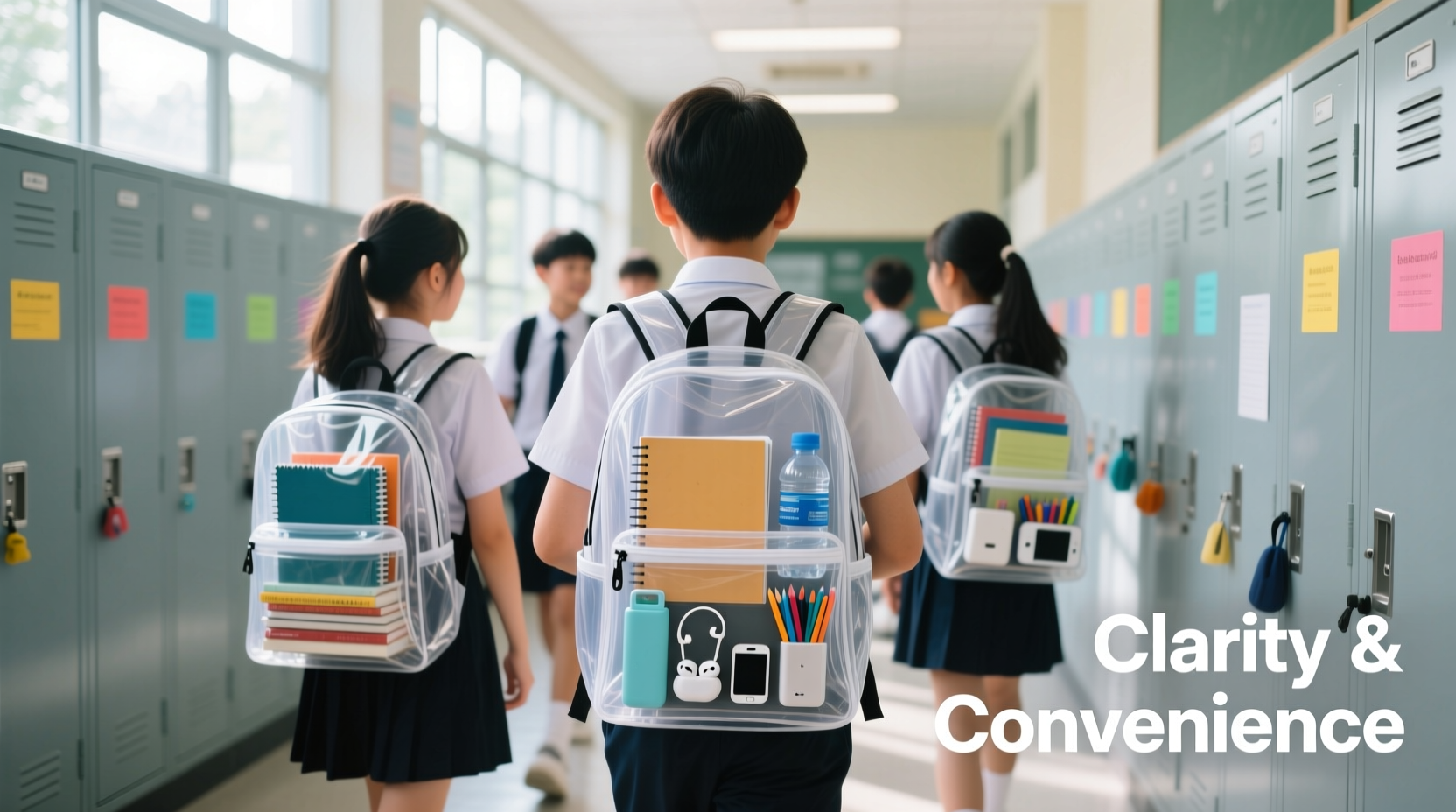
School safety has been a top concern for decades, but the frequency and severity of incidents in recent years have intensified the urgency. In response, educational institutions are adopting preventive measures that balance security with daily functionality. Transparent backpacks have emerged as one such solution—a low-cost, non-invasive method of increasing visibility into what students bring onto campus.
Unlike metal detectors or random bag checks, which require staffing and can create bottlenecks, clear backpacks allow for passive monitoring. Teachers, security personnel, and even fellow students can quickly identify prohibited items such as weapons, drugs, or vaping devices without physical searches. This visual transparency reduces opportunities for concealment while minimizing disruptions to the school day.
A 2023 report by the National Association of Secondary School Principals found that 42% of surveyed schools had either implemented or were considering clear-bag policies within the past five years. The primary motivator? Preventing unauthorized items from entering classrooms. One Florida principal noted, “We’re not trying to invade privacy—we’re trying to prevent emergencies.”
“Transparency isn’t about surveillance; it’s about prevention. When everyone can see what’s inside a bag, there’s less room for dangerous surprises.” — Dr. Lena Pruitt, School Safety Consultant, National Center for Safe Schools
Policy Shifts and District-Wide Implementation
The adoption of transparent backpacks often begins at the district level. After incidents involving contraband or threats, school boards may revise dress codes or security protocols to include restrictions on opaque bags. These policies typically exempt medical equipment, religious garments, or personal care items to ensure inclusivity.
For example, the Houston Independent School District introduced a clear-bag policy in 2021 following a series of knife-related altercations. Within two years, reports of concealed weapons dropped by 67%, according to internal district data. Similarly, schools in Broward County, Florida, reported fewer lockdown drills related to suspicious packages after implementing similar rules.
These policies are rarely arbitrary. They are usually developed in collaboration with law enforcement, mental health professionals, and parent advisory committees. The goal is not to criminalize students but to deter risky behavior through predictability. When students know their belongings will be visible, they’re less likely to bring prohibited items in the first place.
Benefits Beyond Security: Accountability and Equity
While safety remains the primary driver, transparent backpacks offer secondary advantages that contribute to their appeal. One often-overlooked benefit is increased accountability among students. Because peers and staff can easily see contents, behaviors like sharing prescription medication, hiding stolen items, or carrying unauthorized electronics become harder to sustain.
Moreover, some educators argue that clear backpacks promote equity. Traditional bag checks can be inconsistent and subject to bias, particularly when conducted by overburdened staff. A transparent system removes discretion from the equation—everyone’s bag is equally visible, reducing the risk of discriminatory targeting.
There’s also a psychological component. Knowing that belongings are on display encourages responsibility. Students learn to organize their materials thoughtfully and avoid bringing unnecessary or inappropriate items. Teachers report fewer distractions during class time, as students aren’t rummaging through deep pockets or zipped compartments searching for supplies.
Real-World Example: A Day at Lincoln Middle School
At Lincoln Middle School in suburban Atlanta, the transition to clear backpacks began gradually. After a vape device was discovered in a locker during a routine inspection, the administration proposed a pilot program requiring all seventh graders to use transparent backpacks for one semester.
Initially met with skepticism, the program gained support as teachers noticed changes. “I could instantly see if someone brought in a water bottle instead of a soda,” said Ms. Carla Dunn, a science teacher. “And I didn’t have to stop class to check bags.”
Incidents of contraband dropped by half during the trial period. By the next academic year, the policy expanded to all grade levels. Student councils even launched a campaign encouraging creative customization of clear bags using colored dividers and labeled folders—turning compliance into self-expression.
Challenges and Considerations for Families
Despite the benefits, the shift to transparent backpacks isn’t without friction. Privacy concerns are the most commonly cited objection. Some students feel uncomfortable knowing personal items—like hygiene products, medications, or handwritten notes—are visible to others.
Schools addressing these concerns often implement accommodations. For instance, small opaque pouches may be permitted inside clear backpacks for sensitive items. Others designate private areas where students can access locked storage for personal belongings upon arrival.
Durability and weather resistance are additional factors. Early versions of clear backpacks were prone to scratching and clouding, making them appear worn quickly. However, modern designs use reinforced PVC or TPU materials that resist abrasion and maintain clarity over time. Many now include waterproof coatings and padded laptop sleeves, improving both function and longevity.
| Feature | Clear Backpack | Traditional Backpack |
|---|---|---|
| Visibility of Contents | High – immediate visual access | Low – requires opening and inspection |
| Security Efficiency | Passive monitoring possible | Relies on active checks |
| Privacy for Sensitive Items | Moderate (with inner pouches) | High |
| Durability (Modern Models) | Good to excellent | Varies widely |
| Weather Resistance | Improved in newer models | Typically strong |
Step-by-Step: How Schools Can Transition Smoothly to Clear Backpack Policies
- Assess Needs: Review incident reports and consult stakeholders to determine if a clear-bag policy addresses specific safety concerns.
- Engage the Community: Hold town halls with parents, students, and staff to explain the rationale and gather input.
- Develop Exceptions: Define allowable opaque containers for medical, religious, or personal care needs.
- Pilot the Program: Launch a limited rollout to test logistics and collect feedback.
- Educate Users: Provide guidelines on proper use, cleaning, and customization options.
- Evaluate and Adjust: After 3–6 months, analyze outcomes and refine the policy as needed.
What Parents and Students Should Know
For families navigating this shift, understanding both the expectations and best practices is essential. Not all clear backpacks are created equal—some meet school standards while others fall short due to thickness, opacity, or lack of structural integrity.
- Choose backpacks made from thick, scratch-resistant vinyl or polycarbonate.
- Look for models with multiple compartments to help organize contents visibly.
- Avoid bags with large printed graphics or mesh panels that obstruct view.
- Consider adding color-coded folders or inserts to personalize the look.
Checklist: Preparing for a Clear Backpack School Year
- ✔ Confirm your school’s backpack policy (clear-only, partial allowance, etc.)
- ✔ Purchase a compliant backpack made from durable, transparent material
- ✔ Label all personal items inside the bag for easy identification
- ✔ Use small zippered pouches for private items like medication or hygiene products
- ✔ Practice packing and unpacking to ensure efficiency and organization
- ✔ Discuss privacy expectations and responsible use with your child
Frequently Asked Questions
Are transparent backpacks required in all U.S. schools?
No, there is no national mandate. Policies vary by district and individual school. Some states, like Texas and Florida, have seen widespread adoption, especially in urban and suburban public schools. Private and rural schools are less likely to enforce such rules unless prompted by specific incidents.
Can students still bring opaque cases for electronics or instruments?
Yes, most clear-bag policies allow hard-sided cases for laptops, tablets, musical instruments, or specialized equipment. The focus is on limiting concealable soft bags rather than banning all non-transparent containers.
Do clear backpacks really make schools safer?
Data suggests they contribute to a deterrent effect. While they won’t prevent every threat, they reduce opportunities for hidden contraband and support consistent monitoring. Combined with counseling services and threat assessment teams, they form part of a layered safety strategy.
Conclusion: A Practical Step Toward Safer Classrooms
The rise of transparent backpacks in schools reflects a pragmatic response to complex challenges. Rather than relying solely on reactive measures, educators are embracing tools that promote visibility, consistency, and shared responsibility. While not a panacea, clear backpacks represent a tangible step toward environments where students can learn without fear and staff can focus on education—not emergency response.
As policies continue to evolve, open dialogue between schools, families, and students remains critical. With thoughtful implementation and respect for privacy, transparent backpacks can serve not as symbols of suspicion, but as everyday tools of trust and safety.




 浙公网安备
33010002000092号
浙公网安备
33010002000092号 浙B2-20120091-4
Comments
No comments yet. Why don't you start the discussion?