
When most people think of sea turtles, a vivid image comes to mind: a graceful creature gliding through turquoise waters, its shell shimmering with a soft green hue. But have you ever stopped to wonder—why are turtles green? The answer isn’t as simple as it seems. While no sea turtle has bright emerald skin or a fluorescent shell, the term “green” in green sea turtle refers to more than just surface appearance. It’s tied to biology, diet, evolution, and even human perception. This article dives deep into the reasons behind the greenish tones associated with sea turtles, separating myth from fact and revealing the fascinating science beneath their coloration.
The Green Sea Turtle: More Than Meets the Eye
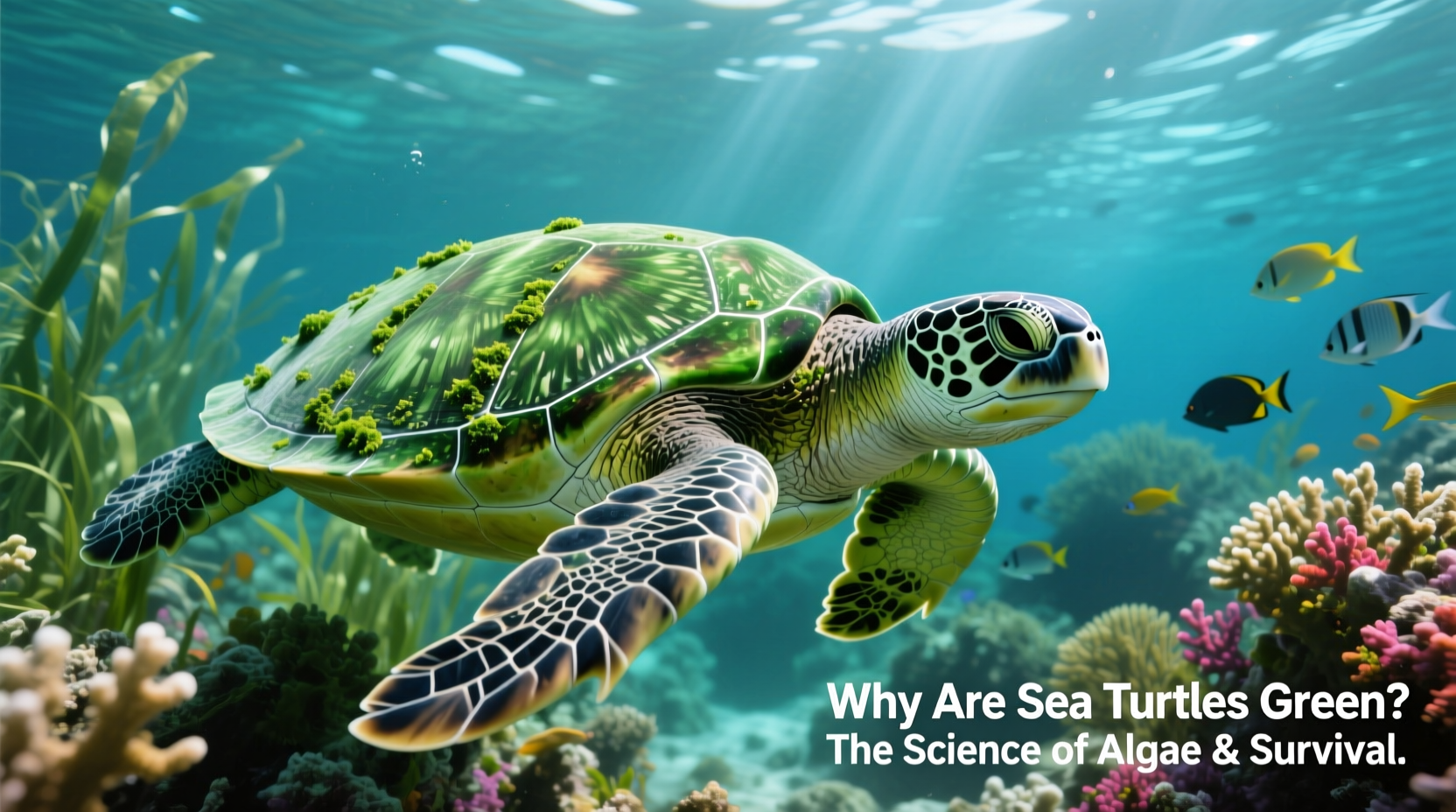
The species most commonly linked to the color green is the *Chelonia mydas*, better known as the green sea turtle. Despite its name, this turtle does not have a green shell. Instead, its carapace (top shell) is typically a blend of olive, brown, or black streaks with occasional golden or yellow highlights. What sets it apart is the color of its fat tissue—distinctly green—which gave rise to its common name.
This internal green pigment results from the turtle’s herbivorous diet. As adults, green sea turtles primarily consume seagrass and algae. These plants are rich in chlorophyll and other pigments that accumulate in the turtle’s body fat over time, giving it a greenish tint. Early naturalists who consumed or dissected these turtles noted this unusual feature and named the species accordingly.
“Naming the green sea turtle wasn’t about aesthetics—it was a direct observation of its physiology. The green fat was unmistakable.” — Dr. Lila Torres, Marine Biologist, Scripps Institution of Oceanography
Biology Behind the Hue: Pigments, Diet, and Evolution
The greenish appearance of sea turtles—both externally and internally—is influenced by several biological factors:
- Dietary pigments: Chlorophyll from seagrass breaks down into compounds that deposit in fatty tissues. Over years, this bioaccumulation creates the signature green fat.
- Shell composition: The keratin-based scutes on a turtle’s shell can reflect light in ways that enhance greenish or olive tones, especially underwater where blue and green wavelengths dominate.
- Symbiotic algae: Some sea turtles host microscopic algae on their shells. While not true “color,” this biofilm can give the carapace a slightly greenish sheen, particularly in older individuals living in nutrient-rich waters.
- Camouflage adaptation: The muted greens and browns help sea turtles blend into seagrass beds and coral reef environments, offering protection from predators like sharks and large fish.
Do All Sea Turtles Look Green?
No. Among the seven species of sea turtles, only the green sea turtle consistently exhibits greenish characteristics—and even then, it's subtle. Other species vary widely in color:
| Species | Typical Shell Color | Notable Features |
|---|---|---|
| Green Sea Turtle (*Chelonia mydas*) | Olive-brown with streaks | Green fat; herbivorous as adult |
| Hawksbill Turtle (*Eretmochelys imbricata*) | Amber with dark streaks | Tiger-like pattern; feeds on sponges |
| Loggerhead Turtle (*Caretta caretta*) | Reddish-brown | Large head; carnivorous |
| Leatherback Turtle (*Dermochelys coriacea*) | Black with white spotting | Leathery skin; deepest diving species |
| Kemp’s Ridley (*Lepidochelys kempii*) | Gray-green | Smallest sea turtle; nests in mass groups |
As shown, only the green sea turtle earns its name from internal traits rather than external appearance. Juveniles of this species are actually omnivorous and gradually shift to a plant-based diet as they mature—a transition mirrored in their changing physiology and fat pigmentation.
Environmental Influences on Appearance
A sea turtle’s perceived color can change based on its environment. Several external factors contribute to this visual variability:
- Water depth and light penetration: Underwater, red and orange wavelengths are absorbed quickly, leaving blues and greens dominant. This makes any olive-toned turtle appear more vividly green when viewed from above or at moderate depths.
- Algae and barnacle growth: Long-term residents of warm, shallow reefs often develop epibionts—organisms like algae, barnacles, and bryozoans—that grow on their shells. A thick layer of green algae can dramatically alter the turtle’s apparent color.
- Age and health: Older turtles may show more pronounced greenish hues due to prolonged exposure to chlorophyll-rich diets and slower metabolism, which affects pigment retention.
“I once observed a green sea turtle in the Great Barrier Reef whose shell looked almost jade-colored. Upon closer inspection, it was covered in a fine layer of filamentous algae. In clean water, the same turtle would have appeared much darker.” — Marine biologist field notes, 2022
Common Misconceptions About Turtle Color
Several myths persist about why turtles are green. Let’s clarify them with science:
- Myth: Green sea turtles have green shells.
Fact: Their shells are not green; the name comes from green fat beneath the muscle tissue. - Myth: All sea turtles turn green as they age.
Fact: Only green sea turtles develop green fat, and only if their diet includes sufficient seagrass. - Myth: The green color is for mating displays.
Fact: There’s no evidence of color-based courtship in sea turtles. Camouflage and thermoregulation are more likely evolutionary drivers.
How Scientists Study Turtle Pigmentation
Researchers use a combination of field observation and laboratory analysis to understand turtle coloration. Techniques include:
- Spectral reflectance measurement: Devices measure how much light different parts of the shell reflect, helping determine actual vs. perceived color.
- Dietary tracking: Stable isotope analysis of tissue samples reveals the proportion of plant vs. animal matter in a turtle’s diet over time.
- Fat tissue sampling: During health assessments or necropsies, biologists examine fat color and composition to assess nutritional status and habitat use.
- Photographic monitoring: Long-term photo databases track changes in shell appearance due to aging, disease, or environmental shifts.
Mini Case Study: The Seagrass Restoration Project in Florida
In the early 2010s, coastal development and pollution caused a sharp decline in seagrass beds across Florida Bay. Researchers noticed that juvenile green sea turtles in the area were growing more slowly and showing less green fat during routine health checks. A restoration initiative replanted over 2,000 acres of seagrass between 2015 and 2020. Follow-up studies revealed that turtles returning to those areas had significantly greener fat deposits and improved body condition scores by 2023. This case underscores the direct link between ecosystem health, diet, and the very trait that defines the species’ name.
FAQ: Frequently Asked Questions
Why is it called a green sea turtle if its shell isn’t green?
The name comes from the green color of its fat tissue, which results from a diet high in chlorophyll-rich seagrass and algae. Early taxonomists named the species based on internal anatomy observed during dissection.
Can a sea turtle’s color change over time?
Yes. External color can appear different due to algae growth, water conditions, or scarring. Internally, fat color deepens with a consistent herbivorous diet. Juveniles start omnivorous and gradually become more plant-eating as they mature.
Are green sea turtles endangered?
Yes. Listed as endangered under the U.S. Endangered Species Act and globally by the IUCN, green sea turtles face threats from habitat loss, pollution, fishing gear entanglement, and illegal hunting. Conservation efforts focus on protecting nesting beaches and restoring seagrass habitats.
Conclusion: Seeing Green in a New Light
The question “why are turtles green?” opens a window into marine biology, ecology, and the intricate relationship between diet and physical traits. The green sea turtle’s name is a legacy of early scientific observation, but its coloration tells a deeper story—one of adaptation, survival, and environmental interconnectedness. Understanding this helps us appreciate not just the turtle’s appearance, but the health of the ecosystems it inhabits.




 浙公网安备
33010002000092号
浙公网安备
33010002000092号 浙B2-20120091-4
Comments
No comments yet. Why don't you start the discussion?