
The internet has a unique way of turning frustration into comedy. One of the most enduring and absurdly relatable memes to emerge in recent years is the \"why are you the way you are\" meme. It captures that moment when someone—often a friend, family member, or even a pet—does something so inexplicably odd that your only response is a deadpan, exasperated question. This phrase didn’t start as a joke, but through repetition, irony, and perfect comedic timing, it became a cultural shorthand for bewilderment.
More than just a throwaway line, the meme reflects how digital culture repurposes everyday speech into shared humor. Its simplicity allows for endless variation, making it adaptable across platforms like Twitter, Reddit, TikTok, and Instagram. But where did it come from? Why did it resonate so deeply? And what are some of the funniest iterations that have defined its legacy?
The Origins: From Frustration to Viral Gold
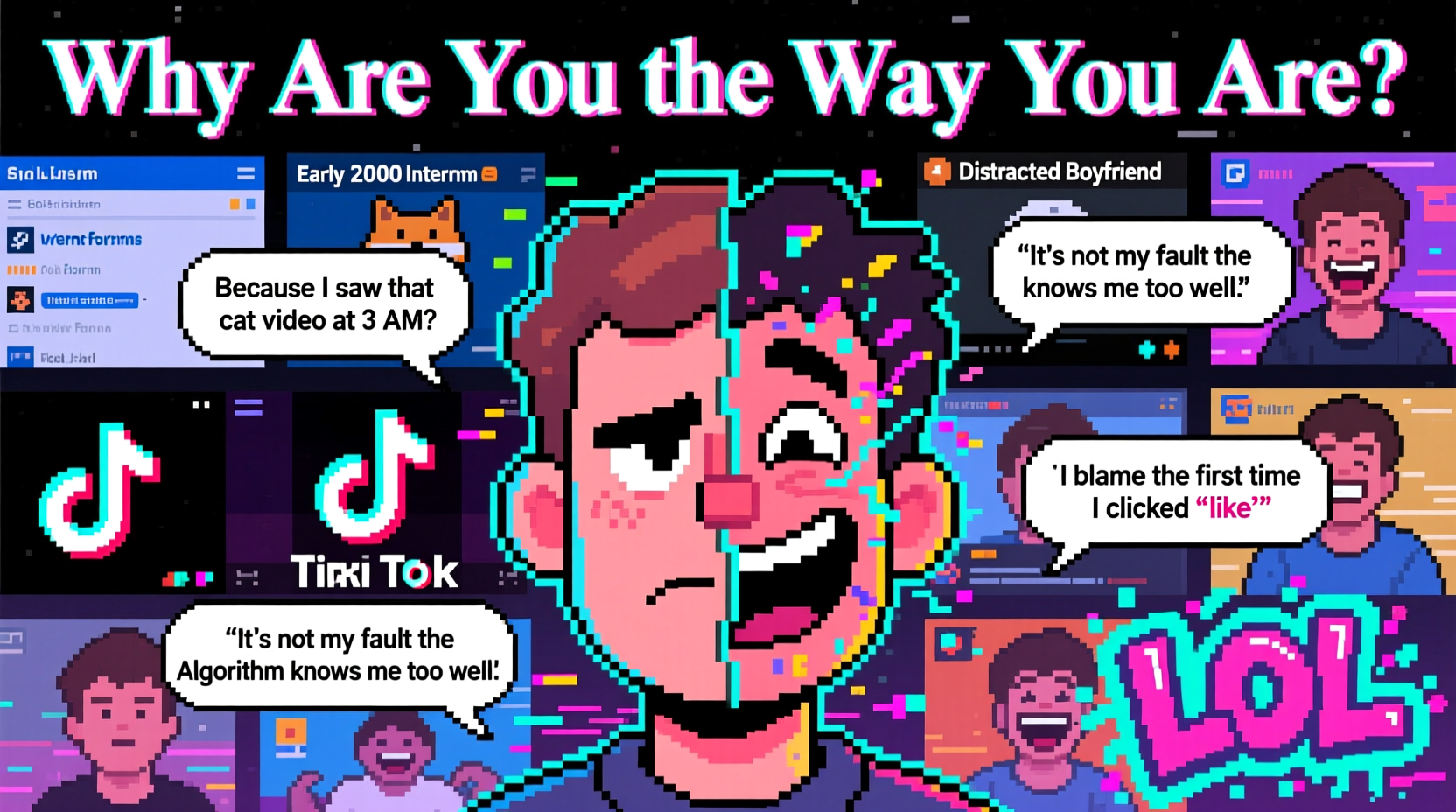
The phrase “Why are you the way you are?” likely originated in casual conversation—perhaps muttered by a parent watching their child eat peanut butter with a garden trowel or said by a roommate after finding socks in the freezer. However, its ascent into meme fame began around 2013–2014 on Tumblr and early Twitter threads, where users started pairing the phrase with surreal or illogical behaviors.
One of the earliest documented uses came from a now-viral tweet in 2013: a user describing their friend who microwaved an orange “to warm it up.” The reply? “Why are you the way you are?” That single exchange encapsulated the meme’s essence: reacting to irrational actions with dry disbelief rather than anger or confusion.
By 2016, the phrase had evolved into a template format. Images of confused-looking people—often stills from movies or TV shows—were captioned with bizarre scenarios followed by the titular question. The rise of reaction GIFs and image macros on Reddit communities like r/facepalm and r/interestingasfuck helped accelerate its spread.
“Internet humor thrives on absurdity meeting sincerity. ‘Why are you the way you are’ works because it’s both judgmental and affectionate—it mocks behavior while acknowledging human weirdness.” — Dr. Lena Torres, Digital Culture Researcher at NYU
The Anatomy of a Perfect Meme
What makes this meme so effective isn’t just the words—it’s the delivery. A successful “why are you the way you are” post follows a simple structure:
- Setup: Present an action that defies logic (e.g., putting cereal in the fridge before adding milk).
- Reaction: Use a visual cue—a stunned face, wide eyes, or subtle head tilt—to amplify disbelief.
- Punchline: Deliver the phrase without exaggeration. The drier, the better.
The humor lies in the contrast between normalcy and nonsense. There's no malice; instead, there's a kind of bewildered acceptance. This balance keeps the meme from feeling mean-spirited, which is crucial for shareability.
Funniest Examples That Broke the Internet
Over the years, countless variations have circulated online. Some stand out for their creativity, others for sheer relatability. Here are a few iconic examples that defined the meme’s peak popularity:
- “My brother put his phone in the oven to ‘charge it faster.’ He said metal heats up electricity. Why are you the way you are?” – Shared widely on Reddit in 2017, this example combines pseudo-science with genuine confusion, making it both hilarious and oddly believable.
- “Saw my mom wrap her toothbrush in cling film so it wouldn’t get wet in the bathroom. Why are you the way you are?” – A classic case of over-engineering a solution to a non-existent problem.
- “My dog barks at his own reflection, then runs away scared. Then comes back. Repeats for 20 minutes. Why are you the way you are?” – Animal-related versions often go viral due to universal pet-owner recognition.
- “My coworker brings a banana to work every day and eats half. Leaves the other half on the desk. Never eats it the next day. Just gets a new one. Why are you the way you are?” – Highlights workplace quirks with eerie specificity.
Perhaps the most legendary version involves a man who taped a spoon to his ceiling fan “to see if it would fly.” When asked why, he reportedly replied, “I thought maybe centrifugal force could launch utensils.” The photo of the spoon stuck to the blade, paired with a shocked reaction image, racked up over two million shares on Facebook alone.
How to Create Your Own Version (Without Being Cringe)
Making a good meme isn’t just about copying a formula—it’s about authenticity. If you want to contribute to the legacy of “why are you the way you are,” follow these steps:
- Observe real-life moments: Pay attention to small, strange habits people have. The more mundane the setting, the funnier the twist.
- Capture the emotion: Use a neutral or mildly shocked facial expression. Avoid overly dramatic reactions—they dilute the dry humor.
- Keep it concise: The setup should take no more than one sentence. The punchline must be exactly—or very close to—the original phrase.
- Avoid targeting sensitive topics: Mental health, disabilities, or traumatic experiences are off-limits. The goal is lighthearted amusement, not mockery.
- Test it internally: Show it to a friend. If they chuckle *and* say, “That’s so weirdly accurate,” you’ve nailed it.
| Do | Don't |
|---|---|
| Use realistic, everyday situations | Invent absurd scenarios that feel forced |
| Pair with understated reaction images | Use exaggerated anime screams or rage faces |
| Share among friends first | Post publicly without testing reception |
| Laugh with people, not at them | Criticize hygiene, intelligence, or appearance |
Mini Case Study: How One Tweet Sparked a Subculture
In 2015, a college student named Jamie posted a now-deleted tweet: “My roommate tried to charge his phone by putting it in direct sunlight. Said solar panels work that way. Why are you the way you are?” Within 72 hours, the tweet gained over 40,000 retweets and inspired hundreds of spin-offs using the same structure.
What made this particular post take off? First, it was plausible—many people misunderstand basic science. Second, it wasn’t hostile. Third, it used clean formatting: a clear anecdote, followed by the exact phrase. Soon, subreddits and Facebook groups began collecting similar stories under titles like “People Who Defy Physics” and “Roommate Logic.”
This case illustrates how a single, well-crafted example can ignite a broader trend. It also shows the importance of timing—this emerged during a wave of “relatable roommate horror stories,” giving it built-in audience momentum.
Frequently Asked Questions
Is the 'why are you the way you are' meme still popular?
While its peak virality was between 2015 and 2019, the meme remains culturally relevant. It resurfaces regularly in niche communities and is frequently referenced in pop culture, including sitcoms and late-night monologues. Its adaptability ensures longevity.
Can I use this meme in professional settings?
With caution, yes—especially in informal team chats or creative industries. For example, captioning a colleague’s unusual coffee ritual with “why are you the way you are” can build camaraderie. But avoid using it in formal emails or performance reviews.
Are there any copyright concerns with using reaction images?
Most reaction images fall under fair use when used for parody or commentary. However, avoid monetizing content that relies heavily on copyrighted stills (e.g., movie screenshots). Opt for royalty-free or user-generated visuals when possible.
Conclusion: Embracing the Absurdity
The “why are you the way you are” meme endures because it speaks to a universal truth: humans are inherently unpredictable. We all do strange things—some out of habit, others out of curiosity, and a few just to see what happens. Rather than shame those quirks, this meme invites us to laugh at them with warmth and recognition.
It’s a reminder that perfection isn’t the goal—connection is. Whether it’s your sibling who irons their socks or your cat who refuses to drink from anything but the faucet, these oddities make life interesting. So next time someone does something baffling, don’t yell. Don’t sigh. Just look at them calmly and ask: “Why are you the way you are?”




 浙公网安备
33010002000092号
浙公网安备
33010002000092号 浙B2-20120091-4
Comments
No comments yet. Why don't you start the discussion?