
The question of whether members of The Church of Jesus Christ of Latter-day Saints (LDS Church), commonly known as Mormons, are considered Christian is a topic of ongoing theological debate. While Mormons identify as Christians—affirming belief in Jesus Christ as Savior and central to their faith—many traditional Christian denominations do not classify Mormonism as part of orthodox Christianity. This divergence stems from significant doctrinal differences that go beyond cultural or organizational distinctions. Understanding this issue requires examining core theological beliefs, historical developments, and how definitions of “Christian” are applied across traditions.
Historical Context: Origins of the LDS Movement
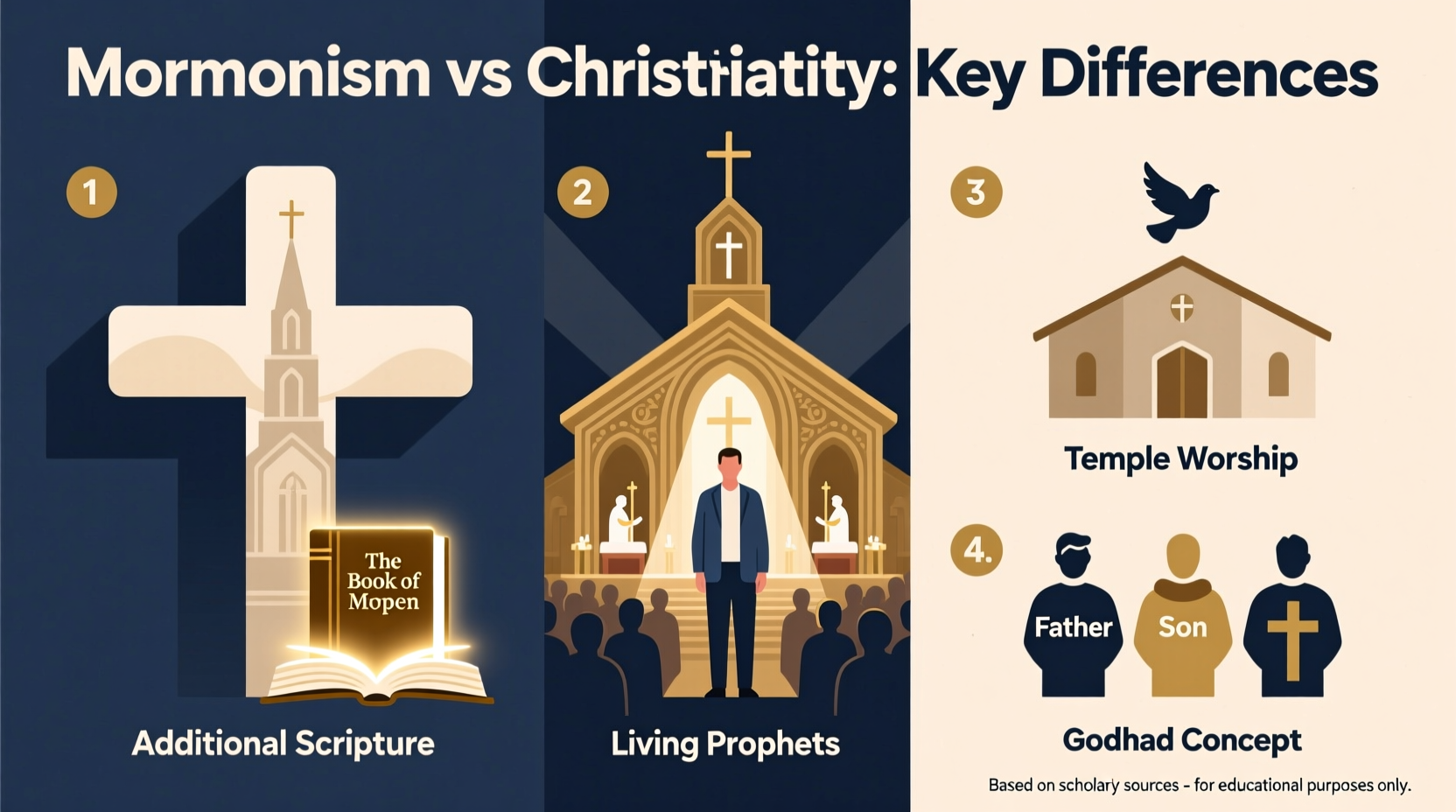
Mormonism began in the early 19th century with Joseph Smith, who claimed divine visions in upstate New York around 1820. According to Smith, God the Father and Jesus Christ appeared to him and instructed him not to join any existing churches, which were deemed corrupt. Later, he said he was led to golden plates buried in a hillside, inscribed with a record of ancient inhabitants of the Americas. These plates, translated through divine means, became the Book of Mormon—published in 1830 and serving as an additional scripture alongside the Bible.
This foundational narrative marks a departure from traditional Christian history, which holds that divine revelation concluded with the apostolic age and the closure of the biblical canon. For many Christians, the idea of new scripture revealed centuries later challenges the finality of the biblical message and raises concerns about the continuity of doctrine.
“Christian orthodoxy has always been defined not merely by affirming Jesus, but by adherence to the creeds and doctrines established over centuries of reflection.” — Dr. Timothy George, theologian and dean of Beeson Divinity School
Key Doctrinal Differences
The divergence between mainstream Christianity and Mormon theology centers on several essential doctrines. While both affirm Jesus Christ, the understanding of His nature, the Trinity, salvation, and Scripture differs profoundly.
1. Nature of God and the Trinity
Traditional Christianity, rooted in the Nicene Creed (325 AD), affirms one God in three co-equal, co-eternal persons: Father, Son, and Holy Spirit—distinct yet unified in essence. This is known as Trinitarian monotheism.
In contrast, Mormon theology teaches that the Father, Son, and Holy Spirit are three separate beings with physical bodies (except the Holy Ghost, who is a spirit). They are united in purpose but not in substance. Moreover, LDS doctrine includes the belief that God the Father was once a man who progressed to godhood—a concept known as exaltation.
2. View of Salvation
Orthodox Christianity teaches salvation by grace alone through faith in Christ (Ephesians 2:8–9), with good works as a result, not a cause, of salvation. This is a cornerstone of Protestant, Catholic, and Orthodox theology.
Mormonism emphasizes a combination of faith, obedience, ordinances (such as baptism, temple rites), and personal righteousness as necessary for exaltation—the highest level of salvation, which includes becoming a god in the afterlife. This view aligns more closely with a works-inclusive model, leading critics to argue it contradicts the biblical doctrine of justification by faith.
3. Scripture and Revelation
For most Christians, the Bible—Old and New Testaments—is the complete and sufficient Word of God. While interpretations vary, the canon is considered closed.
Mormons accept the Bible “as far as it is translated correctly,” but regard the Book of Mormon, Doctrine and Covenants, and Pearl of Great Price as equally authoritative. These texts introduce narratives and doctrines absent from historic Christianity, including a migration of Israelites to the Americas and additional teachings from modern prophets.
Comparative Theology: A Side-by-Side Analysis
| Doctrine | Mainstream Christianity | Mormonism (LDS) |
|---|---|---|
| Nature of God | One God in three persons (Trinity); immaterial, eternal | Three separate beings; God the Father has a physical body and was once a man |
| Salvation | By grace through faith; eternal life as gift | Through faith, works, ordinances, and enduring to the end; exaltation includes godhood |
| Scripture | Bible (66 books) is final authority | Bible + Book of Mormon + D&C + Pearl of Great Price; ongoing revelation |
| Afterlife | Heaven, hell, or purgatory (denomination-dependent) | Three kingdoms of glory; righteous can become gods |
| Original Sin | Inherited guilt and corruption; need for regeneration | No inherited guilt; children are born innocent |
Real-World Example: Interfaith Dialogue Challenges
In 2012, during Mitt Romney’s presidential campaign, the question resurfaced publicly: Is a Mormon a Christian? Evangelical leaders such as Russell Moore and Richard Land acknowledged Romney’s personal integrity but expressed concern that calling Mormonism “Christian” would dilute the term’s theological meaning.
One interfaith panel at a university highlighted the tension. A Baptist pastor affirmed that while Mormons speak of Christ, their Christ is “a different being in a different metaphysical framework.” A Latter-day Saint participant responded that rejecting their Christian identity felt like spiritual exclusion. This exchange illustrates how doctrinal precision and religious identity intersect in real-life conversations.
Expert Perspectives on Christian Identity
The debate isn’t merely academic—it affects ecumenical relations, missionary work, and public discourse. Many Christian scholars emphasize that “Christian” has historically been tied to adherence to the ecumenical creeds.
“To be recognized as Christian in the historic sense, a group must affirm the Trinity, the full divinity and humanity of Christ, and salvation by grace. Mormonism does not meet these criteria.” — Dr. Alister McGrath, Professor of Theology at Oxford University
However, some scholars advocate for a broader definition. Harold Bloom, the late literary critic, described Mormonism as “the most American religion” and argued that its focus on Jesus qualifies it as a branch of Christianity, albeit a heterodox one.
Frequently Asked Questions
Do Mormons believe in Jesus?
Yes, Mormons affirm Jesus Christ as the Son of God, the Savior of the world, and the central figure of their faith. They believe in His virgin birth, atoning death, and resurrection. However, their understanding of His divine nature differs significantly from traditional Trinitarian doctrine.
If Mormons believe in the Bible, why aren’t they considered Christian?
Belief in the Bible alone doesn’t define Christian orthodoxy. It’s the interpretation of core doctrines—such as the Trinity, the nature of salvation, and the canon of Scripture—that determines alignment with historic Christianity. Adding new scriptures and redefining foundational concepts leads many theologians to conclude that Mormonism falls outside orthodox boundaries.
Can a Mormon and an evangelical Christian share common ground?
Yes, especially on moral issues, family values, and the importance of religious freedom. Interfaith cooperation is possible and often productive. However, theological dialogue reveals deep disagreements that cannot be overlooked when defining religious identity.
Practical Checklist for Understanding the Divide
- ✅ Recognize that Mormons self-identify as Christians but differ on core doctrines.
- ✅ Study the Nicene Creed to understand historic Christian orthodoxy.
- ✅ Compare LDS teachings on God, salvation, and Scripture with biblical passages.
- ✅ Engage respectfully in conversations without reducing beliefs to stereotypes.
- ✅ Consult theological resources from both LDS and evangelical perspectives.
Conclusion: Toward Clarity and Respectful Dialogue
The question of whether Mormons are Christian hinges on how one defines the term. If “Christian” means anyone who reveres Jesus, then Mormonism qualifies. But if it refers to adherence to the doctrinal foundations of historic Christianity—established over centuries through councils, creeds, and scriptural consensus—then most mainstream Christian traditions find Mormon theology incompatible.
This distinction is not about disrespect or exclusion but about preserving theological coherence. At the same time, respectful dialogue remains essential. People of goodwill, regardless of doctrinal differences, can collaborate on social issues, support families, and uphold religious liberty.




 浙公网安备
33010002000092号
浙公网安备
33010002000092号 浙B2-20120091-4
Comments
No comments yet. Why don't you start the discussion?