
In an age dominated by wireless technology, few pause to consider the curious origin of the word \"Bluetooth.\" It’s not a made-up tech buzzword like “Wi-Fi” or “firewall.” Instead, it traces back over a thousand years to a Danish king known for uniting warring factions in Scandinavia. The name might sound whimsical, but its roots are deeply historical—and surprisingly meaningful in the context of modern connectivity.
The story of how a 10th-century Viking king came to lend his name to a global wireless standard is more than just a quirky trivia fact. It reflects a deliberate effort by engineers to symbolize unity, interoperability, and seamless communication—values that both Harald Bluetooth and the Bluetooth technology embody.
The Historical Figure: Who Was Harald Bluetooth?
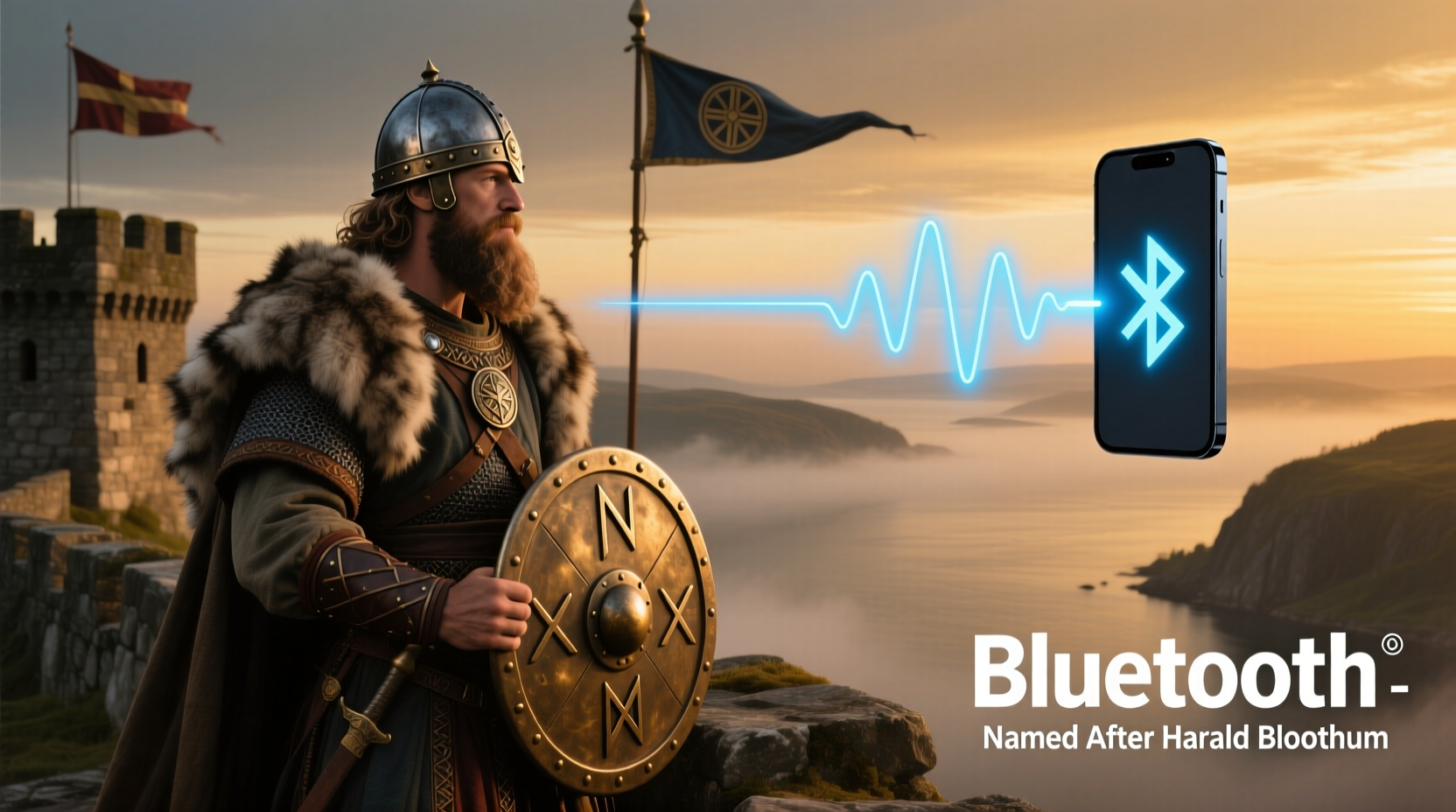
Harald Gormsson, commonly known as Harald Bluetooth, ruled Denmark from around 958 to 986 AD. He was a powerful Viking king credited with unifying disparate Danish tribes and bringing Christianity to Denmark—a significant cultural and political shift at the time. His reign marked a pivotal moment in Scandinavian history, transforming a fragmented region into a more cohesive kingdom.
The nickname “Bluetooth” has uncertain origins, but historians generally agree it may have stemmed from a dead or discolored tooth—possibly blue or darkened. In Old Norse, “blátǫnn” translates literally to “blue tooth.” While this might seem like an odd moniker for a king, nicknames were common in Viking culture and often based on physical traits or notable deeds.
One of Harald’s most enduring legacies is the Jelling Stones, massive rune carvings in central Denmark. On one stone, he proclaims himself the unifier of Denmark and Norway and the bringer of Christianity to the Danes. This act of unification is precisely why, over a millennium later, his name would be resurrected in the world of technology.
“Harald Bluetooth united Denmark and Norway; we aimed to unite computers and mobile phones.” — Jim Kardach, Bluetooth co-founder
From Vikings to Wireless: How the Name Was Chosen
In the mid-1990s, engineers from Ericsson, Intel, Nokia, and IBM were developing a short-range wireless communication protocol designed to eliminate cables between devices. As the project progressed, they needed a codename—one that was temporary, neutral, and slightly humorous to keep internal morale high.
Jim Kardach, an engineer at Intel and one of the key figures in the development of Bluetooth, had recently read a book about Viking history, including the story of Harald Bluetooth. He drew a parallel between the king’s unification of Scandinavian tribes and the goal of the new technology: to unify communication protocols across different industries and devices.
Kardach proposed the codename “Bluetooth,” and it stuck. What began as a temporary placeholder eventually became the official brand name after the team realized no better alternative captured the spirit of cross-platform collaboration. The Bluetooth logo itself is a bind rune combining the Nordic runes ᚼ (Hagall) and ᛒ (Berkanan), representing Harald’s initials: H and B.
The Symbolism Behind the Name
The choice of “Bluetooth” goes beyond mere historical reference. It encapsulates the core mission of the technology: bridging gaps between incompatible systems. Just as Harald Bluetooth united feuding Danish clans and introduced a new religion to align cultural practices, Bluetooth technology connects devices from different manufacturers, operating systems, and functions.
This symbolic resonance was not accidental. The developers wanted a name that suggested cooperation, compatibility, and innovation. At a time when mobile phones, laptops, and peripherals all used proprietary connectors and protocols, Bluetooth offered a universal solution—wireless, low-energy, and accessible.
Today, Bluetooth is embedded in billions of devices worldwide—from wireless earbuds and smartwatches to cars and medical equipment. Its success lies not only in technical efficiency but also in widespread adoption, which mirrors Harald’s political achievement: creating a single, functional system out of many independent parts.
Timeline: From Viking King to Global Standard
- 958–986 AD: Harald Bluetooth rules Denmark, unifies tribes, and converts to Christianity.
- 1994: Ericsson develops a short-range wireless link for hands-free headsets.
- 1996: Intel, Nokia, and IBM join Ericsson; the group adopts “Bluetooth” as a codename.
- 1998: The Bluetooth Special Interest Group (SIG) is formed to oversee the standard.
- 1999: First consumer devices with Bluetooth hit the market.
- 2003: Bluetooth appears in smartphones, accelerating mainstream adoption.
- Present: Over 4 billion Bluetooth-enabled devices shipped annually.
Common Misconceptions About the Name
Despite its well-documented origin, several myths persist about why Bluetooth is named as such:
- Myth: It’s named after a blue-colored device or antenna.
Reality: No hardware is blue; the name is purely symbolic. - Myth: “Bluetooth” refers to teeth in some tech slang.
Reality: The dental reference is historical, not literal. - Myth: It was chosen because it sounds futuristic.
Reality: It was meant to be temporary and ironic, not sci-fi.
| Misconception | Truth |
|---|---|
| Bluetooth devices have blue transmitters | No visual component; name is symbolic |
| The name is marketing fluff | Rooted in real history and intentional symbolism |
| It’s a random, catchy name | Chosen deliberately to reflect unification |
Real-World Impact: A Case Study in Naming Power
In 2001, a major electronics manufacturer hesitated to adopt Bluetooth, fearing consumers would find the name unprofessional or confusing. Internal surveys suggested some customers associated “Bluetooth” with dentistry or hygiene products.
However, after launching a campaign that subtly emphasized reliability and seamless pairing—without explaining the Viking connection—the technology gained rapid traction. Interestingly, the very strangeness of the name helped it stand out in a crowded market. Unlike generic terms like “Wireless Link,” “Bluetooth” was memorable, distinctive, and eventually trusted.
By 2005, Bluetooth was included in over 50% of mobile phones sold globally. The name, once considered a liability, became a mark of quality and compatibility. This case underscores how a well-chosen, story-rich name can enhance brand identity—even without public awareness of its origin.
Frequently Asked Questions
Why is it called Bluetooth if there’s no actual blue tooth?
The name references King Harald Bluetooth of Denmark, not a physical feature. “Bluetooth” was his nickname, possibly due to a dead or discolored tooth. The technology adopted the name symbolically to represent unification.
Is Bluetooth related to Wi-Fi or the same type of technology?
No. While both are wireless, Bluetooth is designed for short-range, low-power communication between devices (like headphones and phones), whereas Wi-Fi is optimized for high-speed internet access over longer distances.
Can the Bluetooth name be changed now?
No. The name is trademarked and globally recognized. Changing it would cause massive confusion and branding loss. Ironically, its unusual origin has contributed to its lasting power.
How to Appreciate Tech History in Everyday Tools
Understanding the origin of names like Bluetooth enriches our relationship with technology. It reminds us that even the most advanced tools often carry human stories—of vision, collaboration, and cultural legacy.
Next time you pair your wireless earbuds or connect your fitness tracker, remember: you’re not just using a piece of software. You’re engaging with a legacy of unification that began over a thousand years ago on the shores of Scandinavia.
Conclusion: Connecting Past and Present
The naming of Bluetooth after a Viking king is more than a clever anecdote—it’s a testament to how deeply history influences modern innovation. Harald Bluetooth united nations; today, his namesake unites devices. The parallel is poetic, purposeful, and profoundly effective.
As technology continues to evolve, the values behind Bluetooth—interoperability, simplicity, and universal access—remain as relevant as ever. Whether you're a developer, a historian, or simply someone who uses wireless headphones, recognizing the story behind the name adds depth to the digital experience.




 浙公网安备
33010002000092号
浙公网安备
33010002000092号 浙B2-20120091-4
Comments
No comments yet. Why don't you start the discussion?