
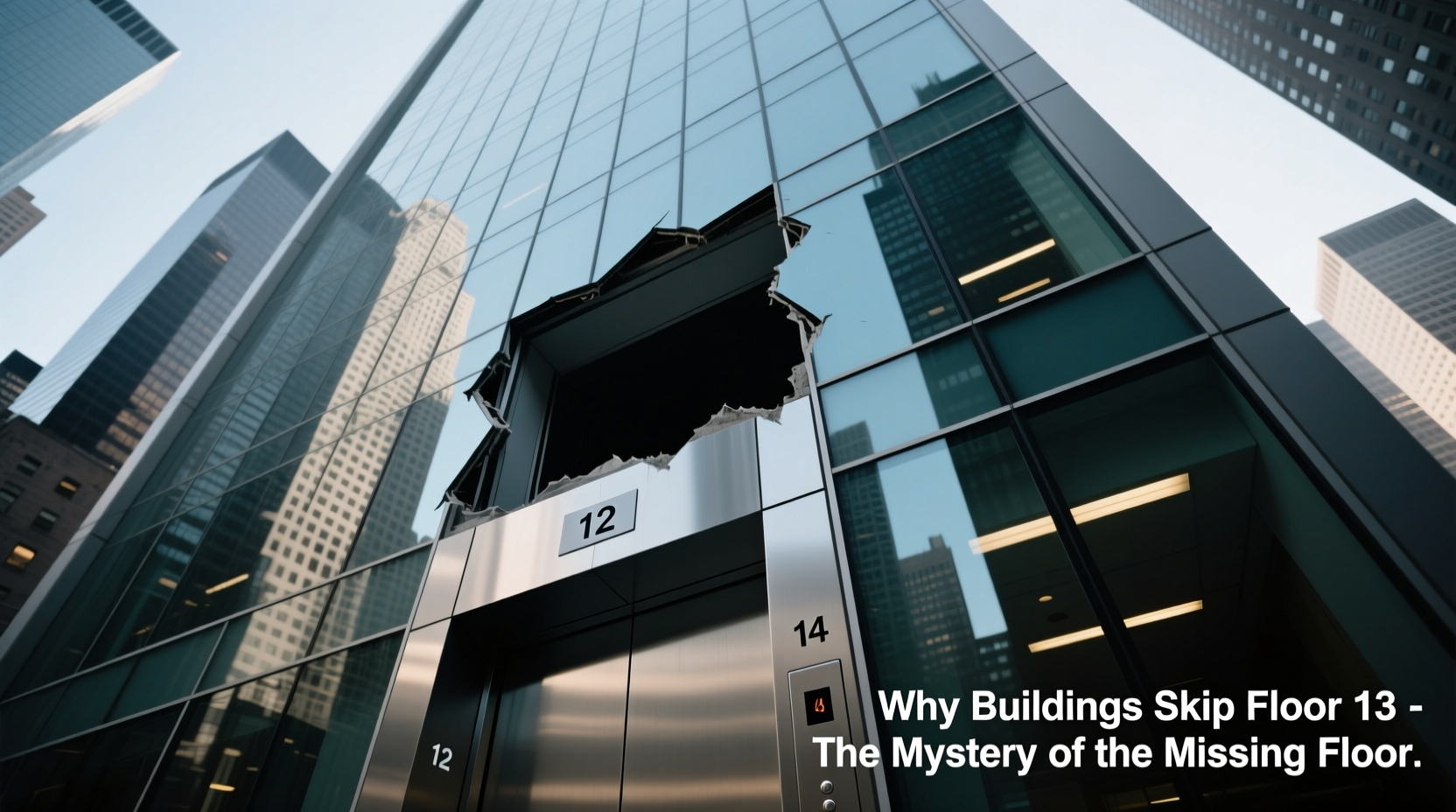
In cities across North America and parts of Europe, a curious pattern repeats in high-rise buildings: after the 12th floor, the next one is often labeled 14. The 13th floor appears to vanish into thin air. This isn’t a construction error or an oversight—it’s a deliberate omission rooted in centuries-old beliefs, psychological conditioning, and modern real estate strategy. While no structural law mandates skipping floor 13, the practice persists in thousands of buildings worldwide. Understanding why requires exploring cultural history, human behavior, and even economic incentives.
The Origins of Triskaidekaphobia
The fear of the number 13, known as triskaidekaphobia, has deep historical roots. Ancient Norse mythology tells the story of a banquet in Valhalla where 12 gods were invited. Loki, the trickster god, crashed as the uninvited 13th guest, leading to the death of Balder, a beloved deity. This myth contributed to the belief that 13 people at a table brings misfortune.
Christian tradition reinforces this unease. The Last Supper featured Jesus and his 12 apostles—13 individuals in total—with Judas Iscariot, the betrayer, traditionally identified as the 13th to sit down. Additionally, some historical records suggest that Friday, October 13, 1307, marked the mass arrest of the Knights Templar, further cementing the date’s ominous reputation.
Over time, these narratives coalesced into a widespread cultural aversion. By the early 20th century, architects and developers began responding to public sentiment by omitting the number 13 from floor labels, especially in residential and hospitality buildings where tenant comfort directly affects occupancy and value.
How Common Is Floor Skipping?
The omission of the 13th floor is far more prevalent than many realize. A 2019 survey by Architectural Digest estimated that over 85% of high-rise buildings in major U.S. cities like New York, Chicago, and Miami skip floor 13. In some cases, the numbering continues seamlessly: 12, then 14. In others, creative alternatives are used—such as labeling the space as “12A,” “M” (for mechanical), or simply integrating it into elevator programming without a visible button.
This practice extends beyond floors. Some hospitals avoid room 13, airlines skip row 13, and certain cruise ships lack deck 13. The avoidance is less common in countries like Italy or China, where different numbers carry stigma—Italy fears 17, while in Chinese culture, the number 4 is avoided due to its phonetic similarity to “death.”
“People may not believe they’re superstitious, but when choosing between two identical apartments—one on 12 and one on 13—many will unconsciously lean toward 12.” — Dr. Lena Torres, Behavioral Psychologist, Columbia University
Real Estate and Psychological Influence
The decision to skip floor 13 is rarely about structural concerns. It’s a strategic move driven by market psychology. Developers and property managers understand that perception influences demand. Even skeptical buyers may hesitate when confronted with floor 13, not because they believe in bad luck, but because the label carries subtle negative associations.
A case study from a luxury condominium project in downtown Toronto illustrates this. During pre-sales, units on the 13th floor received 30% fewer inquiries despite identical views, pricing, and layouts. After rebranding the level as “12B” and adjusting marketing materials, interest rose to match other floors. No changes were made to the actual space—only the label.
This phenomenon reflects a broader principle in consumer behavior: symbolic meaning can outweigh rational assessment. In real estate, where emotional appeal drives decisions, avoiding discomfort—even subconscious—is sound business practice.
Architectural Workarounds and Modern Trends
Modern building design offers several ways to handle the 13th floor without drawing attention:
- Renumbering: Floors go from 12 to 14, with no mention of 13.
- Functional Reassignment: The physical 13th floor is designated for mechanical systems, storage, or building management, making it inaccessible to tenants.
- Split-level Design: In buildings with mezzanines or split-floor layouts, the 13th floor may exist structurally but not appear in occupant navigation.
- Digital Masking: Elevator control systems skip the number 13 in display and button logic, even if the floor exists.
Some newer developments are challenging the norm. In progressive markets like Seattle and Austin, developers emphasize transparency and rationality, keeping floor 13 intact and marketing it as a sign of modern thinking. However, such projects often include data-driven reassurance—like energy efficiency stats or structural integrity reports—to offset any lingering bias.
Do’s and Don’ts: Navigating Floor Numbering in Property Decisions
| Do | Don’t |
|---|---|
| Verify the actual floor count when leasing or buying—ask for a floor plan if unsure. | Assume a missing floor means lower quality or safety issues. |
| Consider how floor numbering might affect resale or rental appeal. | Dismiss client preferences just because they seem irrational. |
| Use neutral labels like “Sky Level” or “Zenith” instead of numerical designations. | Draw attention to skipped floors during sales pitches. |
| Educate tenants that structural integrity is unaffected by floor numbering. | Reinforce superstitions by joking about “haunted” floors. |
Step-by-Step: How to Address Floor 13 in Building Management
- Assess Local Market Norms: Research whether neighboring buildings skip floor 13. Align with regional expectations unless aiming for a disruptive brand identity.
- Survey Potential Tenants: Conduct anonymous polls to gauge sensitivity around floor numbers.
- Consult Legal and Zoning Guidelines: Ensure renumbering doesn’t conflict with emergency response protocols or fire codes.
- Design Consistent Signage: If skipping 13, ensure all directories, elevators, and digital maps reflect the change uniformly.
- Train Staff on Messaging: Equip leasing agents and concierge teams to explain floor numbering calmly and professionally.
- Monitor Occupancy Rates: Track lease-up speed and tenant satisfaction on affected floors to evaluate long-term impact.
Frequently Asked Questions
Is it legal to skip floor 13 in a building?
Yes. There are no federal or international building codes that require sequential floor numbering. As long as emergency services have accurate mapping and egress routes, renaming or skipping floors is permitted. Many jurisdictions require internal documentation to reflect true floor counts for fire safety purposes, but public-facing labels can be adjusted.
Does skipping floor 13 affect building height or structure?
No. The physical structure remains unchanged. Skipping the number is purely a labeling decision. The 13th floor may still exist mechanically or functionally but simply not be labeled as such for occupants.
Are there any famous buildings that keep floor 13?
Yes. The Empire State Building includes a 13th floor, as does the Burj Khalifa in Dubai. However, many hotels within skyscrapers—like those operated by Marriott or Hilton—may still omit room numbers containing 13, even if the floor itself is numbered.
Conclusion: Embracing Awareness Over Avoidance
The missing 13th floor is more than an architectural quirk—it’s a mirror reflecting how culture, emotion, and economics shape our built environment. While the superstition lacks scientific basis, its influence persists because it taps into something deeper: the human desire for control in uncertain spaces. Whether you’re a developer, tenant, or curious observer, understanding this phenomenon empowers better decision-making.




 浙公网安备
33010002000092号
浙公网安备
33010002000092号 浙B2-20120091-4
Comments
No comments yet. Why don't you start the discussion?