
In an era defined by unpredictability—from cyberattacks and natural disasters to supply chain breakdowns—business continuity is no longer optional. It’s a strategic necessity. Organizations that fail to prepare for disruption risk more than temporary downtime; they risk customer trust, regulatory penalties, financial loss, and long-term viability. Business continuity planning (BCP) ensures that critical functions continue operating during and after a crisis. More than just an emergency response, it’s a comprehensive framework that safeguards people, processes, and profits.
What Is Business Continuity?
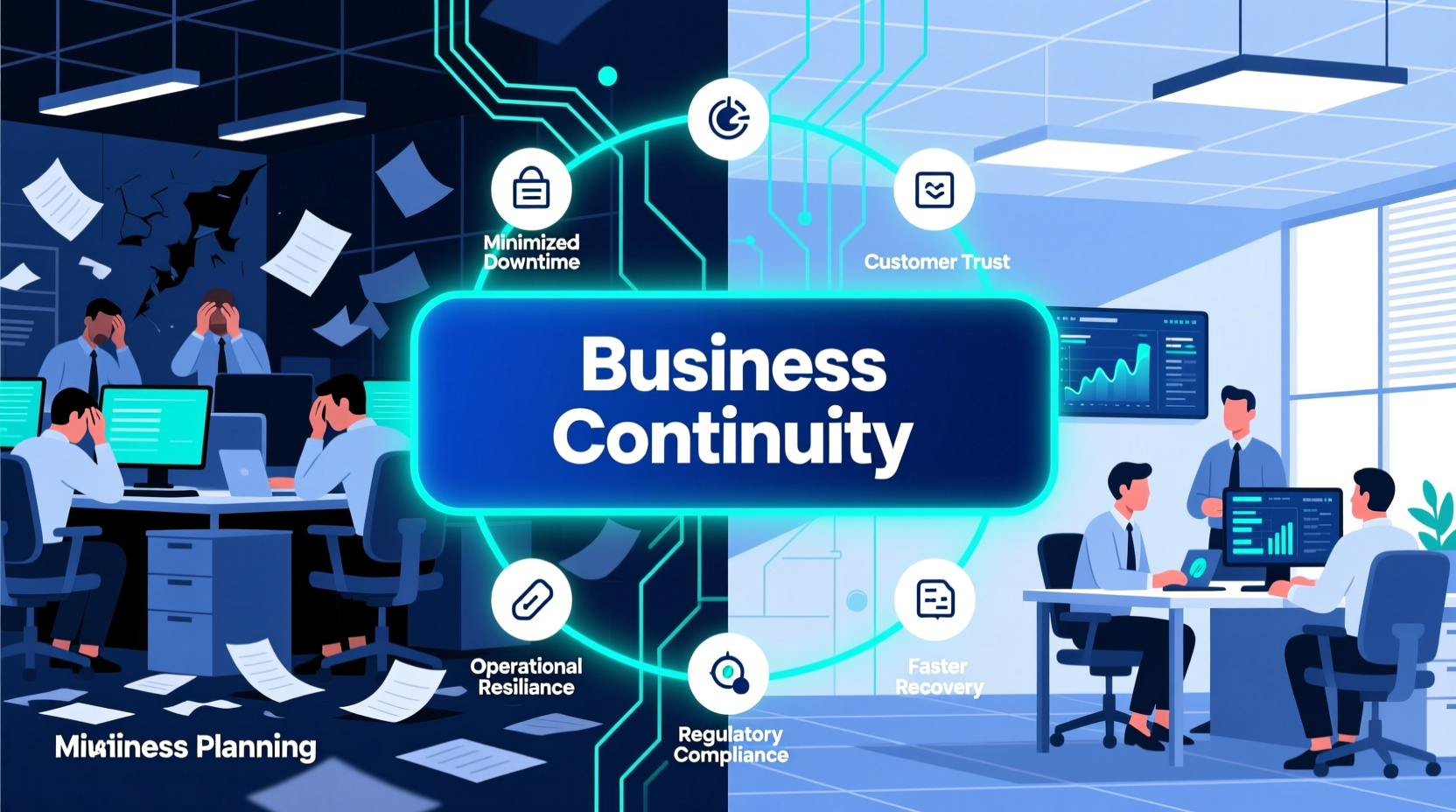
Business continuity refers to the proactive strategy organizations use to maintain essential operations during and after a disruptive event. Unlike disaster recovery, which focuses primarily on IT systems, business continuity encompasses all aspects of an organization: human resources, supply chains, communications, facilities, and customer service.
A robust business continuity plan identifies potential threats, assesses their impact, and outlines procedures to minimize downtime. It includes risk assessments, crisis communication protocols, alternate work arrangements, data backup strategies, and recovery time objectives (RTOs). The goal isn’t just survival—it’s resilience.
Key Benefits of Business Continuity Planning
The value of business continuity extends far beyond avoiding chaos during a crisis. When implemented effectively, it delivers measurable advantages across multiple dimensions of organizational performance.
1. Minimizes Operational Downtime
Every minute of downtime can cost thousands—or millions—for businesses depending on real-time transactions or digital infrastructure. A well-designed continuity plan reduces interruptions by enabling rapid response and alternative operational pathways. For example, cloud-based systems allow remote access, ensuring employees can keep working even if physical offices are inaccessible.
2. Protects Revenue Streams
Disruptions directly affect income. A manufacturing plant shutdown halts production. An e-commerce site outage stops sales. With continuity planning, companies can reroute orders, activate backup suppliers, or switch to manual processes temporarily—keeping revenue flowing even under stress.
3. Enhances Customer Trust and Loyalty
Customers expect reliability. When a company responds swiftly and transparently during a crisis, it reinforces confidence. Consider how banks handle system outages: institutions with clear communication and quick resolution retain customer loyalty far better than those that appear disorganized.
4. Ensures Regulatory Compliance
Many industries—especially finance, healthcare, and energy—are subject to strict regulations requiring continuity readiness. Non-compliance can result in fines, legal action, or license revocation. For instance, HIPAA mandates contingency plans for protecting patient data, while GDPR requires organizations to report data breaches within 72 hours.
5. Safeguards Employee Safety and Morale
Continuity planning isn't only about systems—it's about people. Emergency evacuation procedures, remote work policies, and communication channels help protect employees during crises. Knowing there’s a plan in place also reduces anxiety and maintains morale, enabling teams to respond calmly and efficiently.
“Organizations that invest in business continuity don’t just survive crises—they emerge stronger.” — Dr. Lena Patel, Risk Management Consultant at Global Resilience Group
Real-World Example: How a Retail Chain Avoided Collapse During a Cyberattack
In 2022, a mid-sized retail chain experienced a ransomware attack that encrypted its point-of-sale (POS) systems and inventory databases. Without immediate action, stores would have been forced to close.
Luckily, the company had invested in a business continuity plan six months earlier. As soon as the breach was detected, the incident response team activated backup systems hosted in a secure offsite environment. Store managers were trained to process sales manually using printed price lists and paper receipts, with transactions logged for later digital entry.
Within four hours, 85% of locations were operational. While full IT restoration took two days, the business lost less than 5% of expected weekly revenue. Competitors without such plans reported losses exceeding 30%. This case illustrates how preparation turns a potential catastrophe into a manageable incident.
Essential Components of a Strong Business Continuity Plan
Effective continuity planning follows a structured approach. Below is a step-by-step guide to building a resilient framework:
- Conduct a Business Impact Analysis (BIA): Identify mission-critical functions and determine how long the organization can operate without them.
- Perform Risk Assessment: Evaluate internal and external threats—natural disasters, cyber threats, equipment failure, etc.—and their likelihood and impact.
- Develop Recovery Strategies: Define alternatives for key operations, such as remote work setups, secondary suppliers, or redundant servers.
- Create Communication Plans: Establish clear internal and external messaging protocols, including contact trees and media statements.
- Test and Train Regularly: Run simulations like tabletop exercises or full-scale drills to validate the plan and train staff.
- Maintain and Update: Review the plan quarterly and revise after major changes in personnel, technology, or operations.
Do’s and Don’ts of Business Continuity Planning
| Do’s | Don’ts |
|---|---|
| Involve stakeholders from all departments in planning | Rely solely on IT to develop the entire plan |
| Document all procedures clearly and store them offsite | Keep plans locked in a single location or on a single device |
| Test the plan at least twice a year | Assume the plan works without testing |
| Update contact lists and vendor agreements regularly | Neglect to review third-party dependencies |
| Communicate roles and responsibilities to all employees | Use technical jargon that confuses non-specialists |
Frequently Asked Questions
How is business continuity different from disaster recovery?
Disaster recovery focuses specifically on restoring IT systems and data after an outage. Business continuity is broader, covering all aspects of operations—including staffing, logistics, communications, and customer service—to ensure the entire organization can function during and after a disruption.
Can small businesses benefit from business continuity planning?
Absolutely. Small businesses are often more vulnerable to disruptions due to limited resources. A simple continuity plan—such as cloud backups, remote access tools, and a basic emergency contact list—can mean the difference between surviving a crisis and closing permanently.
How long does it take to create a business continuity plan?
The timeline varies based on size and complexity. A small business might complete a basic plan in 4–6 weeks, while larger enterprises may require several months. However, even a preliminary version developed over a few days provides significant protection compared to having no plan at all.
Action Checklist: Building Your Business Continuity Foundation
- ✅ Identify critical business functions and dependencies
- ✅ Conduct a risk assessment and business impact analysis
- ✅ Define recovery time objectives (RTO) and recovery point objectives (RPO)
- ✅ Develop alternative work procedures and communication protocols
- ✅ Secure offsite backups and redundant systems where possible
- ✅ Train employees on their roles during emergencies
- ✅ Schedule biannual tests and update the plan accordingly
Conclusion: Turn Preparedness Into Competitive Advantage
Business continuity is not just about reacting to disasters—it’s about building an agile, confident organization capable of navigating uncertainty with clarity and control. Companies that prioritize continuity gain peace of mind, protect stakeholder value, and often outperform competitors when crises strike.
In today’s fast-moving world, resilience is a differentiator. Whether you're managing a startup or leading a multinational corporation, investing in business continuity today prepares you for tomorrow’s challenges. Don’t wait for a crisis to expose vulnerabilities. Start building your plan now—because when disruption hits, your response will define your future.




 浙公网安备
33010002000092号
浙公网安备
33010002000092号 浙B2-20120091-4
Comments
No comments yet. Why don't you start the discussion?