
The Moon has captivated humanity for millennia—not just as a symbol in art and mythology, but as a constant celestial presence in our night sky. But have you ever paused to wonder why we can see the Moon at all? Unlike stars that generate their own light, the Moon is a dark, rocky body reflecting sunlight back to Earth. Its visibility depends on a delicate balance of orbital mechanics, solar illumination, atmospheric conditions, and human perception. Understanding how and why the Moon appears in our sky reveals not only basic astronomy but also deep insights into Earth’s place in the solar system.
How the Moon Becomes Visible: The Role of Reflected Light
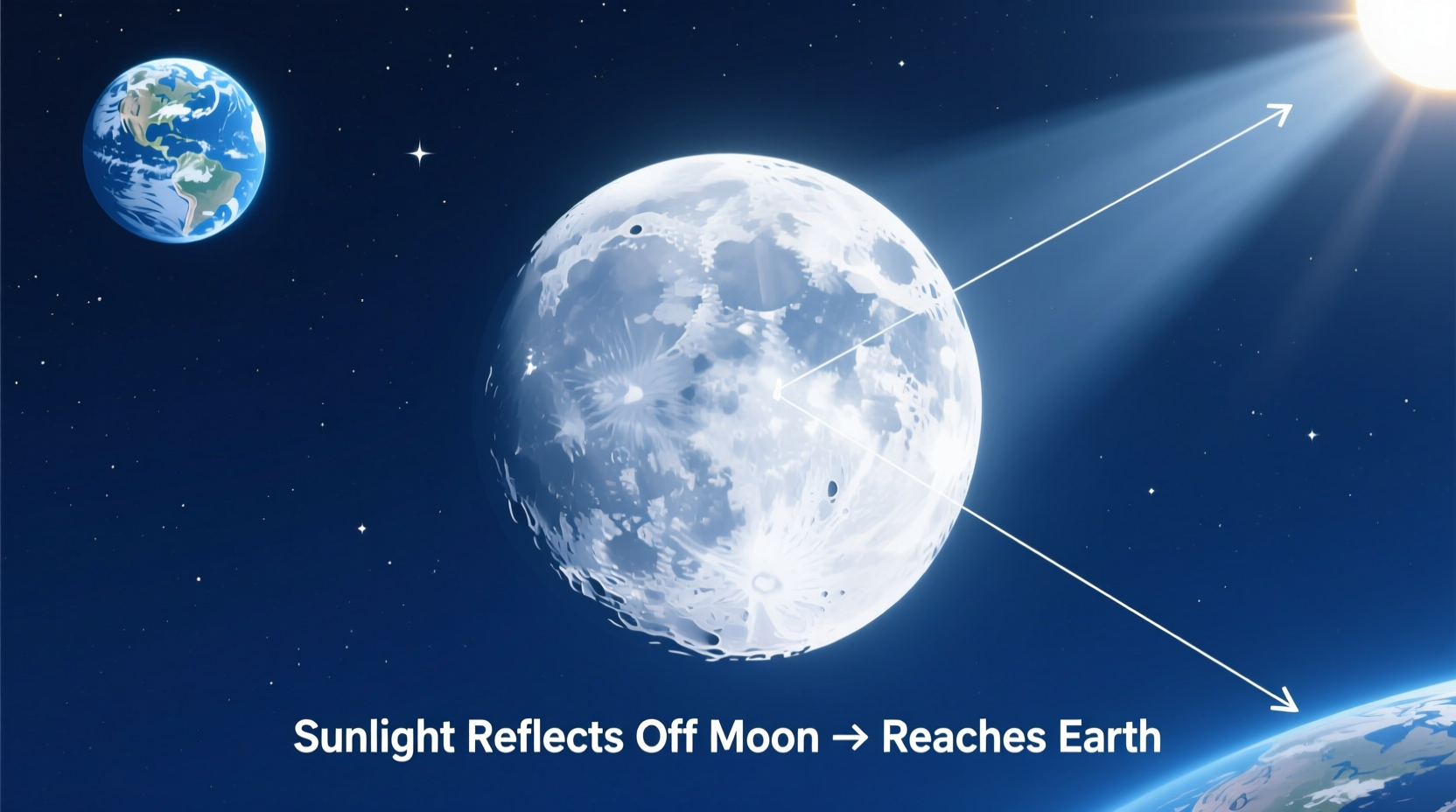
The Moon does not produce its own light. Instead, it acts like a giant mirror in space, reflecting sunlight toward Earth. Approximately 7% to 12% of incoming sunlight bounces off the Moon’s surface—primarily due to its composition of silicate rock and regolith (lunar soil). This reflected light travels about 1.3 seconds before reaching Earth, allowing us to see the Moon even though it emits no light of its own.
The brightness and clarity of the Moon depend on several factors:
- Phase of the Moon: Only the portion illuminated by the Sun is visible from Earth.
- Distance from Earth: The Moon's elliptical orbit means it varies between 363,000 km (perigee) and 405,000 km (apogee), affecting apparent size and brightness.
- Albedo: The Moon’s reflectivity influences how much light reaches our eyes.
Lunar Phases and Visibility Patterns
The Moon goes through eight primary phases in a cycle lasting approximately 29.5 days, known as a synodic month. These phases dictate when and where the Moon appears in the sky—and whether it's visible during day or night.
| Phase | Visibility Time | Appearance |
|---|---|---|
| New Moon | Not visible (too close to Sun) | Completely dark |
| Waxing Crescent | Afternoon to early night | Thin sliver in western sky after sunset |
| First Quarter | Noon to midnight | Half-lit, high in sky at sunset |
| Waxing Gibbous | Afternoon to pre-dawn | Mostly lit, rises mid-afternoon |
| Full Moon | Sunset to sunrise | Fully illuminated, opposite the Sun |
| Waning Gibbous | Evening to late morning | Gradually dimming, rises after sunset |
| Last Quarter | Midnight to noon | Half-lit (left side), visible in morning sky |
| Waning Crescent | Morning hours before sunrise | Faint sliver in eastern sky before dawn |
Because the Moon orbits Earth, its position relative to the Sun changes daily. This shifting geometry determines which part of the illuminated hemisphere we observe. For instance, during a full moon, Earth lies directly between the Sun and Moon, so the entire daylight side of the Moon faces us.
Atmospheric and Environmental Factors Affecting Visibility
Even with ideal lunar positioning, Earth’s atmosphere plays a critical role in how clearly we see the Moon. Several environmental conditions influence lunar observation:
- Air pollution and light pollution: Urban areas often obscure the Moon’s details due to skyglow from artificial lighting.
- Humidity and cloud cover: Moisture and clouds scatter or block moonlight, reducing visibility.
- Altitude: Observers at higher elevations experience less atmospheric distortion, resulting in sharper views.
- Twilight interference: During dawn and dusk, scattered sunlight can wash out faint lunar phases like crescents.
“Even a small amount of haze can reduce contrast, making subtle features on the Moon disappear from view.” — Dr. Lena Patel, Atmospheric Optics Researcher, University of Colorado
Interestingly, the Moon is often visible during daylight hours—especially around first and last quarters—when it’s positioned far enough from the Sun in the sky to avoid being drowned out by sunlight. Many people don’t notice it because they aren’t looking up.
Step-by-Step Guide: How to Observe the Moon Effectively
Want to improve your ability to spot and study the Moon? Follow this practical timeline:
- Check the lunar calendar: Use apps or websites to determine the current phase and rise/set times.
- Pick an optimal viewing time: Full moons are best seen at night; crescent moons are most visible just after sunset or before sunrise.
- Find a dark location: Move away from city lights if possible to enhance contrast.
- Use binoculars or a telescope: Even modest optics reveal craters, maria (dark plains), and mountain ranges.
- Track changes nightly: Observe how shadows shift across the surface due to changing angles of sunlight (known as libration).
Real-World Example: A City Dweller’s Lunar Discovery
Mark, a graphic designer in Chicago, never paid attention to the night sky until one evening he noticed a thin silver arc above the skyline. Curious, he looked it up online and learned it was a waxing crescent Moon. Inspired, he began tracking the Moon using a free astronomy app. Within weeks, he spotted his first lunar eclipse and shared photos with friends. “I didn’t realize the Moon was up during the day too,” he said. “Now I point it out to my kids every chance I get.” His story illustrates how awareness and minimal tools can transform passive visibility into active engagement with the cosmos.
Common Misconceptions About Moon Visibility
Several myths persist about why and when we see the Moon:
- Myth: The Moon is only visible at night.
Truth: It’s often visible during the day, particularly in the afternoon or morning depending on the phase. - Myth: The dark side of the Moon is always dark.
Truth: All sides receive sunlight; “dark side” refers to the far side never visible from Earth. - Myth: Clouds make the Moon disappear.
Truth: The Moon is still there—it’s just obscured temporarily by weather systems.
Frequently Asked Questions
Why can we see the Moon during the day?
The Moon follows an orbit that often places it high in the sky when the Sun is also up. As long as it’s not too close to the Sun’s position (like during a new moon), its reflected light is strong enough to be seen against the blue sky.
Can everyone on Earth see the Moon at the same time?
People on the side of Earth facing the Moon can see it simultaneously, but its appearance (phase, position, altitude) varies slightly depending on geographic location due to parallax.
Why does the Moon sometimes look orange or red?
Near the horizon, moonlight passes through more atmosphere. Shorter blue wavelengths scatter out, leaving longer red/orange wavelengths dominant—similar to sunsets. Dust, smoke, or pollution can intensify this effect.
Conclusion: Embrace the View
The Moon’s visibility from Earth is a result of precise cosmic alignment, reflective surfaces, and clear atmospheric pathways. It’s not magic—but it’s close. By understanding the science behind what we see, we deepen our connection to the natural world and gain appreciation for the quiet rhythms of our nearest celestial neighbor. Whether you're glancing up during a morning commute or planning a stargazing session, take a moment to locate the Moon. Notice its phase, its brightness, its position. That small act links you to centuries of astronomers, poets, and dreamers who have looked up and wondered the same thing: Why can we see the Moon?




 浙公网安备
33010002000092号
浙公网安备
33010002000092号 浙B2-20120091-4
Comments
No comments yet. Why don't you start the discussion?