
In a democracy built on the principle of representation, the right to vote is foundational. Yet, millions of Americans are excluded from this basic civic act due to felony convictions. The issue of felon disenfranchisement is not only complex but deeply rooted in historical, legal, and social contexts. While some states automatically restore voting rights after release from prison, others impose lifelong bans unless clemency is granted. Understanding these disparities is essential for anyone interested in justice reform, civil rights, or democratic participation.
The Legal Basis of Felon Disenfranchisement
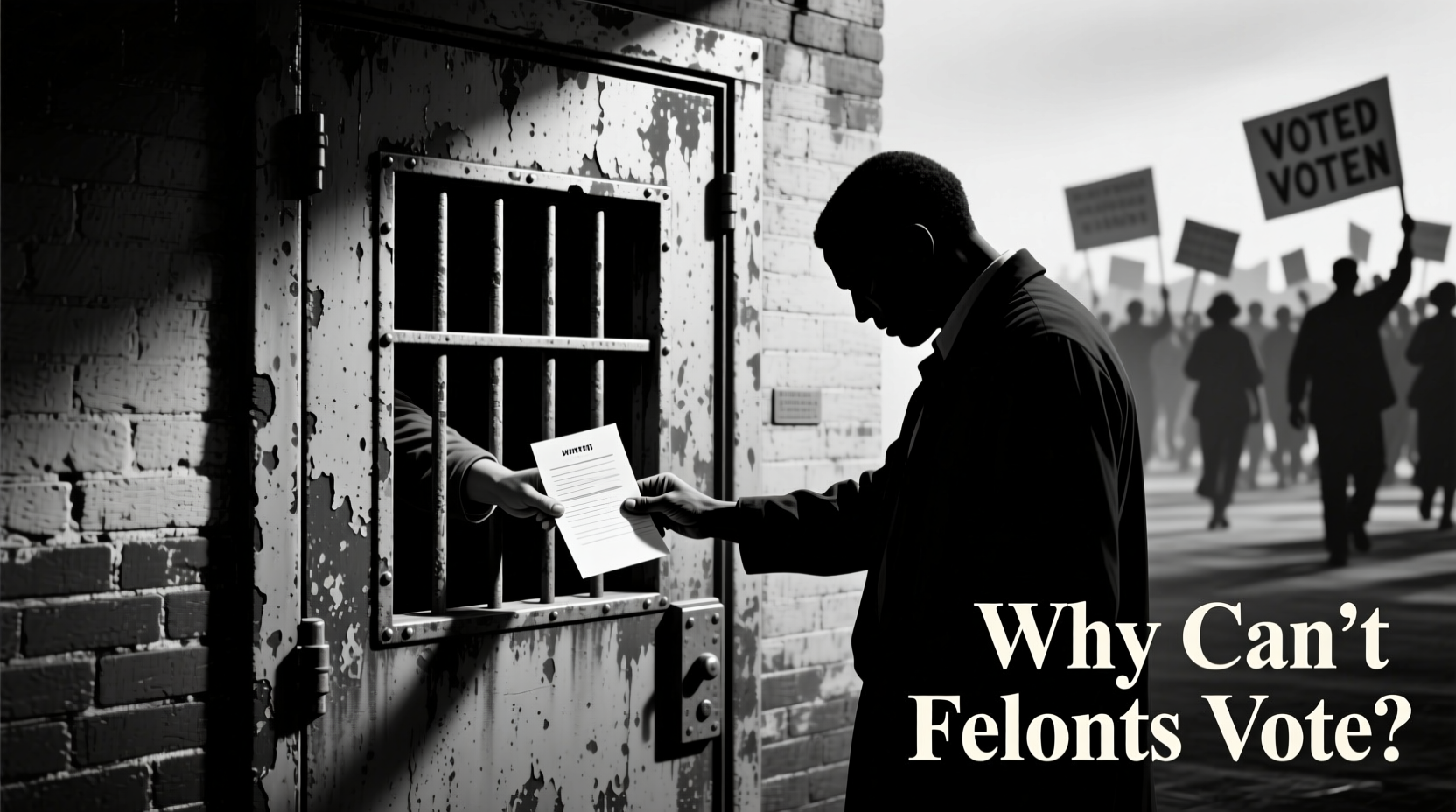
Felon voting restrictions originate from state-level laws rather than federal mandates. The U.S. Constitution does not explicitly prohibit people with felony convictions from voting. Instead, Article I, Section 2 grants states the authority to determine voter qualifications, as long as they don’t conflict with federal protections like the Voting Rights Act.
The practice dates back to the post-Civil War era when Southern states used felony disenfranchisement laws to suppress Black voters—a strategy that persists in effect today. According to the Sentencing Project, over 4.6 million Americans are disenfranchised due to felony convictions, with African Americans disproportionately affected—nearly one in 13 Black adults lacks voting rights compared to one in 59 non-Black adults.
“Felony disenfranchisement undermines democratic values by excluding individuals who remain part of society yet have no voice in shaping it.” — Michelle Alexander, civil rights advocate and author of *The New Jim Crow*
Variations Across States: A Patchwork of Policies
No two states treat post-conviction voting rights the same. Some restore rights automatically; others require applications, waiting periods, or executive approval. This inconsistency creates confusion and often results in unintentional violations of election law.
| State Type | Policy Summary | Examples |
|---|---|---|
| Automatic Restoration After Release | Voting rights restored upon completion of sentence (including parole/probation) | California, New York, Texas |
| Restoration After Full Sentence + Waiting Period | Must complete all terms and wait additional time before eligibility | Florida (after 2020 ballot measure reversal), Mississippi |
| Clemency Required | Individuals must apply for rights restoration through governor or board | Kentucky, Iowa, Virginia (prior to policy changes) |
| Lifelong Disenfranchisement (with exceptions) | No automatic restoration; permanent ban unless pardoned | Alabama, Wyoming, Florida (for certain offenses post-2020) |
| No Restrictions | Felons can vote even while incarcerated | Maine, Vermont |
This fragmented system means a person released from prison in Maine can immediately cast a ballot, while someone in similar circumstances in Florida may face years of bureaucratic hurdles—or permanent exclusion, depending on their crime.
How Voting Rights Are Restored: A Step-by-Step Guide
For those living in states where rights aren’t automatically restored, the process requires deliberate action. Here’s a general timeline for navigating restoration:
- Determine Eligibility: Confirm whether your conviction qualifies for restoration under state law. Some states exclude certain violent or sexual offenses.
- Complete All Sentence Requirements: Finish incarceration, parole, and probation. Outstanding fines or fees may also be required in some jurisdictions.
- Apply for Restoration: Submit an application to the appropriate body—often a pardon board, governor’s office, or court.
- Wait for Review: Processing times vary widely—from months to years. In Florida, for example, the clemency board meets monthly but backlog delays are common.
- Register to Vote: Once rights are restored, you must still register separately. Restoration does not automatically enroll you.
Success rates differ dramatically. In Kentucky, only about 1% of eligible applicants had their rights restored between 2015 and 2019, according to advocacy group Kentuckians for the Commonwealth.
Real Impact: A Case Study from Florida
In 2018, Florida voters approved Amendment 4, which would have automatically restored voting rights to most former felons after completing their sentences. An estimated 1.4 million people stood to benefit—the largest single expansion of voting rights in decades.
However, in 2019, the state legislature passed a law requiring individuals to pay all legal financial obligations—court fees, fines, restitution—before regaining the franchise. This created a “pay-to-vote” system that critics argue violates the 24th Amendment, which prohibits poll taxes.
Jamal Thompson, a Miami resident convicted of a nonviolent offense in 2012, completed his probation in 2020 and wanted to vote in local elections. He discovered he owed $1,843 in court costs—money he couldn’t afford. Despite working full-time, he remained disenfranchised. His story reflects that of tens of thousands caught in the gap between legal reform and practical access.
In 2020, the Supreme Court declined to intervene, allowing Florida’s payment requirement to stand. As of 2023, fewer than 15% of those eligible under Amendment 4 have successfully regained their voting rights.
Arguments For and Against Felon Disenfranchisement
Supporters of disenfranchisement often cite accountability and deterrence. They argue that losing certain rights is a natural consequence of breaking serious laws and that restoring them prematurely may undermine public trust in the justice system.
Opponents counter that voting is a civil right, not a privilege contingent on moral standing. They emphasize rehabilitation and reintegration: denying a voice in democracy makes it harder for returning citizens to become productive members of society.
- Pro-Disenfranchisement View: “Society sets standards; violating them carries consequences beyond prison time.”
- Reform Advocacy: “You can’t expect people to respect the law if the law excludes them permanently.”
A growing body of research suggests that restoring voting rights correlates with lower recidivism. A 2020 study published in the American Journal of Political Science found that formerly incarcerated individuals who voted were significantly less likely to reoffend.
Frequently Asked Questions
Can felons vote in federal elections?
No independent federal rule allows felons to vote. Eligibility is determined by state law, even in federal elections. However, once rights are restored at the state level, individuals can participate in all elections, including presidential and congressional races.
Does a pardon always restore voting rights?
In most cases, yes. A full pardon typically includes restoration of civil rights, including voting. However, partial pardons or commutations may not. Always verify the scope of the pardon with official documentation.
What happens if a felon votes illegally?
It’s considered a criminal offense in most states, punishable by fines or imprisonment. This risk underscores the importance of clarity in rights restoration—many people mistakenly believe they’re eligible when they’re not.
Action Checklist: Reclaiming Your Vote After a Felony Conviction
If you’re navigating re-enfranchisement, follow this checklist to stay on track:
- ✅ Confirm your conviction type and sentencing details
- ✅ Complete all aspects of your sentence (incarceration, parole, probation)
- ✅ Research your state’s current restoration policy (visit official government sites)
- ✅ Pay outstanding fines or fees if required
- ✅ Submit a formal application for rights restoration, if necessary
- ✅ Wait for official confirmation letter or notice
- ✅ Register to vote using your updated status
- ✅ Update your registration if you’ve moved since incarceration
Conclusion: Toward a More Inclusive Democracy
The question of why felons can’t vote isn’t just legal—it’s moral. At its core lies a fundamental choice: do we view justice as purely punitive, or as a path toward redemption and inclusion? Millions of Americans have served their time, paid their debts to society, and yet remain locked out of civic life. Reforming these outdated policies isn’t about leniency; it’s about fairness, equity, and the integrity of our democracy.




 浙公网安备
33010002000092号
浙公网安备
33010002000092号 浙B2-20120091-4
Comments
No comments yet. Why don't you start the discussion?