
Lucid dreaming—becoming aware that you’re dreaming while still in the dream—is a skill many aspire to master. It offers creative freedom, emotional healing, and even rehearsal for real-life scenarios. Yet despite its appeal, countless people struggle to achieve it consistently. If you’ve tried techniques like reality checks or wake-back-to-bed with little success, you’re not alone. The journey to lucid dreaming is often blocked by subtle but significant mental, physical, and behavioral habits. Understanding these roadblocks is the first step toward overcoming them.
The Science Behind Lucid Dreaming
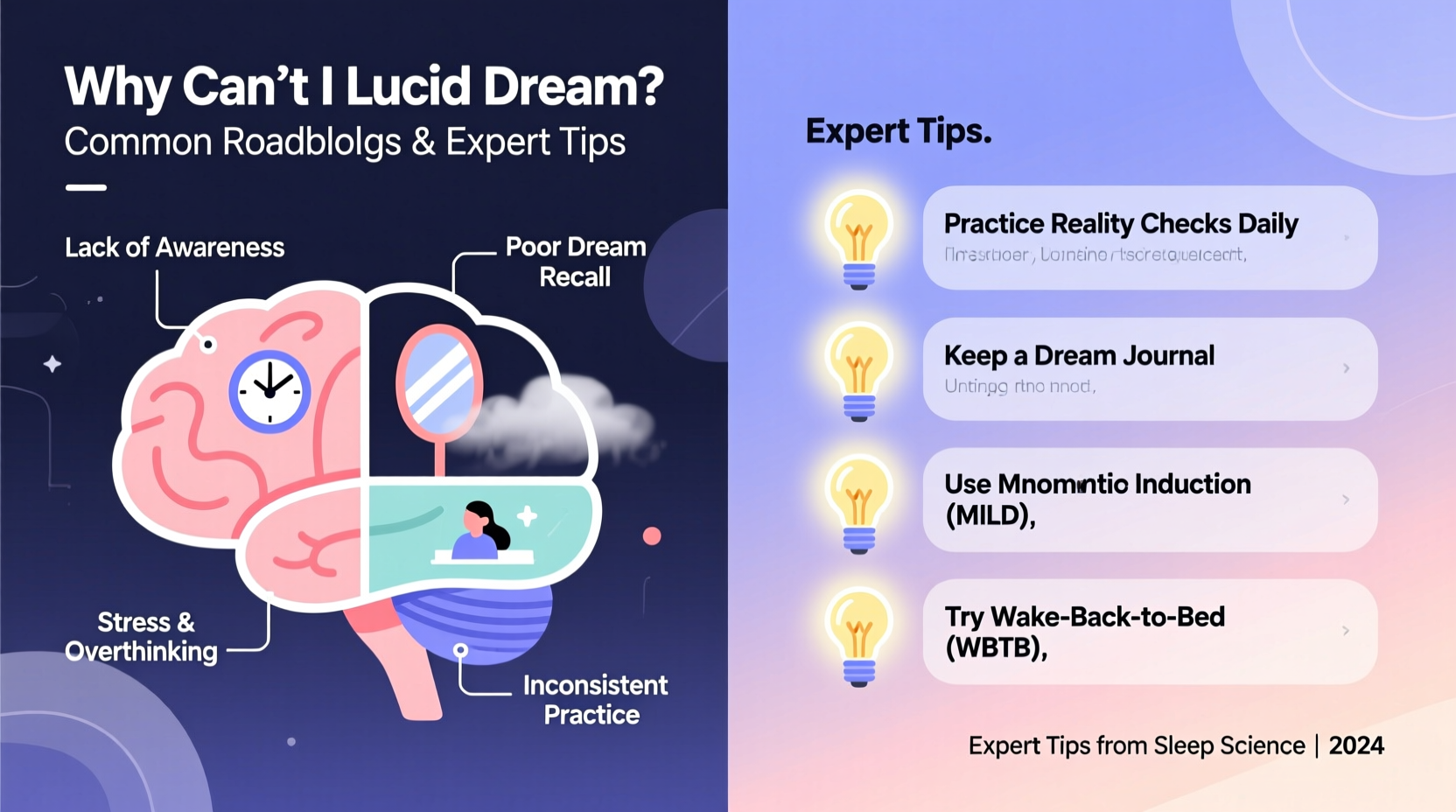
Lucid dreaming primarily occurs during rapid eye movement (REM) sleep, when brain activity closely resembles wakefulness. During this phase, the prefrontal cortex—the area responsible for self-awareness and decision-making—can reactivate, allowing dreamers to recognize they are dreaming. However, this reactivation doesn’t happen spontaneously for most people.
Research shows that only about 50% of people have experienced at least one lucid dream in their lifetime, and fewer than 20% report having them monthly. Neuroimaging studies indicate that frequent lucid dreamers exhibit stronger connectivity between the anterior prefrontal cortex and other brain regions involved in metacognition—essentially, the ability to think about thinking.
“Lucid dreaming isn’t magic—it’s a trainable state of consciousness. But just like learning an instrument, it requires consistency, patience, and the right conditions.” — Dr. Daniel Erlacher, Cognitive Psychologist & Sleep Researcher, University of Bern
Common Roadblocks Preventing Lucid Dreams
Even with dedication, several obstacles prevent people from achieving lucidity. Identifying which ones apply to you is crucial for progress.
1. Inconsistent Sleep Schedule
Your REM cycles lengthen throughout the night, peaking in duration and intensity in the final hours of sleep. Skipping deep REM stages due to early wake-ups or irregular bedtimes drastically reduces opportunities for lucid dreaming.
2. Poor Dream Recall
If you don’t remember your dreams, you won’t recognize patterns or inconsistencies that trigger lucidity. Many assume they “don’t dream,” when in fact they simply fail to recall them upon waking.
3. Overreliance on Techniques Without Foundation
Jumping straight into advanced methods like MILD (Mnemonic Induction of Lucid Dreams) or WBTB (Wake-Back-to-Bed) without building dream recall or mindfulness often leads to frustration. These techniques work best when supported by a strong base of awareness.
4. High Stress or Anxiety
Chronic stress suppresses REM sleep and increases nighttime awakenings. Even if you enter REM, anxiety can distort dreams into chaotic or frightening experiences, making lucidity difficult to sustain.
5. Misunderstanding Reality Checks
Many perform reality checks mechanically—pinching their arm or checking a clock—without true critical thinking. In dreams, these actions often fail to trigger awareness because the brain accepts illogical results as normal.
Expert-Backed Strategies to Overcome Barriers
Success in lucid dreaming comes not from forcing entry into the dream world, but from cultivating the right internal environment. Here are proven methods to dismantle common roadblocks.
Step-by-Step Guide: Building a Lucid Dreaming Foundation
- Stabilize Your Sleep Schedule: Go to bed and wake up at the same time daily, even on weekends. Aim for 7–9 hours to ensure full REM cycling.
- Keep a Dream Journal: Place a notebook by your bed. Write down every fragment you remember immediately upon waking. This trains your brain to prioritize dream memory.
- Practice Mindfulness Daily: Spend 10 minutes meditating each day, focusing on breath and bodily sensations. This enhances self-awareness, which carries over into dreams.
- Conduct Effective Reality Checks: Perform 5–10 reality checks per day, but only after noticing something odd (e.g., a misplaced object). Question reality with intent, not habit.
- Identify Personal Dream Signs: After journaling for two weeks, review entries for recurring themes—flying, being chased, missing teeth, etc.—and use them as lucidity triggers.
Advanced Techniques (Once Foundation Is Set)
- MILD (Mnemonic Induction of Lucid Dreams): As you fall asleep, repeat a phrase like “Next time I’m dreaming, I will remember I’m dreaming,” visualizing yourself becoming lucid.
- WBTB (Wake-Back-to-Bed): Set an alarm for 4.5 or 6 hours after bedtime. Stay awake for 15–30 minutes, then return to sleep with lucid intention.
- SSILD (Sleep-Self-Induced Lucid Dreaming): Upon waking briefly, focus attention on your senses—sight, sound, touch—for 1–2 seconds each, cycling through them before drifting back to sleep.
Dos and Don’ts of Lucid Dreaming Practice
| Do | Don’t |
|---|---|
| Review your dream journal every morning | Expect results overnight |
| Use alarms strategically for WBTB | Disrupt sleep more than necessary |
| Practice mindfulness during waking hours | Skip reality checks when busy |
| Stay calm when lucidity occurs (to avoid waking up) | Panic or get overly excited in the dream |
| Set clear intentions before sleep | Rely solely on supplements or apps |
Real Example: Breaking Through After Months of Failure
Sophie, a 29-year-old graphic designer, had attempted lucid dreaming for over a year using YouTube tutorials and sporadic reality checks. She rarely remembered her dreams and never achieved lucidity. Frustrated, she consulted a sleep coach who recommended a structured approach: nightly journaling, consistent sleep hours, and mindful reality checks tied to emotional cues (like stress or confusion).
After six weeks, Sophie began recalling multiple dreams per week. By week eight, she noticed a recurring dream sign—her childhood dog appearing in modern settings. One night, seeing the dog in her office, she performed a reality check, noticed the clock’s numbers shifting, and realized she was dreaming. She spent seven minutes flying over a cityscape before gently waking up. “It wasn’t flashy,” she said, “but it was real—and completely under my control.”
Frequently Asked Questions
Can anyone learn to lucid dream?
Yes, most people can develop the ability with consistent practice. While some may achieve it faster due to natural dream recall or mindfulness, persistence matters more than innate talent.
Are lucid dreaming supplements safe?
Some nootropics like galantamine or choline are used to enhance dream vividness and recall, but should be approached cautiously. Always consult a healthcare provider before use, especially if you have sleep disorders or take medication.
What if I get stuck in a lucid dream or can’t wake up?
You cannot get “stuck” in a dream. When you’re ready to wake, your brain naturally exits REM sleep. If you feel trapped, try closing your dream eyes and spinning your body—a technique that often triggers awakening or stabilizes the dream.
Conclusion: Take Control of Your Inner World
Lucid dreaming isn’t reserved for mystics or outliers. It’s a learnable skill grounded in neuroscience and disciplined practice. The barriers—poor recall, erratic sleep, shallow awareness—are common, but not insurmountable. By building a strong foundation of dream journaling, mindfulness, and intentional habits, you create the conditions where lucidity can flourish.
The dream world responds to consistency, not force. Start small: write one dream fragment today. Perform one reality check with genuine curiosity. These tiny actions compound over time, rewiring your mind to recognize the dream state when it arrives. The moment you realize you’re dreaming while soaring above mountains or conversing with a lost loved one—will be worth every effort.




 浙公网安备
33010002000092号
浙公网安备
33010002000092号 浙B2-20120091-4
Comments
No comments yet. Why don't you start the discussion?