
Suddenly being unable to urinate — or finding it extremely difficult — is more than just uncomfortable; it can be a medical emergency. Known medically as urinary retention, this condition affects people of all ages and genders, though it’s more common in older men due to prostate issues. The inability to empty the bladder fully or at all can stem from physical blockages, nerve problems, medications, or underlying health conditions. Recognizing the signs early and knowing how to respond can prevent complications such as kidney damage, urinary tract infections, or bladder rupture.
Understanding Urinary Retention
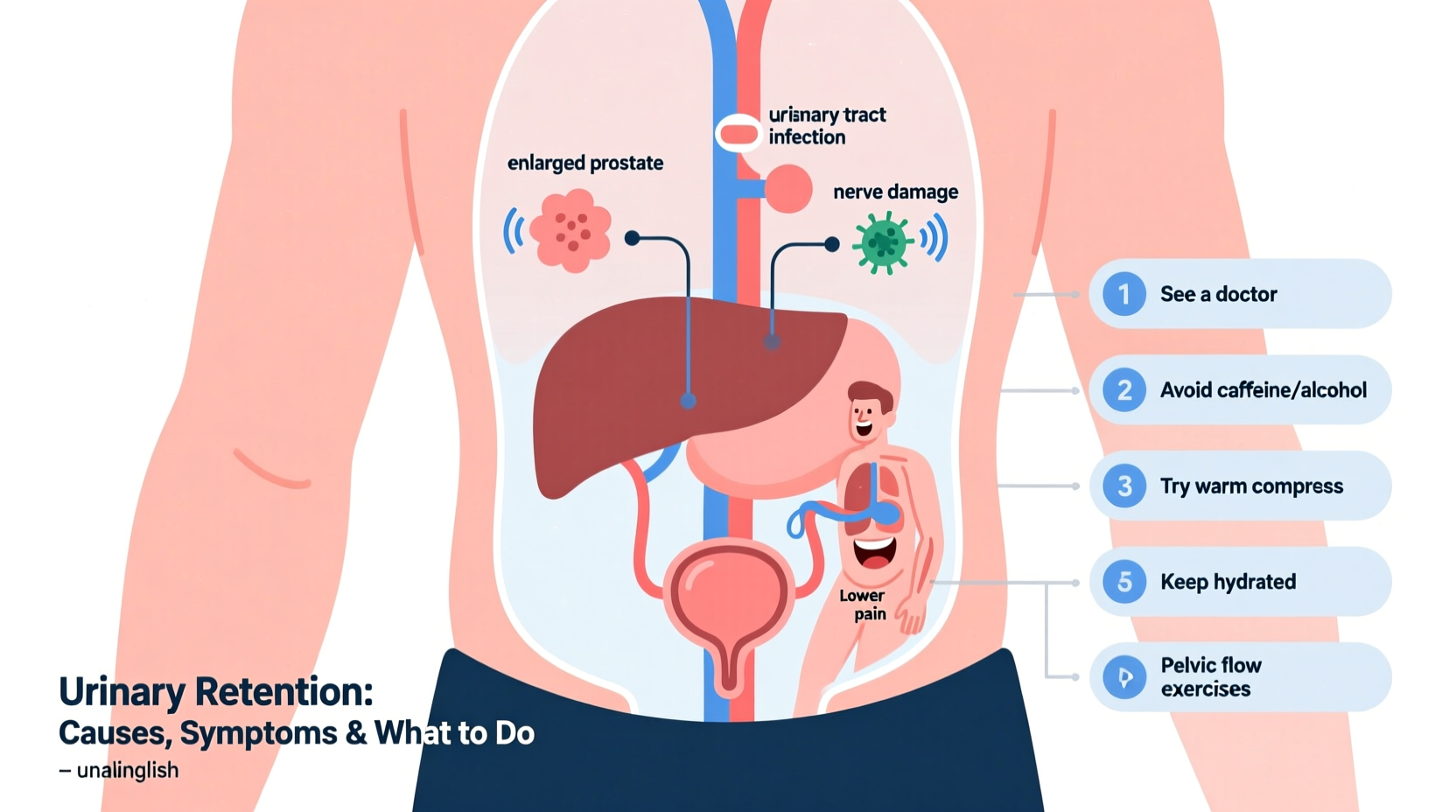
Urinary retention occurs when the bladder fails to empty completely or cannot empty at all. It comes in two forms: acute and chronic. Acute urinary retention strikes suddenly and is often painful, requiring immediate medical attention. Chronic urinary retention develops over time and may go unnoticed until complications arise.
The process of urination involves coordination between the brain, spinal cord, bladder muscles, and sphincters. Any disruption in this system — whether mechanical, neurological, or pharmacological — can interfere with normal voiding. Common culprits include an enlarged prostate, nerve damage from diabetes, certain medications, and pelvic injuries.
“Acute urinary retention is a urological emergency. Delaying treatment increases the risk of permanent bladder dysfunction.” — Dr. Alan Reyes, Urologist at Boston Medical Center
Common Causes of Inability to Pee
The reasons behind urinary retention vary widely. Some are structural, others relate to nerve signaling, and some are side effects of treatments or lifestyle factors.
- Enlarged Prostate (Benign Prostatic Hyperplasia): As men age, the prostate gland often grows, compressing the urethra and restricting urine flow.
- Urinary Tract Obstruction: Kidney stones, tumors, or strictures (narrowing of the urethra) can physically block urine passage.
- Nerve Problems: Conditions like multiple sclerosis, Parkinson’s disease, spinal cord injury, or diabetic neuropathy can disrupt signals between the brain and bladder.
- Medications: Antihistamines, decongestants, antipsychotics, and some antidepressants can impair bladder muscle contraction.
- Surgery and Anesthesia: Postoperative swelling or the effects of anesthesia can temporarily paralyze bladder function.
- Pelvic Floor Dysfunction: Overactive or uncoordinated pelvic floor muscles can prevent proper bladder emptying, especially in women.
- Infections: Severe urinary tract infections (UTIs) or prostatitis can cause swelling that blocks urine flow.
Symptoms That Signal Trouble
Recognizing the warning signs of urinary retention can make the difference between quick recovery and serious complications. Symptoms depend on whether the condition is acute or chronic.
| Symptom Type | Acute Retention | Chronic Retention |
|---|---|---|
| Onset | Sudden | Gradual |
| Pain | Severe lower abdominal pain | Mild discomfort or none |
| Bladder Fullness | Intense urge with no output | Constant feeling of fullness |
| Urine Flow | None or dribbling | Weak stream, frequent starts/stops |
| Other Signs | Nausea, restlessness | Frequent UTIs, nocturia, overflow incontinence |
Overflow incontinence — leaking small amounts of urine despite a full bladder — is a hallmark of chronic retention and is often mistaken for overactive bladder.
What to Do If You Can’t Pee
If you’re experiencing acute urinary retention — sudden inability to urinate accompanied by pain and bloating — seek emergency care immediately. This is not a condition to “wait out.”
Immediate Steps
- Go to the ER or urgent care: A catheter will likely be inserted to drain the bladder, providing instant relief and preventing organ damage.
- Avoid attempting home remedies: No amount of pushing, squatting, or running water will resolve a physical blockage or nerve failure.
- Stay calm: Anxiety can worsen muscle tension and make urination harder.
Follow-Up Actions
After initial treatment, identifying the root cause is essential. Your doctor may recommend:- Ultrasound of the bladder and kidneys
- Urodynamic testing to assess bladder function
- Blood tests to check kidney function and PSA levels (for men)
- Cystoscopy to examine the urethra and bladder lining
Mini Case Study: John’s Sudden Blockage
John, a 62-year-old man with mild BPH, started having trouble urinating after taking cold medicine containing pseudoephedrine. Within 12 hours, he experienced severe lower abdominal pain and couldn’t pass any urine. He went to the ER, where a catheter was placed, draining over 1,000 mL of urine. Tests revealed his prostate was moderately enlarged, and the decongestant had triggered acute retention. After stopping the medication and starting tamsulosin, his symptoms improved. John now avoids over-the-counter cold meds without consulting his doctor.
This case illustrates how seemingly harmless medications can have serious consequences in susceptible individuals — especially those with preexisting urinary issues.
Prevention and Long-Term Management
For those at risk — particularly men over 50, people with neurological conditions, or those on high-risk medications — proactive management reduces the likelihood of future episodes.
📋 Urinary Retention Prevention Checklist- ✅ Discuss medications with your doctor — avoid known bladder-blocking agents if possible
- ✅ Limit alcohol and caffeine, especially in the evening
- ✅ Practice double voiding: Urinate, wait a few seconds, then try again to ensure complete emptying
- ✅ Stay hydrated — but avoid excessive fluid intake before bedtime
- ✅ Monitor prostate health with annual checkups if over 50
- ✅ Perform pelvic floor exercises (Kegels) under guidance if recommended
Frequently Asked Questions
Can dehydration cause me to stop peeing?
No — dehydration leads to less urine production, but you should still be able to pass small amounts. True inability to pee despite drinking fluids suggests a blockage or neurological issue, not dehydration.
Is it dangerous to hold your pee for too long?
Occasionally delaying urination isn’t harmful for most people. However, regularly holding it in can weaken the bladder muscle over time and increase the risk of UTIs. For those with existing urinary issues, prolonged retention can trigger acute episodes.
Can women get urinary retention?
Yes. While less common than in men, women can develop retention due to pelvic organ prolapse, nerve damage from childbirth, or pelvic floor dysfunction. Diagnosis may take longer because symptoms are sometimes misattributed to UTIs or incontinence.
Conclusion: Take Action Before It Escalates
The inability to urinate is not something to ignore or self-treat. Whether the cause is medication-related, anatomical, or neurological, timely intervention prevents lasting harm. If you experience sudden, painful inability to urinate, go to the emergency room immediately. For recurring or subtle symptoms, schedule a visit with a urologist to identify and address the underlying cause.
Your urinary health is a vital part of your overall well-being. By understanding the risks, recognizing the signs, and acting promptly, you protect not only your bladder but your kidneys and quality of life. Don’t wait for a crisis — take control of your urinary health today.




 浙公网安备
33010002000092号
浙公网安备
33010002000092号 浙B2-20120091-4
Comments
No comments yet. Why don't you start the discussion?