
Forgetting where you left your keys, struggling to recall a colleague’s name, or blanking on something you just read—these moments are more than inconvenient. When they become frequent, they raise a pressing question: Why can’t I remember anything anymore? Memory lapses affect people of all ages, and while occasional forgetfulness is normal, persistent issues may signal underlying causes. The good news is that most factors contributing to poor memory are modifiable. With the right understanding and actions, cognitive clarity can be restored and even strengthened.
Understanding How Memory Works
Memory isn’t a single function but a complex system involving encoding, storage, and retrieval. Information enters through sensory input, gets processed in the hippocampus (a key brain region), and is stored for short-term or long-term use. Problems at any stage—whether due to distraction during learning or interference during recall—can lead to perceived memory loss.
There are three primary types of memory:
- Sensory memory: Brief retention of sensory information (e.g., what you just saw).
- Short-term memory: Holds information for seconds to minutes (e.g., a phone number).
- Long-term memory: Stores knowledge and experiences over extended periods.
When someone says, “I can’t remember anything,” it often reflects impaired short-term or working memory—the kind used daily for tasks like following conversations or remembering appointments.
Common Causes of Poor Memory
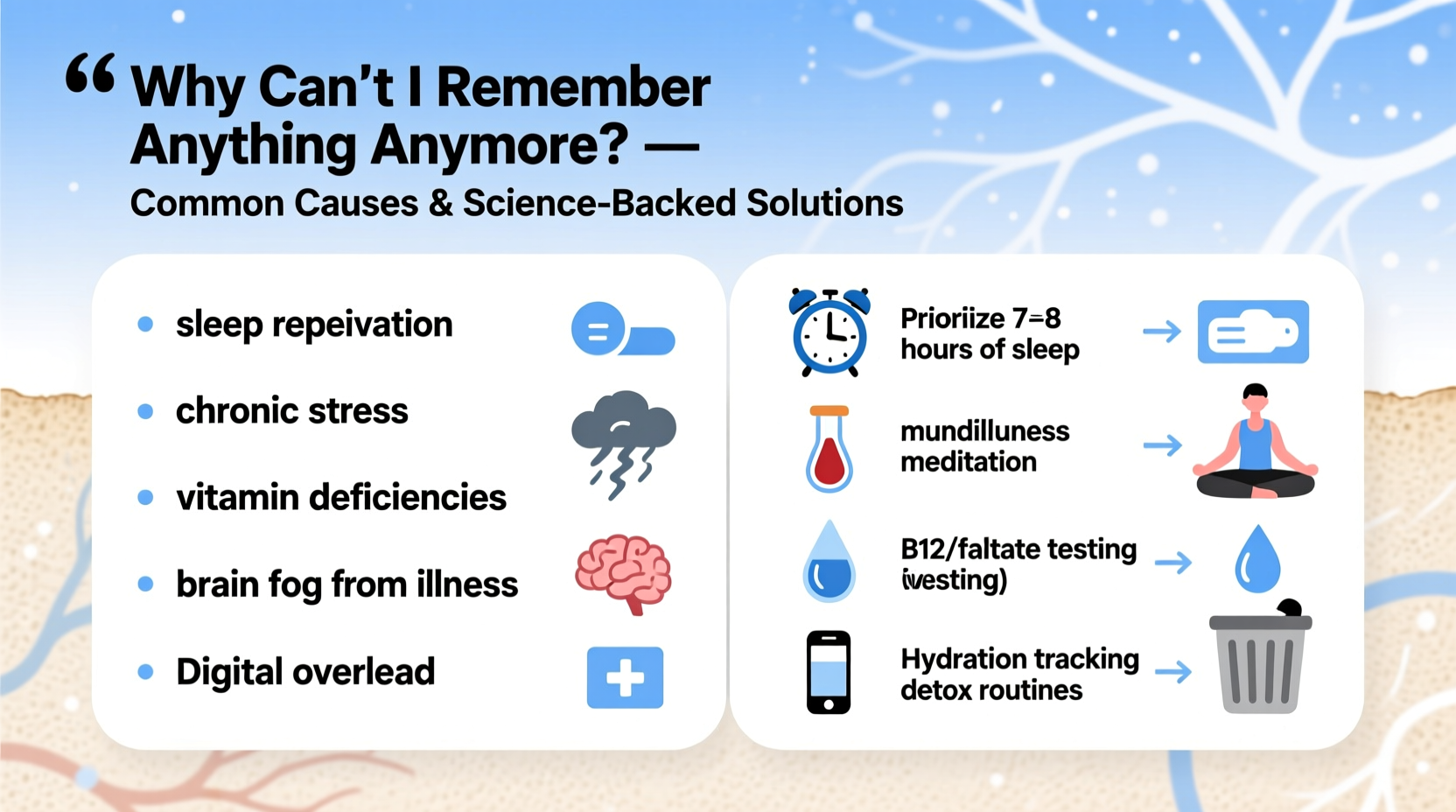
Forgetfulness rarely stems from a single cause. Instead, it’s usually the result of overlapping lifestyle, medical, and psychological factors. Recognizing these is the first step toward improvement.
1. Chronic Stress and Anxiety
Prolonged stress elevates cortisol, a hormone that, in excess, can damage the hippocampus. This impairs both memory formation and retrieval. People under constant pressure often report \"brain fog\" and difficulty concentrating.
2. Sleep Deprivation
Sleep is essential for memory consolidation—the process by which short-term memories are stabilized into long-term storage. Missing even one night of quality sleep disrupts this cycle. Chronic insomnia is strongly linked to reduced cognitive performance.
3. Poor Nutrition and Vitamin Deficiencies
The brain requires specific nutrients to function optimally. Deficiencies in B vitamins (especially B12 and folate), vitamin D, and omega-3 fatty acids are associated with cognitive decline. Diets high in processed foods and sugar also contribute to inflammation, which harms brain cells.
4. Sedentary Lifestyle
Physical inactivity reduces blood flow to the brain and lowers levels of brain-derived neurotrophic factor (BDNF), a protein critical for neuron growth and memory. Studies show that regular aerobic exercise improves memory performance within weeks.
5. Medical Conditions
Certain health issues directly impact memory:
- Thyroid disorders: Both hypothyroidism and hyperthyroidism can impair cognition.
- Diabetes: Poor glucose control damages blood vessels in the brain.
- Depression: Often mimics dementia with symptoms like forgetfulness and slowed thinking.
- Medication side effects: Antihistamines, antidepressants, and benzodiazepines may reduce mental sharpness.
“Many patients come in worried about Alzheimer’s, only to discover their memory issues stem from treatable conditions like sleep apnea or vitamin deficiency.” — Dr. Lena Patel, Neurologist at Boston Brain Health Clinic
Evidence-Based Solutions to Improve Memory
Improving memory isn’t about quick fixes—it’s about sustainable habits that support brain health. The following strategies are backed by neuroscience and clinical research.
Step-by-Step Guide to Sharper Recall
- Assess Your Sleep Quality
Track your sleep for a week. Note how long it takes to fall asleep, how often you wake up, and how rested you feel. If problems persist, consult a sleep specialist. - Optimize Your Diet
Incorporate brain-boosting foods: fatty fish (omega-3s), leafy greens (folate), nuts (vitamin E), and berries (antioxidants). Reduce refined sugar and trans fats. - Exercise Regularly
Aim for 150 minutes of moderate aerobic activity per week (e.g., brisk walking, cycling). Even 20-minute sessions boost cerebral blood flow. - Manage Stress
Practice mindfulness, deep breathing, or meditation for 10–15 minutes daily. Apps like Headspace or Calm offer guided sessions proven to reduce cortisol. - Challenge Your Brain
Engage in mentally stimulating activities: learn a language, play chess, solve puzzles, or take an online course.
Checklist: Daily Habits for Better Memory
- ✅ Get 7–9 hours of sleep
- ✅ Drink enough water (dehydration affects focus)
- ✅ Eat a balanced breakfast with protein and healthy fats
- ✅ Take a 10-minute walk after meals
- ✅ Write down important tasks or use a digital planner
- ✅ Limit screen time before bed
- ✅ Practice gratitude or journaling to reduce mental clutter
Real-Life Example: Recovering Cognitive Clarity
Mark, a 42-year-old software developer, began noticing he’d forget meetings, misplace documents, and struggle to follow team discussions. Initially, he blamed aging. After several months, he consulted a neurologist. Tests revealed mild vitamin B12 deficiency, elevated cortisol, and undiagnosed sleep apnea. With treatment—B12 supplements, CPAP therapy, and stress management techniques—his memory improved significantly within 10 weeks. His case highlights how multiple factors can converge and how targeted interventions restore function.
Do’s and Don’ts for Memory Health
| Do’s | Don’ts |
|---|---|
| Maintain a consistent sleep schedule | Stay up late scrolling on devices |
| Use mnemonic devices (acronyms, visualization) | Rely solely on memory for critical tasks |
| Break tasks into smaller steps | Multi-task during learning or conversations |
| Stay socially engaged | Isolate yourself when stressed |
| Review new information within 24 hours | Cram information last minute |
Frequently Asked Questions
Is forgetfulness a sign of dementia?
Not necessarily. Occasional forgetfulness is normal. Dementia involves progressive decline affecting daily life—such as getting lost in familiar places, inability to manage finances, or repeating questions despite being told the answer. If concerned, seek a professional evaluation rather than self-diagnosing.
Can medications improve memory?
There are no over-the-counter \"smart pills\" proven to enhance memory in healthy individuals. Prescription drugs like donepezil are used for Alzheimer’s but not recommended for general forgetfulness. Instead, focus on lifestyle changes, which have stronger evidence for long-term benefit.
How long does it take to see memory improvements?
Most people notice subtle improvements in focus and recall within 2–4 weeks of better sleep and diet. Significant gains typically emerge after 6–8 weeks of consistent effort. Patience and routine are key.
Conclusion: Reclaim Your Mental Sharpness
Struggling to remember things doesn’t mean your brain is failing—it may simply be asking for better care. Whether it’s adjusting your sleep, managing stress, or reevaluating your diet, small changes yield meaningful results. Memory is not fixed; it’s dynamic and responsive to how you live. By addressing root causes and adopting brain-supportive habits, you can regain confidence in your mind’s abilities.




 浙公网安备
33010002000092号
浙公网安备
33010002000092号 浙B2-20120091-4
Comments
No comments yet. Why don't you start the discussion?