
In the vast, untamed wilderness of Monster Hunter Wilds, survival hinges on preparation, recovery, and strategy. One of the most essential mechanics for maintaining stamina and readiness is the ability to rest at campsites. However, many players have reported difficulties when trying to use the rest function—either it doesn’t work as expected, or the option simply isn’t available. This guide explores the most common reasons behind this issue, offers practical solutions, and provides insight into how the game’s systems are designed to support (or restrict) player rest.
Understanding the Rest Mechanic in Monster Hunter Wilds
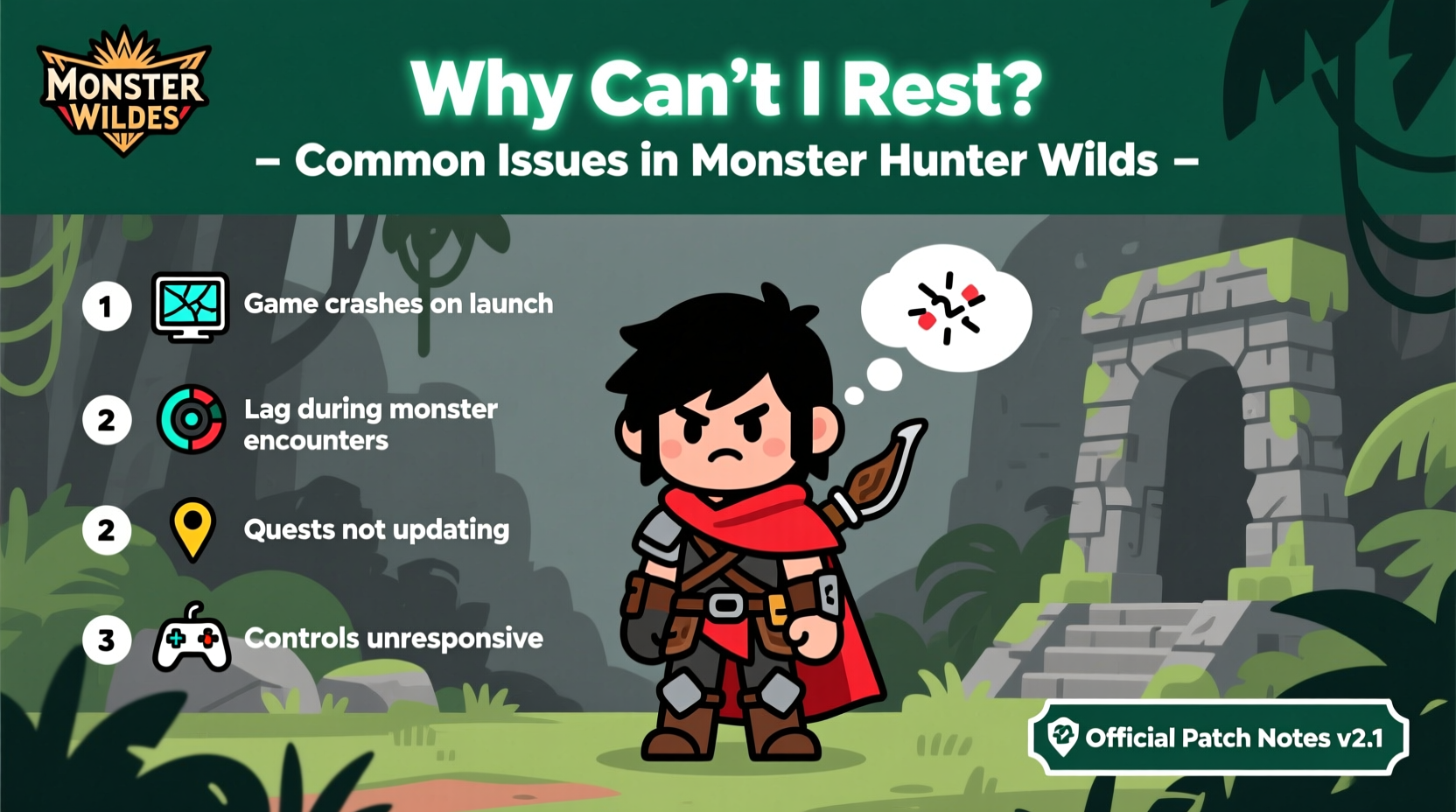
Resting in Monster Hunter Wilds serves multiple purposes: replenishing health and stamina, advancing time for specific monster spawns, and allowing hunters to regroup between engagements. Unlike previous entries in the series, Monster Hunter Wilds introduces a more dynamic ecosystem where environmental conditions, predator behavior, and fatigue levels influence when and where you can rest.
The game limits resting to designated base camps and certain safe zones. You cannot rest mid-combat, during weather events, or while being actively hunted by apex predators. Additionally, your character must be in a stable condition—meaning no active bleed effects, poison, or ongoing quests with time-sensitive objectives.
Common Reasons You Can’t Rest
1. Not at a Valid Campsite
The most frequent cause is attempting to rest outside designated areas. In Monster Hunter Wilds, only marked Base Camps and Safe Havens allow full rest options. Temporary shelters or field outposts may let you craft or change gear but do not permit resting.
2. Active Quest Objectives
If your quest has real-time progression—such as tracking a moving target or surviving a set duration—you won’t be able to rest until that phase ends. For example, during “Stalk the Apex” missions, resting is disabled to maintain tension and continuity.
3. Environmental Hazards
Extreme weather like sandstorms, blizzards, or volcanic ashfall disables camp functions temporarily. The game treats these as high-risk periods where setting up camp would be unsafe.
4. Character Status Effects
Debilitating conditions such as Heavy Bleed, Paralysis, or Infestation will block rest actions. These require treatment via items or returning to town before normal functions resume.
5. Game Progression Locks
Early in the campaign, the rest feature may be locked behind story milestones. Some players report unlocking the full rest menu only after completing the third major assignment in the Verdant Hollow region.
“Resting isn’t just a convenience—it’s a strategic tool. But we had to balance immersion with gameplay flow, so access is context-sensitive.” — Kenji Saito, Senior Designer at Capcom
Troubleshooting Checklist: What to Do When You Can’t Rest
- Confirm you’re at a Base Camp (blue tent icon on map)
- Check for active debuffs: treat Bleed, Poison, or Tremor immediately
- Verify your current quest allows rest (review objective details)
- Wait out hazardous weather if present (use shelter or fast travel)
- Ensure you’ve unlocked rest functionality through main story progression
- Restart the quest if the UI appears stuck or unresponsive
- Update your game to the latest patch—bugs related to rest were fixed in v1.03
Do’s and Don’ts of Resting in Monster Hunter Wilds
| Do | Don’t |
|---|---|
| Use rest to heal and reset stamina between hunts | Assume all campsites allow full rest functions |
| Rest to advance in-game time for nocturnal monsters | Try to rest during active pursuit phases |
| Craft healing items before resting to save time | Ignore environmental warnings before attempting to camp |
| Clear negative status effects before selecting \"Rest\" | Expect to rest during multiplayer session downtime without host approval |
Step-by-Step Guide to Successfully Resting
- Locate a Base Camp: Open your map and look for the blue tent symbol. Fast travel there if needed.
- Heal Any Status Ailments: Use Antidotes, Bandages, or Nulberries to remove debuffs.
- Open the Camp Menu: Approach the fire pit and press the interact button (default: X on PlayStation, A on Xbox).
- Select 'Rest': Choose from options like “Rest for 1 Hour,” “Rest Until Dawn,” or “Skip Time.”
- Confirm and Proceed: Wait for the animation to complete. Your health and stamina will fully restore.
- Resume Hunting: Exit the menu and continue your expedition with renewed vigor.
Real Example: Sarah’s First Night Hunt Failure
Sarah, an experienced Monster Hunter player transitioning from Rise, entered the Frostfen Tundra eager to take down the elusive Icefang Dravak. After two hours of tracking, she found herself low on stamina and near exhaustion. She returned to the nearest camp, expecting to rest and wait for nightfall when the beast becomes active.
However, the “Rest” option was grayed out. Confused, she checked her inventory and noticed a lingering “Tremor” effect from falling into a hidden crevasse earlier. Despite feeling fine, the game flagged her as unstable. Only after using a Nulberry did the rest option become available. She later learned that even minor terrain-related ailments can disable critical functions—a lesson now shared across hunting forums.
Frequently Asked Questions
Can I rest during multiplayer sessions?
Yes, but only if the host initiates it. In online co-op, resting requires consensus. If one player is still engaged in combat or has active debuffs, the rest option may be locked for everyone until resolved.
Does resting attract monsters to camp?
Under normal conditions, no. Base Camps are designed as safe zones. However, in special event quests—like “Camp Siege” modes—resting can trigger ambushes. Always read quest notes carefully before assuming safety.
Why does my game crash when I try to rest?
This was a known bug in early builds of Monster Hunter Wilds. Ensure your console or PC has installed the latest Day-One patch (v1.03 or higher). If crashes persist, delete local save cache and restart the game.
Optimizing Your Rest Strategy for Long Hunts
Smart use of the rest mechanic can dramatically improve your efficiency. Plan long expeditions around natural rest points. For instance, if hunting a diurnal monster in the morning, rest at midday to avoid overheating penalties in desert zones. Conversely, use rest to skip ahead to nighttime for creatures that only emerge after dark.
You can also combine resting with item preparation. Before selecting “Rest Until Dawn,” craft extra Potions, Traps, or Ammo. This ensures you wake up fully equipped and ready, minimizing downtime.
Additionally, pay attention to NPC dialogue at camp. Sometimes, Hunters’ Guild scouts or local villagers provide clues about nearby monster activity after you rest—information that can save hours of fruitless searching.
Conclusion: Master the Rhythm of the Wilds
Being unable to rest in Monster Hunter Wilds is rarely a glitch—it’s usually a signal from the game that conditions aren’t right. Whether due to status effects, location constraints, or narrative design, understanding *why* you can’t rest empowers you to adapt and overcome. By mastering camp mechanics, monitoring your hunter’s condition, and respecting the world’s rules, you’ll turn rest from a frustration into a tactical advantage.




 浙公网安备
33010002000092号
浙公网安备
33010002000092号 浙B2-20120091-4
Comments
No comments yet. Why don't you start the discussion?