
When an astronaut is stranded in orbit or delayed from returning to Earth, public concern often spikes. News headlines speculate, families worry, and many ask a simple but urgent question: “Why can’t they just bring them home?” The reality, however, is far more complex than it appears. Space missions are governed by physics, engineering constraints, international coordination, and safety protocols that leave little room for improvisation. Delays in bringing astronauts back are rarely due to indecision—they stem from unavoidable technical, logistical, and environmental factors.
This article breaks down the core reasons behind astronaut return delays, explores real-world examples, and explains how space agencies manage these high-stakes situations with precision and care.
The Physics of Space Travel: Why You Can’t Just “Fly Back”
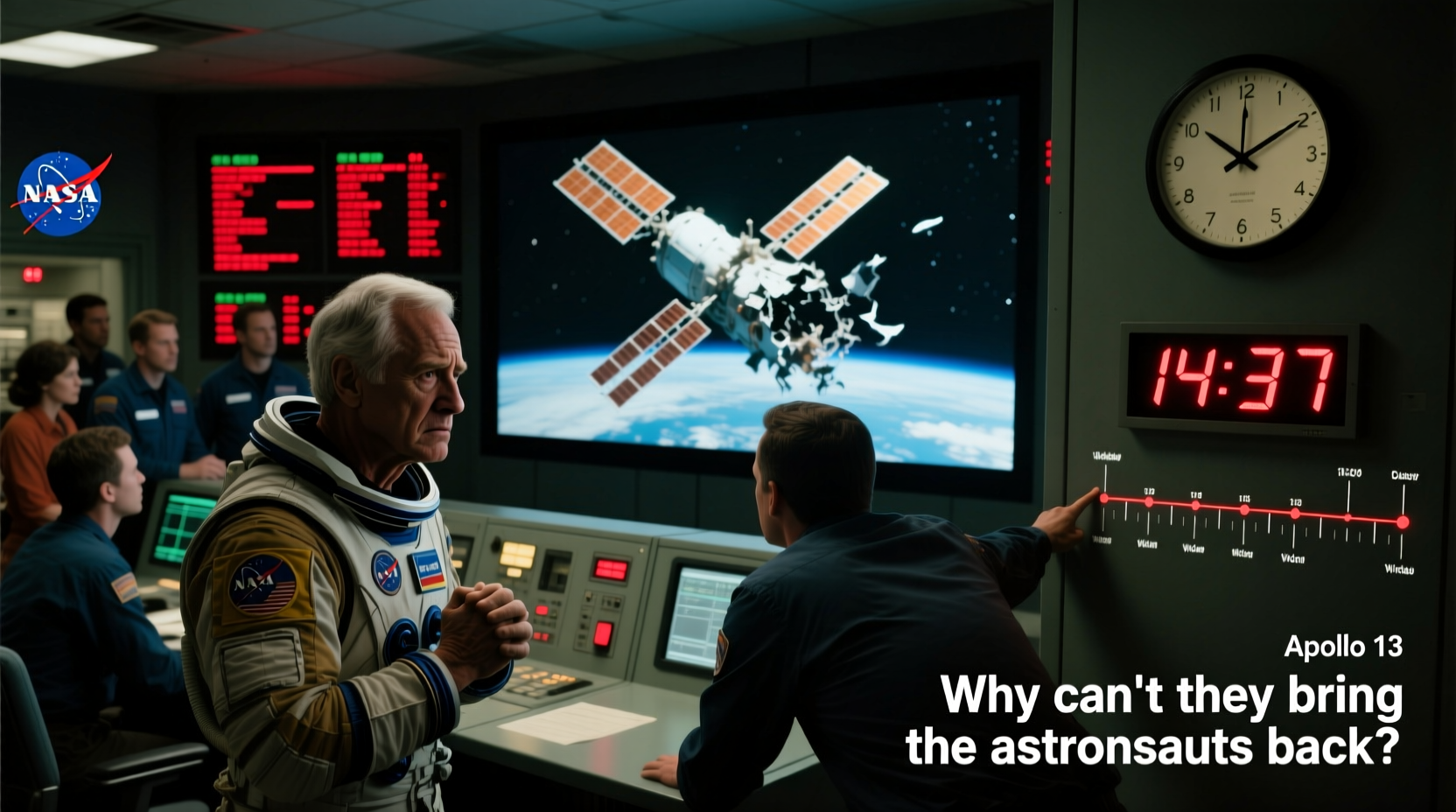
Unlike driving a car or flying a plane, returning from space isn’t as simple as turning around and heading home. Orbital mechanics dictate every movement in space. Astronauts aboard the International Space Station (ISS), for example, travel at approximately 28,000 kilometers per hour—fast enough to circle Earth every 90 minutes. To return safely, a spacecraft must perform a series of precisely timed maneuvers known as deorbit burns.
These burns slow the spacecraft enough to drop out of orbit and re-enter Earth’s atmosphere. But such operations require:
- Exact alignment between the spacecraft’s position and landing zone
- Functional propulsion systems
- Favorable atmospheric conditions
- Available recovery assets on the ground
If any of these elements are compromised—even slightly—the return must be postponed. There are no emergency roads or detours in space.
Technical Failures and Vehicle Readiness
One of the most common causes of return delays is spacecraft malfunction. Whether it’s a Soyuz capsule, SpaceX’s Crew Dragon, or another vehicle, all systems must pass rigorous pre-flight checks before departure. Issues like thruster leaks, software glitches, or heat shield anomalies can ground a crew indefinitely until resolved.
In 2023, NASA astronauts Suni Williams and Butch Wilmore faced an extended stay on the ISS after their Boeing Starliner spacecraft experienced multiple valve malfunctions and helium leaks. Although the crew was safe, engineers needed time to verify whether the capsule could safely return through re-entry.
As NASA Administrator Bill Nelson explained:
“We’re not going to rush this. The safety of our astronauts is paramount. If the vehicle isn’t ready, they aren’t coming home.” — Bill Nelson, NASA Administrator
Unlike commercial flights, there’s no backup shuttle waiting on standby. Each return vehicle is assigned to specific crew members, and replacements take months to prepare and launch.
Weather and Landing Zone Constraints
Even if the spacecraft is ready, Earth-side conditions can halt a return. Most capsules land via parachute in remote areas—either on land in Kazakhstan or splashing down in the ocean near Florida. Both require ideal weather.
High winds, storms, or rough seas increase the risk of injury during landing or complicate recovery operations. For water landings, naval teams must be in position, and helicopters need clear visibility. A single thunderstorm can scrub a landing attempt.
SpaceX’s Crew-5 mission in March 2023 was delayed by over 24 hours due to high winds off the coast of Jacksonville. Though seemingly minor, such conditions could have caused the capsule to drift into dangerous currents or damaged parachutes during descent.
International Coordination and Launch Scheduling
The ISS is a multinational project involving NASA (USA), Roscosmos (Russia), JAXA (Japan), ESA (Europe), and CSA (Canada). All return operations require synchronized planning across agencies, especially when using Russian Soyuz vehicles or American commercial craft.
Delays in one mission can ripple through the entire schedule. For instance, if a new crew launch is postponed, the outgoing astronauts may need to stay longer to maintain minimum staffing levels on the station. Similarly, visiting cargo or crew vehicles must dock and undock in sequence—like planes at a busy airport.
| Factor | Impact on Return Timeline |
|---|---|
| Spacecraft Anomaly | Hold until engineering review completed (days to weeks) |
| Poor Weather | Delay by 12–72 hours per unsuitable window |
| Crew Health Issue | Medical evaluation required; possible early return or quarantine |
| Launch Delay | Extends current crew’s mission to cover gap |
| Orbital Mechanics | Landing opportunities every 1–2 days depending on location |
Real Example: The Extended Stay of Mark Vande Hei
In 2021, NASA astronaut Mark Vande Hei launched to the ISS expecting a standard six-month mission. Due to scheduling changes and the need to maintain continuous U.S. presence on the station, his return was delayed multiple times. He ultimately spent 355 days in space—longer than any other American astronaut.
The decision wasn’t made lightly. Vande Hei underwent additional medical monitoring, adjusted exercise routines, and psychological support throughout the extension. His case highlights how operational needs can override original timelines, even when it impacts individual crew members.
“You sign up knowing your mission might change,” Vande Hei said in a post-flight interview. “The work up here matters more than the clock.”
Step-by-Step: How a Return Mission Is Planned and Executed
Returning astronauts isn’t spontaneous—it follows a meticulous process:
- Decision to Return: Made jointly by NASA, Roscosmos, and partners based on mission completion, vehicle readiness, and health status.
- Vehicle Inspection: Engineers run diagnostics on thrusters, life support, and heat shield.
- Deorbit Window Calculation: Flight dynamics teams identify optimal time for re-entry burn.
- Crew Preparations: Astronauts stow equipment, suit up, and board the capsule 3–4 hours before undocking.
- Undocking and Burn: Capsule separates from ISS and fires engines to begin descent.
- Re-entry: Vehicle withstands temperatures over 1,600°C while slowing from orbital speed.
- Landing and Recovery: Parachutes deploy; recovery team reaches site within minutes.
Each phase depends on flawless execution. A problem at any stage can trigger a hold.
Frequently Asked Questions
Can astronauts come back early in an emergency?
Yes—but only if their return vehicle is healthy and docked. The ISS always has at least one spacecraft attached for emergency evacuation. However, if both vehicles are compromised, the crew must wait for repairs or a rescue mission, which could take months.
Why don’t they keep a spare spacecraft on the ISS?
Weight, cost, and orbital logistics make this impractical. Each vehicle requires fuel, maintenance, and docking ports. The ISS has limited capacity. Instead, agencies rely on scheduled rotations and redundancy in design.
Have astronauts ever been truly stranded?
No modern crew has been permanently stranded. Even in serious incidents—like the 1970 Apollo 13 oxygen tank explosion—engineers found ways to return the crew safely. Today’s protocols prioritize contingency planning, ensuring astronauts are never left without options.
Conclusion: Patience, Precision, and Safety Above All
Understanding why astronauts can’t always come home on schedule reveals the immense complexity behind human spaceflight. It’s not bureaucracy or hesitation—it’s the necessity of balancing risk, science, and survival in one of the harshest environments known to humanity.
Every delay, though frustrating, reflects a commitment to bringing crews back alive and well. As space exploration pushes further—to the Moon, Mars, and beyond—these challenges will only grow. But so will our ability to overcome them with better technology, smarter planning, and unwavering dedication to safety.




 浙公网安备
33010002000092号
浙公网安备
33010002000092号 浙B2-20120091-4
Comments
No comments yet. Why don't you start the discussion?