
In an era where banking, shopping, and even healthcare are conducted online with relative ease, the question arises: why can’t we vote online? The idea of casting a ballot from a smartphone or laptop is appealing—convenient, fast, and potentially more inclusive. Yet, despite technological advances, no major democracy has adopted nationwide online voting for public elections. The answer lies in a complex web of security risks, technical limitations, and democratic principles that demand far greater protection than commercial transactions.
The Promise and Peril of Online Voting
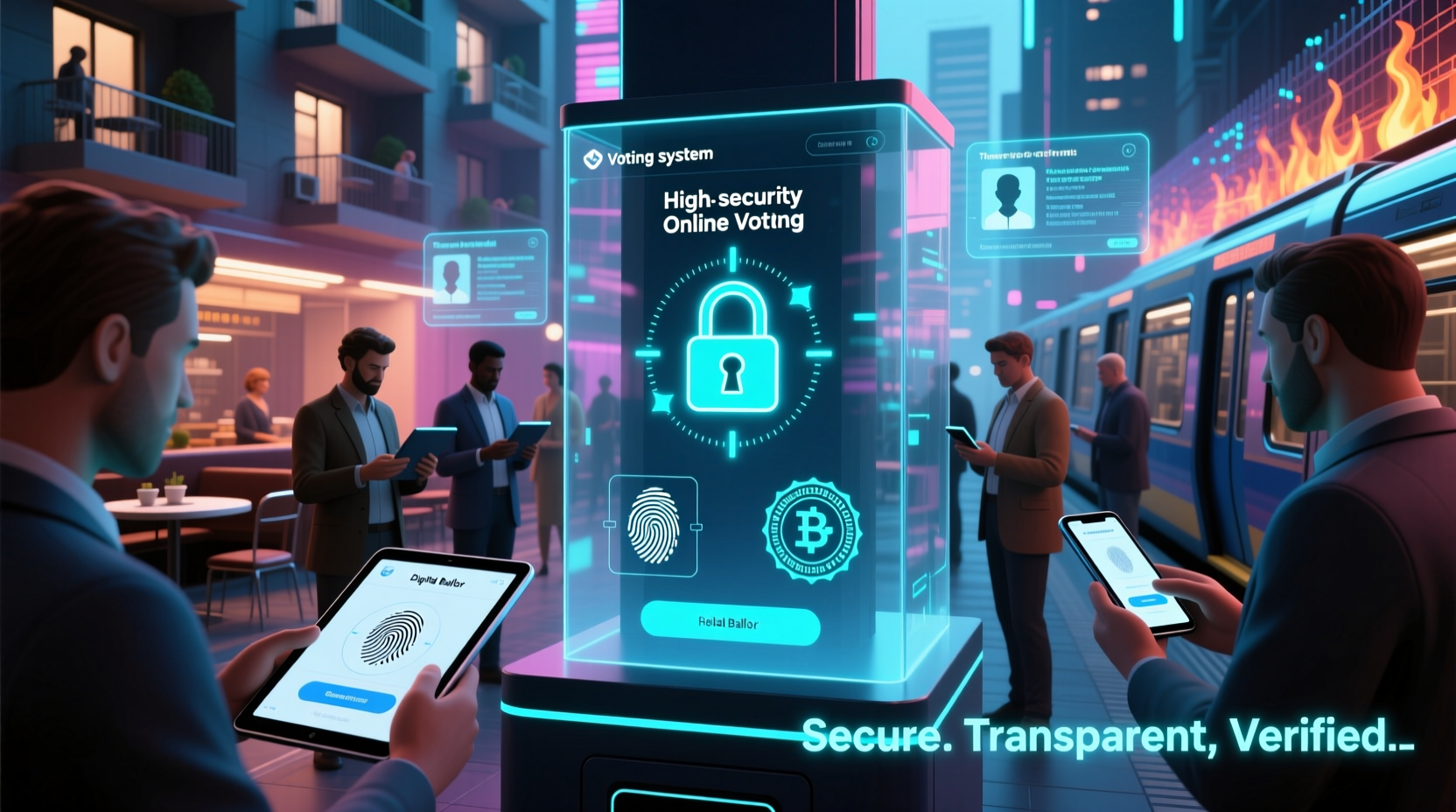
Online voting could revolutionize political participation. It might increase turnout, especially among younger voters and those living abroad. Remote access could benefit people with disabilities, military personnel, and citizens in rural areas with limited polling options. Estonia is often cited as a success story, having used internet voting since 2005. However, its system operates under unique conditions—a small, highly digitized population with national ID cards and robust infrastructure—that don’t scale easily to larger, more diverse democracies like the United States or India.
While convenience is compelling, elections are not just transactions; they are foundational to democracy. Unlike buying a product online, voting requires three critical guarantees: secrecy, verifiability, and integrity. Any compromise on these principles undermines trust in the entire electoral process.
Core Security Concerns
The primary reason online voting remains unviable at scale is the inability to guarantee secure, tamper-proof, and private balloting across millions of devices and networks.
- End-to-end security: Every device used to vote would need to be free of malware. A single infected computer or compromised app could silently alter votes before submission.
- Server vulnerabilities: Centralized vote collection servers become high-value targets for hackers, including state-sponsored actors aiming to influence election outcomes.
- Lack of paper trail: Most online systems do not produce a physical audit trail. Without it, detecting and correcting errors—or proving fraud did not occur—becomes nearly impossible.
- Voter coercion and vote selling: In-person voting happens in private booths, making it hard to prove how someone voted. Online, a voter could be pressured to show their screen or use remote access tools, enabling coercion or vote-buying.
“Elections are not just about counting votes—they’re about proving the count is correct. Online voting systems today cannot offer that proof without sacrificing privacy.” — Dr. Susan Landau, cybersecurity expert and professor at Tufts University
Technical Challenges That Undermine Trust
Beyond security, several technical hurdles make large-scale online voting impractical.
Authentication vs. Anonymity Paradox
A fundamental challenge in online voting is reconciling two opposing needs: verifying that only eligible voters participate (authentication) while ensuring no one can trace a vote back to an individual (anonymity). Traditional systems solve this with poll workers checking IDs and issuing anonymous ballots. Digital systems struggle to replicate this balance securely.
Even with encrypted authentication methods like digital IDs or biometrics, there’s always a risk of spoofing or data breaches. Once credentials are stolen, impersonation becomes possible—and undetectable.
Software Transparency and Verification
For public trust, election systems must be transparent and independently auditable. However, most proposed online voting platforms rely on proprietary software or complex encryption models that average citizens and election officials cannot inspect. This lack of transparency breeds suspicion, especially when results are contested.
Real-World Failures and Warnings
Pilot programs and limited deployments of online voting have repeatedly exposed vulnerabilities.
West Virginia’s Mobile Voting App (2018–2020)
In 2018, West Virginia allowed overseas military personnel to vote via a blockchain-based mobile app called Voatz. While promoted as secure, a 2019 MIT study found serious flaws: researchers demonstrated how the app could leak voter identities, allow vote manipulation, and be compromised through common phone vulnerabilities. Despite these findings, the app was used again in 2020 before being discontinued due to public pressure and lack of verifiable security.
This case illustrates a recurring problem: well-intentioned innovations often overlook real-world threats. A smartphone may seem secure, but it runs third-party apps, receives unverified updates, and connects to insecure networks—all potential attack vectors.
Comparative Risks: Online Voting vs. In-Person Systems
| Factor | In-Person Voting | Online Voting (Current Tech) |
|---|---|---|
| Ballot Secrecy | High (private booth) | Low (risk of surveillance/coercion) |
| Vote Integrity | High (paper trail, audits) | Medium to Low (no physical backup) |
| Accessibility | Moderate (requires travel) | High (remote access) |
| Scalability | Proven at national level | Unproven beyond small pilots |
| Auditability | Strong (manual recounts possible) | Weak (software-dependent) |
| Cyberattack Risk | Low (localized systems) | Very High (centralized targets) |
What Would It Take to Make Online Voting Safe?
While current technology falls short, research continues into secure digital voting models. Some experts suggest hybrid systems—such as encrypted electronic ballots with mandatory paper receipts—as a transitional step. Others advocate for end-to-end verifiable (E2E-V) cryptographic systems that allow voters to confirm their vote was included without revealing its content.
However, even theoretically sound systems face adoption barriers:
- Most E2E-V systems require advanced user knowledge to verify votes.
- They remain vulnerable to endpoint attacks (malware on personal devices).
- Public education and trust-building would take years, if not decades.
Step-by-Step: Building a Secure Digital Voting Framework
- Develop open-source, auditable voting software – All code must be publicly available for inspection by independent experts.
- Require hardware-backed authentication – Use secure tokens or national ID systems with multi-factor verification.
- Implement end-to-end encryption with verifiable receipts – Allow voters to cryptographically confirm their vote was recorded correctly.
- Maintain a physical or printable ballot backup – Ensure every digital vote produces a human-readable, storable record for audits.
- Conduct rigorous penetration testing – Simulate attacks by ethical hackers before any deployment.
- Run phased pilot programs – Start with non-critical elections (e.g., student councils, internal unions) before scaling.
Frequently Asked Questions
Can blockchain fix online voting security?
Blockchain provides immutable record-keeping, but it doesn’t solve the core problems of voter identity verification, device security, or ballot secrecy. It also doesn’t prevent votes from being altered before they enter the system. While useful as part of a broader solution, blockchain alone is not a silver bullet.
Why can we do online banking safely but not online voting?
Banking relies on accountability—you can detect fraud because you see your transaction history and can dispute charges. Voting requires the opposite: you must verify your vote was counted without proving how you voted, to prevent coercion. This contradiction makes online voting fundamentally harder than financial transactions.
Has any country successfully implemented secure online voting?
Estonia allows online voting using national ID cards and encrypted connections. While widely used, security researchers have raised concerns about potential server breaches and client-side malware. No system has yet been proven immune to large-scale attacks, and Estonia’s model is difficult to replicate in less centralized nations.
Actionable Checklist for Policymakers and Voters
Before considering online voting, stakeholders should ensure the following criteria are met:
- ✅ All voting software is open-source and independently audited.
- ✅ Every vote generates a verifiable paper trail.
- ✅ Voters can confirm their ballot was counted without revealing their choice.
- ✅ Systems are tested against real-world cyberattack scenarios.
- ✅ No single point of failure exists in vote transmission or storage.
- ✅ Public education campaigns explain how the system works and its safeguards.
Conclusion: Prioritizing Trust Over Convenience
The desire for online voting is understandable, but democracy cannot afford shortcuts. The stakes are too high. A single compromised election can erode public confidence for generations. Until technology can guarantee both security and anonymity at scale, paper ballots and in-person voting remain the most trustworthy methods.
That doesn’t mean innovation should stop. On the contrary, continued research, cautious experimentation, and public dialogue are essential. But progress must be measured, transparent, and rooted in evidence—not driven by urgency or convenience.




 浙公网安备
33010002000092号
浙公网安备
33010002000092号 浙B2-20120091-4
Comments
No comments yet. Why don't you start the discussion?