
The Sistine Chapel in Vatican City is one of the most revered artistic and spiritual spaces in the world. Home to Michelangelo’s breathtaking frescoes, including the iconic ceiling and \"The Last Judgment,\" it draws millions of visitors each year. Yet, despite its visual splendor, photography is strictly prohibited inside. Many tourists are surprised—or even frustrated—by this rule. However, the ban on taking photos is not arbitrary. It stems from a combination of conservation needs, religious reverence, legal authority, and logistical concerns that together justify the restriction.
Preservation of Irreplaceable Artwork
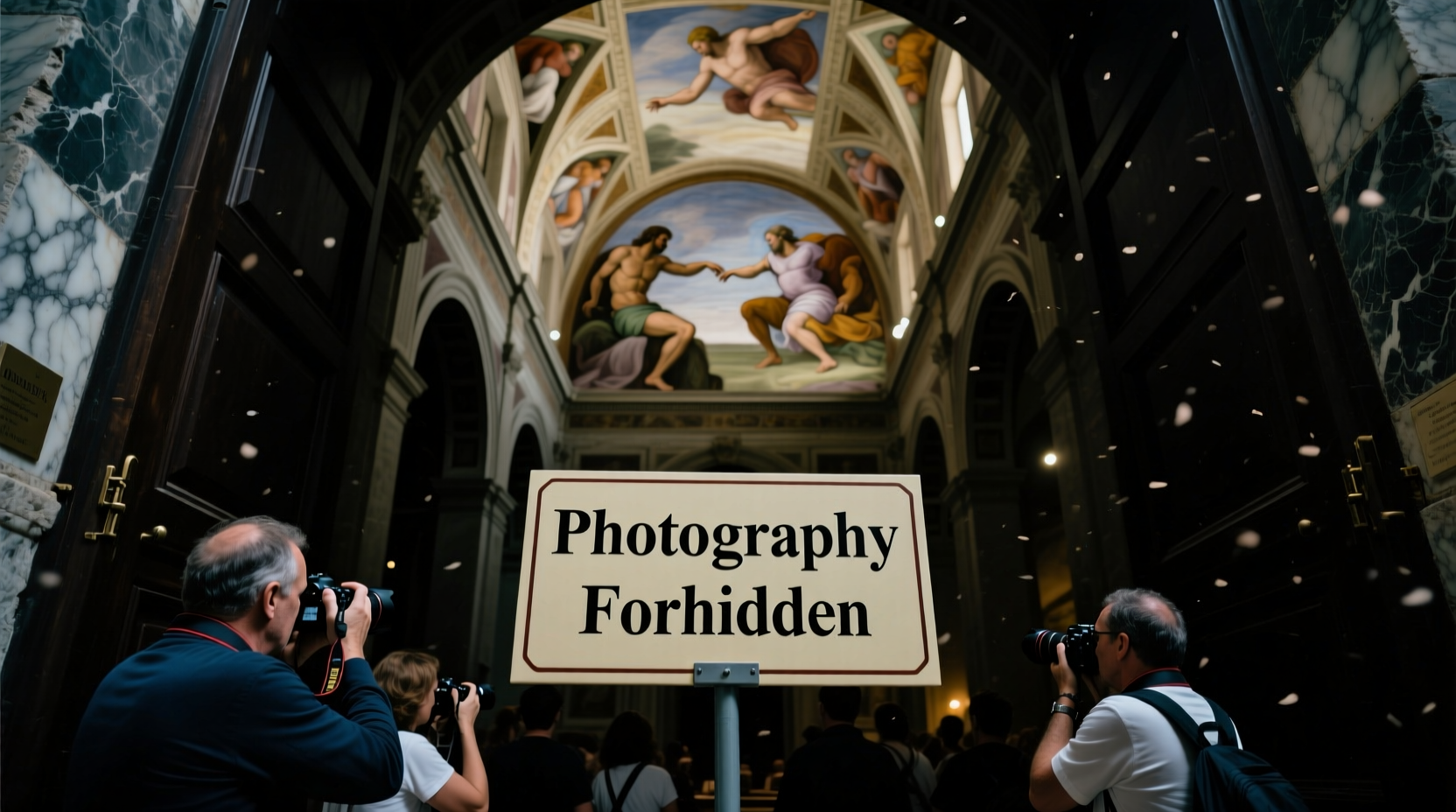
The primary reason photography is banned in the Sistine Chapel is the protection of its priceless frescoes. Michelangelo painted the ceiling between 1508 and 1512 and returned decades later to complete \"The Last Judgment\" on the altar wall. These works were created using delicate techniques involving pigments applied to wet plaster—a method known as *buon fresco*. Over time, exposure to environmental factors such as light, humidity, and airborne particles can cause irreversible damage.
Flash photography, in particular, emits intense bursts of light that may accelerate pigment fading. While a single photo might seem harmless, millions of flashes over years could contribute to cumulative degradation. Even without flash, the sheer volume of artificial light introduced by cameras and smartphones disrupts the carefully controlled lighting environment designed to preserve the artwork.
“Every photon counts when you're dealing with 500-year-old pigments. We must minimize all avoidable light exposure.” — Dr. Elena Ricci, Conservation Scientist at the Vatican Museums
Religious Sanctity and Atmosphere
Beyond art conservation, the Sistine Chapel remains an active sacred space within the Catholic Church. It is used for papal ceremonies, including the conclave where cardinals gather to elect a new pope. This dual identity—as both a museum and a place of worship—means that visitor behavior is expected to reflect reverence and solemnity.
Taking photographs, especially with loud shutters or intrusive movements, can break the contemplative atmosphere. Visitors walking backward to frame shots, clustering near key artworks, or using selfie sticks disrupt the flow and diminish the experience for others seeking quiet reflection. The Vatican emphasizes decorum, asking guests to treat the chapel not merely as a tourist attraction but as a holy site.
This spiritual dimension informs much of the policy. As Cardinal Gianfranco Ravasi once noted, “We are not just protecting paint—we are protecting prayer.”
Vatican Law and Intellectual Property Rights
The prohibition is also legally enforceable. The Vatican asserts copyright over photographic reproductions of the Sistine Chapel’s interior, particularly Michelangelo’s frescoes. Although the artist died in 1564, the Vatican maintains control over commercial use of images taken inside the chapel. This allows them to regulate reproduction rights and prevent unauthorized sales of high-resolution images.
In practice, this means that even if someone sneaks a photo, distributing or publishing it commercially could lead to legal action. The revenue generated from licensed photography supports restoration projects and ongoing maintenance. By restricting casual photography, the Vatican preserves both cultural ownership and financial sustainability.
| Factor | Impact on Photo Ban |
|---|---|
| Art Conservation | Light and humidity from devices can degrade pigments |
| Religious Use | Photography disrupts sacred ceremonies and meditation |
| Crowd Management | Slows foot traffic and causes bottlenecks |
| Copyright Control | Prevents unauthorized distribution of images |
| Security Protocols | Reduces risk of surveillance or misuse of spatial data |
Logistical and Safety Concerns
The Sistine Chapel receives approximately 25,000 visitors per day during peak season. Managing such large crowds requires strict operational rules. Allowing photography would exacerbate congestion, especially near the most photographed areas like the Creation of Adam panel. People stopping to pose, adjust angles, or review shots create bottlenecks in narrow spaces, increasing safety risks.
Additionally, accessories like tripods, extendable poles, and drones are outright hazardous in packed environments. Even small items like selfie sticks have been banned across the Vatican Museums since 2013. Staff members are trained to intervene immediately if they observe photo-taking, ensuring compliance without confrontation.
A mini case illustrates the issue: In 2017, a tourist attempting a panoramic shot accidentally knocked into another visitor, causing a minor fall. Though no serious injury occurred, the incident prompted renewed enforcement of the no-photo policy. Such events underscore how seemingly minor actions can have outsized consequences in high-density settings.
How to Experience the Sistine Chapel Fully Without Photography
While the inability to photograph may feel limiting, there are meaningful ways to absorb and remember the experience beyond digital capture.
- Engage mindfully: Spend time observing details—the expressions on figures, the movement in drapery, the interplay of color and shadow.
- Use guided audio tours: The official Vatican Museums tour provides context-rich commentary that deepens appreciation.
- Sit quietly: Unlike most museum rooms, seating is available in the Sistine Chapel. Take a moment to sit and simply look upward.
- Purchase authorized materials: High-quality prints, books, and digital downloads are available through the Vatican’s official store.
- Sketch respectfully: While photography is banned, sketching with pencil (no ink or charcoal) is permitted for personal use.
Frequently Asked Questions
Can I take photos if I don’t use flash?
No. The ban applies to all photography, regardless of flash usage. Even non-flash devices emit light and distract others.
Are videos allowed?
No. Video recording is also prohibited for the same reasons as still photography—preservation, privacy, and decorum.
What happens if I get caught taking a photo?
Guards will ask you to delete the image immediately. Repeated violations may result in being escorted out or reported, though formal penalties are rare for first-time offenders.
Conclusion: Respecting a Masterpiece Beyond the Lens
The Sistine Chapel stands as a testament to human creativity and spiritual aspiration. Its walls carry centuries of history, faith, and artistic mastery. The no-photography rule isn’t about denying visitors a memento—it’s about ensuring that Michelangelo’s genius endures for future generations. By setting aside cameras, we shift from passive documentation to active engagement, allowing ourselves to truly see what we’ve come to witness.
Next time you enter the chapel, let go of the urge to capture. Instead, focus on absorbing the scale, emotion, and brilliance of the frescoes with your own eyes. That memory—unfiltered and unmediated—will likely stay with you far longer than any photo ever could.




 浙公网安备
33010002000092号
浙公网安备
33010002000092号 浙B2-20120091-4
Comments
No comments yet. Why don't you start the discussion?