
Carbon is the backbone of life on Earth. More than just a component of organic matter, it is the chemical cornerstone upon which all known biological systems are built. From the DNA in our cells to the proteins that drive metabolic reactions, carbon’s unparalleled versatility enables the complexity and diversity of life. While other elements play vital roles, none match carbon in its ability to form stable, intricate structures necessary for living organisms. This article explores the scientific, structural, and biochemical reasons why carbon is indispensable to life as we know it.
The Unique Bonding Properties of Carbon
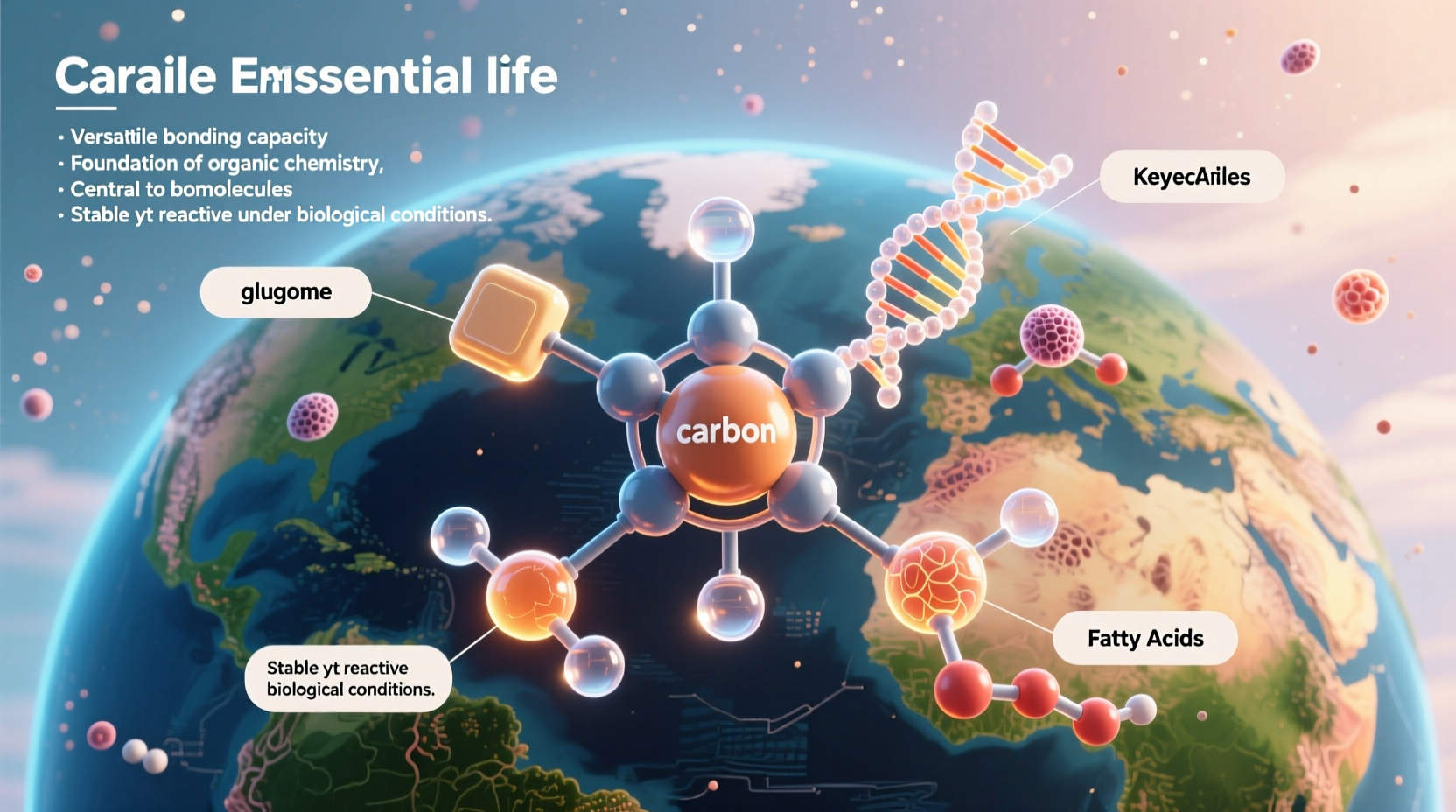
At the heart of carbon’s significance lies its electron configuration. With four valence electrons, carbon can form up to four strong covalent bonds with a variety of atoms—including hydrogen, oxygen, nitrogen, and even other carbon atoms. This tetravalency allows for an extraordinary range of molecular architectures.
Unlike many other elements, carbon readily forms single, double, and triple bonds. It also creates long chains (catenation), branched structures, and rings—features critical for building complex biomolecules. No other element exhibits this degree of structural flexibility and stability.
For example, hydrocarbons like methane (CH₄) demonstrate simple bonding, while more advanced compounds such as benzene (C₆H₆) showcase ring formation. These variations provide the foundation for everything from energy storage molecules to genetic material.
Core Building Blocks of Life Depend on Carbon
All major classes of biomolecules—proteins, carbohydrates, lipids, and nucleic acids—are fundamentally carbon-based. Each plays a distinct role in sustaining life, and each relies on carbon’s structural adaptability.
- Proteins: Composed of amino acids linked by peptide bonds, all of which contain carbon backbones. Proteins perform functions ranging from enzymatic catalysis to cellular signaling.
- Carbohydrates: Sugars and starches built around carbon chains, serving as primary energy sources and structural components (e.g., cellulose in plants).
- Lipids: Fats and phospholipids made of long hydrocarbon tails; essential for energy storage and forming cell membranes.
- Nucleic Acids: DNA and RNA use sugar-phosphate backbones where the sugars (ribose or deoxyribose) are carbon-rich, enabling information storage and transfer.
“Life is based on carbon because it offers the richest chemistry of any element. Its capacity to generate diverse, stable, and functional molecules is unmatched.” — Dr. James Tour, Synthetic Organic Chemist, Rice University
Stability and Reactivity: A Delicate Balance
Carbon compounds strike a rare balance between stability and reactivity. Bonds formed by carbon—especially C–C and C–H—are strong enough to persist under physiological conditions, yet they can be broken and reformed during metabolic processes when needed.
This duality supports both structural integrity and dynamic change. For instance, glucose (C₆H₁₂O₆) remains stable in storage but readily breaks down during cellular respiration to release energy. Enzymes facilitate these transformations efficiently due to the predictable behavior of carbon-centered reactions.
In contrast, alternatives like silicon—often speculated as a potential basis for alien life—form weaker bonds with themselves and are prone to oxidation, making them less suitable for sustained, water-based biochemistry.
Isomerism and Molecular Diversity
One of carbon’s most powerful attributes is its ability to give rise to isomers—molecules with the same formula but different arrangements. Structural isomerism, stereoisomerism, and optical isomerism vastly expand the number of possible organic compounds.
For example, both ethanol (drinking alcohol) and dimethyl ether have the formula C₂H₆O, but their differing atomic arrangements result in completely different physical and chemical properties. In biological systems, chirality—the “handedness” of carbon molecules—is crucial. Living organisms typically use only one enantiomer (e.g., L-amino acids), ensuring precise interactions in enzyme binding and replication.
| Molecule Type | Example | Function | Carbon Role |
|---|---|---|---|
| Amino Acid | Alanine | Protein building block | Central alpha-carbon links functional groups |
| Sugar | Glucose | Energy source | 6-carbon chain enables ring formation |
| Nucleotide | Adenine | Genetic coding | Purine ring system built on carbon framework |
| Fatty Acid | Palmitic acid | Membrane structure | 16-carbon hydrophobic tail |
Real-World Example: Photosynthesis and the Carbon Cycle
A compelling illustration of carbon’s centrality is photosynthesis. In this process, plants absorb carbon dioxide (CO₂) from the atmosphere and, using sunlight, convert it into glucose—a carbon-rich molecule that fuels nearly all ecosystems.
Consider a deciduous forest in spring: leaves unfurl and begin fixing atmospheric carbon into organic matter. That carbon flows through food webs—from insects to birds to mammals—each organism relying on carbon-based molecules for growth and energy. When organisms die, decomposers return carbon to the soil and air, completing the cycle.
This continuous recycling underscores carbon’s role not just in individual organisms, but in planetary-scale ecological balance. Disruptions to this cycle, such as excessive CO₂ emissions, highlight how sensitive life is to changes in carbon availability and distribution.
Checklist: Understanding Carbon's Biological Importance
- ✅ Recognize that carbon forms four stable covalent bonds
- ✅ Identify at least three types of biomolecules that depend on carbon
- ✅ Explain how catenation enables complex molecular structures
- ✅ Understand the significance of isomerism in biological function
- ✅ Relate carbon’s role in energy transfer (e.g., ATP, glucose)
- ✅ Connect carbon cycles to ecosystem sustainability
Frequently Asked Questions
Could life exist without carbon?
Based on our current understanding of chemistry and biology, life as we know it cannot exist without carbon. While hypothetical alternatives like silicon-based life have been proposed, silicon lacks the bonding versatility, stability in water, and energetic efficiency of carbon. No viable non-carbon biochemistry has been observed or synthesized to date.
Why is carbon called the \"backbone\" of organic molecules?
Carbon atoms often form the central chain or ring structure in organic compounds, with other atoms branching off from them. This core arrangement provides stability and defines the molecule’s shape and reactivity, much like a spine supports the human body—hence the term “carbon backbone.”
How does carbon enter the food chain?
Carbon enters the biosphere primarily through photosynthesis, where autotrophs (like plants and cyanobacteria) convert atmospheric CO₂ into organic compounds such as glucose. These compounds are then consumed by heterotrophs (animals, fungi, etc.), transferring carbon through trophic levels.
Conclusion: Embracing the Elemental Foundation of Life
Carbon is not merely present in living things—it enables them. Its unique chemical properties allow for the complexity, stability, and dynamism required for life to emerge, evolve, and sustain itself. From the tiniest bacterium to the largest whale, every organism depends on carbon’s remarkable abilities.
Understanding why carbon is essential deepens our appreciation of biology and informs fields from medicine to environmental science. As we face global challenges like climate change and seek to develop synthetic life or detect extraterrestrial biology, recognizing carbon’s irreplaceable role becomes even more critical.




 浙公网安备
33010002000092号
浙公网安备
33010002000092号 浙B2-20120091-4
Comments
No comments yet. Why don't you start the discussion?