
Commerce is not merely the exchange of goods and services—it is one of the foundational forces that shaped human civilization. From early barter systems in Mesopotamia to digital marketplaces connecting billions today, commerce has continuously adapted to meet societal needs, technological advances, and cultural shifts. Understanding why commerce evolved offers insight into how economies grow, how communities interact, and how innovation spreads. This evolution was never linear; it responded to necessity, conflict, discovery, and ambition.
The Origins of Trade: Survival and Surplus
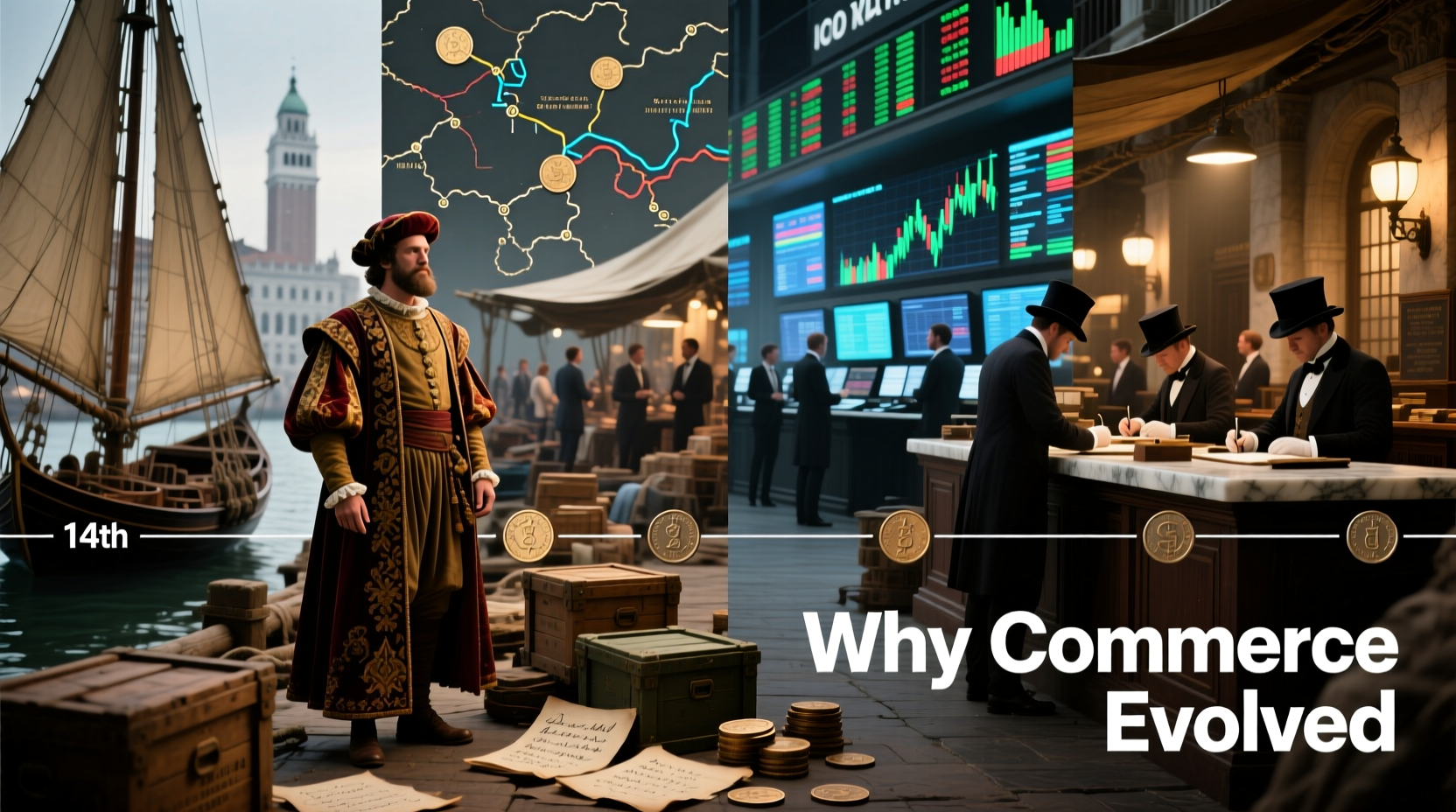
In prehistoric times, humans lived as hunter-gatherers, producing only what they immediately needed. As agricultural techniques improved during the Neolithic Revolution around 10,000 BCE, settlements began generating food surpluses. This surplus allowed some individuals to specialize—not everyone had to farm. Potters, weavers, and toolmakers emerged, creating goods beyond subsistence needs.
To obtain items they couldn’t produce themselves, people began exchanging goods directly—bartering. A farmer might trade grain for pottery, or a herder could offer wool in return for metal tools. These early transactions formed the basis of commerce. However, barter had limitations: the double coincidence of wants (both parties needing exactly what the other offered) made trade inefficient.
The Rise of Currency and Marketplaces
The need for a standardized medium of exchange led to the development of currency. Early forms included livestock, shells, and precious metals. By 600 BCE, the Lydians (in modern-day Turkey) minted the first known coins from electrum, a natural gold-silver alloy. This innovation revolutionized commerce by introducing portability, durability, and uniform value.
With reliable currency came formal marketplaces—agoras in Greece, forums in Rome, souks in North Africa. These hubs became centers not just for trade but also for information exchange, political discussion, and cultural diffusion. Merchants traveled long distances, bringing spices from India, silk from China, and incense from Arabia.
“Money is a tool that turned local barter into scalable economic networks.” — Dr. Lena Patel, Economic Historian, University of Cambridge
Trade Routes and Global Interconnection
One of the most transformative phases in commercial evolution was the establishment of long-distance trade routes. The Silk Road, spanning over 4,000 miles from China to the Mediterranean, operated from the 2nd century BCE to the 15th century CE. It wasn’t a single road but a network of land and sea paths facilitating the movement of goods, ideas, religions, and technologies.
Spices, textiles, paper, and gunpowder moved westward, while glassware, wine, and gold flowed east. More importantly, Buddhism spread into East Asia, Islam reached Central Asia, and scientific knowledge—including mathematics and astronomy—was exchanged between civilizations.
Maritime trade expanded this connectivity. Arab and Persian sailors mastered monsoon patterns to cross the Indian Ocean. Later, Chinese junks and European caravels enabled transoceanic voyages. Vasco da Gama’s arrival in India (1498) and Columbus’s transatlantic journey (1492) marked the beginning of a truly global economy.
Major Historical Trade Routes and Their Impact
| Trade Route | Time Period | Key Goods Traded | Societal Impact |
|---|---|---|---|
| Silk Road (Land) | 2nd c. BCE – 15th c. CE | Silk, spices, tea, horses | Cultural exchange, spread of religions, urban growth |
| Trans-Saharan | 8th – 16th c. CE | Gold, salt, slaves, ivory | Rise of West African empires (e.g., Mali, Songhai) |
| Indian Ocean Network | 1st c. CE – 17th c. CE | Spices, textiles, porcelain | Port city prosperity, Islamic scholarship expansion |
| Columbian Exchange | 15th – 18th c. CE | Potatoes, sugar, tobacco, enslaved people | Demographic shifts, plantation economies, global diets transformed |
Colonialism, Industrialization, and Modern Commerce
The Age of Exploration (15th–17th centuries) linked continents through colonial trade systems. European powers established monopolies on valuable commodities like sugar, coffee, and cotton, often using forced labor in plantations across the Americas and Caribbean. This era introduced mercantilism—the belief that national wealth depended on accumulating gold through exports exceeding imports.
The Industrial Revolution (late 18th century) dramatically accelerated commerce. Mechanized production lowered costs and increased output. Railroads and steamships reduced transportation time and expanded markets. Factories required raw materials from distant colonies and sold finished goods globally. Urbanization followed, as workers migrated to cities near industrial centers.
This period also saw the rise of financial institutions: banks, stock exchanges, and insurance companies. The London Stock Exchange (founded 1801) and later Wall Street became engines of capital allocation, enabling large-scale enterprise and investment.
Mini Case Study: The Dutch East India Company
In 1602, the Dutch government chartered the Vereenigde Oostindische Compagnie (VOC), granting it a monopoly on Asian trade. It was the world’s first publicly traded company, issuing shares on the Amsterdam Stock Exchange. At its peak, the VOC employed over 10,000 people and operated a fleet of 150 merchant ships and 40 warships.
The VOC didn’t just trade—it governed territories, waged wars, and set prices. Its success demonstrated how commerce could rival state power. However, its reliance on exploitation and monopolistic control foreshadowed ethical dilemmas still relevant in global trade today.
From Brick-and-Mortar to Digital Marketplaces
The 20th century brought mass retail, branding, and consumer culture. Department stores, supermarkets, and shopping malls became central to urban life. Post-World War II economic booms in Europe and America fueled demand for automobiles, appliances, and fashion.
But the most disruptive shift came with the internet. Amazon launched in 1995 as an online bookstore; by the 2020s, it had become a trillion-dollar e-commerce giant. Alibaba, founded in China in 1999, connected millions of small manufacturers with global buyers. Digital platforms eliminated geographical barriers, enabled real-time pricing, and personalized customer experiences through data analytics.
Today, blockchain, AI-driven logistics, and mobile payment systems continue reshaping commerce. Cryptocurrencies challenge traditional banking, while social commerce integrates shopping into platforms like Instagram and TikTok.
Checklist: Key Drivers Behind the Evolution of Commerce
- ✅ Agricultural surplus enabling specialization
- ✅ Invention of money to overcome barter inefficiencies
- ✅ Development of transportation networks (roads, ships, railways)
- ✅ Establishment of legal frameworks for contracts and property rights
- ✅ Technological innovations (printing press, telegraph, internet)
- ✅ Emergence of financial systems (banks, credit, insurance)
- ✅ Cultural exchange and globalization of tastes and demands
Frequently Asked Questions
Why did early civilizations develop trade?
Early civilizations developed trade because no single region had access to all necessary resources. For example, Mesopotamia lacked stone and timber but had grain; nearby mountainous regions had stone but needed food. Trade filled these gaps, fostering interdependence and peace through mutual benefit.
How did religion influence historical commerce?
Religion often facilitated trade by establishing trust among distant communities. Pilgrimage routes, such as those to Mecca or Santiago de Compostela, doubled as trade corridors. Religious institutions also acted as banks, storing wealth and offering loans. Moreover, shared beliefs reduced transaction risks in multicultural markets.
Is modern e-commerce sustainable?
Sustainability depends on practices, not the model itself. While e-commerce reduces the need for physical stores, it increases packaging waste and carbon emissions from delivery fleets. However, innovations like electric delivery vehicles, reusable packaging, and optimized routing algorithms are improving its environmental footprint.
Conclusion: The Enduring Significance of Commerce
The evolution of commerce reflects humanity’s relentless pursuit of connection, efficiency, and improvement. What began as simple exchanges between neighbors now powers international relations, drives technological innovation, and shapes cultural identities. Commerce has been both a force for progress and a source of inequality—its impact depends on how it is governed and shared.
Understanding its history isn’t just academic; it equips us to make better choices today. Whether you're a consumer, entrepreneur, or policymaker, recognizing the roots and trajectory of commerce helps navigate the complexities of a globalized world. The next time you click “buy now,” remember—you’re participating in a tradition thousands of years in the making.




 浙公网安备
33010002000092号
浙公网安备
33010002000092号 浙B2-20120091-4
Comments
No comments yet. Why don't you start the discussion?