
The sight of a black flag with a skull and crossbones flying from the mast of a U.S. Navy warship might seem out of place—after all, pirates are the stuff of legend, not modern military decorum. Yet during World War II, the USS Kidd (DD-661), a Fletcher-class destroyer, proudly displayed the Jolly Roger after successful combat missions in the Pacific Theater. This wasn’t an act of rebellion or whimsy; it was a deliberate nod to a long-standing naval tradition rooted in British Royal Navy customs. The story behind the USS Kidd’s use of the pirate flag reveals a deeper culture of morale, recognition, and symbolic pride within wartime naval forces.
The Origins of the Jolly Roger in Naval Warfare
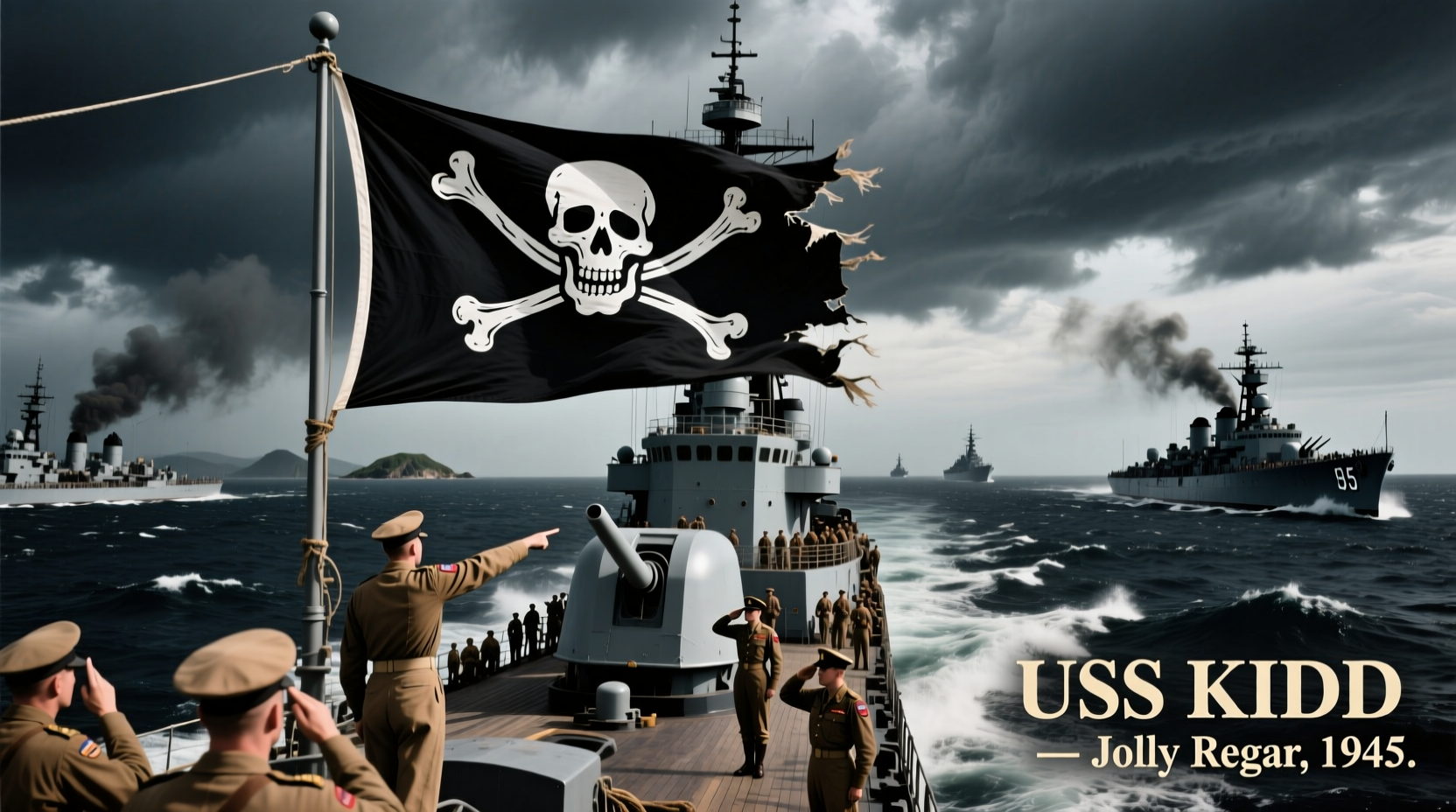
The Jolly Roger, historically associated with piracy in the 17th and 18th centuries, was revived in the 20th century by submarines in the British Royal Navy during World War I. Commander Max Horton of HMS E9 became one of the first modern naval officers to fly the black flag after returning from a successful patrol in which his submarine sank enemy vessels. The gesture was both celebratory and psychological—a way to signal triumph and intimidate adversaries.
This practice quickly gained traction among Allied submariners. Each mission's successes were often marked on the flag with symbols: bars for sunken ships, daggers for covert operations, and even beer mugs for shore raids. The tradition spread beyond submarines and found its way into surface fleet culture, especially among crews with strong ties to British naval allies or those seeking to boost unit cohesion through shared symbolism.
“Flying the Jolly Roger was never about glorifying piracy—it was about honoring silent victories and fostering a sense of elite identity.” — Dr. Robert H. Churchill, Naval Historian, University of Hartford
USS Kidd’s Combat Record and Wartime Role
Commissioned in February 1943, the USS Kidd served extensively in the Pacific, participating in key campaigns including Guadalcanal, the Philippines, and Okinawa. As part of Task Force 58 and later supporting amphibious landings, the ship earned 13 battle stars—one of the highest totals among destroyers in World War II.
The Kidd specialized in anti-aircraft defense, shore bombardment, and screening larger vessels from enemy attacks. Its crew faced relentless kamikaze assaults, particularly during the Battle of Okinawa, where the ship shot down multiple Japanese aircraft. These high-stakes engagements forged a tight-knit, resilient crew accustomed to danger and proud of their effectiveness.
It was in this context that the decision to fly the Jolly Roger emerged—not as a joke, but as a meaningful emblem of proven combat performance. While official U.S. Navy regulations did not authorize such flags, commanders often exercised discretion in allowing morale-boosting traditions, especially when they reflected actual battlefield achievements.
Why Was the USS Kidd Allowed to Fly the Pirate Flag?
The U.S. Navy does not officially sanction the use of the Jolly Roger. However, it has historically tolerated certain informal practices if they serve unit morale and do not violate protocol. In the case of the USS Kidd, several factors contributed to the acceptance of the flag:
- Proven combat record: The ship had demonstrable success in sinking enemy craft and defending allied fleets.
- Allied influence: Close cooperation with British and Australian navies exposed American crews to their symbolic customs.
- Crew initiative: The flag was typically organized by enlisted personnel or junior officers, not imposed from above.
- Tolerance during wartime: With discipline maintained and missions accomplished, senior command often overlooked minor ceremonial deviations.
Flying the Jolly Roger was never random. On the USS Kidd, it reportedly appeared only after significant actions—such as repelling air raids or supporting major landings. It functioned as a visual resume: a way for other ships to recognize the Kidd’s experience and valor at a glance.
Symbolism and Morale: More Than Just a Flag
In the high-pressure environment of naval warfare, small symbols can carry immense psychological weight. The Jolly Roger served multiple purposes aboard the USS Kidd:
- Morale booster: After enduring weeks at sea under threat of attack, seeing the flag raised provided a moment of pride and relief.
- Unit identity: It reinforced the idea that the Kidd’s crew belonged to an elite group of warriors who had “been there, done that.”
- Intimidation factor: To enemy forces observing Allied fleet movements, a ship flying a pirate flag signaled fearlessness and aggression.
- Historical continuity: It linked American sailors to a broader maritime legacy of daring and resilience.
This blend of symbolism and practical psychology made the flag more than a piece of cloth—it became part of the ship’s identity.
Mini Case Study: The Okinawa Campaign
During the spring of 1945, the USS Kidd was assigned radar picket duty off Okinawa—a perilous role involving early warning against incoming kamikaze attacks. These stations were known as “the suicide stations” due to the frequency and ferocity of assaults.
On April 11, 1945, the Kidd engaged in a brutal night battle, shooting down several enemy planes attempting to crash into nearby carriers. After surviving the onslaught with minimal damage, the crew raised a handmade Jolly Roger stitched together from blackout curtains and paint. Word spread across the fleet, and other destroyers began requesting similar flags. Though unofficial, the act strengthened inter-ship camaraderie and highlighted the importance of recognizing frontline courage.
Comparison: Official vs. Unofficial Naval Recognition
| Recognition Type | Examples | Authority | Limits |
|---|---|---|---|
| Official Awards | Battle stars, Navy Unit Commendation | Department of the Navy | Slow approval process; limited visibility |
| Unofficial Symbols | Jolly Roger, painted kill marks, motto banners | Crew-driven | No formal status; depends on command tolerance |
| Public Ceremonies | Homecoming parades, media coverage | Mixed (military/civilian) | Rare and infrequent |
As shown, while official commendations are essential, informal symbols like the Jolly Roger fill gaps in real-time recognition—especially during prolonged conflicts where immediate feedback is scarce.
FAQ
Did other U.S. Navy ships fly the Jolly Roger?
Yes, though rarely. Some submarines and destroyers, particularly those serving alongside British units or involved in special operations, adopted variations of the flag. However, the USS Kidd remains one of the most documented surface ships to do so consistently.
Is it still legal for U.S. ships to fly the Jolly Roger today?
There is no explicit ban, but current regulations emphasize adherence to standardized ensigns and discourage unauthorized flags. Modern usage is extremely rare and typically limited to commemorative events or museum displays.
Where can I see the USS Kidd today?
The USS Kidd is preserved as a museum ship in Baton Rouge, Louisiana, docked on the Mississippi River. It is maintained in wartime configuration and occasionally flies replicas of historical flags, including the Jolly Roger, during special exhibits.
How to Honor Naval Traditions Responsibly: A Checklist
Actionable Steps for Preserving Military Heritage:
- Research historical context before adopting symbols
- Ensure traditions align with unit values and chain-of-command guidelines
- Use symbolism to educate new members about past service
- Avoid offensive or misappropriated imagery
- Document and archive unit-specific customs for future generations
Conclusion
The USS Kidd’s display of the Jolly Roger was far more than a quirky anecdote—it was a calculated expression of combat achievement, unit pride, and transnational naval brotherhood. Rooted in British precedent and adapted by American sailors under fire, the flag served as a powerful, silent testament to survival and skill in the face of overwhelming odds.
Today, as we reflect on the legacy of World War II and the sacrifices made across the Pacific, symbols like the Jolly Roger remind us that military culture thrives not just on regulation, but on meaning. They connect individual service to a broader narrative of courage and continuity.




 浙公网安备
33010002000092号
浙公网安备
33010002000092号 浙B2-20120091-4
Comments
No comments yet. Why don't you start the discussion?