
In an era where nearly every aspect of life intersects with digital platforms—from banking and healthcare to social media and shopping—data privacy has become a cornerstone of personal security and autonomy. Every time you use a smartphone app, browse the web, or make an online purchase, you leave behind a trail of personal information. How that data is collected, stored, used, and shared determines not only your level of digital safety but also your freedom from manipulation, identity theft, and surveillance.
Data privacy isn’t just about hiding information; it’s about having control over who accesses your data and for what purpose. As cyber threats grow in sophistication and scale, understanding why data privacy matters is no longer optional—it’s essential for individuals, businesses, and society at large.
What Is Data Privacy? A Clear Definition
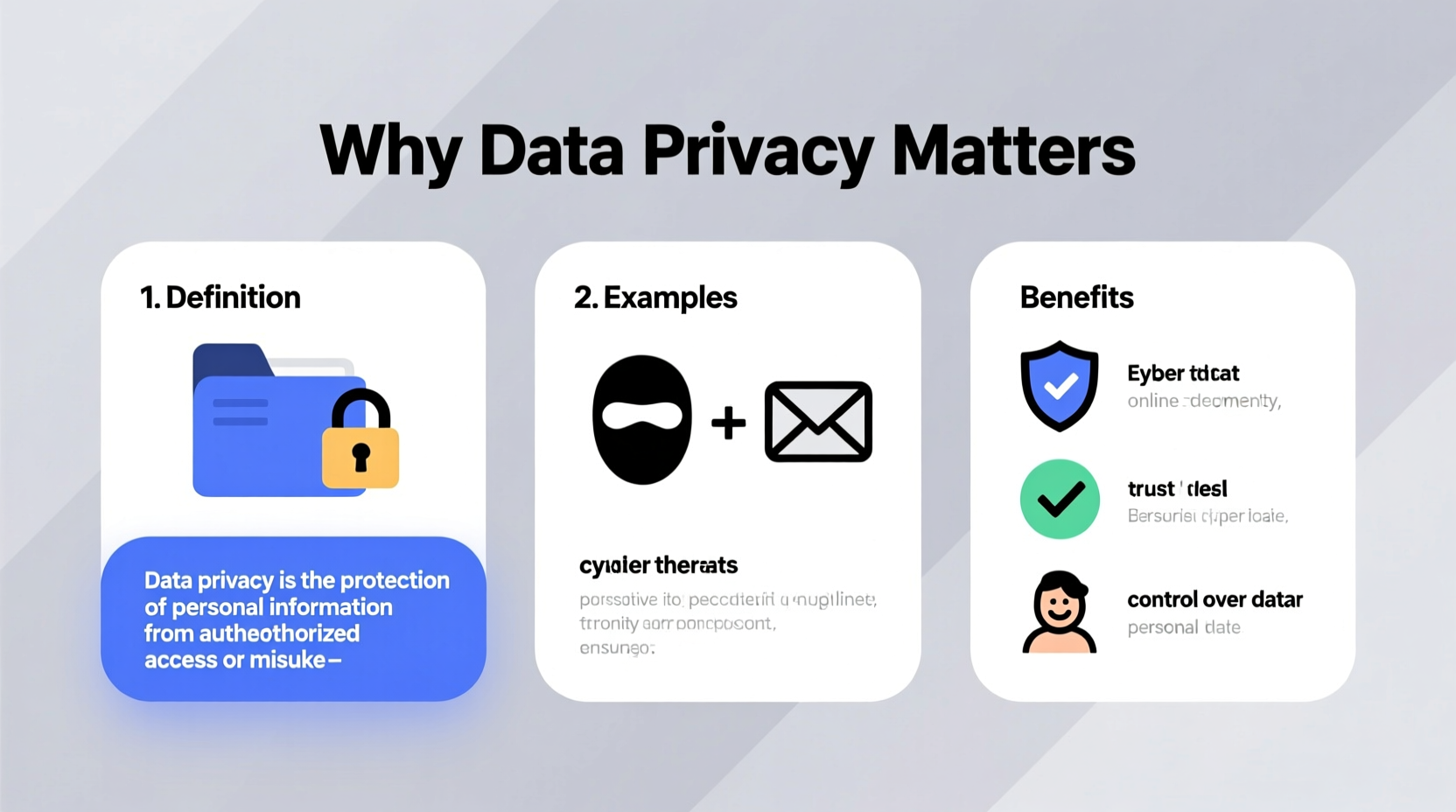
Data privacy refers to the right of individuals to have control over their personal information and how it is collected, processed, stored, and shared by organizations or other individuals. This includes sensitive details such as names, addresses, financial records, health data, biometrics, and online behavior like browsing history and location tracking.
Unlike data security—which focuses on protecting data from breaches and unauthorized access—data privacy emphasizes the ethical and legal handling of information. It involves transparency, consent, and accountability. For example, a company may securely store user data (security), but if it sells that data to third parties without permission, it violates data privacy principles.
“Data privacy is not a luxury; it's a fundamental human right in the digital age.” — Dr. Ann Cavoukian, Former Information and Privacy Commissioner of Ontario
Real-World Examples of Data Privacy Violations
Understanding data privacy becomes more urgent when viewed through actual incidents where misuse of personal data led to significant harm:
- Facebook-Cambridge Analytica Scandal (2018): Over 87 million Facebook users had their personal data harvested without consent through a third-party quiz app. The data was then used to build psychological profiles and influence political campaigns, including the U.S. presidential election.
- Equifax Breach (2017): Hackers accessed the sensitive personal information—including Social Security numbers, birth dates, and addresses—of 147 million people due to poor data protection practices. The breach exposed systemic failures in both security and privacy governance.
- Clearview AI Controversy: The company scraped billions of facial images from public social media profiles to build a facial recognition database sold to law enforcement agencies, often without users’ knowledge or consent—raising major privacy concerns globally.
Key Benefits of Strong Data Privacy Practices
Protecting data privacy delivers tangible advantages across personal, organizational, and societal levels:
- Prevents Identity Theft and Fraud: When personal data is tightly controlled, criminals have fewer opportunities to impersonate individuals for financial gain.
- Builds Consumer Trust: Companies that respect user privacy are more likely to earn loyalty. A 2023 Pew Research study found that 79% of Americans are concerned about how companies use their data.
- Supports Regulatory Compliance: Laws like the GDPR (EU), CCPA (California), and HIPAA (healthcare) require strict data handling standards. Compliance avoids legal penalties and reputational damage.
- Enhances Personal Autonomy: Individuals retain control over their digital identities, reducing the risk of manipulation through targeted ads, misinformation, or algorithmic bias.
- Promotes Ethical Innovation: Organizations can innovate responsibly by designing products that prioritize user consent and minimal data collection.
Step-by-Step Guide to Protect Your Data Privacy
You don’t need advanced technical skills to improve your data privacy. Follow this practical timeline to strengthen your digital footprint:
- Week 1: Audit Your Digital Accounts
Review all active accounts (email, social media, shopping). Delete unused ones and update passwords using a unique, strong combination for each. - Week 2: Enable Two-Factor Authentication (2FA)
Add an extra layer of security to critical accounts like banking, email, and cloud storage using authenticator apps or hardware keys. - Week 3: Adjust Privacy Settings
Go into settings on platforms like Google, Facebook, and Apple ID. Limit ad personalization, disable cross-app tracking, and restrict data sharing with third parties. - Week 4: Use Privacy-Focused Tools
Switch to encrypted messaging apps (e.g., Signal), private search engines (e.g., DuckDuckGo), and consider using a reputable virtual private network (VPN). - Ongoing: Monitor Data Exposure
Use free tools like HaveIBeenPwned.com to check if your email has appeared in known data breaches. Set up alerts for suspicious activity.
Data Privacy: Do’s and Don’ts at a Glance
| Do’s | Don’ts |
|---|---|
| ✅ Read privacy policies before signing up for services | ❌ Share passwords or reuse them across sites |
| ✅ Encrypt sensitive files and communications | ❌ Click on suspicious links or download unknown attachments |
| ✅ Regularly update software and operating systems | ❌ Allow apps unrestricted access to contacts, location, or camera |
| ✅ Back up data to secure, encrypted drives | ❌ Post personal details (birth date, address) publicly online |
Mini Case Study: How One Family Avoided a Phishing Scam
The Thompson family received an email appearing to be from their bank, warning of “unusual activity” and urging immediate action via a linked login page. Instead of clicking, they called the bank directly using the number on the back of their card. The bank confirmed the message was fraudulent—a phishing attempt designed to steal credentials.
Because they practiced good data hygiene—recognizing red flags, avoiding unknown links, and verifying sources—they prevented potential account takeover. They later reported the email to the Federal Trade Commission (FTC), contributing to broader efforts to track and shut down such scams.
Frequently Asked Questions (FAQ)
What’s the difference between data privacy and data security?
Data security focuses on protecting data from unauthorized access, breaches, or corruption using tools like firewalls and encryption. Data privacy, on the other hand, is about ensuring that personal data is collected and used ethically and legally, with user consent and transparency.
Can I really control my data once it’s online?
You can exert significant control by adjusting privacy settings, using encryption tools, and being selective about what you share. While complete erasure is difficult, proactive measures reduce exposure and limit misuse. Under laws like GDPR, you also have the right to request data deletion from companies.
Is data privacy only important for tech-savvy people?
No. Everyone generates digital data, regardless of technical knowledge. Simple habits—like updating passwords and reviewing app permissions—can dramatically improve privacy. Awareness, not expertise, is the key.
Conclusion: Take Control Before It’s Too Late
Data privacy is not a one-time fix but an ongoing practice of vigilance and informed decision-making. The consequences of neglecting it range from minor inconveniences to life-altering fraud and loss of autonomy. By understanding what data privacy means, learning from real-world examples, and applying practical strategies, you reclaim power over your digital identity.
The tools and knowledge are accessible. Start today—review your settings, educate your family, and demand accountability from organizations that handle your data. In a world where information is currency, your privacy is worth protecting.




 浙公网安备
33010002000092号
浙公网安备
33010002000092号 浙B2-20120091-4
Comments
No comments yet. Why don't you start the discussion?