
Cinderella’s flight from the royal ball at the stroke of midnight is one of the most iconic moments in Western storytelling. On the surface, it appears to be a simple consequence of magic wearing off—a fairy tale rule broken, a pumpkin reverting to gourd form, glass slippers on the brink of vanishing. But beneath the enchantment lies a deeper narrative about identity, autonomy, and survival. Understanding why Cinderella ran isn’t just about tracking plot mechanics; it’s about recognizing the psychological and social forces shaping her choices.
The urgency of her departure speaks not only to magical limitations but also to the precariousness of her position. As a young woman trapped between servitude and sudden privilege, Cinderella’s presence at the ball was an anomaly—one that could collapse with a single misstep. Her escape wasn’t merely impulsive; it was calculated self-preservation.
The Magic Had a Deadline
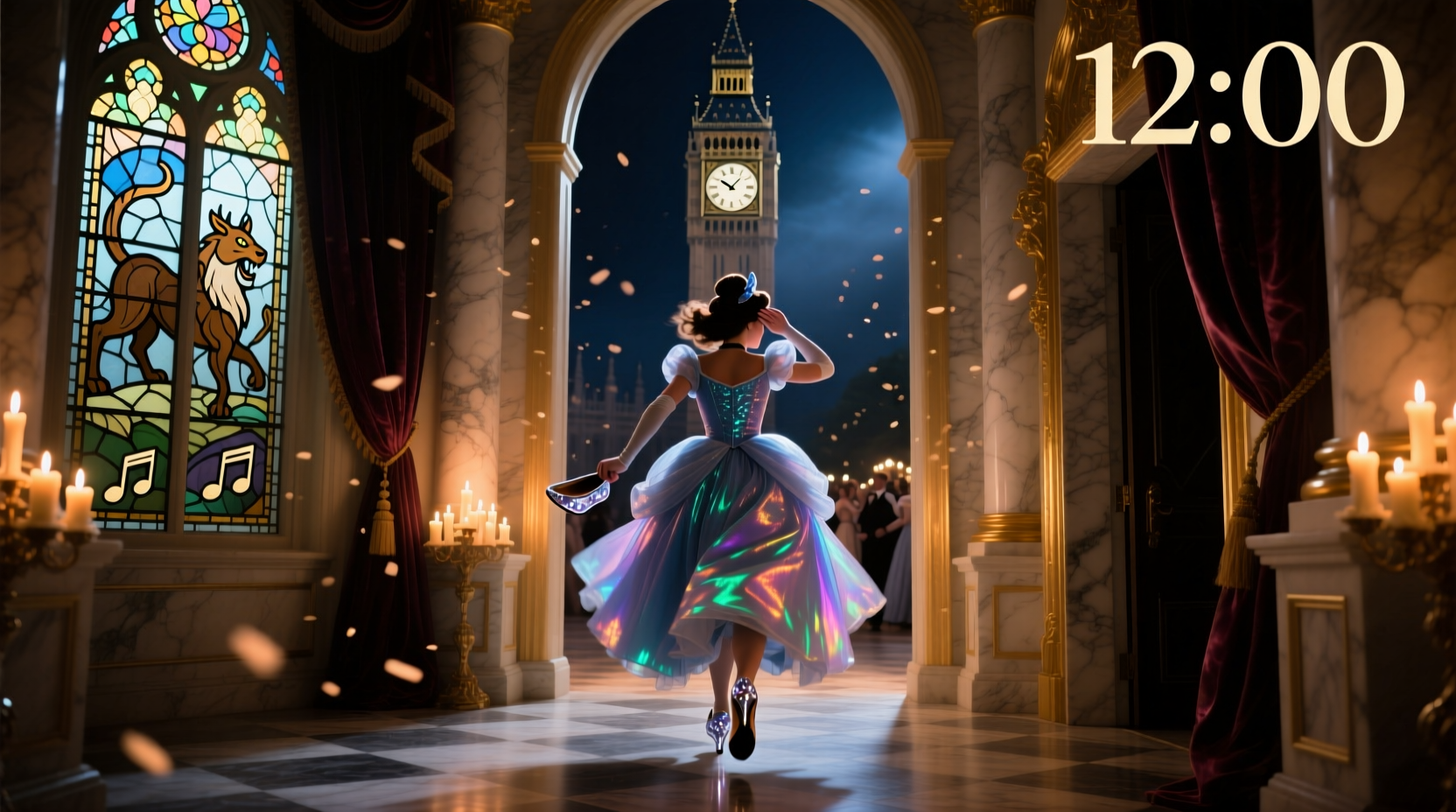
The most literal reason Cinderella fled is rooted in the conditions set by her Fairy Godmother: all enchantments would end at midnight. This time limit serves as both a plot device and a symbolic boundary. It underscores the temporary nature of transformation without structural change. Cinderella didn’t just risk losing her gown or carriage—she risked public exposure, humiliation, and retribution for impersonating nobility.
Consider the stakes: if she were caught after midnight, dressed in rags while claiming royal attendance, she would face accusations of theft, deception, or worse. In historical contexts where class boundaries were rigid and often enforced by law, such transgressions could lead to imprisonment or banishment.
A Fear of Exposure and Social Collapse
Beyond magic, Cinderella’s flight reflects a profound fear of being unmasked. She entered the palace under false pretenses—not out of malice, but necessity. Her stepfamily had barred her from attending, making subterfuge her only path to freedom. Yet, that same subterfuge made her vulnerable.
Social mobility in pre-modern societies was tightly controlled. A servant appearing as a noblewoman threatened the established order. If discovered, Cinderella wouldn’t simply be sent home—she might be punished as a fraud. Her decision to leave preemptively was an act of agency, avoiding confrontation and preserving what little dignity she could.
“Fairy tales encode real anxieties about class, gender, and visibility. Cinderella running isn’t weakness—it’s strategic withdrawal.” — Dr. Lila Monroe, Folklore Historian
The Role of Autonomy in Her Escape
One overlooked aspect of Cinderella’s flight is its demonstration of control. Despite the chaos of the moment, she chooses when to leave. This small act of autonomy is significant. Throughout the story, Cinderella has little say over her life—dictated by her stepmother, excluded from events, forced into labor. At the ball, for the first time, she experiences choice: whom to dance with, how long to stay, when to depart.
Her decision to run is not panic-driven but deliberate. She hears the clock strike twelve and acts immediately. There’s no hesitation, no attempt to stretch the magic. That precision suggests awareness and discipline. Rather than cling to fleeting glamour, she prioritizes safety and integrity.
Why Didn’t She Stay Longer?
Some modern retellings question why Cinderella didn’t try to explain herself or reveal her identity earlier. But within the logic of the tale, disclosure wasn’t safe. Without proof of her origins—and with her stepfamily poised to discredit her—any claim to nobility would likely be dismissed as delusion or deceit.
In fact, her silence until the slipper test protects her. By allowing the prince to seek her through objective means (the perfect fit of the shoe), she avoids direct confrontation and lets evidence speak for her. This indirect route ultimately secures her future more effectively than a dramatic confession ever could.
Symbolism of the Glass Slipper Left Behind
The abandoned slipper is more than a plot device—it’s a symbol of partial revelation. Cinderella leaves behind a piece of her transformed self, creating a trail that invites pursuit without immediate risk. It allows the prince to initiate contact, shifting power dynamics subtly in her favor.
This gesture mirrors real-life strategies used by marginalized individuals navigating oppressive systems: revealing enough to create opportunity, but not so much as to invite destruction. The slipper becomes a bridge between two worlds—one foot in servitude, one in possibility.
| Element | Literal Function | Symbolic Meaning |
|---|---|---|
| Midnight | Magic expiration time | Limits of temporary escape |
| Pumpkin Carriage | Transportation | Fragility of upward mobility |
| Glass Slipper | Identification tool | Fragment of truth left behind |
| Fairy Godmother | Magical helper | External intervention enabling change |
Mini Case Study: Maria’s Modern Parallel
Maria, a junior analyst at a corporate firm, was invited to an exclusive executive gala—an event far above her pay grade. Like Cinderella, she borrowed elegant attire and attended under informal sponsorship. As midnight approached, she noticed senior managers beginning to scrutinize guests’ badges. Fearing she’d be questioned or escorted out, she slipped away quietly before anyone noticed.
She didn’t return to the office the next day expecting rescue. Instead, she focused on performance, knowing visibility alone wouldn’t secure advancement. Months later, a director who remembered her from the event recommended her for promotion. Her quiet exit preserved her reputation; her competence earned her place.
Maria’s story echoes Cinderella’s: temporary access doesn’t guarantee lasting inclusion. Strategic retreat can protect future opportunities.
Step-by-Step: How Cinderella’s Escape Unfolded
- Enjoyment at the Ball: Cinderella dances with the prince, fully immersed in the experience.
- First Chime of Midnight: She hears the clock begin to strike and instantly recognizes the danger.
- Immediate Departure: Without farewell, she flees the hall, prioritizing discretion over politeness.
- Loss of the Slipper: In haste, one glass slipper comes off on the palace stairs—unnoticed by her in the moment.
- Return to Normalcy: She arrives home in rags, resuming her role before her stepfamily returns.
- Waiting for Consequences: She does not pursue the prince but allows the slipper to serve as evidence.
Common Misinterpretations Debunked
- Myth: Cinderella ran because she was shy or lacked confidence.
Truth: Her actions reflect awareness of risk, not insecurity. - Myth: She forgot about the time limit.
Truth: She acted precisely when the clock struck—proof she remembered. - Myth: The prince would have protected her if she stayed.
Truth: Loyalty wasn’t guaranteed; exposure could have led to exile for both.
FAQ
Could the magic have lasted longer if Cinderella wanted it to?
No—the Fairy Godmother explicitly stated the spell would end at midnight. Desire couldn’t override the rules of the enchantment, reinforcing the theme that external help has limits.
Why didn’t the Fairy Godmother warn her more urgently?
Some versions suggest the warning came too late; others imply Cinderella was so engrossed in joy she momentarily forgot. Either way, the moment highlights how easily hope can eclipse caution.
Was running really necessary? Couldn’t she have explained?
In the context of strict class hierarchies, explanation without proof would likely fail. Running preserved her chance to be found through verifiable means—the slipper—rather than dismissed as a liar.
Conclusion: Running Toward Freedom, Not Just Away
Cinderella’s flight from the ball is often romanticized as a moment of panic, but it’s better understood as an intelligent act of survival. She wasn’t fleeing pleasure—she was protecting her future. Her departure ensured she remained safe, unidentified, and free to let truth emerge on its own terms.
Her story reminds us that transformation isn’t complete when we gain access to new spaces—it’s complete when we can occupy them authentically and securely. Cinderella didn’t need to stay until dawn to win. She won by knowing when to leave.




 浙公网安备
33010002000092号
浙公网安备
33010002000092号 浙B2-20120091-4
Comments
No comments yet. Why don't you start the discussion?