
The twice-yearly ritual of springing forward and falling back is familiar to millions, yet few understand why daylight saving time (DST) exists in the first place. Behind the clocks shifting is a story spanning centuries—one of energy conservation, wartime strategy, agricultural myth, and political debate. The idea didn’t emerge overnight but evolved through scientific curiosity, economic pressure, and global coordination. Understanding why DST began reveals not just a quirk of timekeeping, but a reflection of how societies adapt to natural rhythms and industrial demands.
The Conceptual Origins: Benjamin Franklin’s Satirical Proposal
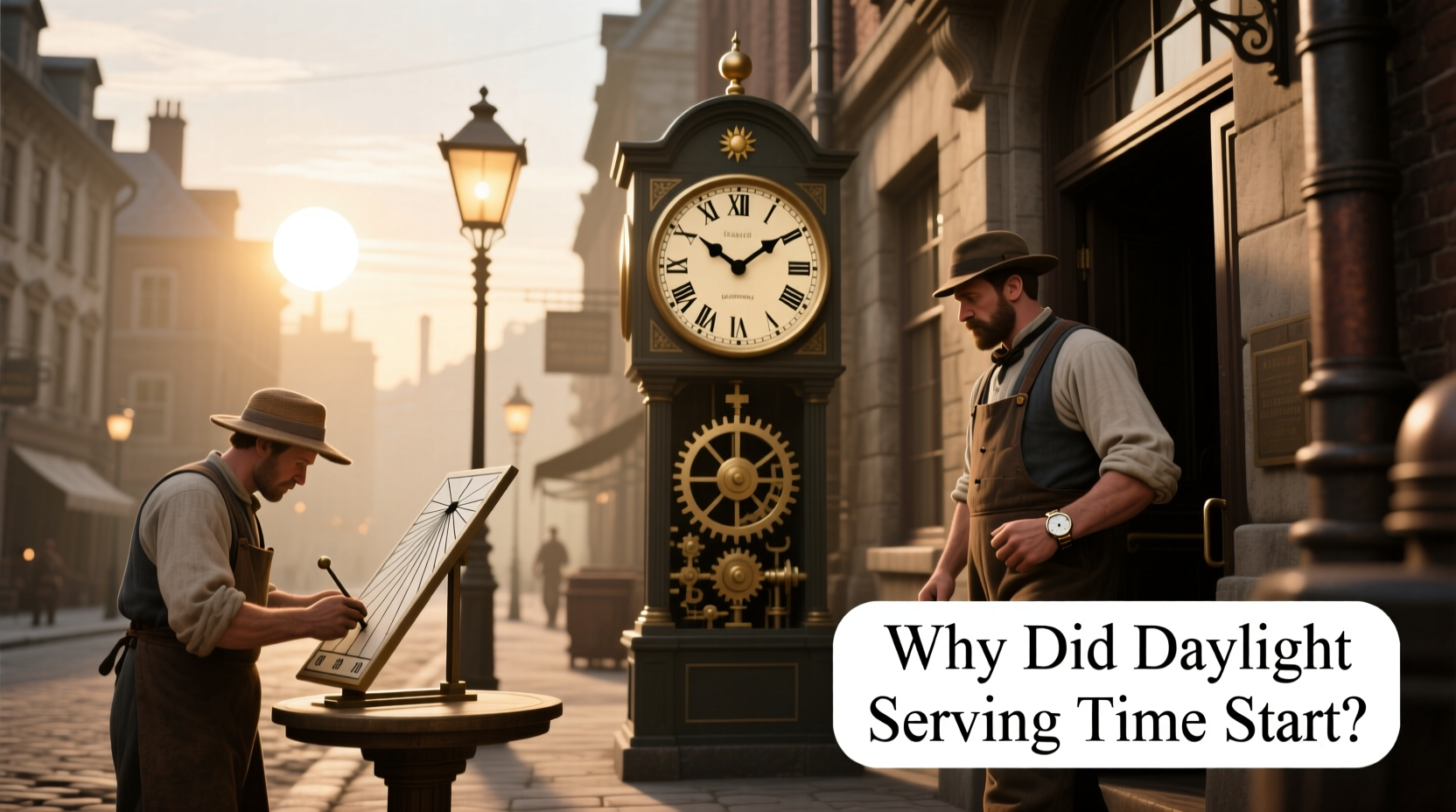
The earliest known reference to adjusting daily schedules to make better use of daylight comes from an unlikely source: Benjamin Franklin. In 1784, while serving as the American ambassador to France, he wrote a satirical letter to the Journal de Paris titled “An Economical Project.” In it, he humorously suggested that Parisians could save money on candles by waking up earlier to use morning sunlight.
Franklin calculated that if the city shifted its sleep schedule to align with sunrise, it could save millions of pounds of candle wax annually. Though clearly written in jest—complete with mock proposals for firing cannons at dawn to rouse citizens—his letter planted a seed. It was one of the first recorded arguments linking human activity to solar time for economic benefit.
“Early to bed, and early to rise, makes a man healthy, wealthy, and wise.” — Benjamin Franklin
While Franklin never advocated for changing the clock itself, his essay introduced the principle behind DST: realigning social time with natural light to conserve resources.
The Modern Invention: George Hudson and William Willett
The actual concept of advancing clocks during summer months emerged in the late 19th and early 20th centuries. Two key figures independently proposed formal daylight saving schemes.
In 1895, New Zealand entomologist George Hudson presented a paper to the Wellington Philosophical Society suggesting a two-hour shift forward in October and back in March. His motivation was practical: more daylight after work would give him extra time to collect insects—a personal passion. Though his proposal gained little traction, it included the core mechanism of seasonal clock adjustment.
A decade later, in 1907, British builder William Willett published “The Waste of Daylight,” a passionate pamphlet advocating for a gradual four-stage clock advancement each Sunday in April, then reversal in September. He estimated the United Kingdom could save millions in lighting costs annually. Willett campaigned tirelessly until his death in 1915, but Parliament rejected his plan multiple times.
World War I: The Catalyst for Adoption
DST remained a fringe idea until war transformed national priorities. In 1916, Germany became the first country to implement daylight saving time as a wartime measure. Facing coal shortages during World War I, the German Empire advanced clocks by one hour on May 1, 1916, aiming to reduce artificial lighting use and conserve fuel for the war effort.
The move was quickly followed by Austria-Hungary and other Central Powers. Within weeks, the United Kingdom passed the Summer Time Act 1916, adopting DST just three weeks after Germany. Other Allied nations, including France, Italy, and Russia, soon followed suit.
The United States resisted initially, but after entering the war in 1917, Congress passed the Standard Time Act of 1918, introducing DST on March 31, 1918. The law also established time zones nationwide, marking a pivotal moment in American time regulation.
| Country | First DST Implementation | Purpose |
|---|---|---|
| Germany | May 1, 1916 | Conserve coal during WWI |
| United Kingdom | May 21, 1916 | Reduce energy use |
| United States | March 31, 1918 | Support war production efficiency |
| Canada | 1918 (local adoption) | Align with U.S. industry |
After the war ended in 1918, many countries abandoned DST. In the U.S., public opposition—especially from farmers—led to its repeal in 1919, though some states continued using it independently. For nearly two decades, DST existed in patchwork form, with no national consistency.
World War II and the Standardization of DST
Daylight saving returned with renewed urgency during World War II. On January 20, 1942, President Franklin D. Roosevelt instituted **War Time**, a year-round version of DST, to again conserve energy and maximize productivity. Clocks remained one hour ahead until September 1945.
After the war, the absence of federal regulation led to chaos. Cities and towns set their own time rules—sometimes differing by county or even neighborhood. A 1962 bus trip from Mankato to Minneapolis, Minnesota, required passengers to adjust their watches seven times. This confusion prompted legislative action.
The turning point came with the Uniform Time Act of 1966. Signed by President Lyndon B. Johnson, this law standardized DST across the U.S., setting consistent start and end dates (originally the last Sunday in April and October). States could opt out entirely, which Arizona and Hawaii eventually did. The act brought much-needed order to the nation’s clocks.
“The Uniform Time Act wasn’t about energy anymore—it was about coordination. Commerce, transportation, broadcasting—all depended on synchronized time.” — Dr. Rebecca Thompson, Historian of Technology, Smithsonian Institution
Energy Crises and Modern Adjustments
DST’s justification shifted in the 1970s amid oil embargoes and rising energy concerns. During the 1973 oil crisis, the U.S. extended DST for two years to test whether longer evening daylight reduced electricity consumption. Studies showed modest savings—around 1% in lighting—but less impact overall due to increased air conditioning use.
In 2005, the Energy Policy Act extended DST in the U.S. starting in 2007: now beginning on the second Sunday in March and ending on the first Sunday in November. The goal was to further reduce energy demand, though subsequent studies have questioned the actual benefits.
Today, approximately 70 countries observe some form of DST, primarily in North America and Europe. However, many nations—especially near the equator, where daylight variation is minimal—do not use it. Over time, the original rationale has weakened as LED lighting, remote work, and digital lifestyles reduce dependence on daylight for daily activities.
Frequently Asked Questions
Did farmers invent daylight saving time?
No. This is a common misconception. Most farmers actually opposed DST because it disrupted their schedules, which are tied to sun and livestock routines, not clock time. The myth likely arose because agriculture was central to early economies, but rural communities were among DST’s strongest critics.
Does DST actually save energy?
The evidence is mixed. Early 20th-century savings were significant when lighting consumed more energy. Today, gains are negligible or offset by increased cooling and electronic usage. A 2008 U.S. Department of Energy study found only 0.03% reduction in electricity use per day during extended DST.
Which U.S. states don’t observe DST?
Arizona (except the Navajo Nation) and Hawaii do not observe daylight saving time. Puerto Rico, Guam, American Samoa, the U.S. Virgin Islands, and the Northern Mariana Islands also remain on standard time year-round.
Tips for Adapting to DST Transitions
- Expose yourself to natural light early in the morning to reset your circadian rhythm.
- Avoid caffeine and heavy meals close to bedtime during transition weeks.
- Adjust household devices (clocks, thermostats, appliances) in advance to reduce stress.
- Use blackout curtains if morning light disrupts sleep after falling back in November.
Conclusion: A Practice at a Crossroads
Daylight saving time began as a blend of satire, idealism, and wartime necessity. From Franklin’s joke to Willett’s crusade, from German fuel strategy to American regulatory reform, DST has endured far longer than its creators imagined. Yet today, its relevance is increasingly questioned. Several U.S. states have proposed permanent DST (pending federal approval), while the European Union voted in 2019 to allow member states to choose their time permanently—though implementation remains delayed.
Whether DST continues or fades into history, understanding its origins offers insight into how societies balance tradition, efficiency, and human well-being. As technology reshapes our relationship with time, the conversation about whether we should keep changing our clocks is far from over.




 浙公网安备
33010002000092号
浙公网安备
33010002000092号 浙B2-20120091-4
Comments
No comments yet. Why don't you start the discussion?